In short
The short answer to dog walker vs dog daycare: a walker solves a bathroom break, and DaySchool solves a behavior gap. If your dog already does well around other dogs, a full day at DaySchool in Scottsdale or Cave Creek adds daily training, safe-threshold socialization, and tracked progress that a 30-minute walk cannot. A senior dog, or one who is calm and content home alone, is often better served by a simple midday walk instead.
This guide walks through what a dog walker provides, what DaySchool adds on top of it, and where Arizona's climate changes the calculus. It also covers which dogs are better matched to a walker than to a group setting, plus the weekly cost math and the hybrid schedule most Scottsdale and Cave Creek families land on once they have tried both options.
Dog Walker vs Dog Daycare: Which Problem Are You Solving?
Every owner asking about a dog walker vs dog daycare is asking two different questions at once, and mixing them up is where the wrong choice happens. A dog walker solves a bathroom problem. Dog daycare, done right, solves a behavior problem. Your dog's day-to-day tells you which question applies to your house.
If the concern is simply "who lets him out and stretches his legs," that is a bathroom-and-movement problem, and a walker fixes it cleanly. The concern might be behavioral instead: pulling on leash, jumping on guests, barking at the fence, chewing the baseboards by 3pm. That is a behavior problem, and a stranger opening the door for twenty minutes will not touch it. Most families are living with a mix of both, which is why this article ends on a hybrid answer instead of a pitch for one side.
What a Midday Walk Delivers
Give the walker their due. A midday dog walker is a legitimate, useful service, right for plenty of dogs. A walk delivers bathroom relief, a short stretch of movement, and low-stimulation one-on-one attention, nothing more and nothing less.
Here is where a walker wins:
- Lower stimulation. One person, one dog, no unfamiliar dogs to navigate, good for a dog who finds groups overwhelming rather than fun.
- Lower cost per visit. A single walk is a smaller commitment than a full day of care, fitting a dog who does not need a full day away from home.
- Home-based comfort. The dog stays home the rest of the day instead of adjusting to a new space and routine.
- Simplicity for senior or crate-content dogs. A dog who naps most of the day and needs no active enrichment is not missing anything with a walk instead of a group setting.
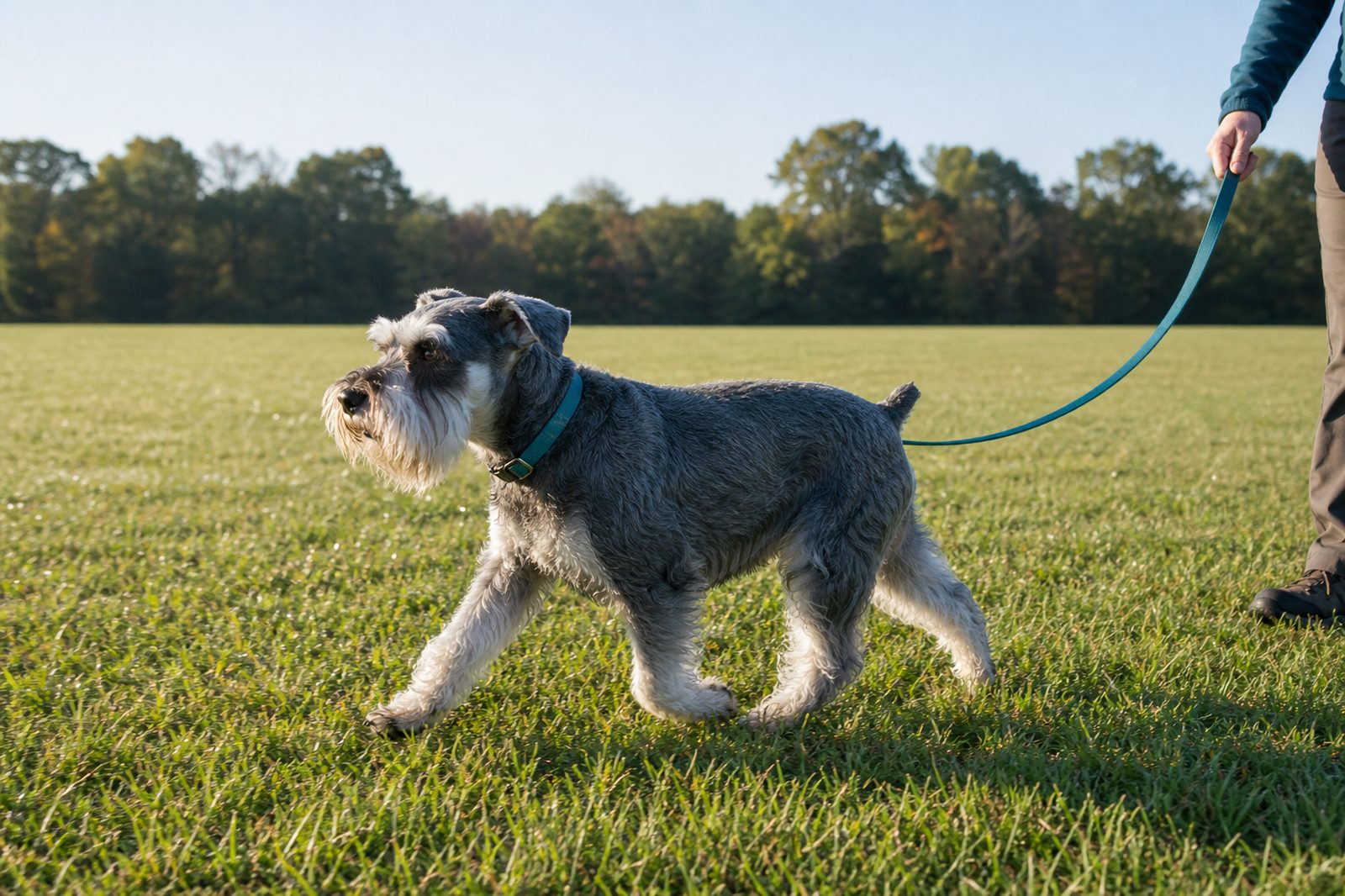
What a walk does not deliver is training. Most walking services are not staffed by instructors, and a twenty- to thirty-minute visit is too short for anything beyond getting out the door and back. A walker just trying to get through the block safely can, at best, manage a hard pull, not correct it. At worst, letting the dog drag them forward reinforces the exact behavior you are trying to fix.
There is no group interaction, no practiced greeting, and no record beyond a text message or a photo. It is exercise, not training or structured socialization.
What DaySchool Adds That a Walk Cannot
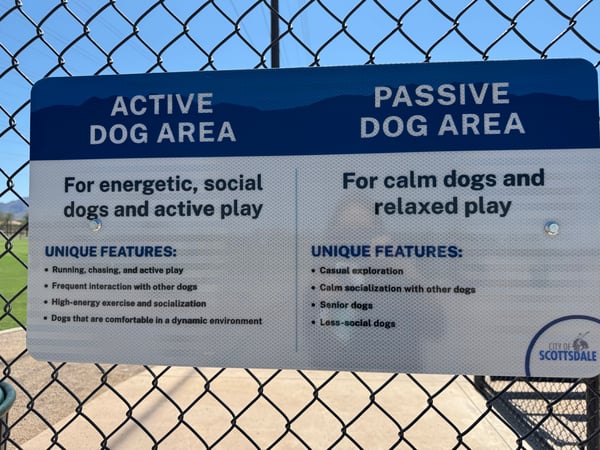
DaySchool is daycare plus daily training with instructors on the floor, built for dogs who are genuinely social and ready to play and learn in a group. It is a fit for a dog who already does well around other dogs, not one who needs to be eased into it. DayCamp's lower-stimulation structure is the better starting point for one specific group: dogs who are reactive, fearful, undersocialized, or newly adopted. That distinction is covered in the FAQ below.
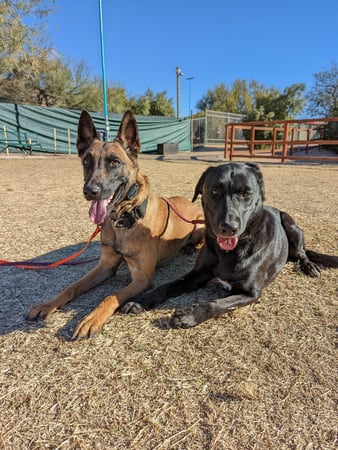
The gap between a walk and a full day of DaySchool is not more exercise, it is supervised practice. A dog who pulls toward every dog on the sidewalk gets a chance, every day, to practice a calm greeting at a safe threshold instead of dragging toward the fence line. Instructors watch for that pattern, the kind covered in our leash pulling guide, and redirect it as it happens instead of just absorbing it on a leash. A dog who cannot settle, the pattern behind hyperactive behavior, gets structured play and downtime instead of one burst of energy followed by eighteen more hours alone.
Partners Dogs also staffs at one trainer for every ten dogs, well above the twenty to fifty dogs one attendant often supervises at a warehouse-style daycare. That ratio is the difference between a room being watched and a room being coached, and it is one reason Partners Dogs carries a 4.8-star rating across 2,000+ reviews. A walker cannot replicate that ratio; a single person managing one dog for thirty minutes is doing a different job, just a smaller one.
The Arizona Problem: Midday Walks From May Through September
There is a piece of this decision that has nothing to do with training and everything to do with the calendar. Most dog walkers visit on a midday schedule, exactly when an Arizona summer makes outdoor walking the least safe. A walker who comes at noon because that is when your workday allows it is walking your dog when pavement and asphalt in Scottsdale and Cave Creek are hot enough to burn paw pads, and when heat exhaustion risk climbs fast for any dog, not just brachycephalic breeds.
From roughly May through September, a responsible walk needs to happen at sunrise or after sunset, and a midday commercial walking visit rarely has that flexibility built in. DaySchool sidesteps the problem entirely: dogs move between air-conditioned indoor space and shaded outdoor time on a schedule built around the day's temperature, not around a fixed appointment slot. The eight-plus hours a dog spends alone on walker days is also when boredom-driven destructive chewing tends to show up, since a twenty-minute walk does not use up a whole day's worth of energy no matter what time it happens.
Next step
See which setting fits your dog
A quick call gets you a straight answer on whether your dog is ready for open DaySchool play, needs the more structured setting first, or is doing fine with a walker for now.
What a DaySchool Week Costs, and How to Compare It
A single DaySchool day is priced per visit, with current rates always posted on the pricing page. A single walker visit is smaller because it covers twenty to thirty minutes of one service, while a DaySchool day covers supervision, play, and training together. Comparing them dollar for dollar means asking what each dollar buys, then applying it to your own week.
- A walker's fee covers a single bathroom-and-movement visit, once per scheduled day, with no training component built in.
- A DaySchool day covers the full workday, supervised play with other dogs, and daily training reps with an instructor, so the per-day rate is doing several jobs at once instead of one.
To see the exact math for your dog, check the current DaySchool day rate on the pricing page and multiply it by the days you would use in a week, then set that total next to what your local walker charges per visit for the same number of days. Run the comparison with real numbers for your dog's schedule rather than assuming either service costs more; Partners Dogs membership plans bring the per-visit DaySchool cost down further, and a quick call gets you the current membership rate for your dog's size and schedule.
Dogs Who Do Better With a Walker Than a Group
This is not a piece built to talk every reader into a group setting. Some dogs are better off with a walker, and being straight about who those dogs are is the only way this comparison is worth reading.
- Senior dogs whose stamina and joints do better with a short, controlled outing than a full active day.
- Dogs recovering from surgery or injury who need restricted, low-impact movement rather than group play.
- Dogs who are content and calm home alone and are not showing anxiety, boredom, or behavior fallout from the hours by themselves.
- Dogs on a strict medical or medication routine where a consistent, familiar person and environment matters more than social time.
- Dogs who already get plenty of structured socialization elsewhere, for example through weekly group classes, and just need a midday break, not a second social commitment.
Each of those situations calls for movement and relief. A walker is the right match for that, day in and day out.
The Hybrid Schedule Most Working Families Land On
In practice, few families run a pure either-or schedule once they have tried both. The most common landing point is DaySchool two or three days a week for training and social time, with a walker filling the other weekdays for simple relief. That gets the dog consistent training reps without paying for five full days of care that a lower-energy dog does not need, and it keeps the walker's lower cost and lower stimulation available on the days a full day of stimulation is not the priority.
If your dog is not yet ready for open DaySchool play, the same hybrid logic applies with DayCamp instead. DayCamp is a lower-stimulation day program for one group: dogs who are reactive, fearful, undersocialized, or newly adopted. It pairs well with walker days while the dog builds toward group readiness. DaySchool runs Monday through Friday from 7 a.m. to 6 p.m., and Saturday from 8 a.m. to 4 p.m., closed Sunday. A mixed schedule is easy to build around a standard workweek without gaps.
How Progress Gets Measured Either Way
Ask a walker how the visit went and you get a text: good walk, no issues, or a note about the weather. Evaluating behavior patterns simply falls outside a walker's job, since that was never the service being hired. At DaySchool and DayCamp, what your dog worked on and how they responded is tracked through the PD360 Pet Progress Tracking System, so it does not disappear the moment you pick up your dog. Instructors log specific patterns across a series of days: greeting behavior, settle time, and reactivity triggers. That is the only way to see whether a behavior is improving, not just being managed.
If you are not sure yet whether your dog needs the structure of DayCamp before working up to open DaySchool play, a PD360 Assessment gives you a trained instructor's read on exactly where your dog stands.
Frequently asked questions
Is a 30-minute walk enough exercise for my dog?
For a lower-energy, senior, or already well-socialized dog, a 30-minute midday walk can be enough physical movement to get through the rest of the day comfortably. A young, high-energy, or undersocialized dog needs more than a walk. A full day at DaySchool or DayCamp adds training, socialization, and mental stimulation that a single walk cannot.
What is the difference between DaySchool and DayCamp at Partners Dogs?
DaySchool is daycare plus daily training with instructors, built for dogs who are already genuinely social and ready for open group play. DayCamp is a lower-stimulation day program for one group: dogs who are reactive, fearful, undersocialized, or newly adopted. It gives them a safer setting to build toward group readiness.
Can I use a dog walker and DaySchool in the same week?
Yes, and it is the most common schedule working families land on. A typical split is DaySchool two or three days a week for training and social time, with a walker covering the remaining weekdays for simple bathroom relief and a short stretch.
Is a midday dog walk safe during an Arizona summer?
From roughly May through September, midday pavement and asphalt in Scottsdale and Cave Creek get hot enough to burn paw pads and raise heat exhaustion risk quickly. A safe summer walk needs to happen at sunrise or after sunset, which a fixed midday walker appointment often cannot accommodate. An indoor, air-conditioned option like DaySchool avoids the midday heat problem entirely.
How is my dog's progress tracked at DaySchool or DayCamp?
Partners Dogs tracks behavior through the PD360 Pet Progress Tracking System. Instructors log specific patterns across multiple days: greeting behavior, settle time, and reactivity triggers. That gives you a read on whether a behavior is improving, not just how one day went.
Does Partners Dogs offer dog walking as a service?
No. Partners Dogs' day programs are DaySchool and DayCamp, both full-day settings with instructors on site. A dog walker is typically a separate local service, and pairing one with DaySchool or DayCamp days, the way this guide covers, is a common way families cover the rest of the week.
Ready to decide
Give your dog the day that fits
A trainer can help you land on the right schedule: DaySchool, DayCamp, a walker, or some mix of the three.
Keep reading