In short
The best dog daycare for a high-energy dog has a staff-to-dog ratio near one trainer per 10 dogs, a real behavioral screening before your dog joins a group, and structured enrichment instead of just an open yard. In Scottsdale and Cave Creek heat, look for climate-controlled play spaces and a facility that separates dogs by temperament and play style, not just by size.
Your Australian Shepherd just demolished another couch cushion. Your Lab ate through the drywall again. If this sounds familiar, you are not alone. High-energy dogs need more than a quick walk around the block to stay happy and balanced. Partners Dog Training, Daycare and Resort helps Arizona dog owners channel that energy through structured daycare built around real supervision, enrichment, and behavior-informed care.
Choosing the right daycare for an active or undersocialized dog is not as simple as finding the nearest facility with an open spot. The wrong environment can reinforce problem behaviors or create new ones. This guide walks through what actually matters when you are picking a daycare for an energetic dog.
Why High-Energy Dogs Need More Than Basic Daycare
Breeds like Border Collies, Australian Shepherds, Labrador Retrievers, and Belgian Malinois were bred for demanding work: herding livestock, retrieving game, and covering ground all day. When those instincts do not have an outlet, that energy goes somewhere else, usually your furniture, your shoes, or your patience.
A daycare built only around free play often leaves a high-energy dog just as wound up at pickup as at drop-off. Loose, unstructured group play does not teach a dog to settle. It can even reward the exact arousal pattern you are trying to reduce at home.
The real difference between a basic daycare and one built for active breeds is structure. High-energy dogs do better with scheduled play rotations, real rest intervals, and guided engagement that channels excitement into calmer behavior, not just a big yard where dogs run in circles until they crash.
What Makes a Daycare Safe for Active Dogs
Safety at a dog daycare comes down to more than fencing and a vaccination form. For high-energy breeds, the supervision model matters as much as the physical space.
Staff-to-Dog Ratios That Actually Protect Your Dog
Ask any facility directly what their staff-to-dog ratio is during peak hours. Partners Dog Training, Daycare and Resort staffs at one trainer for every 10 dogs. That is a meaningful difference from the 20 to 50 dogs per handler some warehouse-style daycares run, where one person is watching a room too large to actually read.
A trainer who can read canine body language and step in before arousal escalates can safely manage a group. A handler who is just watching from across the room cannot, no matter how good the fencing is.
How Staff Training Affects Daily Safety
Well-trained daycare staff should recognize stress signals like lip licking, whale eye, a tucked tail, and displacement sniffing well before they show up as growling or snapping. A facility that only reacts once a dog is already growling is reacting too late.
- Staff intervene early, using redirection rather than spray bottles or leash corrections
- Play is paused and dogs are separated the moment arousal starts to climb, not after a scuffle
- New or nervous dogs are introduced gradually instead of dropped into the biggest group
How Behavioral Assessments Protect Every Dog in the Group
A real screening before your dog joins a play group is one of the strongest signs of a quality facility. It protects your dog and every other dog in the room.
What a Professional Screening Process Includes
A thorough assessment usually starts with a conversation about your dog's socialization history, known triggers, and any bite history, followed by individual observation of your dog in the space before they meet anyone. From there, a graduated introduction to one or two calm, socially skilled dogs comes before placement in a full group.
At Partners Dog Training, Daycare and Resort, the PD360 Assessment evaluates your dog across a full day in different environments. You cover your goals in an initial conversation at drop-off, and a training plan with recommended programs gets discussed at pickup, so the recommendation is built around your actual dog, not a generic intake form.
Red Flags During the Intake Process
Be cautious of a facility that skips screening entirely, or offers only a brief meet-and-greet lasting a few minutes.
- No questions about bite history or resource guarding
- No proof of vaccination required before the first visit
- A claim that "every dog is welcome" regardless of temperament
Some dogs genuinely do not enjoy group play, and a responsible facility will say so instead of enrolling everyone. A daycare that prioritizes headcount over fit is putting every dog in the room at risk, including yours.
Why Enrichment Matters More Than Extra Playtime
Here is something that surprises a lot of owners: mental work tires most dogs out more than physical exercise does. A short puzzle-feeder session can leave a high-energy dog calmer at home than a long walk alone, and the effect tends to last longer.
The Science Behind Mental Stimulation
Problem-solving is genuinely tiring in a way that running is not. Constant running mostly engages the motor system. Working through a puzzle, tracking a scent, or figuring out how to get a treat out of a toy engages decision-making and impulse control, and that kind of fatigue tends to stick. Dogs who get regular enrichment tend to show less destructive chewing and digging, better impulse control, and fewer attention-seeking behaviors at home.
Types of Enrichment to Look For
Food enrichment covers puzzle feeders, snuffle mats, frozen Kongs, and lick mats, the core idea being that a dog works for food instead of finishing a bowl in thirty seconds.
Sensory enrichment uses new scents, different textures underfoot, and varied visual stimulation. Dogs experience the world primarily through scent, so scent-based activities tap into how they naturally process information.
Cognitive enrichment challenges a dog to solve problems through puzzle toys, hide-and-seek games, and novel obstacles. A dog with nothing to figure out will often invent their own problem to solve, usually by taking apart something in your house.
How Play Group Structure Keeps Dogs Safe and Happy
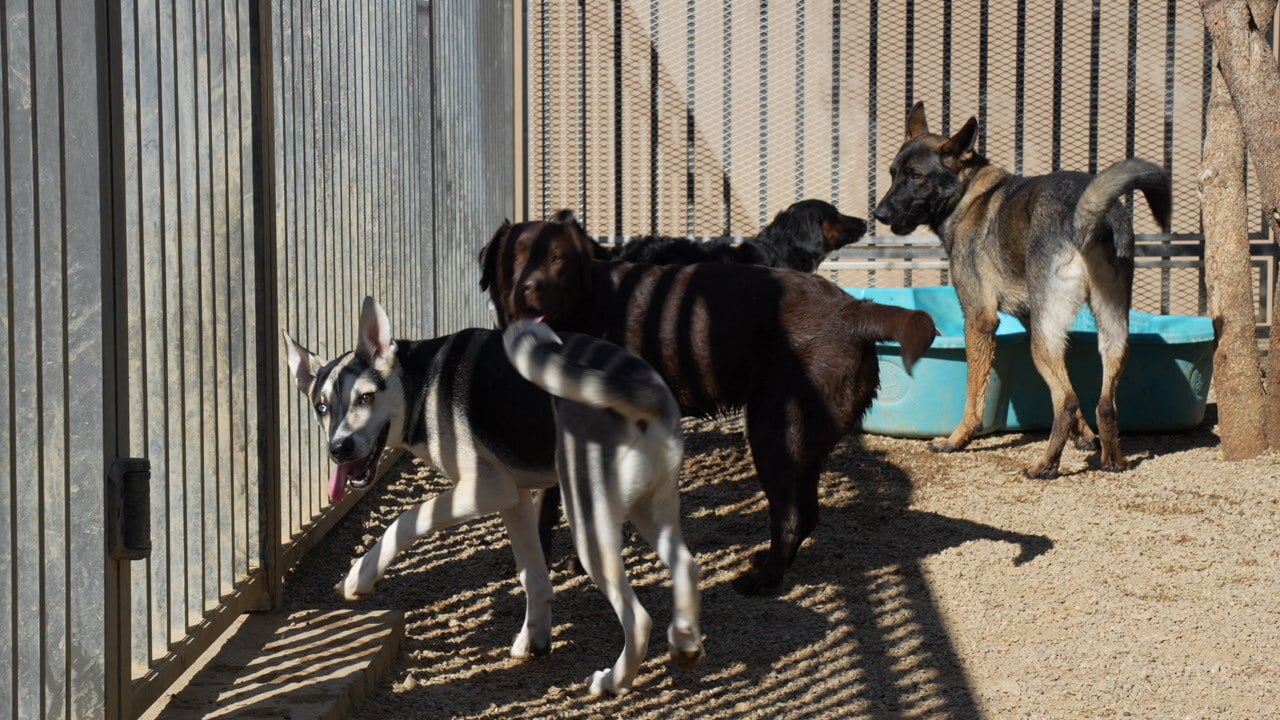
Not every dog plays the same way, and grouping dogs at random is a recipe for conflict. Effective daycares match dogs by size, energy level, and play style, not by breed alone.
Understanding Different Play Styles
- Body slammers and wrestlers want full-contact play. Boxers, Bulldogs, and many bully breeds tend to fall here.
- Chasers and runners prefer pursuit games. Herding breeds and sighthounds gravitate here, though herding breeds may nip mid-chase, which can upset other dogs.
- Gentle or parallel players like being near other dogs without intense contact. Many toy breeds, seniors, and less confident dogs do best in this group.
- Rough-and-tumble generalists are comfortable across styles. Many sporting breeds and well-socialized mixed breeds fit here.
Why Size Separation Matters
Most quality facilities separate dogs into at least two size categories, typically under and over roughly 30 to 35 pounds. This lowers the risk of accidental injury and reduces the chance of "predatory drift," where play can shift toward predatory motor patterns in a larger dog interacting with a much smaller one. The question worth asking any facility directly: "Do you ever mix size groups, and under what circumstances?"
Next step
Match Your Dog to the Right Program First
A short conversation goes a long way before you commit to a schedule. Our team can walk through your dog's energy level and social history and point you toward the daycare structure that actually fits.
What to Ask Before Enrolling Your High-Energy Dog
Walking into a tour with the right questions is what separates a good decision from a regrettable one.
Questions About Daily Operations
Ask about the daily schedule and look for real rest periods built into full-day care. Nonstop play for eight to ten hours risks chronic overstimulation, not relaxation. Ask how staff handle a dog who gets overstimulated, and what the plan is for separating dogs who need a break.
Questions About Communication
Ask how the facility keeps you in the loop through the day. A useful daily report includes specific behavioral observations, not just "they did great." Partners Dog Training, Daycare and Resort keeps pet parents connected through Personalized Pupdates, daily photos, videos, and adventure albums showing what your dog actually did. The PD360 Pet Progress Tracking System layers on weekly check-ins, goal re-evaluation, and grade level graduations, so you can see development over time, not just a single day.
Questions About Training Integration
For a high-energy or undersocialized dog, the best daycare weaves training into the day instead of treating it as a separate expense. Ask whether staff reinforce basic commands during play and whether training add-ons are available.
Programs like DaySchool follow a structured curriculum where dogs work through obedience, socialization, and enrichment inside a group setting through daily day training, turning what could be empty calories of running around into actual learning.
Signs Your Dog Is Thriving at Daycare
Once your dog is enrolled, pay attention to how they respond over the first few weeks.
- Comes home pleasantly tired, not wired or shut down
- Keeps a normal appetite and sleeps well that night
- Shows fewer boredom-driven behaviors at home over time
- Settles within an hour or two of getting home
When to Adjust Your Approach
Some dogs need a slower start. A facility that begins with two- to three-hour sessions and extends them gradually understands that adjustment takes time. Pairing a new dog with a calm companion instead of the most active group in the yard helps a nervous dog build confidence instead of getting overwhelmed on day one.
Watch for hypervigilance, more reactivity on walks, reluctance to eat, or trouble settling after a session. A dog who is simply tired from good play rests calmly and is back to normal within an hour or two. A dog who is stressed usually is not.
When Daycare Isn't the Right Fit
Not every dog belongs in group daycare, and that is fine. Dogs with real anxiety, dog-aggression, or extreme reactivity often do better starting somewhere smaller and more structured. Partners Dog Training offers private lessons for one-on-one work on specific goals, and DayCamp gives reactive, fearful, or undersocialized dogs a structured day program built for exactly this stage before, or instead of, full group play. For more serious behavior concerns, Behavior Camp and Transform Camp pair a boarded stay with weeks of follow-up coaching.
How Arizona's Climate Shapes Daycare Selection
Living in Arizona means heat management is not optional for a dog care facility. Summer temperatures regularly clear 100 degrees, which makes outdoor play dangerous during peak hours.
What Climate-Conscious Facilities Offer
Look for climate-controlled indoor play space, shaded outdoor areas, and outdoor time scheduled for cooler morning and evening hours. Fresh water needs to be available throughout the facility, not just in one corner, and staff should be trained to recognize the early signs of heat stress. Both the Scottsdale and Cave Creek campuses build their daily schedules around Arizona heat rather than around it.
Hydration and Rest Protocols
Ask how the facility manages hydration and whether staff actively encourage dogs to drink rather than just leaving a bowl out. Watch for signs of overheating: heavy panting, excess drooling, or lethargy. Rest periods in air-conditioned space let dogs cool down completely before returning to active play. A daycare that pushes nonstop activity through an Arizona summer is putting dogs at real risk.
Building a Complete Care Plan for Your Active Dog
Daycare works best as part of a bigger plan that includes enrichment at home on non-daycare days. Keep puzzle feeders and snuffle mats in rotation, let your dog lead a sniff walk at their own pace, and practice the obedience skills learned at daycare so they carry over.
Balancing Daycare Frequency
Many active breeds do well attending daycare two to three times a week, enough for consistent exercise and socialization without tipping into overstimulation. Some dogs thrive with daily attendance, others do better with more rest days between sessions, and the right answer depends on your dog's age, stamina, and behavior at home.
Partners Dog Training, Daycare and Resort has trained more than 70,000 dogs since 1997, with a 4.8-star average across 2,000-plus reviews. Choosing daycare for a high-energy or undersocialized dog means looking past basic amenities to staff ratios, screening, enrichment, and communication. Ask direct questions on your tour, and trust what you see. Your couch cushions will thank you.
Frequently asked questions
How often should high-energy dogs go to dog daycare?
Most active breeds do well with dog daycare two to three times a week. That gives them consistent exercise and socialization without overstimulation, though the right schedule still depends on your dog's age, stamina, and behavior at home between visits.
What staff-to-dog ratio should I look for at a daycare?
Ask directly. Partners Dog Training, Daycare and Resort keeps one trainer for every 10 dogs, far tighter than the 20 to 50 dogs per handler some warehouse-style daycares run. A facility that cannot answer the ratio question clearly is telling you something.
Why does enrichment matter more than exercise for active dogs?
Mental work tires a dog out in a way that lasts. A short puzzle-feeder or scent session can leave a high-energy dog calmer at home than a long walk alone, because it works problem-solving instead of just burning off physical energy.
What should a behavioral screening before daycare include?
A real screening covers an owner questionnaire about history and triggers, individual observation of your dog in the space, and a slow introduction to a calm dog before group placement. Partners' PD360 Assessment evaluates your dog across a full day, with a training plan discussed at pickup.
How can I tell if daycare is helping my dog instead of stressing them out?
A dog who is genuinely tired from good play comes home relaxed, eats normally, sleeps well, and settles within an hour or two. Watch for the opposite pattern, hypervigilance, reluctance to eat, or trouble settling, and treat it as a sign to slow down or change the environment.
Is group daycare right for every dog?
No. Dogs with real anxiety, dog-aggression, or extreme reactivity often do better in a smaller, more structured setting first. Partners' DayCamp and private lessons are both built for dogs who need that step before, or instead of, full group play.
Ready when you are
Give Your Dog a Plan, Not Just a Play Yard
Whether your dog is ready for full group play or needs a smaller, more structured start, we can help you figure out which one fits. Start with an assessment, or take a closer look at the structured option built for dogs who need more support.
Keep reading