In short
Stop leash pulling with three moves in order: a clear correction the instant your dog leans into the leash, redirection back to you before the pull happens, and a reward the second the leash goes slack. It is one of the faster problems to turn around because a walk hands you dozens of repetitions a day, and Partners Dogs trainers use this same pattern with families across the Desert Ridge area.
You did not buy a sled dog. A walk should be the easiest part of your day, not forty minutes of bracing against sixty pounds of shoulder. The good news: loose leash walking is one of the faster problems to turn around, because you get dozens of repetitions every single time you go out.
One thing this guide does not cover: leash reactivity, meaning a dog who is actively lunging at people, dogs, or bikes while you walk. That is a different and more serious problem with its own plan. Here we are talking about the dog who simply drags you down the street toward the next smell.
Start With the Right Equipment
Bring your dog's favorite reward, whether that is treats, a ball, or a tug, and a sturdy six-foot leash you can actually hold onto. The right collar or harness depends on the individual dog: his size, his drive, how sensitive he is, and how much strength you have to work with. A light puller and a dog who has been dragging his owner down the street for three years are not the same problem, and they should not get the same tool.
We would rather fit that in person during Private Lessons than have you guess from a blog post. Getting the equipment wrong in either direction, too little communication or too much, is the most common reason a home program stalls out.
One clear recommendation we will make without meeting your dog first: if you are walking on a harness and he pulls, stop using the harness. Harnesses are built for pulling. That is their entire purpose in sledding and weight work, and they do that job just as well when you did not want them to.
Step One: Correction
To stop an unwanted behavior, your dog has to understand that it does not work. That means a clear "no" and, depending on the dog, a quick leash correction the moment he commits to pulling.
Timing is where most owners lose this. The right moment is as your dog thinks about surging forward, not thirty feet later when he is already at the end of the leash and fully aroused. Watch his head and shoulders. The decision happens before the pull does, and correcting after the fact still communicates something, it is just far less effective.
If you say "no, heel," give a correction, and your dog genuinely does not respond, there are two likely reasons. Either your timing is late and you are waiting until he is too worked up to hear you, or the communication is not meaningful enough for this particular dog. That second reason is exactly where owners start escalating equipment on their own, and it is exactly where we would rather you called a trainer first. Escalating without guidance is how dogs get sore necks and owners get worse results.
Step Two: Redirection
Correction alone leaves you fighting your dog for the length of every walk. Nobody enjoys that, including the dog. The proactive half of the job is redirection.
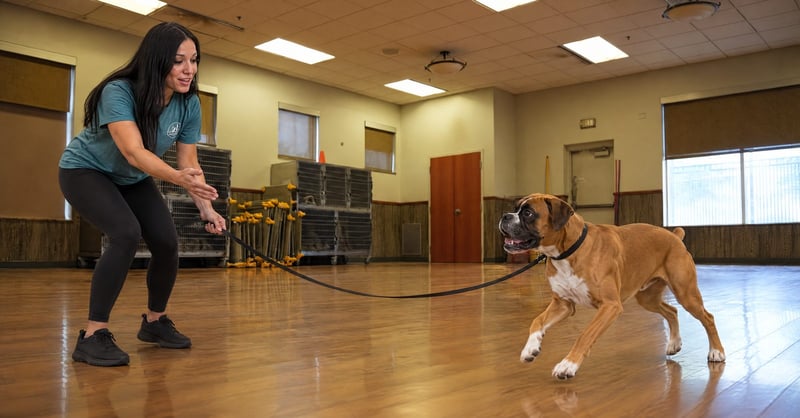
You already know what sets your dog off, whether that is a person, another dog, a squirrel, or a passing car. Because you know, you can get ahead of it. As the trigger comes into view, use the reward to pull your dog's attention onto you instead. This works especially well for dogs who are strongly motivated by food or toys, and it works even better if your dog has real obedience to fall back on, because then you have something specific to redirect him into rather than just waving a treat.
Yes, at the start this is close to a bribe. That is fine. Over enough repetitions you are patterning a new default: when arousal starts to climb, your dog checks in with you. That check-in is the whole game.
Step Three: Rewarding
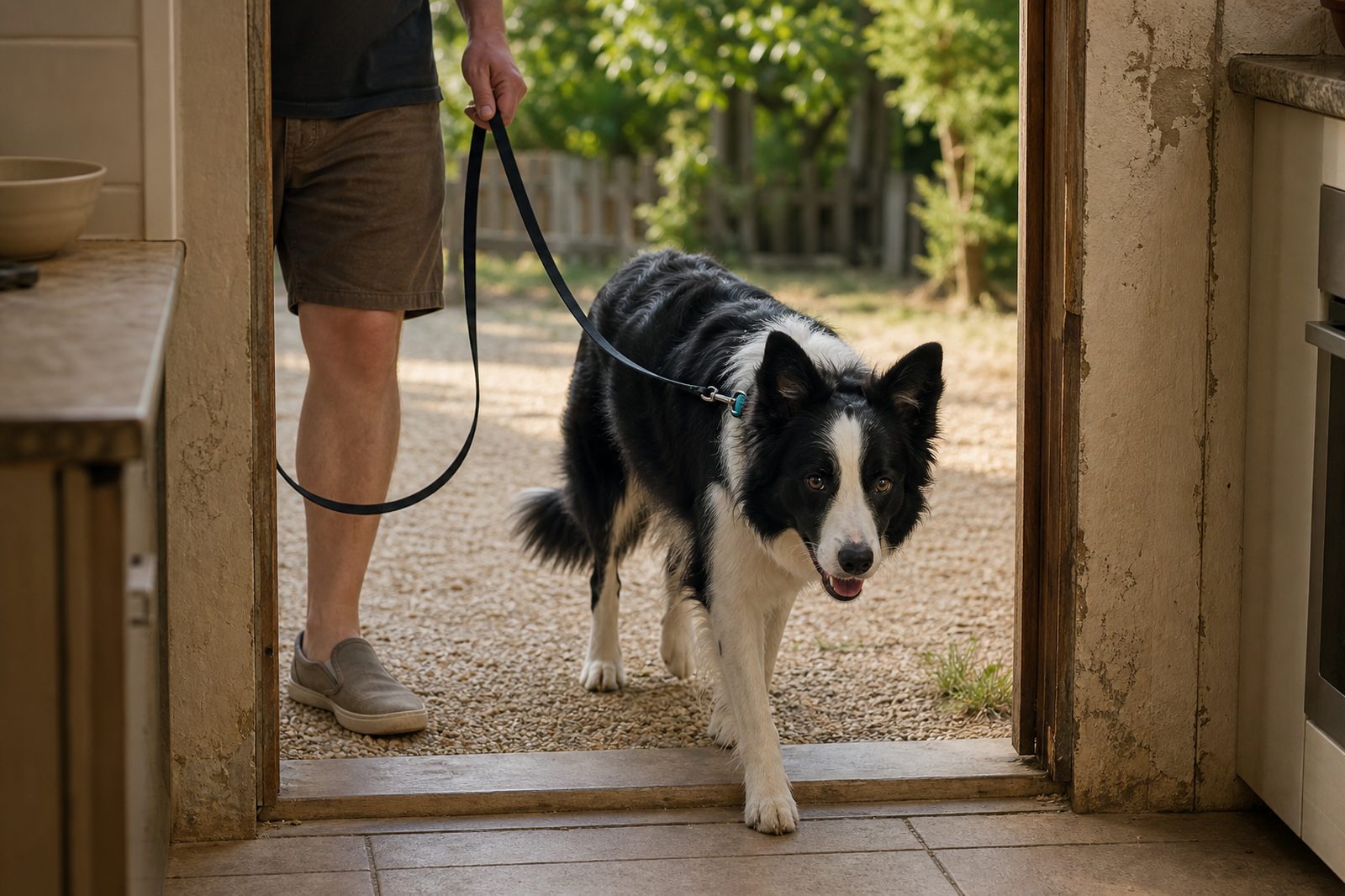
When your dog stops pulling, even for two seconds, pay him.
Timing matters as much here as it does in correction. The instant the leash goes slack, mark it with a bright word and deliver the reward. You are building a pattern where coming back to your side is the thing that pays, so your dog starts choosing it on his own instead of waiting to be told.
Give it time and the physical reward matters less and less. Your dog learns that working with you is more interesting than whatever he was towing you toward, and praise starts carrying the behavior on its own.
Next step
Get a Trainer's Eyes on the Problem
A PD360 assessment shows exactly where leash pulling fits into your dog's bigger behavior picture, and which equipment and plan actually match him.
Training Through the Arizona Heat
Scottsdale and Cave Creek summers change the calculus a little. A hot walk is a rushed walk, and a rushed walk is exactly when a dog blows through his training and drags you toward the nearest shade. Move sessions to early morning or evening when the pavement and your dog are both cooler, and keep early reps short enough that he is thinking clearly instead of just trying to get the walk over with.
The method does not change with the season. Correction, redirection, and reward all still apply, you are just choosing a smarter window to practice them in.
How Long Does Leash Pulling Take to Fix?
There is no single number that fits every dog, but the process follows the same four stages as any other behavior: Teaching it in a low-distraction setting like your driveway or backyard, Reinforcing it on a normal block walk once your dog understands the pattern, Proofing it against real triggers like a jogger, a bike, or another dog, and Maintenance, the tune-ups that keep it solid for life.
Because a single walk hands you dozens of repetitions, families who stay consistent with correction, redirection, and reward tend to see real change before they see a fully bomb-proof dog. Proofing against the hardest triggers, a squirrel at close range, another dog off leash, is usually the part that takes the longest and benefits the most from a trainer's help.
When to Bring In a Trainer
If you have been consistent with correction, redirection, and reward across several walks and nothing is changing, that is not a sign to push harder on your own. It usually means the communication is not landing for this specific dog, or leash pulling is one piece of a bigger picture your dog is showing you.
A PD360 assessment is where that gets sorted out. A trainer watches your dog on leash, matches equipment and method to him specifically, and tells you honestly whether this is a quick fix or whether it connects to something bigger that belongs in Foundation Camp. Either way, you leave with a real plan instead of another blog post to guess from.
Quick Recap: What to Hold Onto
Five things to remember once you are out the door.
- Match the equipment to the dog in front of you, ideally with a trainer's eyes on it.
- Correction alone is not enough. Redirection and reward are what make the change stick.
- Your timing is the single biggest variable. Correct and reward at the decision, not at the outcome.
- Be patient. You are replacing a habit, and habits take real repetition to move through Teaching, Reinforcing, and Proofing.
- If your dog pulls in a harness, the harness is part of the problem.
Our behavior library goes deeper on getting a calm, loose leash walk back, including what to do when the basics above are not enough.
Frequently asked questions
How do I stop my dog from pulling on the leash?
Combine three things in order: a clear correction the instant your dog leans into the leash, redirection of his attention back to you before he pulls, and a reward the moment the leash goes slack. Consistency across every walk is what makes the pattern stick.
Should I switch from a harness to a collar if my dog pulls?
If your dog pulls hard in a harness, the harness is working against you, since harnesses are built to help a dog pull. The right collar depends on his size, drive, and sensitivity, which is exactly why we would rather match equipment to your dog in person during a private lesson than guess from a blog post.
Is leash pulling the same as leash reactivity?
No. Leash pulling is a dog who simply drags you toward the next interesting thing. Leash reactivity is a dog who lunges, barks, or escalates at people, dogs, or bikes while on leash, and it needs its own plan. If your dog does both, start with the reactivity piece first.
How long does it take to fix a dog that pulls on the leash?
There is no single timeline, but the process follows the same four stages as any other behavior: Teaching it somewhere quiet, Reinforcing it on a normal walk, Proofing it against real triggers like another dog or a jogger, and Maintenance tune-ups after that. A walk gives you dozens of repetitions a day, which is why leash pulling tends to move faster than most training goals.
When should I get a trainer involved for leash pulling?
If you have been consistent with correction, redirection, and reward and nothing is changing, that is a sign to bring in a trainer rather than escalate equipment on your own. A PD360 assessment matches the right plan and equipment to your specific dog and tells you honestly whether leash pulling is the whole issue or connects to something bigger.
Ready when you are
Get Your Walks Back
If leash pulling is the tip of a bigger behavior problem, Foundation Camp gives your dog fourteen nights to build real obedience with a trainer, not another round of guessing on your own.
Keep reading