
In short
On days when Arizona heat or a packed schedule rules out a real walk, indoor enrichment, puzzle feeders, sniffing games, and short training reps, gives your dog's brain the workout their body isn't getting. A short session of the right activity can leave a dog in the Desert Ridge area just as settled as a lap around the block, without a single paw touching hot pavement.
Why Arizona Dogs Need Indoor Enrichment on Hot Days
When the thermometer climbs into triple digits, or your calendar simply explodes, it is easy to feel guilty about cutting a walk short. Many Scottsdale and Cave Creek families assume that if they cannot get in a long outing, their dog is doomed to bounce off the walls by dinner. The truth is more hopeful: on the hottest or busiest days, what your dog needs most is not more miles, it is more mental work. With the right indoor enrichment, you can leave the leash hanging by the door and still send your dog to bed pleasantly tired.
Enrichment simply means giving your dog's day activities that use their brain and natural instincts in healthy ways. That might be sniffing and hunting for food, solving a puzzle toy, working through a safe chew project, learning a new trick, or practicing a calm settle on a bed. Done well, these activities tap into what dogs are wired to do, without risking burned paws on midday asphalt or heat exhaustion during summer pavement heat. Those same skills, focus, impulse control, and the ability to settle, are exactly what your dog practices in Foundation Camp, so the work carries over into your living room even when the sidewalk is off limits for the afternoon.
What Counts as Real Indoor Enrichment
Mental enrichment is not a bonus activity for days when you feel like doing extras. For many Arizona dogs, it is the main way they burn energy safely when it is too hot, too bright, or too late for a long outdoor route. Good enrichment gives your dog a job to do, not just something to look at. A few reliable options that work in almost any home:
- A puzzle feeder or snuffle mat for part or all of a meal, so eating becomes a search instead of a thirty-second gulp.
- A short, closed-room sniffing game: scatter a handful of kibble in a hallway or spare room and let your dog hunt it down.
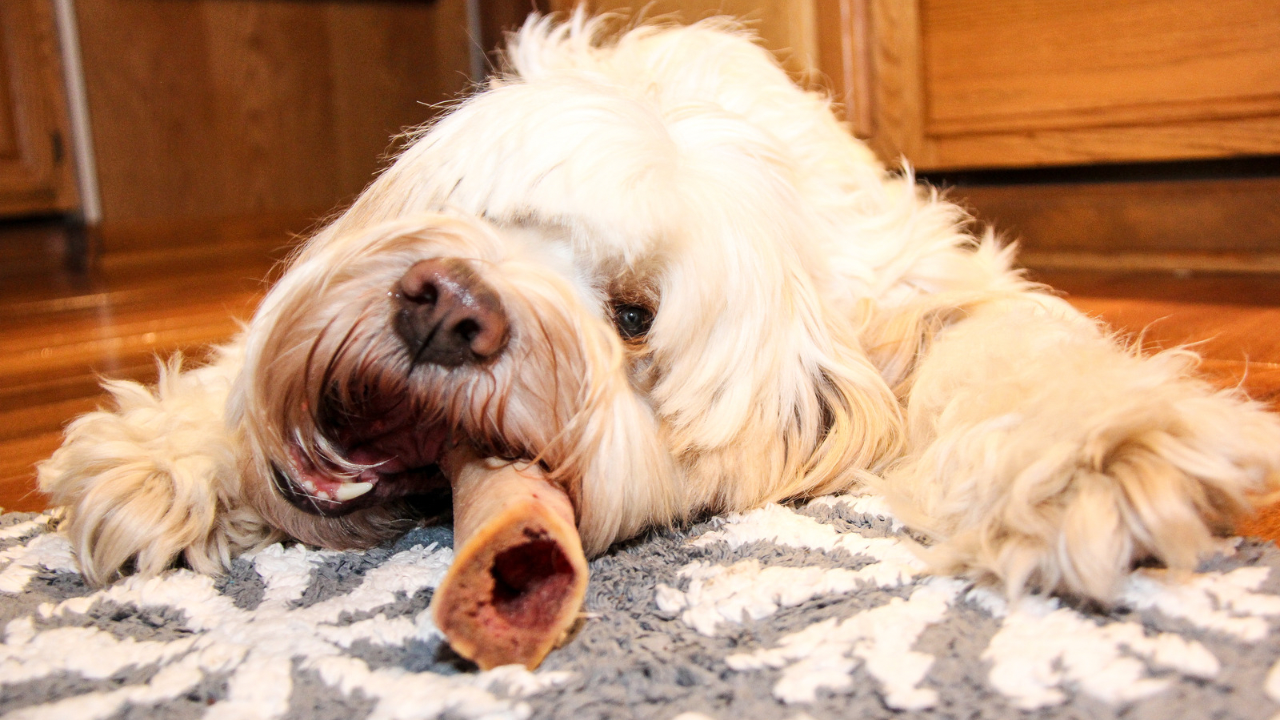
- A safe chew project, like a stuffed chew toy, that gives your dog something appropriate to work on with their mouth.
- Five minutes of trick or obedience practice, the same short reps used in Group Classes, turned into a quick mental workout.
- A deliberate calm settle on a mat or bed, rewarding your dog simply for lying still near you.
None of these require special equipment or a lot of space. What they require is a little structure, because a bored dog left to "self-entertain" on open tile floors usually invents their own project, and it is rarely one you would have picked.
How Enrichment Prevents Boredom Behavior
Boredom is a major driver of nuisance behavior in dogs who are not getting enough to do. A dog with nowhere to put their energy will find somewhere, and it is usually the couch cushion, the trash can, or the back window. Structured enrichment gives that energy a legal place to go instead.
In Arizona homes, this matters even more because tile floors and open layouts, while great for staying cool, offer no natural boundaries. Without a plan, a dog who cannot walk off steam can turn restless energy into digging at the carpet, shredding whatever is within reach, or barking at every sound outside. If chewing on the wrong things has already become a pattern in your house, a stuffed chew toy or bully stick on a mat gives your dog a legal outlet instead, and it is worth reading our guidance on stopping destructive chewing if the habit is further along than an occasional shoe.
Over time, a dog who previously paced between windows in the afternoon starts checking their puzzle spot or training corner instead, because that is where the good things happen now.
Build a Weekly Indoor Enrichment Routine
Once you have a handful of enrichment options, the real payoff comes from turning them into a rhythm you can actually keep up. Think in anchors, not perfection: one or two short activities at roughly the same times each day beats an ambitious plan you abandon by Wednesday. For a lot of Scottsdale and Cave Creek families, that rhythm looks something like this:
- Morning: part of breakfast served in a puzzle feeder or snuffle mat after a quick, cool-hours potty break.
- Midday: a five-minute sniff-and-search game in a hallway or closed room while you grab lunch or a coffee.
- Evening: a calmer activity, a stuffed chew toy, a lick mat, or an easy training-and-settle session, while you cook or wind down.
Reset the routine in seconds by keeping supplies where you already spend time: a puzzle feeder near the coffee maker, a chew mat by the couch. The goal is not more work for you, it is fewer decisions in a schedule that is already full.
Adjust Enrichment for Your Dog's Age and Energy
From there, you will tweak the mix based on your own dog. Puppies and adolescents usually do best with more frequent, shorter sessions and very simple puzzles, since they are still learning how to focus without getting frustrated. Seniors often prefer low-impact sniffing, gentle food puzzles, and easy training games that skip the jumping or paw work.
Dogs who run hot, the ones who get more wound up as an activity goes on, usually need enrichment that encourages calm rather than more arousal: longer licking on a mat, slow scent work, and training that rewards lying quietly between reps instead of high-energy fetch. If your dog tends to spin up rather than settle down no matter what you try, our help for overexcited dogs covers what a calmer baseline actually looks like. Watch your dog's body language and adjust: if an activity leaves them more wound up than before, save it for earlier in the day and lean on slower options closer to bedtime.
Enrichment is not only for dogs with a problem to solve. Even easygoing, well-behaved dogs do better with richer indoor lives, especially during Arizona's hottest stretch of the year. Fill the week with a few thoughtful puzzles, some sniffing, and brief training, and you are not just passing time, you are building a calmer, more satisfied dog who can handle triple-digit summers and a full human schedule with a lot less frustration on both ends of the leash.
Not sure where to start
Find the Right Fit for Your Dog's Energy
Every dog needs a different mix of structure and mental work. Take a few minutes to see which Partners program matches your dog's energy level and your family's schedule, or talk it through with a real person on our team.
Frequently asked questions
What is indoor enrichment for dogs?
Indoor enrichment is any activity that gives your dog's brain a job to do at home, using their natural instincts to sniff, forage, chew, or problem-solve. Puzzle feeders, snuffle mats, scatter-feeding games, short training reps, and calm settle work all count. The goal is mental effort your dog can get without leaving the house.
Can indoor games replace a dog's walk on hot Arizona days?
For an occasional day when heat or a busy schedule rules out a real walk, yes, a focused indoor enrichment session can leave a dog about as settled as a shorter outdoor outing. It is not meant to replace regular exercise long term, but it is a real, safe substitute on the days outdoor time genuinely is not an option.
How often should I do enrichment activities with my dog?
Most dogs do well with two to three short sessions a day rather than one long one. A puzzle feeder at breakfast, a quick sniffing game midday, and a calmer chew or settle activity in the evening spread mental work through the day instead of asking your dog to burn it all off at once.
What indoor enrichment works best for a high-energy or easily overexcited dog?
Dogs who get more wound up as an activity goes on generally do better with calming enrichment rather than anything high-arousal. Longer licking on a lick mat, slow scent work with low-value treats, and training that rewards lying quietly between reps all build calm instead of adding to the wind-up.
How do I know it is too hot to walk my dog outside in Arizona?
During Arizona's peak summer months, pavement can get hot enough to burn paws, and outdoor exertion can bring on heat exhaustion, for most of the daytime. That risk window is exactly when a solid indoor enrichment routine earns its keep.
Next step
Give Your Dog More Structure Than a Walk Alone Can
Enrichment at home works even better paired with real training foundations. Build focus, impulse control, and a reliable settle with Foundation Camp, or keep skills sharp week to week in Group Classes.
Keep reading
/Programs/Transform%20Camp/Safer%20home%20(1).jpeg?width=800&height=450&name=Safer%20home%20(1).jpeg)