Start here
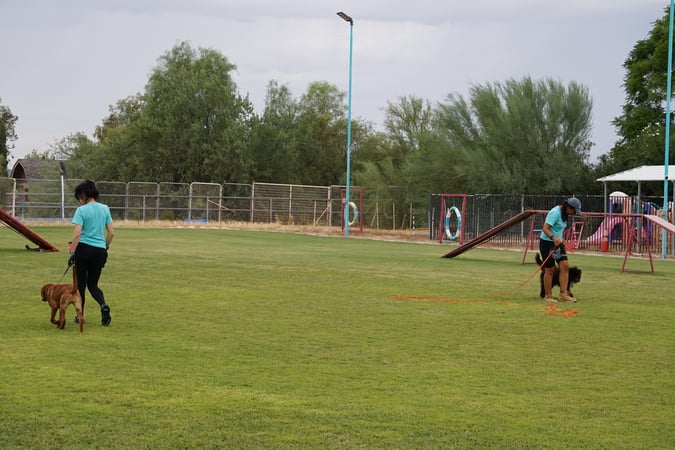
Dog training classes for adult dogs place every dog by grade level and current skill, not by age, so a four-year-old who has never taken a class starts exactly where he is and is never dropped into a room full of puppies.
If your dog is past puppyhood, it is easy to assume the class window already closed, especially when the dog in question is fully grown or a little gray around the muzzle. Some dogs have spent years learning nothing more formal than staying off the counter, and that does not change the answer either. A room full of tiny puppies is also not what waits on the other side of the door for a grown dog, since dogs are grouped by what they know, not by how many birthdays they have had. This guide walks through what each stage needs from a group setting:
- Puppy into adolescence, the first year of classes
- One to three years, the stage most owners think they missed
- Adult and senior dogs, what changes and what does not
- The one situation where a class is not the right first step at all
The Age Question: Dog Training Classes for Adult Dogs, by Stage
The honest answer is that no dog ages out of Group Classes at Partners Dogs in Scottsdale or Cave Creek. What changes at each stage is not whether a dog belongs in a room, it is which grade he starts in and what that grade is built to teach. A dog's calendar age tells you far less about placement than his current skills do. A four-year-old who has never taken a class and a four-year-old who graduated the early grades years ago are not placed in the same session, and neither one trains alongside brand-new puppies just because a birthday happens to line up.
If you are not sure which stage your own dog falls into, the short program quiz takes a few minutes and points you toward a starting grade before you ever set foot on campus.
Puppy Into Adolescence: What the First Year of Classes Covers
The earliest grade, Pre-School Puppy, is built for the youngest dogs joining Group Classes: name recognition, gentle handling, a first sit, and enough structured exposure to other dogs and people that the world stops feeling like a surprise. As a dog moves into adolescence, roughly six to eighteen months, the material shifts toward holding a skill under distraction instead of just learning it in a quiet room.
This is also the age where impulse control tends to fall apart the fastest. Jumping, mouthing, and a dog who cannot settle around another dog or a dropped leash are ordinary at this stage, not a sign anything is wrong; the behavior spoke on overexcitement goes deeper if that is the main thing you are managing at home. Classes at this stage stay in the Teaching phase of training, building a skill fresh before ever asking for it under pressure.
"Started bringing our 5 month old Pomeranian to puppy to classes. All of the trainers we have participated with have been awesome and the staff is so helpful."
One to Three Years: The Stage Most Owners Think They Missed
This is the stage that generates the most questions along the lines of "is it too late." It is not. A one to three year old dog usually has a longer attention span than a puppy and some real physical maturity going for him. What he also usually has is a full set of habits nobody planned for: pulling toward every dog on the sidewalk, ignoring his name the moment something interesting happens, and guarding a spot on the couch. None of that means the window closed; it means the dog has more practice at the wrong behavior than a puppy does.
If your dog tunes you out the moment there is competition for his attention, the not listening spoke covers that exact pattern in more depth. Group Classes at this stage move faster than Pre-School Puppy work, because the dog already has the coordination and the attention span, he just needs the right habits laid on top of the wrong ones.
"We got Kash (3 year old Boxer) a little over a month ago, and every day seemed to be worst than the last. From leash pulling to barking, and even separation anxiety, Kash was testing my every nerve. ... He is an absolute gem on walks now."
Adult and Senior Dogs: What Changes and What Does Not
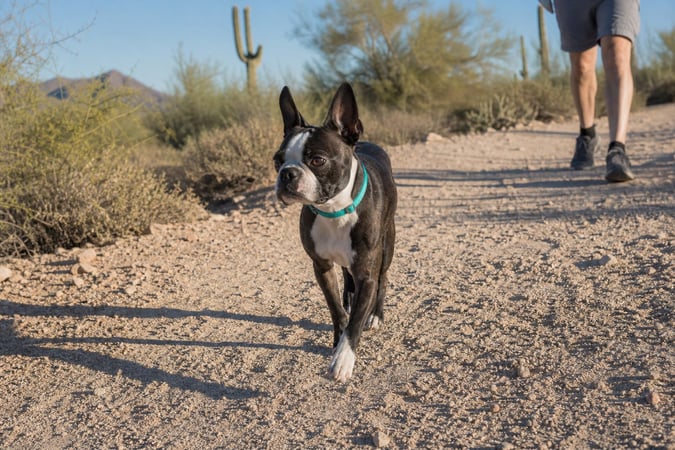
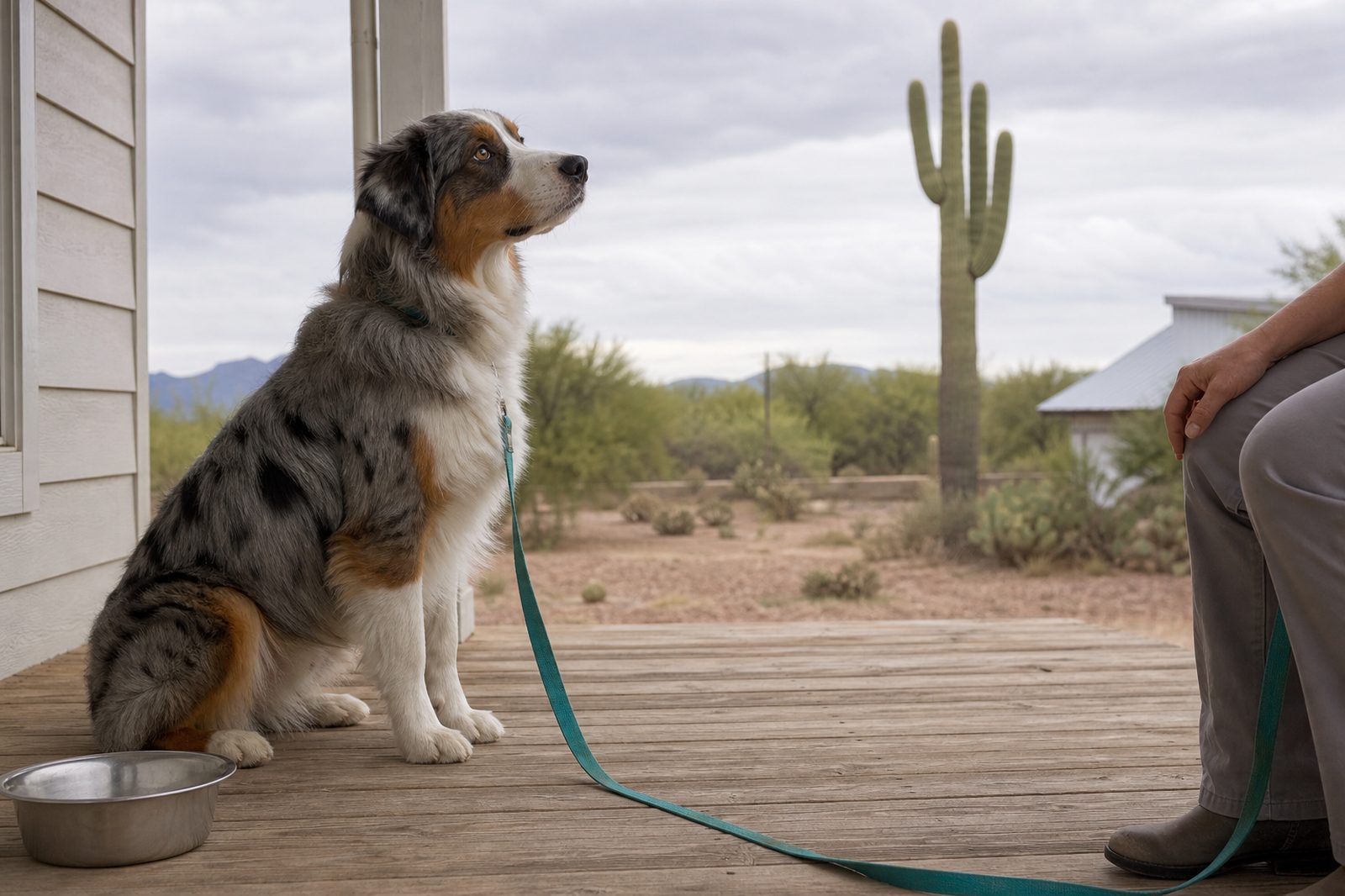
A fully adult dog, roughly three to seven years old, and a senior dog past that age both learn the same way in Group Classes as any younger student does. What changes is pacing and physical comfort, not the material; the goal, a dog that listens the first time and settles on cue, does not move. A ten-year-old working through the early grades moves at a walk instead of a jog, gets more rest between repetitions, and is never asked for a flying recall his joints are not built for anymore, but he still learns the same skill in the same room.
Enrollment does not cost more or work differently because a dog is grown instead of green. A ten-year-old and a ten-month-old enroll in Group Classes at the same rates, listed in full on the current pricing page.
"I was really impressed with how well our 7 year old dog responded to the training Partners implemented. We've allowed Gibbs many years of complete freedom with very little discipline and I wholeheartedly expected Gibbs to be untrainable. That was not the case."
What a Group Class Cannot Do for a Dog With a Bite History
None of this applies if your dog has bitten a person or another dog, or shows aggression rather than ordinary adolescent rudeness on leash. A Group Class was built for manners and impulse control, not for managing a bite risk around six or eight other dogs and their people. Barking at the fence, pulling toward a squirrel, or ignoring a recall are grade-level problems.
A dog that has broken skin, or that stiffens and stares before lunging, is a different conversation, and a room full of strangers and their dogs is not the place to find out. If that describes your dog, start with a PD360 Assessment instead of a class booking, since that is where severity gets scoped before anyone recommends a next step.
How Grade Levels Let an Adult Dog Start Where He Already Is
Group Classes at Partners are organized into named grades, never numbered levels, and placement runs on what a dog already knows, not on the day he was born. The ladder runs:
- Pre-School Puppy
- Kindergarten
- Elementary
- Middle-School
- High-School
- College
- Masters
- Dogtorate
A four-year-old who has never taken a class starts at the grade that matches his manners today, the same starting point a trainer would assign any brand-new student, and he trains with dogs working at that same point, not with the youngest puppies in the building. After 28 years of running classes in Scottsdale and Cave Creek, that is still the only placement question that matters: what does this particular dog already know.
Frequently Asked Questions
Is there an age limit for joining Group Classes?
No. Group Classes accepts dogs across every life stage, from young puppies in Pre-School Puppy through senior dogs well past their first year of adulthood. Placement is based on what a dog already knows, not on how old he is.
Will my four-year-old dog train next to a room full of puppies?
No. Dogs are grouped by grade level, not simply by age. An adult dog who is new to classes starts at the entry grade alongside other dogs working at that same point, not alongside very young puppies.
My dog already knows sit, down, and stay. Does he still start at the beginning?
Not necessarily. A trainer evaluates what your dog reliably does before he is placed, so an adult dog with background skills already in place can start at a later grade instead of repeating material he has already mastered.
Is training different for a senior dog?
The pace adjusts to the dog in front of the trainer, but the goal does not change. A senior dog still works on the same core manners as any other grade, with movement and repetitions suited to what that dog can comfortably do that day.
What if my dog has a bite history or shows aggression toward people or other dogs?
A general Group Class is not the right starting point for a dog with a bite history or aggression like that. That situation calls for a PD360 Assessment first, so severity gets scoped before any program gets recommended.
See it before you decide
Find Out Which Grade Fits Your Dog Right Now
Current Group Classes schedules and grade placements run at both the Scottsdale and Cave Creek campuses, no matter how old your dog is on day one.
Keep reading
/Resources/Review%20and%20Testimonials/Top%20of%20Page%20(1).jpeg?width=800&height=450&name=Top%20of%20Page%20(1).jpeg)