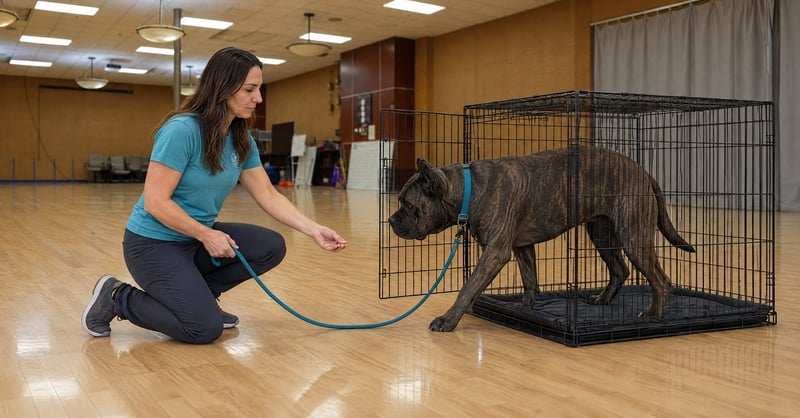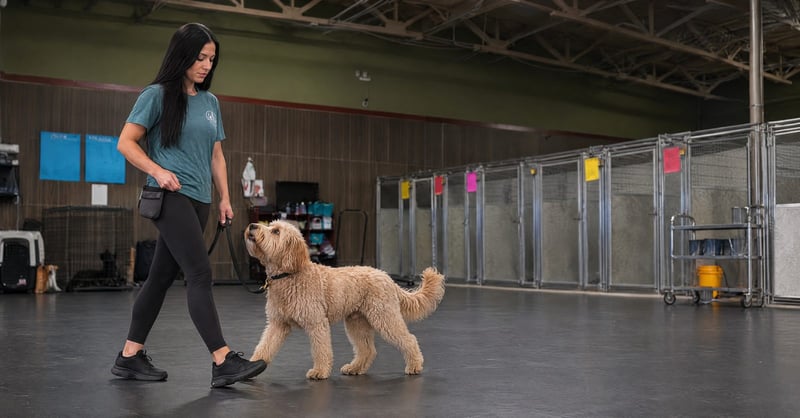
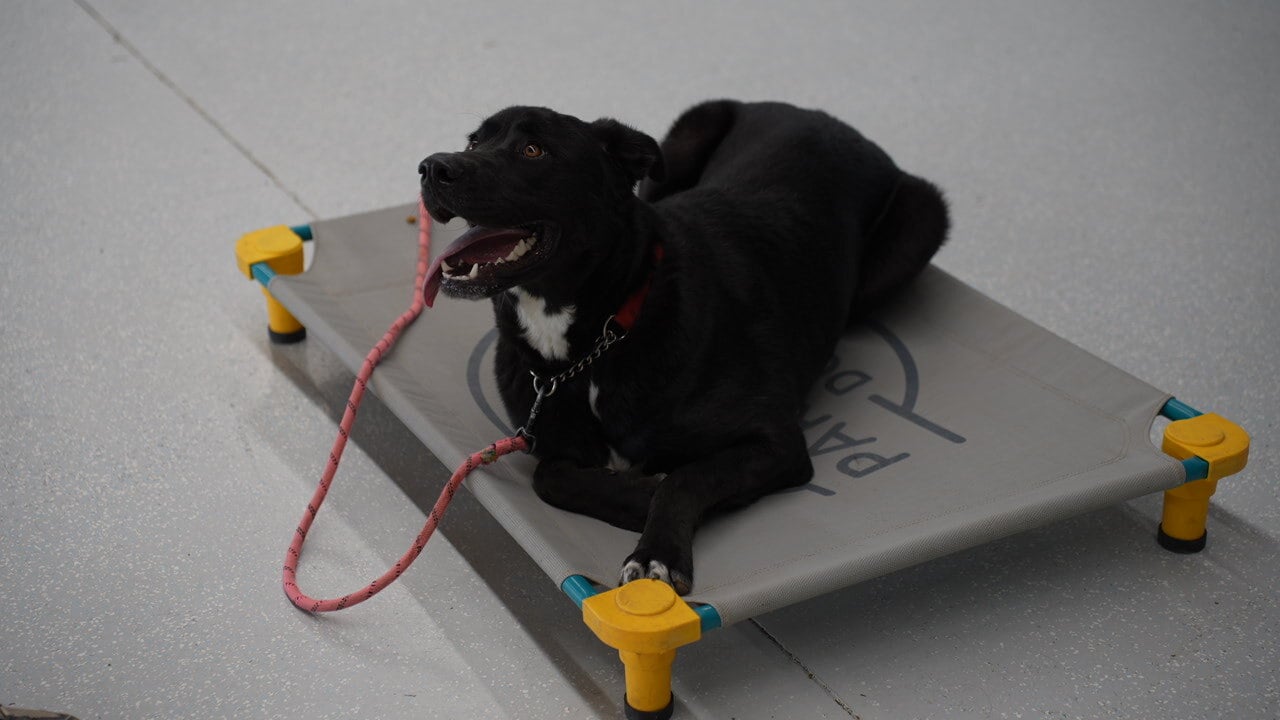
Your dog has not forgotten the commands: sit, down, place, come, or wait. What faded is the reinforcement and the consistency behind them. Scottsdale and Cave Creek families see the same drift within weeks of finishing class or camp, and the fix is rebuilding each command through the same stages that built it: Teaching, Reinforcing, Proofing, and Maintenance.
Picture the same dog in two rooms: at our Cave Creek or Scottsdale campus, a "sit" lands the instant you ask, tail wagging, eyes locked on you. Ask for the identical "sit" in your own kitchen a month later, stove running and dinner underway, and the same dog stares back like the word never existed. Nothing about the dog changed between those two rooms; what changed is the reinforcement and consistency this guide walks through, stage by stage.
Is Your Dog Forgetting Commands, or Testing the Rules?
Talk to enough Arizona families a few weeks after class or camp and the same pattern shows up. Come and wait are usually the first commands to slip. Both ask a dog to give up something real for something abstract: a squirrel, an open gate, or a guest at the door. Sit and down near the handler tend to hold longer, because the payoff stays close by. Place often holds longest, because the mat gives the dog one clear physical target no matter how the rest of the house feels that day.
A command rarely fails all at once. It fades in a predictable order, and the order tells you exactly where reinforcement stopped first. That order is diagnostic: it maps directly to which piece of the routine went quiet first. Dogs run a value test on what has recently paid off, and once a command stops earning anything, following it stops feeling worth the effort.
Why the Payoff Disappeared Before the Command Did
During Foundation Camp or Group Classes, almost every correct rep gets an acknowledgment: a marker word, a release, a treat, a moment of praise. At home, that feedback thins out fast. Your dog sits at the door and nobody says anything because you are juggling keys and a coffee mug. They hold a down through dinner and nobody notices, because everyone's attention is on the meal in front of them.
A behavior that goes unacknowledged for long enough eventually goes untried. A consistent signal delivered often enough keeps your dog betting that the command still pays: a word, a release, a quick touch of the collar. None of this requires a treat pouch worn at every hour of the day. Reinforcement just needs to show up regularly enough that following the cue still feels worth it.
Context-Only Learning: Sit at Camp Is Not Sit in the Kitchen
Dogs do not automatically transfer a skill from one room, or one campus, to another. A sit taught on the training floor at our Cave Creek campus and a sit asked for in your kitchen at six in the evening, with the stove running and a toddler underfoot, are two different requests to your dog until you build the bridge between them.
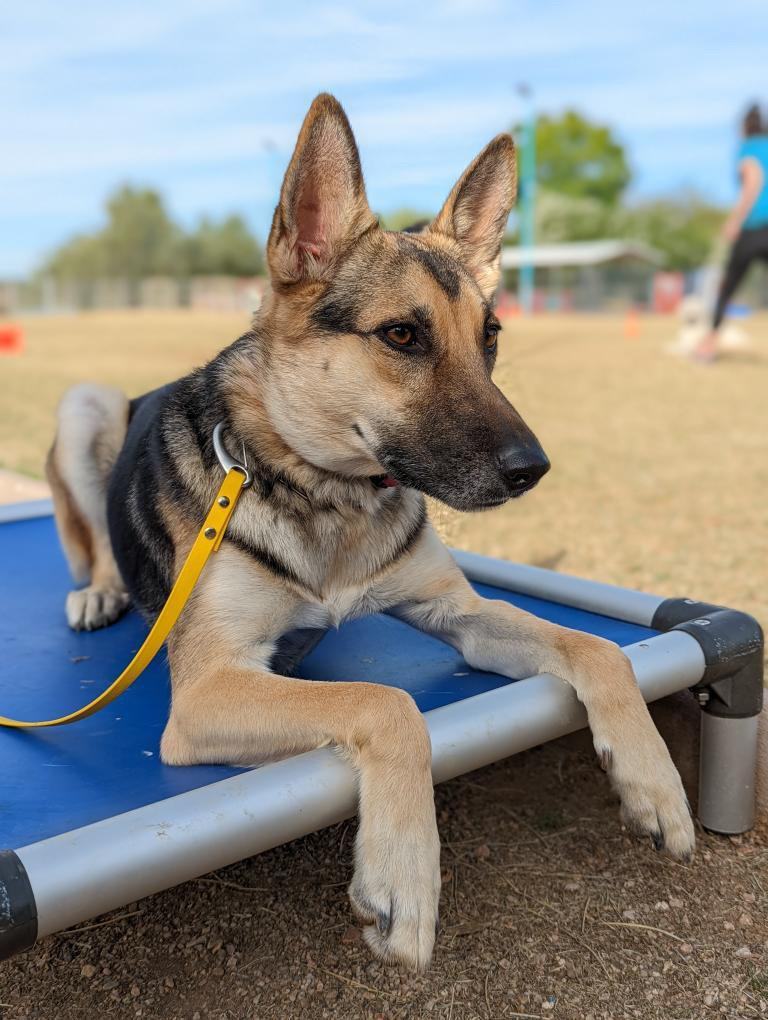
Generalization is a skill of its own, separate from knowing the command in the first place. Part of why Partners Dogs works with more than one trainer across two campuses is that a dog who has only ever heard "down" from one person in one room has not actually generalized the behavior yet. The same command asked by a different voice, in a different room, with different distractions running, is the true test of whether the dog learned the word or just learned the room.
When the Household Runs on Different Rules
If one adult asks for a sit before the leash goes on and another just clips it on the moment the dog gets close, your dog is not confused. Dogs are accurate. They have correctly identified that the rule only applies sometimes, and they default to whichever version of a rule costs them the least effort.
A command only holds as well as the least consistent person enforcing it. Every adult and older kid in the house needs to use the same word and hold the same standard for what counts as a completed sit, every time the moment comes up. Which household style is stricter matters far less than everyone holding that one standard together.
Criteria Creep: When Close Enough Becomes the New Sit
Criteria creep is the quiet one. Nobody decides to lower the bar. It happens one rep at a time: a sit that is more of a crouch gets rewarded because you are in a hurry, a stay where the dog scoots six inches closer gets ignored because six inches does not seem worth a correction, a wait at the door that turns into a half-second pause gets treated as good enough.
Each small acceptance moves the working definition of the command, and after a few weeks the command your dog is performing is not the one you taught. Harsher corrections rarely close this gap. Going back to the original picture of the behavior you trained, and holding that line again before you reward, closes it faster, even if it means a slower rep here and there while the standard resets.
Get a second set of eyes
Not Sure Which Fix This Needs?
A short quiz points you toward the right next step, whether that is a private session on your exact routine or a fuller PD360 Assessment for something bigger than drift.
Mapping Decay to Teaching, Reinforcing, Proofing, and Maintenance
Every command Partners Dogs teaches moves through four stages: Teaching, Reinforcing, Proofing, and Maintenance. Regression rarely drops a command all the way back to Teaching; it almost always just slips back one stage, and our guide to why dogs still pull and jump after training walks through that full stage ladder in more depth.
What determines which stage a command slips to at home is usually one specific, unenforced piece of the house, not a vague lack of practice. The couch rule nobody enforces once guests are in the room turns a solid "off" into a coin flip. The doorway that was never proofed against a delivery knock turns a reliable "wait" into a sprint the second the bell rings. The visitor who overrides the "place" command, because holding a stranger to house rules feels awkward, undoes in one visit what took weeks to build. Each of these is fixable the same way: find the specific moment the rule went soft, and hold the original standard there again.
A Maintenance Rhythm That Holds
A maintenance rhythm is less about adding practice time and more about checking each command on purpose, on a rhythm that matches the stage each command currently sits at.
| Command | Early drift sign | Suggested check-in rhythm |
|---|---|---|
| Sit | Needs a second cue or a hand signal to land | A few times a week, in passing |
| Down | Breaks early the moment something interesting happens nearby | A few times a week, held through an everyday task |
| Place | Leaves the mat before being released | Weekly, with a longer hold |
| Come | Reliable in the yard, ignored around a genuine temptation | Weekly, from farther away or with a harder distraction present |
| Wait | Holds for a second or two, then pushes through anyway | Weekly, at the specific door or gate it was trained on |
Each command earns a different check-in rhythm because each one asks something different of your dog. Sit, down, and place tend to need less frequent checks once they hold, since the payoff stays close and the setting rarely changes. Come and wait tend to need closer, more frequent checks for longer, since both ask a dog to give something up for something abstract. Checking each command on this kind of rhythm catches drift while it is still a one-rep fix, instead of finding out three weeks later that the whole command slid.
Tracing a Slipped Command Back to Its Inconsistency
Each of the decay patterns above usually traces back to one specific person's habit, not a vague "the family isn't consistent" complaint. Reinforcement drift traces to whoever is home most and stopped marking correct reps once the newness wore off. Context-only learning traces to whichever family member only ever asks for the command in one room, at one time of day. A household rule mismatch traces to the parent who was not in the room during class and picked the command up secondhand. Criteria creep traces to whoever is in the biggest hurry on a given day, which is often a different person week to week.
/Programs/Transform%20Camp/Safer%20home%20(2).jpeg?width=1200&name=Safer-home-2.jpeg)
Ask the household this: who was holding the leash or standing closest the last time a command reliably worked? That person's version of the cue and the standard is the one to teach back to everyone else, word for word. For families building a full daily routine around this instead of tracing one slipped command, our guide to everyday obedience routines walks through fitting the reps into a busy Arizona schedule. When the gap is bigger than a household conversation can close, a trainer working directly through Private Lessons can watch the household in motion and find the specific person and moment where the command drifted from the original.
When Drift Points to Something Bigger Than a Refresher
Not every case of fading obedience is a maintenance problem. If your dog is ignoring commands across the board, not just one or two, and the pattern keeps spreading instead of staying isolated to a couple of specific moments, that pattern points less to normal drift and more to a dog whose listening was never fully generalized as a skill in the first place. Our guide to building reliable listening covers that broader pattern in more depth.
A dog with an existing PD360 Pet Progress Tracking System history has an advantage here: the record already shows which behaviors were tracked and how they scored over time, giving a trainer a solid starting point instead of a blind guess. That record is part of why Partners Dogs treats training as ongoing rather than something that ends at graduation. If your dog trained with us before, that history is the fastest way back to solid ground. If a command was never assessed in the first place, a PD360 Assessment is the place to start.
Key takeaways
- Commands fade in a predictable order: come and wait usually slip first, sit and down hold longer, and place tends to hold longest.
- Every command Partners Dogs teaches moves through four stages: Teaching, Reinforcing, Proofing, and Maintenance, and regression almost always slips back only one stage at a time.
- Criteria creep is the gradual habit of accepting a looser version of a command than the one originally taught, such as a half-sit or a wait that turns into a half-second pause.
- A faded command usually returns within days, not weeks, once the specific unenforced piece of the routine is identified and the original standard is held again.
- A dog with an existing PD360 Pet Progress Tracking System history gives a trainer a documented starting point instead of a blind guess.
Frequently Asked Questions
My dog knew sit and down perfectly last month. Why did those commands stop working at home?
The command almost never disappears completely. What usually happened is the reinforcement or consistency behind it thinned out over a few weeks, an unacknowledged sit here, a skipped down-stay there, until your dog stopped betting that responding was worth it. The fix is going back to the exact spot the drop happened and rebuilding the command there, not starting the whole skill over from scratch.
What is criteria creep in dog training?
Criteria creep is the gradual habit of accepting a looser version of a command than the one you originally taught: a half-sit instead of a full sit, a stay where the dog scoots closer, a wait that turns into a half-second pause. Each small acceptance shifts what your dog thinks the command requires, and after a few weeks the behavior being performed is not the one that was trained.
How many days a week does a trained dog need practice to keep a command reliable?
There is no fixed number that works for every dog, but a command needs enough short, honest reps most days to stay in the Maintenance stage rather than sliding back toward Reinforcing. A handful of moments already in your day, a sit before the leash clips on, a down held through one task, do more than a single long weekly session.
Does my dog need a formal training session every day to hold obedience?
No. Short reps folded into things you already do work better than a scheduled session: ask for a sit before the leash goes on, a place before the door opens, a wait before the food bowl lands. Two minutes spread across the day beats twenty minutes once a week.
How long should it take to get a faded command back?
Usually days, not weeks, when the command is only one stage back. Tighten your criteria, raise the reward rate for a few sessions, and add distraction back gradually. If a week of consistent reps changes nothing, the command was never fully proofed, and it is worth having a trainer watch you run it.
Keep it going
Ready to Lock These Commands Back In?
Group Classes give your dog a steady, structured place to keep proofing commands around everyday distractions, week after week. You also get a weekly rep with a trainer watching your timing.