What you need to know
Every dog over three months old living in Maricopa County for 30 or more consecutive days must be licensed and rabies-vaccinated. Since May 2025, all licensing runs through DocuPet on one-year terms: altered dogs pay less than unaltered dogs, online costs less than in person, and late fees accrue monthly after a grace window. Register at maricopacounty.docupet.com with your rabies certificate in hand, and check the official page for current figures before you pay.
- Licensing is mandatory in Maricopa County for every dog over three months old that lives here 30+ consecutive days.
- DocuPet replaced the old county system in May 2025. Online is the fastest route and cheaper than in person.
- Fees (per the official DocuPet page, and they change): altered rate lower than unaltered, online lower than in person, discounted senior rate (65+, altered dog).
- You need a current rabies certificate. A spay/neuter certificate gets you the discounted rate.
- Miss the renewal by 30+ days and late fees start accruing monthly. Fees change, so verify the current schedule on the official page before you pay.
If you live in Scottsdale, Cave Creek, or anywhere else in Maricopa County, your dog's license no longer runs through the old county website. Since May 2025, Maricopa County Animal Care and Control contracts dog licensing to DocuPet. The tag is the boring part of dog ownership. It is also the part that gets a lost dog home. This post walks through who has to license, what the fee tiers look like, what paperwork you need, and where the penalties land. It is the paperwork side of responsible ownership: licenses plus leash rules are how you stay on the right side of local dog law.
What is DocuPet, and why did Maricopa County switch?
The short version: DocuPet is the company Maricopa County hired in May 2025 to run dog licensing, and it handles registration and renewals for the whole county.
DocuPet is a pet-licensing platform used by municipalities across North America. Maricopa County Animal Care and Control (MCACC) switched to it in May 2025, replacing the older county-run site and its multi-year terms. DocuPet sells one-year terms only. The switch changed the mechanics, not the law: licensing stays mandatory under state statute.

Licensing also funds the shelter system. The county says registration fees help pay for MCACC services and support animal care and control operations. If you want to understand the other half of local dog law, our guides on barking ordinances cover the noise side.
Which dogs have to be licensed in Maricopa County?
The short version: every dog over three months old that lives in Maricopa County for 30 or more consecutive days, with a current rabies vaccination.
The rule comes from state statute, and the DocuPet page states it plainly: all dogs over three months of age that reside in Maricopa County for at least thirty consecutive days of each calendar year must be licensed and vaccinated. A few things follow from that.
- Age floor: the day your puppy turns three months, the clock starts. If you brought home a young pup, our puppy training timeline starts around the same window: vaccination and paperwork all land in the first months. (At our campuses, pups that age are still too young for on-site classes; under 20 weeks we coach Pet Parents at home instead.)
- Residency rule: 30 consecutive days. Snowbirds who winter in Scottsdale or Cave Creek with their dog need a license if the dog is here that long. Our snowbird guide covers the seasonal angle in more detail. Snowbird season is our busiest intake season for a reason: a dog in a new desert environment, new wildlife, new rules. The license is the paperwork; a PD360 Assessment is the introduction that tells you what the dog needs here.
- Rabies is non-negotiable: no current rabies vaccination, no license. A license cannot be valid at any time the dog's rabies is expired.
- Dogs only: cats, ferrets, and everything else are not licensed under this program. The DocuPet page lists dogs as the only required species in Maricopa County.
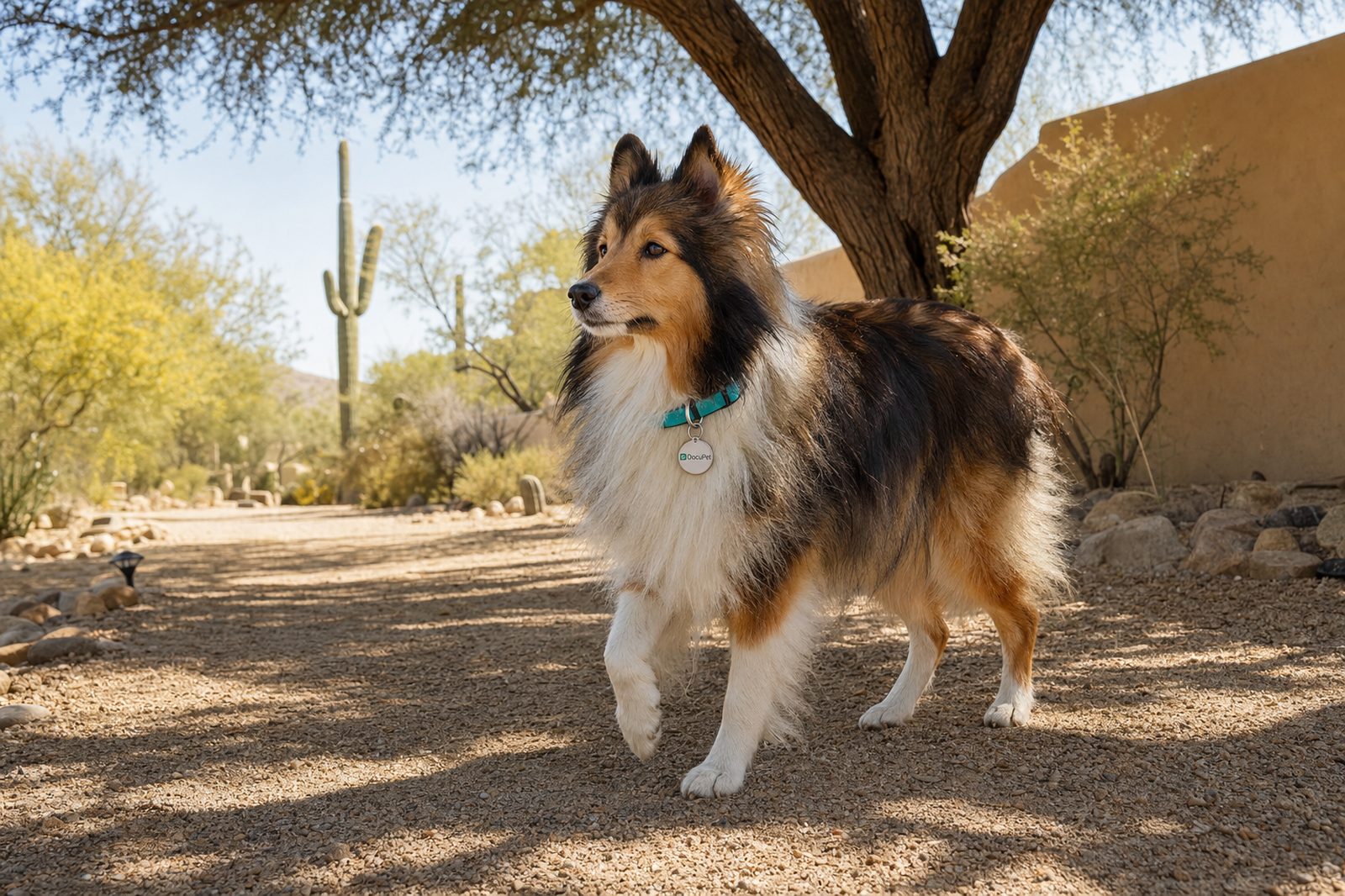
A license tag is the cheapest return ticket your dog will ever have. Microchips are good backup, but a tag lets any stranger help. A chip only helps if someone takes your dog to be scanned.
How much does a Maricopa County dog license cost?
The short version: one-year terms, with a lower rate for spayed or neutered dogs, a discounted senior rate for owners 65 and older with an altered dog, and cheaper pricing online than in person. The current figures live on the official DocuPet page, so this guide points you there instead of printing a number that can go stale.
Here is the shape of the fee schedule as published on the live DocuPet page, retrieved 2026-09-16. Online purchase runs cheaper than in person for both the altered and unaltered rates, and a discounted senior rate exists. Fees change, so check the official page before you pay.
- Spayed/neutered dog: one-year term at the discounted altered rate; online runs cheaper than in person.
- Senior rate: owner 65 or older with a spayed or neutered dog; a discounted rate.
- Unaltered/intact dog: one-year term at the higher rate; online runs cheaper than in person.
- Replacement tag: a standard replacement tag is available if yours is lost.
Two details that catch people. First, the senior rate requires both conditions: the owner is 65 or older AND the dog is spayed or neutered. Second, the online discount does not apply to the senior rate. The county also offers a no-fee license for service animals and search-and-rescue dogs, covered below, but the standard fee schedule does not list it, so contact MCACC directly if that applies to you.
The first move
Book a PD360 Assessment
Start with a complete behavioral evaluation of your dog.
What do you need before you register?
The short version: a current rabies certificate for every dog, a spay/neuter certificate if you want the discounted rate, and a payment method.
Gather these before you start. It is a five-minute job with the paperwork and a slow one without it.
- Rabies vaccination certificate. Signed by a veterinarian or certified professional. No current rabies proof, no license. If you are waiting on paperwork, a 30-day temporary license covers the gap.
- Spay/neuter certificate. Required to get the altered-dog rate. It is only needed once; DocuPet saves it to your dog's profile for future renewals. A statement or receipt from the vet, shelter, or clinic that performed the procedure works.
- Payment. Online: major credit cards and Visa/Mastercard debit cards. Mail: checks payable to DocuPet.
You upload documents as scanned files or photos taken from your device. If your records are scattered across old vet visits, sort that out before you sit down to register. The fastest registration is the one where nothing is missing.
How do you license your dog with DocuPet?
The short version: register online at maricopacounty.docupet.com, build your dog's profile, upload documents, pay, and the tag comes in the mail.
Online registration is the primary path. One action per step:
- Go to the official page. maricopacounty.docupet.com (retrieved 2026-09-16). Ignore third-party sites that offer to file the application for you.
- Create an account and add your dog. Name, breed, sex, birth date, color, microchip number if you have one.
- Upload your documents. Rabies certificate, plus spay/neuter proof for the discounted rate. A phone photo works if you have no scan.
- Choose your license type and pay. Altered, senior, or unaltered, by credit or Visa/Mastercard debit card.
- Get your tag in the mail. Every first-time DocuPet license includes one free lifetime tag. It does not expire. You keep the same tag at renewal; only the registration behind it renews.
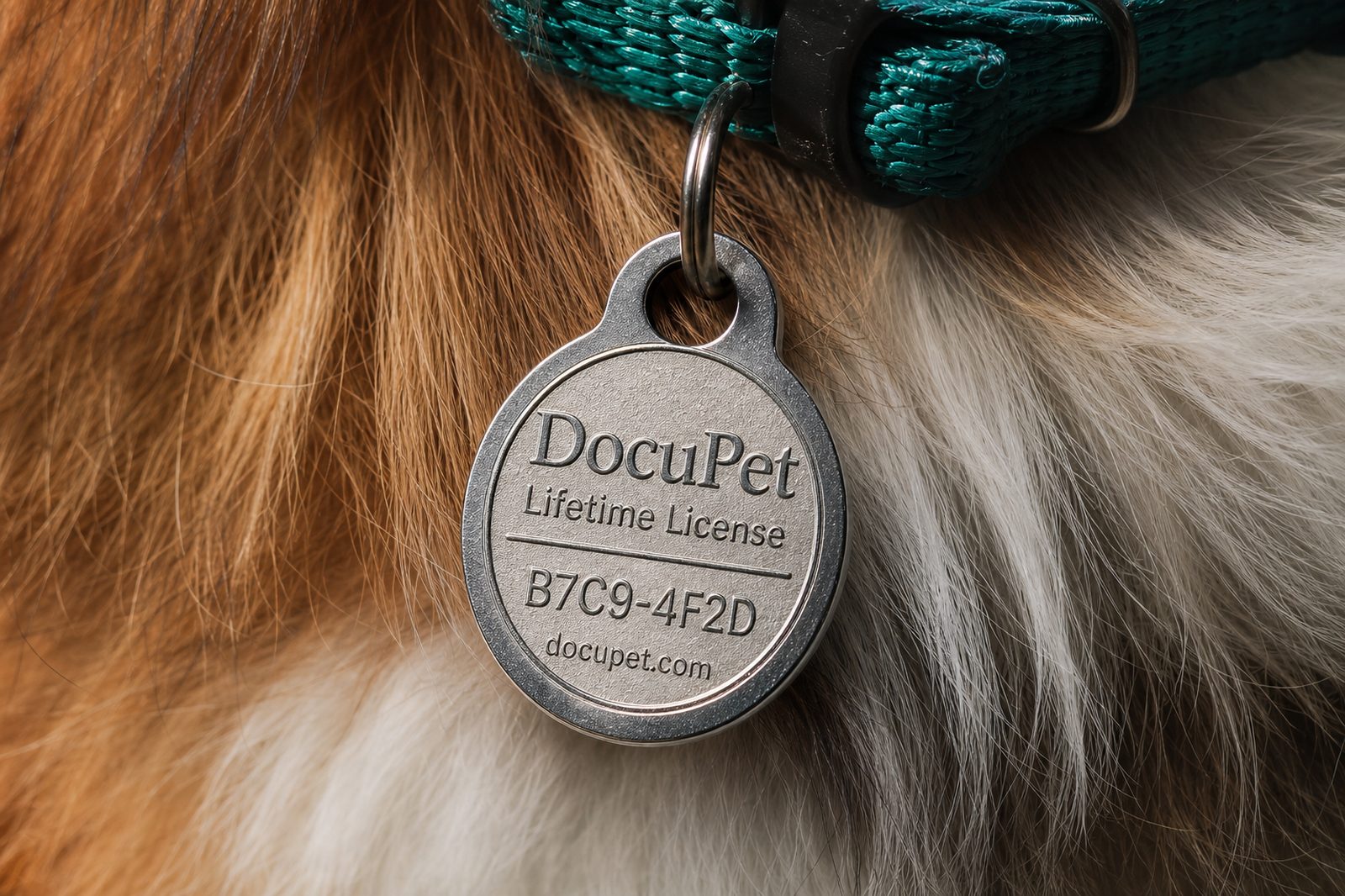
If you do not want to do it online, mail the printed form with checks payable to DocuPet (slower), or go in person: the West Valley Animal Care Center (2500 S. 27th Avenue, Phoenix, 85009) or the East Valley Animal Care Center (1920 S Lewis, Mesa, 85210). MCACC's phone is 602-506-7387. Check hours, appointment policies, and accepted payment methods before you go. Note the oddity: even when you license in person, the tag is still mailed to you.
When does the license expire, and how do renewals work?
The short version: one year from purchase, unless your dog's rabies vaccination expires first. Then the license expires with the rabies.
The expiration rule has a catch that generates most of the late fees.
- The license runs one year from the purchase date. Buy on October 1, it expires the next October 1.
- Rabies controls everything. If your dog's rabies vaccination expires before that date, the license expires on the rabies date instead. Upload new rabies proof before the old one lapses to keep the full term.
- Renew within 60 days of expiration. DocuPet sends reminders by email and mail. Mailed reminders include a pre-filled form you can return by mail.
- Renew early without losing time. If you renew before the current license expires, the new license starts the day after the old one ends, not the day you pay.
- Refunds are narrow. If your dog dies, a refund may be granted when you ask within 30 days of the license purchase date.
Set a calendar reminder for 60 days before expiration. The renewal itself is two clicks if your rabies proof is current. The late fees below are what happen when it is not.
What happens if you miss the deadline?
The short version: late fees start 30 days after expiration and accrue every 30 days until you renew.
The math is simple. Let the license lapse and ignore it, and the balance grows each month until you renew. During the DocuPet transition, the county suspended late fees until August 1, 2025. That grace period is over.
One thing to be straight about: the DocuPet page publishes late fees, not a citation fine schedule. The county's older materials referenced fines and impound for unlicensed dogs found by officers, but no current published fine schedule could be verified on the official page. Assume an unlicensed dog picked up by animal control can be cited and impounded. If you need the current fine amounts, call MCACC at 602-506-7387 before quoting any number. Nobody should learn the fine schedule at the shelter door.
Are service dogs or search-and-rescue dogs exempt?
The short version: the county cannot charge a license fee for a service animal used by a person with a disability, or for a search-and-rescue dog, but the dog still must be licensed and rabies-vaccinated.
Under ARS § 11-1008, a county board of supervisors may not charge a license fee to a person with a disability who uses a service animal (as defined in ARS § 11-1024) or to a person who uses a search-and-rescue dog. The exemption is from the fee, not from licensing. The dog still gets registered and still needs current rabies vaccination.
- Service animal: the owner signs a written statement that the dog is a service animal under the statute.
- Search-and-rescue dog: the handler provides proof satisfactory to the county enforcement agent.
- False statements: claiming the exemption falsely is a petty offense.
The standard fee schedule does not show a service-animal option, so if this applies to you, contact MCACC at 602-506-7387 for how to set it up the first time. Note the distinction the law cares about: this covers service animals and search-and-rescue dogs, not emotional-support animals.
Mistakes that cost pet parents money
- Renewing against an expiring rabies shot. The license expires with the rabies date, not the purchase anniversary. Book the vet visit first, upload the new certificate, then renew.
- Paying the unaltered rate by accident. If your dog is spayed or neutered but you never uploaded the certificate, DocuPet charges the intact rate. That costs you the altered-versus-intact difference for the same dog.
- Expecting the tag at the counter. In-person licensing does not hand you the tag. It is mailed. Do not make a second trip to ask for it.
- Forgetting the address update. Moved within Maricopa County? Update the address in your online account and the license stays valid. Moved out of the county? The license may not count where you land. Contact the new community's licensing provider.
- Thinking the microchip is the license. It is not. A chip needs a scanner. A tag needs eyeballs. Run both.
If your dog is a flight risk and you are reading this because licensing feels like the least of it, the real fix is behavior. A reliable recall and a dog that holds a boundary are what keep the tag from ever being needed. Dogs in our Foundation Camp build exactly that pair over 14 nights: a recall that holds at distance and a place command that holds at the door. The tag is the backup. The training is the plan. For the training side, see our reactive dog training guide.
By the numbers
Fees change: verify every number on the official licensing page before you pay.
Which program fits
Find the Right Training Program
Match the training program to your dog's specific needs and your family's goals.
Key takeaways
Key takeaways
- Every dog over three months old living in Maricopa County for 30+ consecutive days must be licensed and rabies-vaccinated.
- DocuPet has run county licensing since May 2025. One-year terms, online at maricopacounty.docupet.com. Check the official page for current figures: altered rate lower than unaltered, online cheaper than in person, discounted senior rate for owners 65+ with an altered dog.
- Bring a current rabies certificate and, for the discounted rate, a spay/neuter certificate.
- The license expires with the rabies vaccination date if that comes first. Late fees accrue monthly after 30 days.
- Service animals and search-and-rescue dogs are exempt from the fee but not from licensing. Fees and rules change, so verify everything at the official page before you pay.
Frequently Asked Questions
Do I need a Maricopa County dog license if I only live here part of the year?
Yes, if your dog is here for 30 or more consecutive days. The statute counts residency by the dog, not the owner. Snowbirds wintering in Scottsdale or Cave Creek with their dog fall under the rule once the dog has been in the county for 30 straight days. A current rabies certificate from your home state works for the license.
My dog is microchipped. Do I still need a license?
Yes. A microchip and a license do different jobs. The license is the legal requirement, and its tag is visible to anyone who finds your dog. A chip only helps if someone takes the dog somewhere with a scanner. Run both. The chip is backup. The tag is the front door.
Can I license my dog in person instead of online?
Yes. Go to the West Valley Animal Care Center in Phoenix or the East Valley Animal Care Center in Mesa, phone 602-506-7387. Bring your rabies and spay/neuter documents. Check hours, appointment policies, and accepted payment methods before you go. The tag is mailed to you either way.
What happens if my dog dies or I move to a different county?
If your dog dies, you can request a refund within 30 days of the license purchase date, and you can remove the dog from your online profile. If you move within Maricopa County, update your address online and the license stays valid. Moving out of the county? Contact your new community's licensing provider; the Maricopa license may not apply there.
Is the DocuPet tag the same thing as the license?
No. The license is the registration and the profile behind it, and it renews every year. The tag is the physical proof, and the first one is free and lasts a lifetime. Keep wearing the same tag. Renew the license behind it each year so the registration, and the reunification service, stay current.
Where to go from here
Licensing is ten minutes of paperwork. Do it online, keep the rabies certificate current, and renew before the late fees start. And if the newly licensed dog is an escape artist, the tag helps you get him back, and a reliable recall means you never need it. When the paperwork is done and you want the dog itself handled, our guide to how to choose a dog trainer shows what to ask before you hire one. And a PD360 Assessment is where a senior trainer reads your dog for a full day before anyone sells you a program.
Scottsdale: 8642 E Shea Blvd, 85260. Cave Creek: 4640 E Forest Pleasant Pl, 85331. Serving the Phoenix Valley.