In short
Care for the person first, exchange information, then expect Maricopa County Animal Care and Control (MCACC) to open a bite investigation that usually includes a quarantine period for your dog. Once the immediate situation is handled, lock down management at home the same day, and get a professional assessment before you decide anything about your dog's future. This is general orientation for Scottsdale and Cave Creek Pet Parents, not legal advice.
You are reading this because your dog bit someone, and you need to know what to do next, in what order. Take a breath. This happens to responsible Pet Parents more often than the internet lets on, and there is a clear sequence of steps between right now and a safer household. Here is what we walk Scottsdale and Cave Creek families through when a bite happens, in the order it needs to happen.
The First Hour: What to Do Right Now
The person comes first, every time. Separate your dog from everyone immediately, ideally into a crate, a closed room, or on a leash held by someone the dog is calm around. Do not scold or physically correct the dog in this moment. It will not undo the bite, and a stressed dog handled roughly right after biting is more likely to escalate, not calm down.
With your dog secured, turn your full attention to the person who was bitten:
- Get the person medical attention immediately: call 911 or get them to urgent care or an emergency room without delay.
- Exchange information: your name, address, phone number, and your dog's rabies vaccination status and veterinarian's contact information.
- If there were witnesses, get their names and contact information too.
Write down what happened while it is fresh. Where it happened, what led up to it, and how the person was bitten will matter later, both for the county process and for whatever training plan comes next.
What Happens Next in Maricopa County
We are dog trainers, not attorneys, and this section is general orientation, not legal advice. For the exact requirements that apply to your situation, contact Maricopa County Animal Care and Control (MCACC) directly at 602-506-7387 or through their bite assessment and reporting page.
Expect a bite report to open an investigation. A bite may be reported by the person who was bitten, a witness, a medical provider, or an animal control officer. Once MCACC has a report, a field officer typically investigates, may issue a citation, and explains the quarantine requirements that apply to your dog. Quarantine exists to rule out rabies, and the length and location (a county facility, your veterinarian, or your own home) generally depends on your dog's vaccination status and the specifics of the case, which MCACC will confirm with you directly.
Cooperate fully and keep your own records. Save the citation or case number, keep copies of anything you submit, and follow the quarantine terms exactly as given to you. Rushing this step or trying to avoid it creates problems that outlast the original bite. Handling it cleanly protects your family, the person who was hurt, and your dog's future.
How to Lock Down Management at Home Today
While the county process runs its course, your job at home is to make a second incident physically impossible, not just less likely. Management is the structure that buys everyone time to get help, not a punishment for the dog.
- Separate the dog from visitors, delivery drivers, and anyone outside the household entirely. Use a crate, a closed-off room, or a baby gate the dog cannot jump or push through.
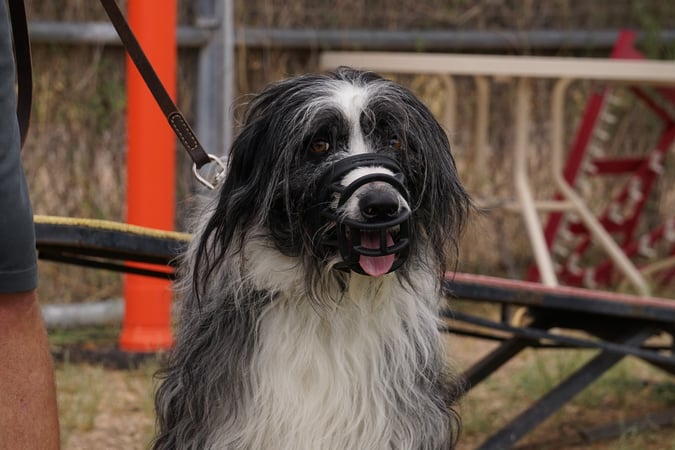
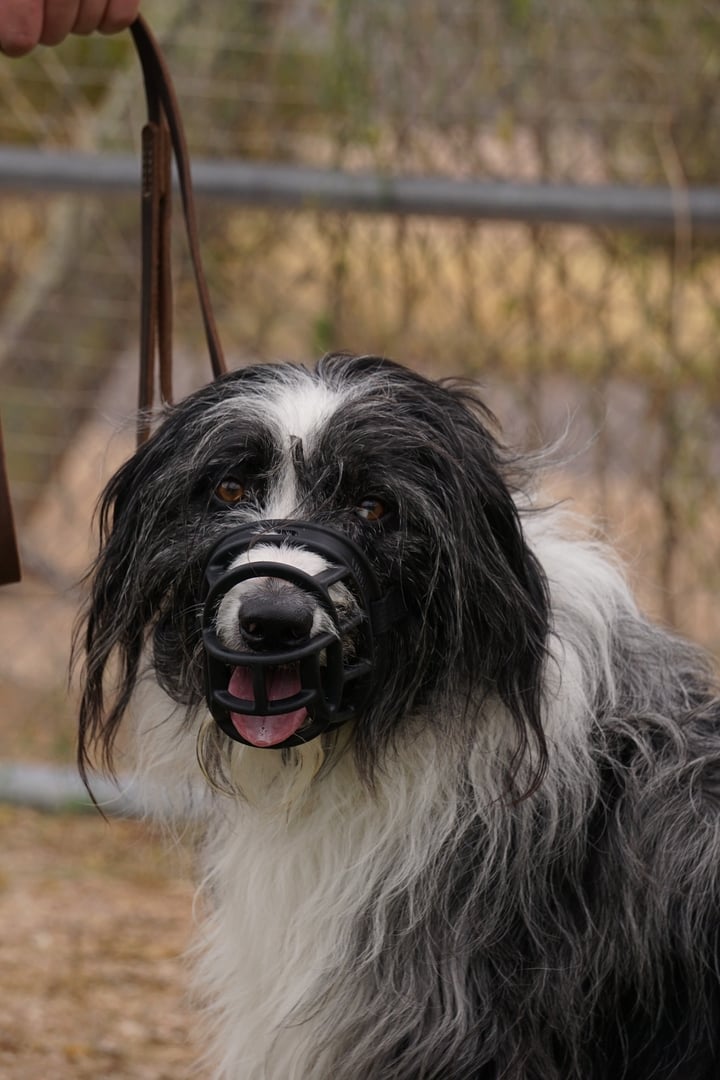
- Condition a well-fitted basket muzzle for any handling, vet visits, or situations where a second bite is even remotely possible. A muzzle is a safety tool, not a verdict on the dog.
- Walk on a secure leash and a properly fitted collar or harness, never off leash, until you have a professional read on the dog's triggers.
- Post the plan where everyone in the house can see it. A management plan only one person follows is not a plan.
- Skip situations you cannot fully control right now: the dog park, the front-yard mailbox rush, the holiday gathering with a house full of kids.
None of this has to be permanent. It is the floor you stand on while you get a professional assessment and a plan, not the rest of your dog's life.
Why Bites Almost Never Come Out of Nowhere
Most families tell us the bite came "out of nowhere." Almost none of them did. Dogs give warnings first: stiffening, a hard stare, lip curling, a growl, an air snap. Those signals get missed or brushed off until the day the dog skips straight to contact.
The pattern behind a bite usually has a name. A dog guarding a bone, a bed, or a food bowl is showing resource guarding. A dog who is fine in the yard but explodes at the door or the fence line is showing territorial aggression. A dog who tenses around a specific person, a stranger, a child, or even a family member is showing a form of people aggression. Naming the pattern is the first step toward changing it, because it tells us exactly what to test for and what to train.
Can a Dog That Has Bitten Be Rehabilitated?
This is the question every family wants answered: many dogs with a bite history go on to live calmly and safely around people again. Rehabilitation does not mean the dog forgets what happened. It means the dog is systematically taught a different, trained response to the situation that caused the bite, while management fills in any gap that training alone cannot close.
That claim is checkable. Partners Dogs holds a 4.8-star rating from more than 2,000 reviews, including from families who have been through exactly this.
Severity, history, and the specific trigger all shape the timeline. A dog with one bite tied to a clear, identifiable trigger is a very different case from a dog with a pattern of escalating incidents. We judge dogs on behavior, not on breed, background, or a single bad day. There is no dog we turn away and no person we cannot help; the rare exception is a neurological cause, and that has applied to only a handful of cases out of tens of thousands of dogs we have worked with. Getting there means using whatever combination of tools and techniques actually works for your dog, not one method applied to every case. Every case gets scoped individually before we promise anything. Skipping that scoping step is how families end up guessing instead of following a plan.
Know the trigger
Find Out Exactly What Triggered the Bite
A trained evaluator can identify your dog's specific triggers and thresholds in one assessment, so your next step is based on facts instead of fear.
How the PD360 Assessment Scopes a Bite Case
A bite case is exactly the situation the PD360 Assessment was built for. A trained evaluator works directly with your dog to identify: specific triggers, arousal thresholds, bite history, and how the dog responds under pressure, not just how the dog behaves on a calm afternoon at home.
The assessment carries a modest fee, credited toward same-day camp enrollment if you move forward that same day; see current PD360 pricing for the exact numbers. For a bite case specifically, the assessment is what tells us and you whether the right next step is targeted private lessons, Behavior Camp for a moderate case, or Transform Camp for a more severe or crisis-level one. The findings feed directly into the PD360 Pet Progress Tracking System, so progress after the assessment is measured against data, not a feeling.
Transform Camp: What a Crisis-Level Program Involves
For most bite cases, the assessment points toward Transform Camp, the step up from Behavior Camp for severe or crisis-level behavior. It runs 12 to 16 weeks, which includes the dog's full boarded stay plus follow-up coaching once the dog is back home, not just a couple of weeks of kennel time and a handshake.
A bite case needs eyes on the dog, not a warehouse. Every dog at Partners Dogs works with a trainer at a one-to-ten ratio, which matters most once a dog has already shown it can escalate. Over the course of the stay, a dog with a bite history is worked systematically through its known triggers under controlled conditions, at a pace the dog can handle, with the follow-up coaching afterward built to keep the family consistent once the dog is back in a house full of normal life.
Living Safely With a Dog That Has a Bite History
Training changes the dog's default response. It does not erase the fact that this dog has bitten once, and permanent management is part of living with that reality well.
Some habits are worth keeping for good. Muzzle conditioning becomes a normal, low-stress part of vet visits or grooming, not an emergency measure. Being upfront about bite history with your veterinarian, groomer, and boarding facility protects everyone, including your dog. Plan ahead for known high-stimulus events: monsoon storms that trap everyone inside together, a packed Scottsdale patio during snowbird season, trick-or-treaters at the door. Manage the dog proactively for each instead of hoping it goes fine.
Follow-up coaching exists for exactly this stretch. The weeks after a dog comes home from a program are where old habits either get reinforced or quietly slide, and staying in touch with your trainer through that period is what makes the training last instead of fade.
Frequently Asked Questions
Do I have to report it if my dog bit someone in Maricopa County?
Bites are often reported by the person who was bitten, a witness, or a medical provider, and Maricopa County Animal Care and Control opens an investigation once a report comes in. We are trainers, not attorneys, so for the exact reporting obligations that apply to your specific situation, contact MCACC directly at 602-506-7387 or through their bite assessment and reporting page.
How long will my dog be quarantined after a bite?
Maricopa County Animal Care and Control sets the quarantine terms for your specific case, and where the quarantine happens (a county facility, your veterinarian, or your own home) generally depends on your dog's vaccination status and the circumstances of the bite. Confirm the exact length and location that applies to you directly with MCACC rather than relying on a general answer.
Can a dog with a bite history still be trained?
Many dogs with a bite history go on to live safely and calmly around people again with structured, professional behavior work. The right timeline and plan depend on the severity of the bite, the specific trigger, and the dog's history, which is exactly what a PD360 Assessment is built to identify before any promises get made.
What is the difference between Behavior Camp and Transform Camp for a bite case?
Behavior Camp fits moderate reactivity or aggression cases. Transform Camp is the step up for severe or crisis-level behavior, which is where most bite cases land. Both run 12 to 16 weeks including the boarded stay and follow-up coaching, and the PD360 Assessment is what determines which one fits your dog.
Do I need to get rid of my dog after a bite?
Not automatically. Handle the immediate safety steps first, cooperate with Maricopa County's process, and get a professional assessment before deciding anything about your dog's future. Many families are able to keep and rehabilitate a dog with a bite history through structured training and permanent management, though the right decision depends on the severity of the case and what your household can safely manage, which is worth working through with a professional rather than deciding alone.
Next step
Give Your Dog a Path Back to Safe
Transform Camp is built for exactly this level of case: a full boarded stay plus follow-up coaching, so the change holds after your dog comes home.
Keep reading