
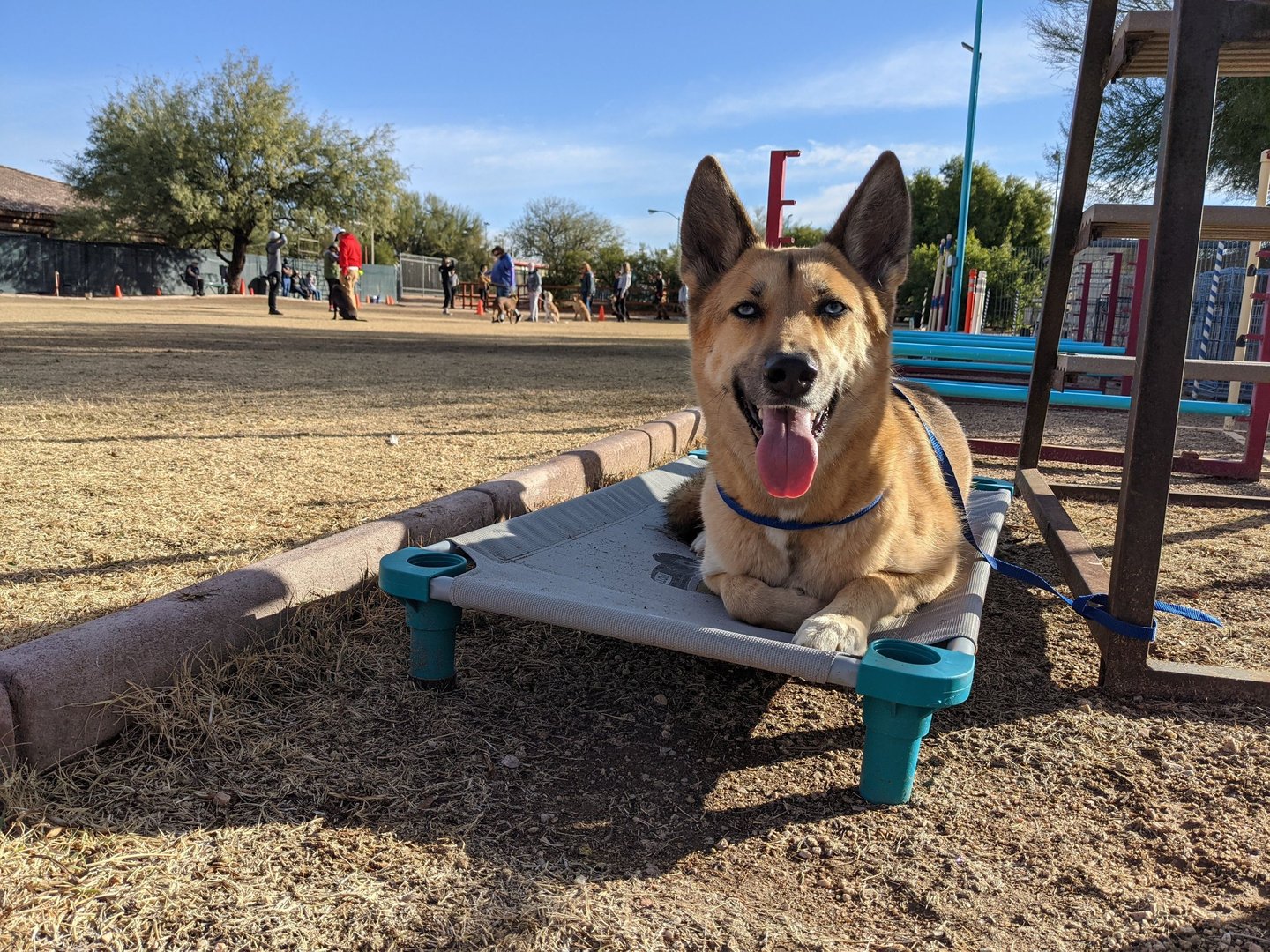
In short
You prevent separation anxiety in Arizona dogs by building alone-time skills gradually, keeping departures and returns low-key, and giving your dog a quiet space with enrichment to settle into. Arizona's cool-hour schedule tends to compress comings and goings into a narrow morning and evening window, so a few consistent habits go a long way toward keeping that time calm instead of stressful. If your dog already shows signs of panic when left alone, a PD360 behavior assessment can help you find the right next step.
Why Arizona Schedules Raise Separation Anxiety Risk
Few things feel worse than closing the front door and picturing your dog panicking on the other side of it. Scratching, howling, pacing, and chewed door frames are not "bad" behavior. For many dogs, those are signs of genuine panic when they are left alone. Left unaddressed, separation anxiety can strain every part of a household: neighbors complain about barking, doors and furniture get destroyed, and owners start avoiding errands because they dread what they will find when they get home.
The habits that prevent separation anxiety are simple, and they work best when you start early or layer them alongside treatment if your dog is already struggling. Puppies and newly adopted dogs need just as much practice being comfortable alone as they need socializing and learning basic cues.
Arizona adds a real wrinkle to the picture. Scottsdale and Cave Creek households tend to compress their comings and goings into the coolest hours of the day, early mornings and evenings, right when doors are opening across the neighborhood, garbage trucks are rolling, and other owners are out walking their own dogs. That extra noise and motion lands at exactly the moment your dog is bracing for you to leave or listening for you to come home. Without a plan, that pattern can slowly turn an ordinary schedule into a string of stress triggers. If your dog is already past the prevention stage, our separation anxiety help page walks through what a full plan looks like.
Build Alone-Time Skills Step by Step
Once your dog has a basic sense that comings and goings are safe, you can deliberately build the skills that protect against separation anxiety: comfort with brief separations, predictable cues, and a solo coping routine. The goal is not to make your dog indifferent to you leaving, it is to teach your dog that departures are temporary, predictable events they already know how to handle.
Start with short, structured alone-time sessions:
- Step out of sight for a few seconds while your dog works on a chew or food puzzle, then return calmly before any worry sets in.
- Extend the duration gradually over days and weeks instead of jumping straight to a full workday.
- Blend in ordinary household sounds while you are gone, running water, a door closing, footsteps down the hall, so your dog learns those sounds are not a signal that something is wrong.
- Rotate a few enrichment options so alone time stays interesting instead of empty.
Interior rooms away from bright, street-facing windows can help too. They buffer your dog from Arizona's noisiest moments alone: delivery trucks, neighbors walking dogs at sunrise, or wildlife moving through at dusk. Background sound from a fan, soft music, or a white-noise machine adds another layer of protection against sudden barks or howls from outside.
Keep Departures and Returns Calm
Dogs with developing separation issues often become anxious well before the door actually closes, the moment they see keys, shoes, a work bag, or hear a particular alarm. Changing how you handle those pre-departure cues can make a real difference in how your dog experiences the whole routine. Practice picking up your keys, putting on your shoes, or grabbing your bag, then sit back down and do something boring, like checking your phone. These "false departures" help break the automatic link between those cues and panic.
During real departures, stay low-key. Give your dog a special, high-value chew or food puzzle they only get when you leave, then step out without a long goodbye. When you return, greet them calmly once their feet are on the floor and they have started to settle. The same routine, the same phrases, and the same type of enrichment every time helps many dogs relax because they recognize the pattern.
Next step
Not sure how bad it really is?
A PD360 behavior assessment gives you a clear read on your dog's separation anxiety and a plan for what to do next, before it turns into a bigger problem.
Recognize the Signs of Separation Anxiety
Even with good routines, some dogs slide into separation anxiety or related isolation distress. Recognizing that shift early, and responding with the right support, can spare both of you months of escalating stress. The red flags go beyond mild restlessness when you leave. Watch for:
- Destructive chewing or scratching, especially at doors and windows
- Frantic barking or howling that starts soon after you leave
- House soiling in a dog who is otherwise reliably house-trained
- Escape attempts that risk self-injury
If these signs show up mainly when your dog is alone, and especially if they are getting worse rather than better, treat it as a real anxiety problem rather than a bad habit, and skip punishment either way, it tends to worsen anxiety and damage the trust you are trying to build.
Get the Right Help in Arizona
Effective treatment usually combines a few pieces working together: adjusting the daily routine and environment, changing the social cues around departures and returns, and carefully paced desensitization to short, then longer, absences. A veterinary exam is a reasonable first step to rule out pain or a medical cause before you build out a full behavior plan.
Local realities matter too. Many Arizona owners work long days away from home and leave during the same narrow cool-hour windows when neighbors are coming and going with their own dogs. Strategically timed structured daycare, a dog walker during cooler hours, or splitting the day between household members can all shorten the longest, hardest alone-time stretches while you work on the root problem. If your dog needs more structure than routine changes alone can give, a Behavior Camp plan builds on the same alone-time and departure skills covered here, with a trainer guiding the pace.
Frequently asked questions
What are the first signs of separation anxiety in dogs?
The earliest signs are usually pacing, whining, or clinginess as you get ready to leave, followed by destructive chewing, scratching at doors, frantic barking, or house soiling once you are gone. If these behaviors happen only when your dog is alone and get worse over time, that pattern points to separation anxiety rather than a training gap.
Can separation anxiety be prevented in puppies?
Yes. Puppies who get regular practice with short, calm alone-time sessions, paired with chews or food puzzles, are far less likely to develop separation anxiety later. Start with a few seconds out of sight and build up gradually rather than waiting until a full workday is required.
Does Arizona's heat and schedule make separation anxiety worse?
It can. Many Scottsdale and Cave Creek households compress their comings and goings into the coolest hours of the day, which stacks extra neighborhood noise and motion right when a dog is most anxious about a departure or return. That does not cause separation anxiety on its own, but it can make an existing case harder to settle without a deliberate routine.
Will structured daycare help a dog with separation anxiety?
Structured daycare can help by shortening the longest, hardest alone-time stretches in the day, especially on days when your schedule does not allow for a gradual build-up. It works best alongside the alone-time and departure training in this guide, not as a replacement for it.
When should I get professional help for my dog's separation anxiety?
Get help once you see destructive behavior, escape attempts, or house soiling tied specifically to being left alone, or if prevention steps at home are not moving the needle after a few weeks. A PD360 behavior assessment is a good starting point for a clear plan, and more severe cases often benefit from the added structure of Behavior Camp.
Ready when you are
Give your dog a plan for being home alone
If prevention alone is not enough, Behavior Camp builds on these same alone-time and departure skills with a trainer guiding the pace, and private lessons keep the plan in your own home.
Keep reading
/Programs/Grooming/The%20same%20people%20your%20dog%20already%20trust.jpeg?width=800&height=450&name=The%20same%20people%20your%20dog%20already%20trust.jpeg)