In short
Puppy training in Scottsdale starts later than most new owners expect: Partners Dogs' minimum enrollment age for Pre-School Puppy is 20 weeks, not the 8-week start date many puppy classes advertise. The months before that are not wasted time, they are the most important stretch for socialization and home groundwork, and this guide covers exactly what to do with them, including how to socialize safely once Arizona's pavement heat sets in.
When Should a Puppy Start Training in Scottsdale?
Partners Dogs has trained dogs across Arizona since 1997, and the puppy question is still the first call most new Scottsdale families make. It usually comes with a number already attached, because a lot of national puppy-class chains enroll dogs as young as 8 weeks. Our minimum enrollment age for Pre-School Puppy and every other group program is 20 weeks. That is not a marketing decision, it is a developmental one. A 20-week-old puppy has steadier legs, a longer attention span, and enough bite control to absorb a lesson instead of just burning through it.
That gap between "we brought him home" and "he's old enough to enroll" is where most families either waste a few months or use them well. This guide is built for the second option. Every section below assumes your puppy is somewhere younger than 20 weeks right now, and walks through what to build at home, what Pre-School Puppy covers once you get there, and how the Arizona calendar changes the socialization plan in between.
What to Work on at Home Before Class Starts
The weeks before enrollment are not a holding pattern. They are the single best window for low-stakes, high-repetition groundwork. Your puppy is small and curious right now, with nowhere else to be. None of this needs to look like formal training, just short and frequent enough to keep up daily.
- Name recognition and attention. Say your puppy's name, reward any glance your way. This one habit is the foundation everything in a group class builds on.
- Handling exercises. Touch paws, ears, mouth, and collar often. Pair each touch with a treat so nail trims and vet visits are not a fight later.
- Crate or pen comfort. Feed meals in the crate and build up to short closed-door naps so alone time is not a new stressor on day one.
- Short indoor leash sessions. A few minutes a day of a loose leash builds the groundwork for leash manners that hold up later. If pulling already shows up, the loose-leash walking guidance in our leash pulling spoke works at a puppy scale.
- Calm greetings with visitors. Practice four-paws-on-the-floor greetings before jumping becomes the default habit. Our jumping and greeting spoke has the mechanics if the habit is already forming.
- A consistent potty schedule. Set feeding and outdoor times now, before a class calendar gets added on top.
Nutrition matters here too. Some families ask about supplement support for a growing puppy's coat and energy. If you and your veterinarian decide that is worth adding, the Invigorate Puppy Multivitamin is available through the Partners Dogs shop.
Pre-School Puppy: What It Covers and Who It Is For
Pre-School Puppy is the entry point once your puppy clears 20 weeks, offered at our Scottsdale campus as part of our regular Group Classes schedule. It is built for the puppy who has never been in a training environment before, not the dog who is already struggling with a specific behavior problem. If your puppy is showing fear, aggression, or a behavior pattern that worries you, that is a conversation for a trainer before class placement. Do not wait it out until enrollment day.
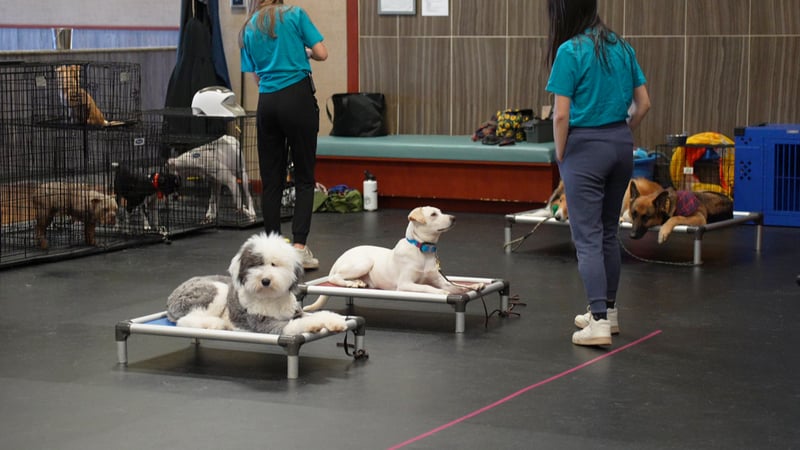
A Pre-School Puppy class covers the fundamentals in a controlled setting: name and attention work, handling, crate settle around distraction, foundational cues, and structured introductions to other puppies of a similar size and energy level, run by an instructor instead of left to chance at a dog park. It is the class where the homework you have already been doing gets a second set of trained eyes on it, and where problems that are easy to fix early get caught before they turn into habits. Current class times and Pre-School Puppy pricing are on our schedule page.
Socializing a Puppy in Arizona Heat Without Skipping the Window
Here is the part of puppy training that trips up Scottsdale and Cave Creek families in particular. Socialization needs to happen early and often, but Arizona's hottest months make the obvious version of it, a midday walk around the block, genuinely unsafe. By mid-morning from roughly May through September, pavement and asphalt across the Valley can get hot enough to burn a puppy's paw pads before it feels hot to you standing on it in shoes.
The fix is not to skip socialization until the weather cooperates. It is to move it to the hours and settings where heat is not a factor.
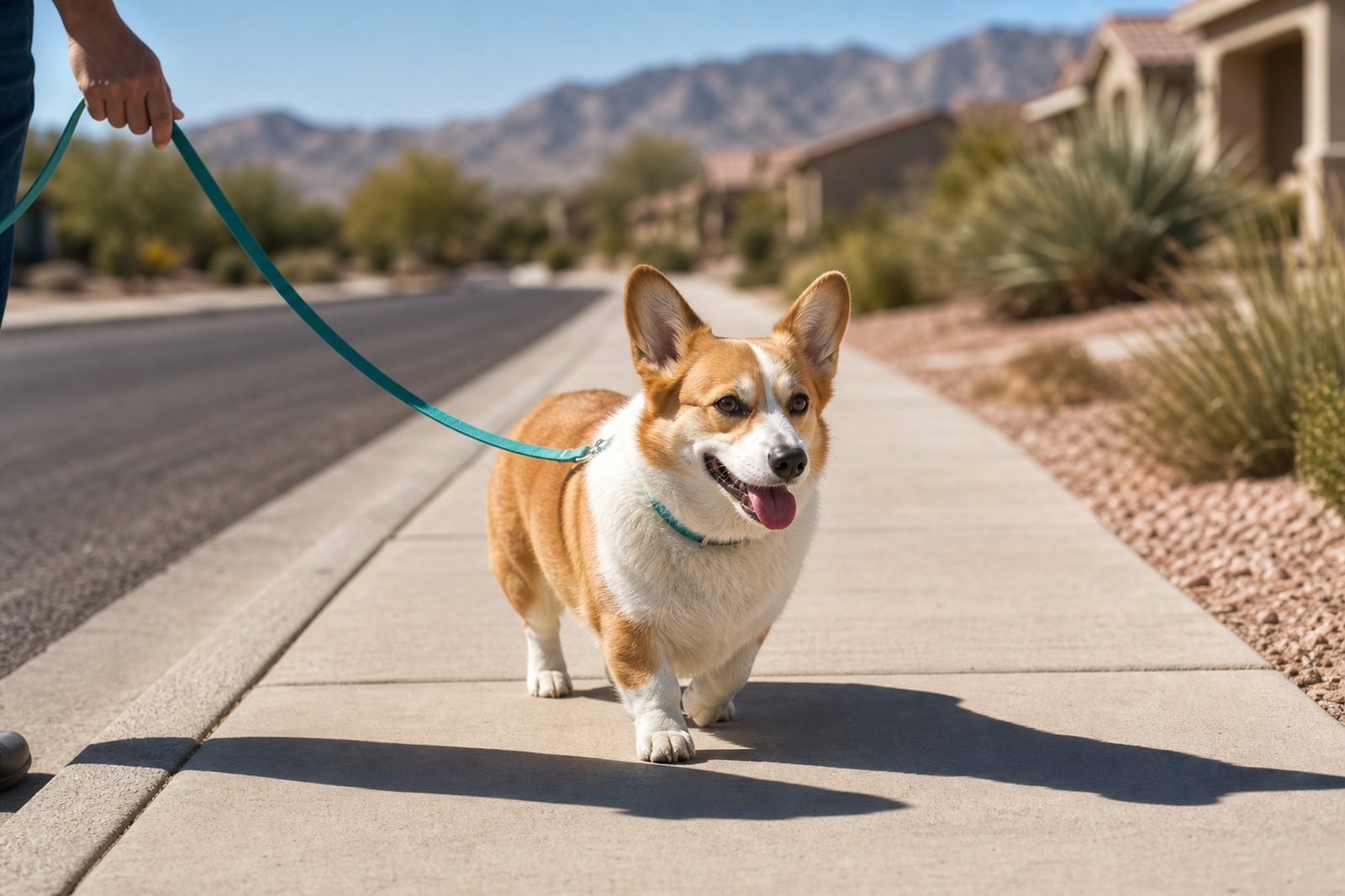
- Walk at sunrise or after sunset instead of midday, and test pavement with the back of your hand first. If you cannot hold it there comfortably, it is too hot for paws.
- Use grass and shaded surfaces over open asphalt when a summer walk cannot be scheduled outside peak heat.
- Lean on indoor exposure for most socialization reps in June, July, and August: new people, new sounds, novel objects, and short car rides with the air conditioning running.
- Ask your veterinarian about the right timing for exposing your puppy to other dogs in public, since that depends on where your puppy is in their vaccination schedule.
- Treat monsoon storms as a socialization opportunity, not just a hazard. Controlled, low-volume exposure to distant thunder from indoors can help build tolerance for loud noise, as long as your puppy stays calm and is never forced closer than they are comfortable with.
The socialization window does not wait for October, so the plan has to work around the thermometer instead of the calendar.
Next step
Get a plan while you wait for the 20-week mark
A short quiz gives you a starting point today, and a quick call with our team can help you map out enrollment once your puppy clears 20 weeks.
Potty Training in a House With Tile and a Doggy Door
Two features common in Scottsdale homes make potty training harder than the average puppy guide assumes. Tile floors hide the sight and smell of a small accident far better than carpet does, so mistakes go unnoticed and unaddressed for hours, which means your puppy never connects the correction to the event. And a doggy door, while convenient once a dog is fully trained, gives an untrained puppy self-directed access to the yard before they understand that outside is the only bathroom option, which tends to produce backyard marking habits instead of a fully potty-trained dog.
The fix is supervision before freedom, in that order. Keep the doggy door blocked or closed until house training is solid, take your puppy out on a fixed schedule rather than waiting for a signal you have not taught yet, and reward the moment they go outside, not the walk back inside. If accidents are already a recurring problem, our potty training and house accident guidance goes deeper on troubleshooting a stalled routine.
Biting, Chewing, and the Adolescent Regression Nobody Warns You About
Mouthing and chewing during the puppy months are normal, not a sign your puppy is aggressive or that training has failed. A puppy explores the world with its mouth and needs to learn bite inhibition through consistent, gentle feedback, redirecting to an appropriate chew item every time teeth land on skin or furniture rather than punishing the behavior outright. Our mouthing and nipping spoke walks through the redirect-and-reward mechanics step by step.
What surprises families is what happens months after Pre-School Puppy graduation, when a dog who had potty training, greetings, and mouthing solid suddenly backslides during adolescence. This regression is common and does not mean the earlier training failed. It usually means a young dog is testing boundaries again as confidence and independence grow. The fix is the same consistency that worked the first time, applied again without frustration. If a specific behavior is regressing hard and group class timing does not line up, a private lesson can get a trainer working the exact problem one-on-one, on your schedule.
Group Classes, DaySchool, or a Camp: The Puppy Path
Pre-School Puppy graduation is a starting point, not a finish line. Where a puppy goes next depends on temperament and how much structure the family wants going forward, not a fixed script every dog follows. Most puppies move into our ongoing Group Classes to keep building on-leash manners and obedience with other dogs their age. A puppy who is genuinely social and thriving around other dogs is often ready for DaySchool, our daycare-plus-daily-training program, for socialization that keeps happening between formal classes. A family wanting a fast, comprehensive foundation instead of a weekly class schedule sometimes chooses our 14-night board and train, Foundation Camp, once their puppy is old enough to enroll.
Whichever path fits, the setting matters as much as the program. Our group classes keep a ratio of one trainer per 10 dogs, low enough that a shy or distracted puppy does not get lost in a crowd, unlike the 20-to-50-dog ratios common at warehouse-style daycares. That is part of why Partners Dogs has trained more than 70,000 dogs across Arizona since 1997, and why families rate us 4.8 stars across 2,000+ reviews. All breeds are welcome, intact puppies are welcome, and every dog is judged on behavior, not background.
Frequently asked questions
What age can my puppy start training at Partners Dogs?
Our minimum enrollment age for Pre-School Puppy and our other group training programs is 20 weeks. Before that, the most useful groundwork is at home: name recognition, handling, crate comfort, and calm greetings.
Can I socialize my puppy before 20 weeks?
Yes, and you should. Socialization at home is some of the most valuable work you can do before formal enrollment: controlled introductions to new people, new sounds, new surfaces, and new objects. Talk with your veterinarian about the right timing for exposing your puppy to other dogs in public, since that depends on where your puppy is in their vaccination schedule.
Is it too hot to walk my puppy outside in Scottsdale during the summer?
Midday walks are unsafe for a puppy's paw pads from roughly May through September, when pavement and asphalt heat up fast across the Valley. Walk at sunrise or after sunset instead, test pavement with the back of your hand before stepping onto it, and lean on indoor socialization for the rest of the day during peak summer months.
Why does my potty-trained puppy suddenly have accidents again?
A backslide during adolescence is common and does not mean earlier training failed. It usually shows up alongside a young dog testing boundaries as confidence grows. Go back to a fixed schedule, supervise doggy door access, and reward outdoor success the same way you did the first time around.
What comes after Pre-School Puppy?
Most puppies move into our ongoing Group Classes to keep building obedience. A social puppy is often ready for DaySchool, our daycare-plus-daily-training program. Some families choose Foundation Camp instead, our 14-night board and train, for a faster foundation.
Ready when your puppy is
Turn the groundwork into the next stage of training
Once your puppy clears 20 weeks, take everything you built at home into a program designed to keep it going.
Keep reading