Most dogs pull on the leash because it works: every successful lunge toward a smell, a person, or the door teaches them to do it again. A properly fitted front-clip harness and a consistent stop-and-wait routine solve this leash pulling for a mild, non-reactive puller, no correction-based tool required. For a dog strong enough to pull you off balance, or one that locks onto a trigger and will not let go, the fix is gear that teaches instead of just redirecting, fitted and conditioned by a trainer rather than strapped on and hoped for.
Leash pulling is one of the most common complaints we hear from members walking Desert Ridge, Scottsdale, and Cave Creek mornings before the heat sets in. Most pulling responds to the right mix of equipment and a few consistent habits, and a correction-based tool is not required for the average case. This guide starts with the free fixes and moves to the gear worth fitting in-store when a dog needs more than management.
Why Does My Dog Pull on the Leash?
Pulling continues because it works: every step your dog gains by leaning into the leash rewards the pulling, whether the payoff is a smell, a person, or shade. Dogs do not pull because they are stubborn or trying to run the household. They pull because the behavior has been accidentally reinforced hundreds of times, one successful lunge toward a reward at a time. Once pulling reads as a rewarded behavior instead of a character flaw, the fix stops being about strength and starts being about which reward you control.
"He also needed some help learning to walk on a leash without trying to win a race."
Ann D., Cave Creek
That reframe changes what "safe" management looks like. A tool that makes pulling physically harder buys you a calmer walk today. A habit or a tool that changes what gets rewarded reduces the pulling itself over time. Both matter, and the eight ways below cover each category honestly, including where the free option is enough.
Does a Front-Clip Harness Solve Leash Pulling?
For a mild, non-reactive puller, a properly fitted front-clip harness paired with a stop-and-wait routine works well. No correction-based gear is required. The front clip sits at the chest instead of the back, so when your dog leans into the leash, the harness turns their shoulders back toward you instead of letting them drive forward with their full weight. Paired with stopping the instant the leash goes tight and moving again only on slack, this is legitimate, well-supported management that plenty of dogs need nothing more than.
Where it runs out: a harness manages the symptom, it does not teach a dog anything about leash pressure. A dog that pulls hard enough to strain a shoulder or drag a handler off balance often plateaus on harness-only management, walk after walk, with no measurable change in how hard the dog leans. That is not a harness failure. It is a mismatch between a mild-case tool and a strength-mismatched or habitual pulling problem, which is exactly where the gear in the next section earns its place.
8 Safe Ways to Reduce Leash Pulling
Here are eight ways to cut the force on your arm, moving roughly from free and immediate to fitted and durable. The comparison table below covers the gear question first, since that is where the leashes and collars our trainers fit in-store come in.
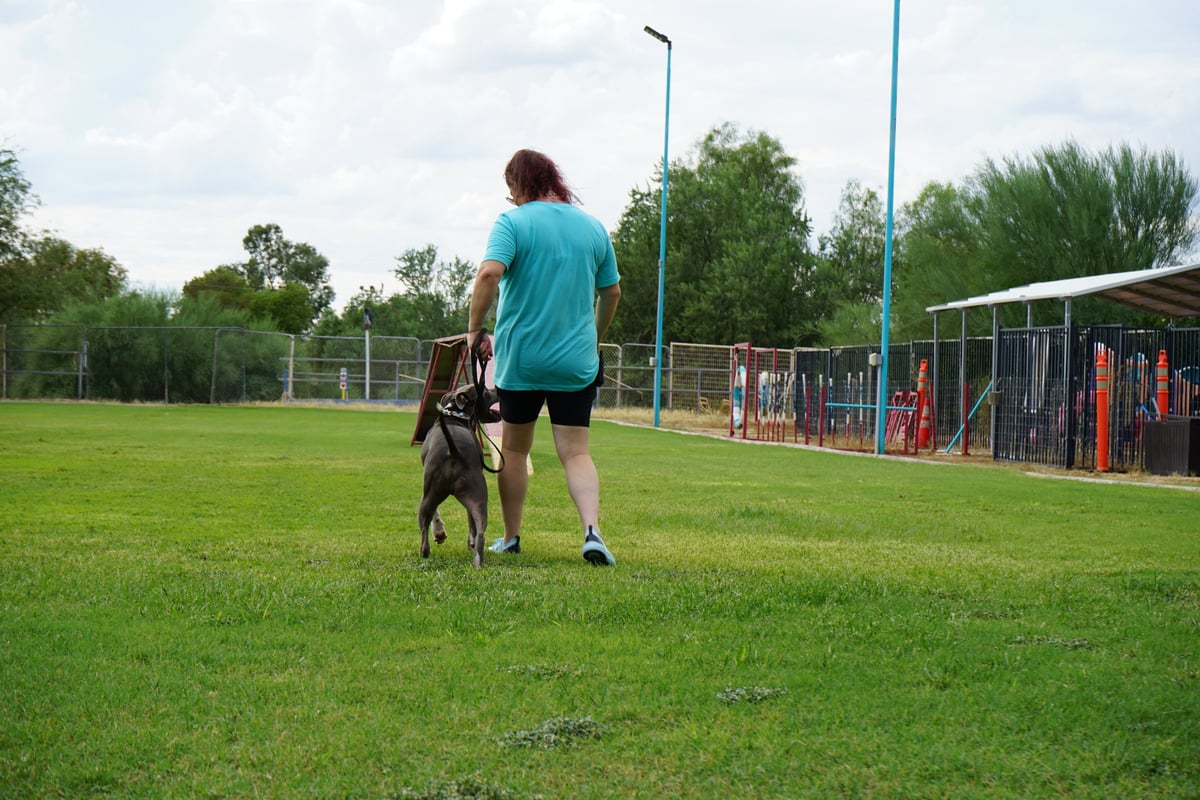
| Tool | Best for | Investment | Where fitted |
|---|---|---|---|
| Front-clip no-pull harness | Mild, non-reactive pullers who just need redirection | Varies by brand, not sold in-store | Sized by owner, no in-store fitting |
| Partners Dogs Nylon Collar | Dogs who already walk politely, everyday wear | Everyday-wear price point | In-store, Scottsdale or Cave Creek |
| Pro Trainer Slip + Snap Leash | Replacing a retractable with a fixed length you control | Mid-range, one-time swap | In-store, Scottsdale or Cave Creek |
| Martingale Prong Cover Combo | Persistent, strength-mismatched pulling that harness-only management has not solved | Comparable to the slip leash, plus fitting | In-store fitting and conditioning, Scottsdale or Cave Creek |
Exact costs vary by product and can change; see the current pricing page for today's numbers.
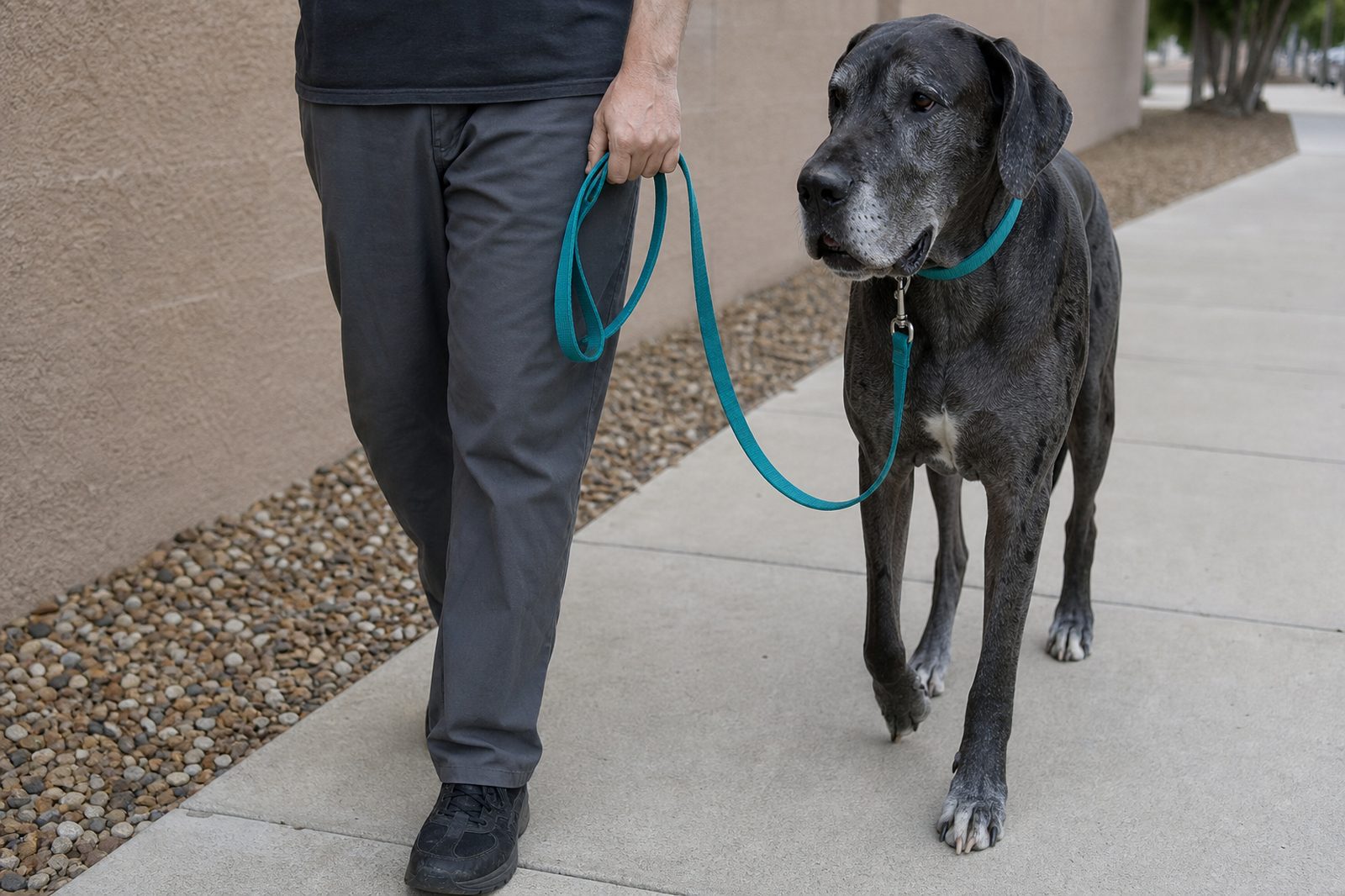
- Retire the retractable leash. A fixed 4-to-6-foot leash, the Pro Trainer Slip + Snap Leash above is one option, gives consistent control a retractable cannot: a retractable extends the instant your dog leans forward, rewarding the pull before you can respond.
- Fit a front-clip harness correctly. The chest strap should sit high and snug, not able to slide down over the shoulders. The leash clips to the chest ring, never the back. A harness that shifts loses its redirect.
- Stop the second the leash goes tight. Freeze the moment you feel tension, wait for slack, then move again. This teaches a dog that pulling ends the walk instead of extending it, and it costs nothing but consistency.
- Reward the check-in before the pull happens. Mark and treat the moment your dog glances back at you on a loose leash, starting in the yard before you ever step out for a walk in Desert Ridge or anywhere else. A dog that checks in voluntarily pulls less because pulling stops being the only thing that pays.
- Practice a stationary wait at the door. A dog that bolts through the threshold is already ahead of you before the walk starts. A few seconds of sit-and-wait before the door opens resets the pace for the whole walk.
- Split one long walk into two shorter ones. Shorter sessions keep both of you fresh enough to use good technique, and splitting the walk around the cooler morning and evening hours avoids the worst of the pavement heat.
- Step up to gear that teaches, not just redirects. When harness-only management has plateaued, a limited-slip martingale paired with a covered prong (the pick in the table above) distributes brief, low pressure a dog learns from instead of leaning into indefinitely. It is fitted and conditioned in-store, not strapped on cold.
- Get it fitted in person instead of estimating the size yourself. A collar or martingale sized wrong will not do its job either direction: too loose slips, too tight chafes. A private lesson covers the fit and the first few reps together, so you leave knowing it is right.
Sized by a trainer
Get Your Dog's Gear Fitted In-Store
Our trainers fit every leash, collar, and martingale combo by hand at Scottsdale and Cave Creek, so the setup matches your dog instead of a size chart.
Is It Pulling or Leash Reactivity?
Plain pulling moves toward a reward and eases once you stop and wait. Reactive pulling locks onto a trigger, usually another dog, and does not let go even after you stop. If your dog glances away and re-focuses once you stop, you are dealing with ordinary reward-driven pulling, and the eight ways above will move the needle. If your dog stiffens, stares, and keeps lunging toward a specific trigger no matter what you do, that is a different risk category with a different plan.
"From leash pulling to barking, and even separation anxiety, Kash was testing my every nerve."
Aubree H., Cave Creek
Reactivity has its own root cause and its own escalation risk, especially when a locked-on stare turns into barking and lunging at a dog approaching from a shared path or a driveway. Trying to fix reactive pulling with a longer leash or a stronger arm treats the wrong problem. Our leash-pulling behavior guide breaks down that exact distinction in more depth, and reactive cases route to a different plan than the equipment above.
When it's more than pulling
Sort Out the Trigger Before It Gets Worse
If your dog locks onto other dogs and will not disengage, a focused look at the trigger beats another round of gear.
"Maizie is so much better behaved after the 2 week training at Partners Dog Training. She is able to walk on a leash without pulling and sits on command."
Claire N., Cave Creek
Partners Dogs holds 4.8 stars across more than 2,000 reviews, most from Pet Parents working through leash manners and reactivity alike.
Why a Shorter Leash Also Keeps You Legal
The 4-to-6-foot fixed leash recommended above also keeps you inside the leash-length standard Scottsdale and Maricopa County both apply, so the training fix and the legal one line up. A shorter leash keeps you close enough to catch tension early and stop before your dog builds momentum, which matters walking through Desert Ridge mornings when foot and bike traffic on shared paths picks up early to beat the heat. Save a longer line for open, fenced space, not a shared sidewalk or trail. For the full breakdown of what the law requires city by city, see our Maricopa County leash law guide.
Key takeaways
- Leash pulling continues because it is rewarded: every successful lunge toward a smell, a person, or the door teaches a dog to pull again.
- A properly fitted front-clip harness paired with a consistent stop-and-wait routine resolves pulling for most mild, non-reactive dogs, with no correction-based gear required.
- A fixed 4-to-6-foot leash gives more control than a retractable and also keeps a walk within the 6-foot leash-length standard Scottsdale and Maricopa County apply.
- Leash reactivity locks onto a specific trigger, usually another dog, and keeps escalating even after a handler stops moving, unlike ordinary reward-driven pulling.
- A covered prong on a limited-slip martingale should be sized and conditioned by a trainer in person, not strapped on cold.
Frequently Asked Questions
What is the fastest way to stop a dog from pulling on the leash?
Stop moving the instant the leash goes tight and only continue once it goes slack again. Paired with a properly fitted front-clip harness or a fixed 4-to-6-foot leash instead of a retractable, most mild pullers show real improvement within a couple of weeks of consistent practice.
Do prong collars hurt dogs?
A properly fitted, covered prong distributes brief, even pressure across the neck rather than concentrating force the way a sustained pull against a flat collar does. It needs correct sizing and a proper conditioning process, which is why our trainers fit and introduce it in person instead of selling it to walk out the door untaught.
What is the leash law in the Scottsdale and Phoenix area?
Scottsdale and Maricopa County both cap leash length at 6 feet outside marked off-leash areas, including neighborhoods like Desert Ridge. Our Maricopa County leash law guide covers the city-by-city detail.
How do I know if my dog's pulling is leash reactivity?
Ordinary pulling moves toward a reward and eases once you stop and wait. Leash reactivity locks onto a specific trigger, usually another dog, and keeps escalating with barking or lunging even after you stop moving. If that describes your dog, a behavior-focused look beats more gear.
Should I choose a harness or a collar for a dog that pulls?
A properly fitted front-clip harness is a fine, legitimate choice for a mild, non-reactive puller and needs no training beyond consistent use. For a dog strong enough to pull you off balance, a fitted collar setup like a limited-slip martingale gives you more control without relying on a harness that has already plateaued.
Ready for more than gear
Start Foundation Camp
When pulling is one symptom of a bigger obedience gap, Foundation Camp builds loose-leash walking into a full set of everyday manners, not just one fix.