
The short of it
Board a dog with separation anxiety successfully by starting short practice separations two to three weeks out, packing a single item that carries your scent, booking a trial half-day first, and keeping the goodbye under ten seconds at a trainer-run campus like Partners Dogs in Scottsdale.
A dog with separation anxiety does not fail at boarding because the kennel is bad. He fails because nobody rehearsed the goodbye. This checklist covers the five things that matter most before a Scottsdale family boards an anxious dog for the first time: a prep timeline, a packing list, a trial stay, a drop-off routine, and how to judge a facility built to handle a dog like yours.
Start prepping two to three weeks before the stay, not the night before
Start familiarization two to three weeks before drop-off, not the night before. A dog with separation anxiety reads an unfamiliar routine as a threat, and cramming a kennel visit into the same week as departure leaves him nothing to draw on once the door closes. Here is the order we walk families through at both campuses.
- Start short practice separations two to three weeks before the stay.
- Pack one item that carries your scent, along with your dog's usual food.
- Book a trial half-day or overnight before the real trip.
- Keep the drop-off calm and under ten seconds.
- Confirm the facility's staff-to-dog ratio and ask about a PD360 Assessment.
Work backward from travel day. Week one is short absences at home, five minutes to start, stretched across the week. Week two adds a car ride and a walk around the boarding campus's parking lot, so the building stops being a novel trigger. By week three, the only new variable on travel day should be the overnight itself.
What belongs in an anxious dog's boarding bag?
One worn shirt beats a fresh blanket every time. Scent is doing most of the emotional work here, and a blanket straight from the dryer carries none of it. Pack a t-shirt or towel you slept in recently, unwashed, so it smells like you rather than laundry detergent. Pair it with your dog's regular food in its original bag rather than a new brand, since a stressed gut on unfamiliar kibble is a bad combination during an already unfamiliar week.
Skip the new toys. A dog managing anxiety does not need a novel object on top of a new environment; a chew he already trusts does more good than anything bought for the trip. If your dog takes medication, send it in its original labeled container with written dosing instructions, and say it out loud at drop-off.
Should I book a trial half-day before the first overnight stay?
A half-day trial tells you more than any phone call. Every trainer at Partners Dogs runs a first boarding visit the same way: watch how the dog settles once the family's car leaves the lot, not before. A morning drop-off with a same-day pickup gives staff a real read on how your dog transitions and eats before you hand over a multi-night stay.
First-time boarding is nerve-wracking for the owner as much as the dog, a feeling Kelly H., Scottsdale, described plainly after her pups' first four-night stay: "I was more anxious then they were." She added that staff "kept me updated on how the pups were doing daily and took the time to talk to me when I called to check in," which is the reassurance a trial stay is meant to prove will hold up.
Start today, not someday
Get the PD360 Assessment scheduled before drop-off
A same-day PD360 Assessment gives our trainers a real read on your anxious dog's specific triggers before the first overnight stay. Book the assessment now so staff already know what to expect at drop-off.
Keep the goodbye under ten seconds
The goodbye should last ten seconds, not ten minutes. A long, tearful send-off feels loving, but to a dog it reads as confirmation that something is wrong. Walk in, hand the leash to a staff member, say one calm word, and leave. No lingering by the door, no repeated hugs, no last-minute treats pressed into his mouth while you back away slowly. Dogs pick up on hesitation faster than words, and a parent who lingers trains the dog to escalate at the exact moment calm matters most.
Ask what the staff do right after you walk out the door. A trainer-run campus has a plan: a staff member redirects attention toward a toy, a sniff walk, or another dog within a minute or two, rather than leaving a dog alone in a run to spiral. That redirect is the difference between a rough first hour and a rough first day.
What is the best boarding option for an anxious dog near Scottsdale, North Scottsdale, 85255, and 85266?
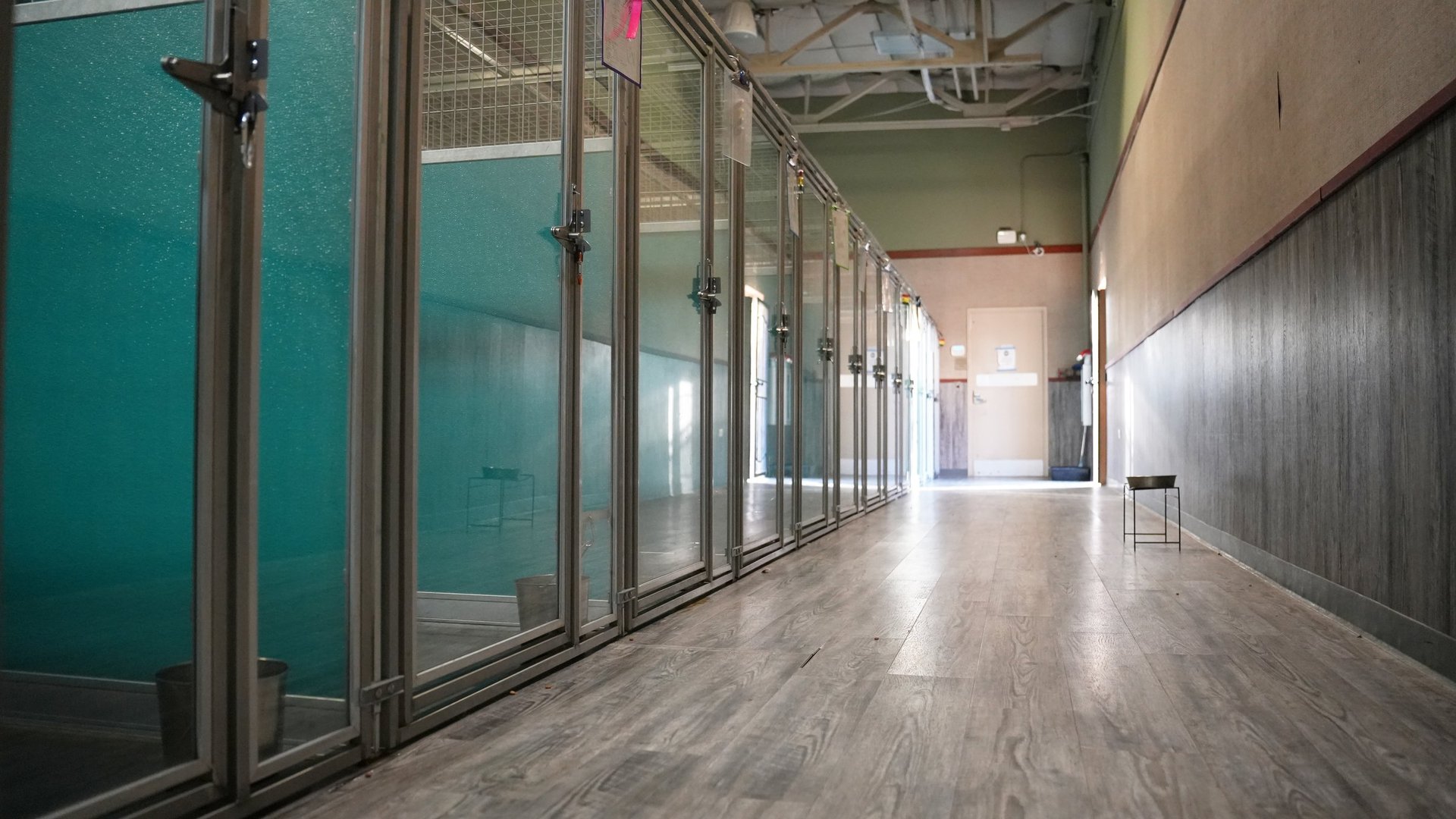
Trainer-run boarding beats a general kennel for a dog that panics at goodbyes. Families around DC Ranch and Grayhawk in the North Scottsdale corridor want the same thing: staff who read stress signals rather than attendants who only feed and clean runs on a schedule. Boarding at Partners Dogs keeps the same 1:10 trainer-to-dog ratio you would find at either the Scottsdale or Cave Creek campus, a ratio that matters more for a dog that spirals the moment a stranger looks unfamiliar.
A PD360 Assessment is optional before a boarding stay, but families with a known-anxious dog often use it anyway for a same-day read on specific triggers. If the anxiety shows up at home too, our separation anxiety training guide covers that side of the work.
Sometimes travel boarding surfaces an anxiety that runs deeper than one trip. Xela, a German Shepherd mix, worked through Behavior Camp at the Scottsdale campus, and her separation anxiety toward her owner was named directly as a training focus late in the stay, after leash reactivity and resource guarding had already been worked earlier in the camp (read Xela's story). A checklist handles a four-night trip; it does not replace that kind of work if the anxiety shows up every day.
Frequently Asked Questions
What if my dog refuses to eat during the first day of a boarding stay?
Loss of appetite on the first day is common in anxious dogs and usually resolves once the new routine repeats a couple of times. Bring your dog's regular food from home rather than switching brands for the trip, and mention any known appetite issues to staff at drop-off so they can offer food between activities instead of only at set meal times.
How will I know if my anxious dog is settling in while I'm away?
Ask the facility how they update parents mid-stay, whether that is a text, a photo, or a call if something changes. A facility that proactively tracks how your dog is settling, rather than waiting for you to call and ask, is doing more than basic kenneling.
Should I talk to my vet about anti-anxiety medication before a boarding stay?
If your dog has a diagnosed anxiety condition or a history of panic during past stays, raise it with your veterinarian well before you book. Timing and dosing are their call to make, not something to decide on your own during an already stressful week, so let them tell you what the runway should look like.
Does an anxious dog need a private suite instead of standard kenneling?
Not always. What matters more is whether staff know your dog is anxious and adjust handling accordingly: shorter transitions between activities, a quieter spot during rest periods, and a calm handler at pickup. A private suite can help a dog that is also reactive to other dogs at the fence line, but it is not a requirement for separation anxiety on its own.
From reading to results
See what a boarding stay for an anxious dog actually includes
Trainer-run boarding means staff read stress signals from drop-off through pickup instead of feeding and cleaning runs on a schedule. See the amenities, ratios, and daily routine before you book.
Key takeaways
Start short practice separations two to three weeks before drop-off, not the week of. Pack one worn, unwashed item that carries your scent instead of a fresh blanket or a new toy. Book a trial half-day or overnight before the real stay so staff get a real read on your dog. Keep the goodbye at the door under ten seconds, no lingering and no repeated hugs. Choose a trainer-run campus with a 1:10 trainer-to-dog ratio over a general kennel for a dog that panics at goodbyes.
Keep reading
/Programs/Boarding/What%20Makes%20Partners%20Dogs%20boarding%20different%20from%20Kennels.jpeg?width=800&height=450&name=What%20Makes%20Partners%20Dogs%20boarding%20different%20from%20Kennels.jpeg)