Opening answer
At Partners Dogs, every boarding stay at our Scottsdale and Cave Creek campuses is run by trainers, not a separate kennel-attendant staff, so an anxious dog gets someone reading its stress signals around the clock instead of just supervised downtime. A kennel-attendant model can still be a safe choice for an easygoing dog on a routine week away, but if your dog struggles with anxiety, reactivity, or triggers like monsoon storms, the person on the floor matters more than the size of the run.
What does trainer-run boarding really mean?
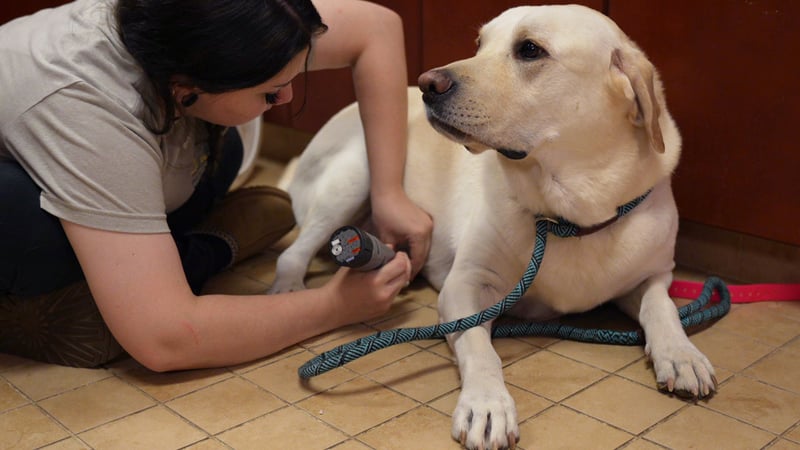
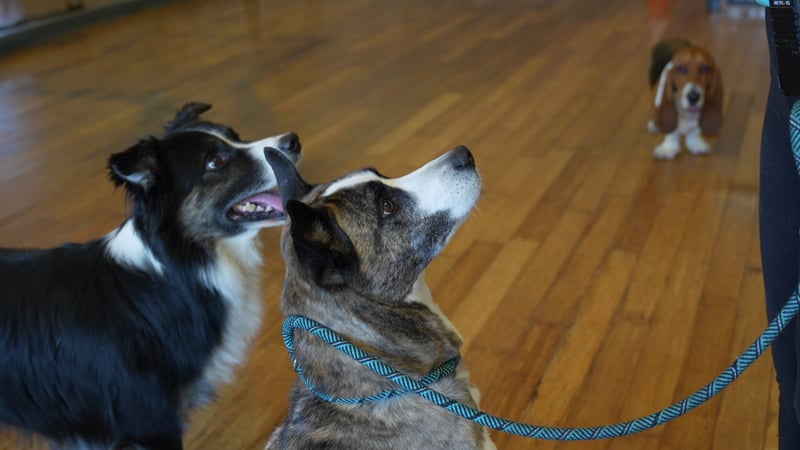
Trainer-run boarding means a certified trainer is the primary person handling your dog's day, from wake-up to lights-out, rather than a kennel attendant. At most facilities, boarding and training are staffed by separate teams. At Partners Dogs, the instructors who run Foundation Camp and Behavior Camp also work the boarding floor at our Scottsdale and Cave Creek campuses, holding the same 1:10 ratio we use in camps and classes. See our team page.
Who watches my dog while I'm away, a trainer or a kennel attendant?
At most boarding facilities, a kennel attendant handles your dog's day, and a trainer only steps in if you've already paid for a training package. That is not a knock on attendants; the split is structural, and the table below lays out where the roles differ.
| Factor | Trainer-run boarding | Kennel-attendant staffing |
|---|---|---|
| Primary daily handler | A trainer who also runs camps and classes | A kennel attendant, separate from training staff |
| Typical focus | Behavior observation woven into routine care | Feeding, cleaning, and supervised play |
| Response to rising stress | Trainer adjusts the dog's day in real time | Attendant manages the group, escalates if trained to |
| Handoff at pickup | Can describe how stress and body language changed | Can report what the dog ate and how it played |
| Best fit | Anxious, reactive, or training-heavy dogs | Easygoing, social dogs on a routine stay |
What the table does not show is who is actually on the floor near you in North Phoenix, Paradise Valley, or Desert Ridge, which is the one thing worth asking before booking.
What can a kennel-attendant model do well, and where does it stop?
A well-run kennel-attendant program can keep a relaxed, social dog fed, clean, and safe for a routine week away. Open-play settings, webcams, and long hours are genuine conveniences. For a dog with no history of reactivity or resource guarding, that model usually works fine. Where it runs out of room is volume containment versus education: attendant training runs days rather than years, built around moving a group safely rather than reading one dog's arousal as it climbs daily. Over-arousal rehearsed gets practiced, not resolved, which is why a trainer-run floor builds in rest cycles instead.
Is trainer-run boarding worth paying more for in the Phoenix area?
A trainer-run boarding stay usually costs more than an attendant-run kennel, and for most dogs that gap pays for actual supervision rather than a nicer lobby. Current rates for our campuses live on the pricing page, since prices change and this article should not. Families driving in from North Phoenix or Anthem should weigh one trip against a home pet sitter or a closer facility. If your dog is easygoing, the premium may not matter; if it is anxious or reactive, or a past boarding stay went sideways, it usually is worth it.
Take a look at what a trainer sees
Get a clear read before your dog's first stay
A PD360 Assessment gives a trainer a real look at your dog's stress signals and manners, so a first boarding stay starts with information instead of a guess.
Is trainer-run boarding better for an anxious dog?
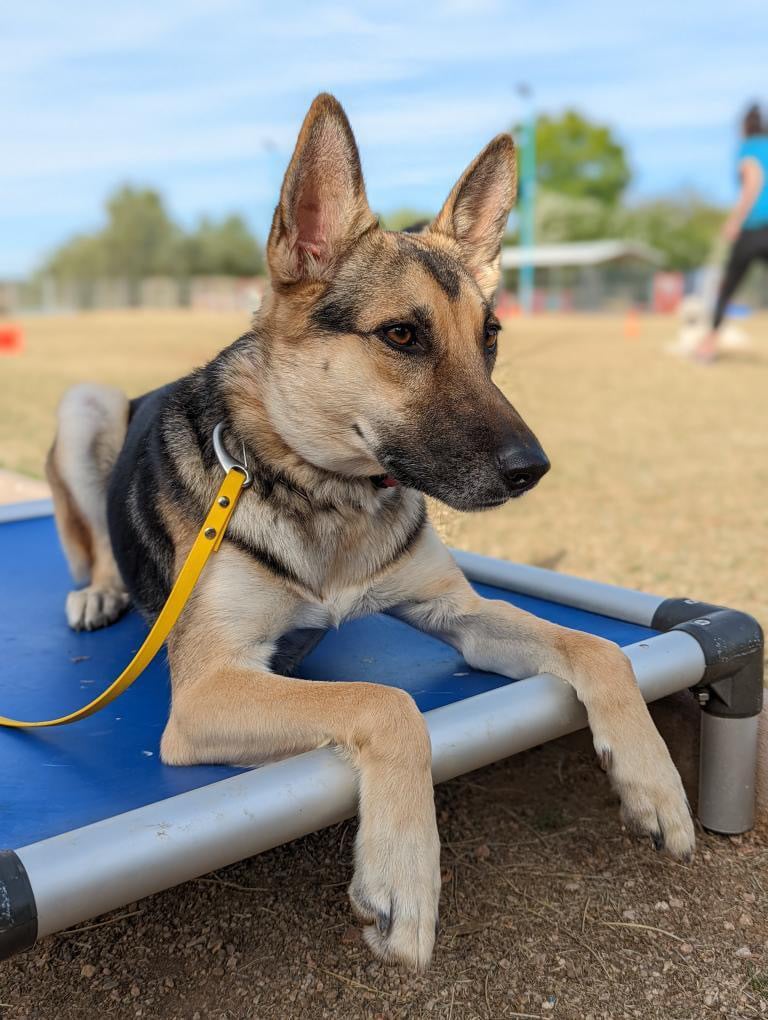
For a dog with real anxiety, being watched by a trainer instead of an attendant is usually the single biggest variable in whether a boarding stay goes well. A monsoon storm, an unfamiliar dog barking two runs over, a first night away from home: an attendant managing a group can miss the early signs of a dog sliding from alert into flooded. A trainer catches that gap before it becomes a bad night. We saw this with Xela, a German Shepherd mix who came through Behavior Camp carrying separation anxiety on top of leash reactivity; her three-week arc folded anxiety work into the daily routine rather than isolating it. Read Xela's full story.
What is the best boarding option in Scottsdale and Phoenix for an anxious traveler?
The best option for an anxious traveler in Scottsdale or greater Phoenix is the one where the same trainers who run camp also run the boarding floor, instead of a separate attendant staff bolted onto a kennel. That holds for families coming from Cave Creek, Carefree, or Fountain Hills too. A few questions separate a facility that says the right things from one that actually staffs that way:
- Who is physically on the floor during the day and overnight, not only who runs the training program?
- How are staff trained to recognize a dog sliding from alert into overwhelmed?
- Can you see the actual boarding area on a tour, not only the lobby or the daycare yard?
- What changes about your dog's day if staff notice rising stress?
Every dog boarding either campus, trained or not, gets the same trainer-run supervision.
How does someone get qualified to run a boarding floor at Partners Dogs?
Every trainer on our boarding floor works up through supervised hours before handling a dog solo overnight, the same pipeline that produces our camp instructors. Partners Dogs University is not as widely recognized as certifications from established outside bodies, and we say that plainly. The case rests on the hours: 1,000 to 2,000 supervised hours before someone runs a floor alone, a different starting point than the days-to-weeks onboarding common for attendant roles, and why trainer-run staffing costs more.
Key takeaways
- Trainer-run boarding means the same instructors who run camp also run the boarding floor at both campuses.
- The 1:10 trainer-to-dog ratio holds across boarding as well as camps and classes.
- A kennel-attendant model can still be a fine fit for an easygoing, social dog on a routine week away.
- Anxious and reactive dogs benefit most from a trainer reading early stress signals instead of an attendant managing group play.
- Current boarding rates live on the pricing page rather than in this article.
Frequently Asked Questions
Does a trainer-run boarding stay always cost more than a standard kennel?
Usually, though the gap depends on stay length. Current rates are on the pricing page.
Can I request a specific trainer to work with my dog during a boarding stay?
You can ask, and a dog who already knows an instructor from camp will often see that person again, staffing permitting.
Do kennel attendants ever work alongside trainers at a boarding facility?
Sometimes, depending on the facility. At Partners Dogs the trainers running boarding are the same instructors who run our camps, and any support staff work under their direction.
What happens if my dog has a rough night during a trainer-run boarding stay?
A trainer can adjust the dog's schedule, separate it from a stressor, or use a decompression routine, and families can call to check in any time.
Should I tour a boarding facility before booking, even if it advertises trainer-run staffing?
Yes. Ask to see the actual boarding area, not only the lobby, and ask who is physically on the floor overnight.
Does booking trainer-run boarding mean my dog automatically gets extra training sessions?
No. Plain boarding and boarding with an added training package are separate bookings, and a PD360 assessment is optional for boarding rather than required.
Get it on the calendar
See how a trainer-run boarding stay works
A weekend stay or two weeks while you travel gets the same standard: every stay at both campuses is supervised by trainers, never a separate attendant staff.
“First time boarding for the pups. I was more anxious then they were. Everyone made an effort to make me feel comfortable with leaving the pups for 4 nights. They kept me updated on how the pups were doing daily and took the time to talk to me when I called to check in.”Kelly H., Scottsdale
Keep reading