In short
10 dogs. That is the most any one Partners Dogs trainer supervises under our dog daycare staff ratio, in DaySchool and DayCamp alike, versus the 20 to 50 dogs per handler common at standard daycares. That gap in supervision is exactly where nervous, reactive, and newly adopted dogs get missed.
What "1 Trainer Per 10 Dogs" Means
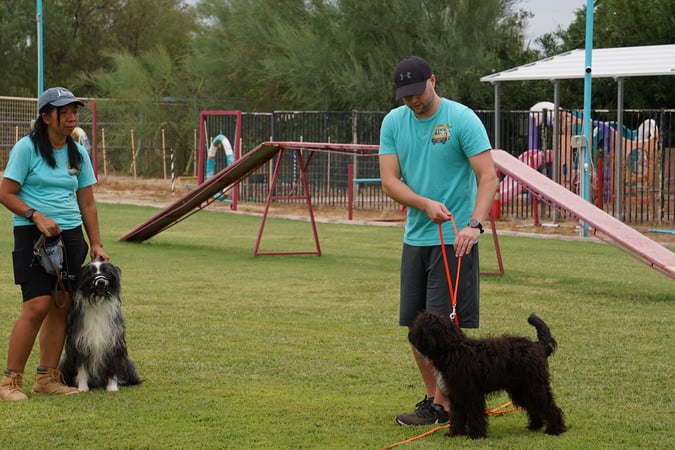
A dog daycare staff ratio describes how many dogs one person is responsible for watching at the same time, and that number decides how much of each dog a handler can actually see. At Partners Dogs, both DaySchool and DayCamp run on the same standard: one trainer for every 10 dogs, held at both the Scottsdale and Cave Creek campuses.
Ten dogs is a number a trained handler can track. They can watch body posture change across the group, notice which two dogs are circling each other a little too long, and step in before a disagreement becomes a fight. That is the whole point of the ratio: it states the working limit on how many animals one set of eyes can genuinely supervise at once. Every team member is trained to read complex dog behavior and handle an emergency calmly. A PD360 assessment sets each dog's starting point before it ever joins a group, so placement rests on that individual result.
Quick gut check
See Where Your Dog Would Land
A short quiz points you toward DaySchool's open play or DayCamp's smaller groups before you ever book a tour.
Why Most Daycares Run 20 to 50 Dogs Per Person
Most commercial daycares run 20 to 50 dogs per staff member because the business model rewards square footage and headcount over supervision quality. A bigger room with fewer employees costs less to run. From a spreadsheet, a "playroom" full of dogs looks the same whether it holds 15 dogs or 45, as long as nothing goes visibly wrong that day.
The problem is that nothing going visibly wrong is a low bar. A handler watching 30 or 40 dogs is managing crowd control, reacting once a problem is already loud enough to see from across the room. That model works fine for a room full of easygoing, thoroughly socialized dogs who mostly ignore each other. It falls apart the moment a nervous, fearful, or undersocialized dog is in that same room, because the warning signs that dog gives off happen quietly, long before anything is loud.
The Learning Economics of a Tight Ratio
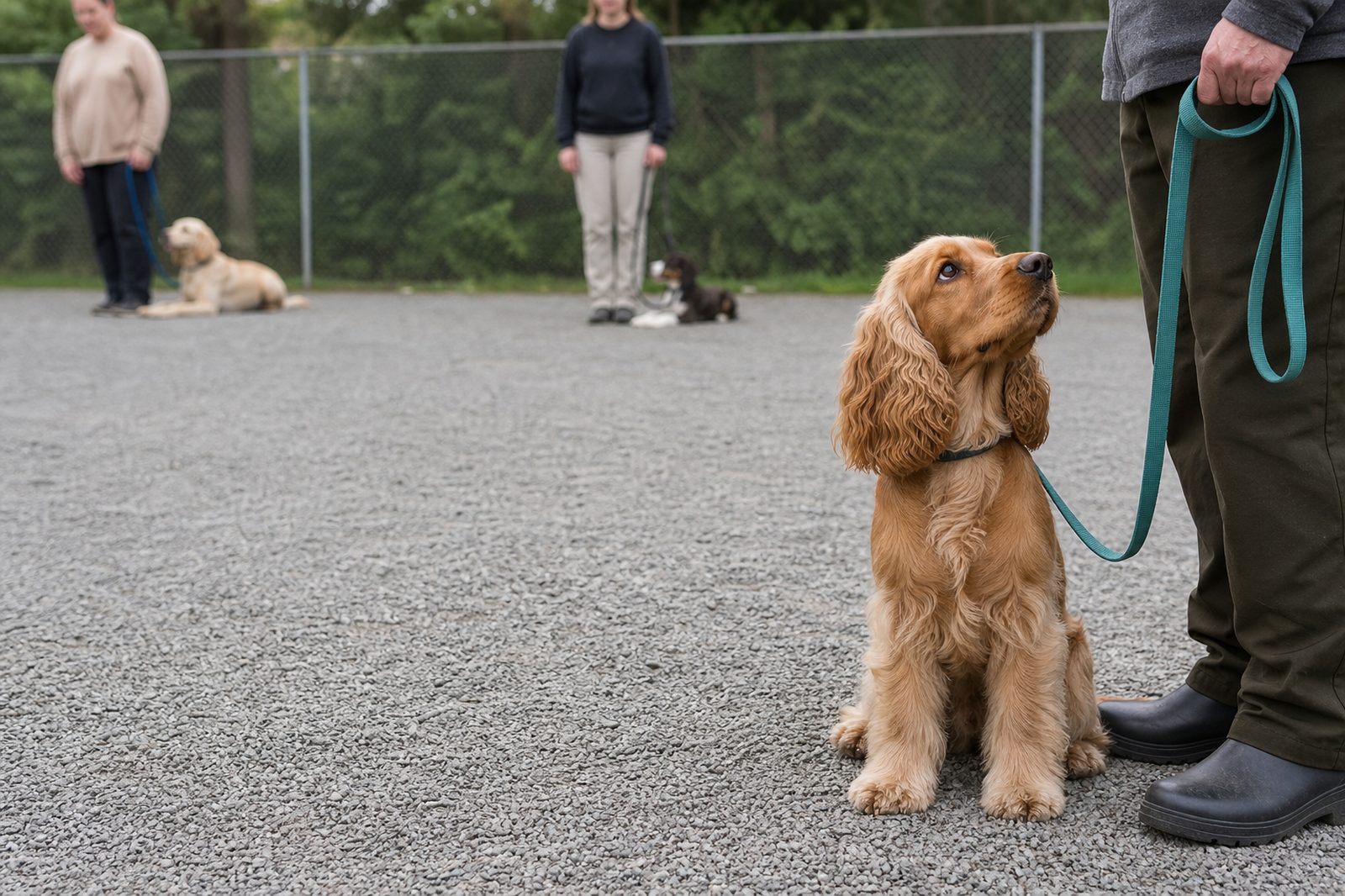
A tight ratio does more than keep dogs safe, it makes real training possible during the day. At a 10:1 ratio, a trainer runs actual skill work: obedience reps, impulse-control practice, and social coaching woven directly into play.
The same day tracks progress instead of passing time. Every skill is logged in our PD360 system and proofed through at least four stages of learning, so progress compounds week over week. Across eight cumulative grade levels, from Pre-School Puppy through Dogtorate, more than 130 behaviors are tracked, with weekly check-ins that re-set goals and move a dog up a grade once the work is solid. That kind of teaching has no room at 30 dogs to one handler, where the ratio leaves time only to react.
Catching Stress Signals Before They Escalate
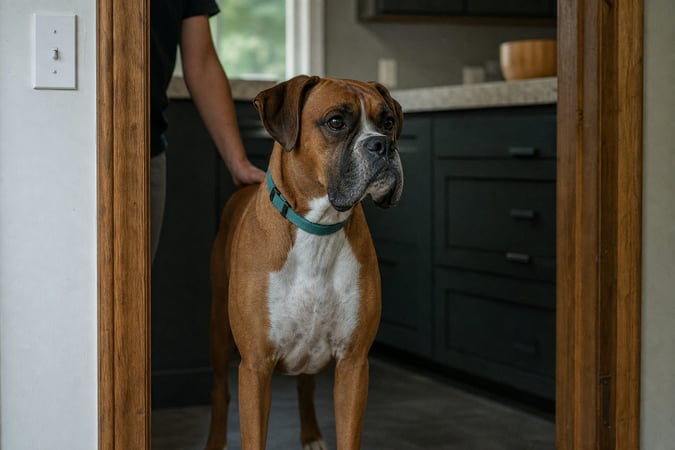
The dogs most at risk in a high-ratio room are not the loud ones, they are the quiet ones building pressure that nobody is close enough to notice. A dog that is about to react rarely announces it with a bark first. The signs come earlier and smaller: a stiffened body, a fixed stare, a tucked tail, repeated lip licking or yawning with nothing to be tired or hungry about, a dog that stops moving and goes very still.
Those signals are easy to catch when one person is watching ten dogs and nearly impossible to catch when one person is watching thirty or forty. By the time a stressed dog's behavior is loud enough to see from across a crowded room, it has usually already escalated past the point where a quiet redirect would have worked. The low staff ratio gives trainers on the floor, every one of whom is trained to read complex dog behavior and handle an emergency calmly, enough dogs per person to catch a problem while it is still quiet. At a 10:1 ratio in DaySchool and DayCamp, that is what a trainer close enough to a dog is watching for:
- Stiff, frozen posture instead of loose, wiggly movement
- A hard, fixed stare at another dog or a tucked, low tail
- Repeated lip licking or yawning with no obvious reason
- Pulling away from the group toward a fence line, corner, or exit
- Sudden stillness after a period of normal play
A dog showing more than one of these signals in group play is exactly the kind of dog Partners Dogs groups by temperament and, when needed, recommends starting in DayCamp's small-group training before joining DaySchool's open play, rather than leaving it to work itself out in a crowded room.
Why High Ratios Fail Nervous and Reactive Dogs
A dog who is confident, well-socialized, and easygoing can survive a 30:1 or 40:1 room. A nervous, fearful, reactive, or newly adopted dog usually cannot, and that gap is exactly why DayCamp exists as a separate structure from open play. Dogs working through general anxiety, reactivity, or a rough start before adoption do not need to be thrown into a crowded room and hope for the best. They need controlled exposure, a trainer close enough to redirect before arousal builds, and a pace set by what the individual dog can actually handle that day.
That is a structural mismatch a high-ratio room cannot fix no matter how well-meaning the staff are. One person genuinely cannot give a nervous dog the graduated, closely watched exposure it needs while also supervising 25 other dogs in open play. The dogs who need the most attention end up getting the least, simply because the math of the room does not allow for anything else.
How the Ratio Shows Up in a Real Day
Find your dog's fit
Find Out Where Your Dog Fits
A PD360 assessment day gives you a clear placement: DaySchool's open play, or DayCamp's smaller groups first.
The ratio shapes the day differently depending on which dog is in the room. In DaySchool, built for dogs already comfortable with off-leash group play, that same 10:1 ratio means play is grouped by size, energy, and play style, with trainers close enough to keep the group honest and step in the moment a match stops being a good one.
In DayCamp, built for dogs who are reactive, fearful, newly adopted, or simply over-aroused, the ratio does different work. Mornings run small-group training on the day's focus behaviors. Afternoons shift to supervised social time, with a trainer coaching the interaction directly. Progress toward earning a spot in DaySchool's open play is tracked against real milestones:
- Calm crate time on arrival
- Polite greetings on a structured leash
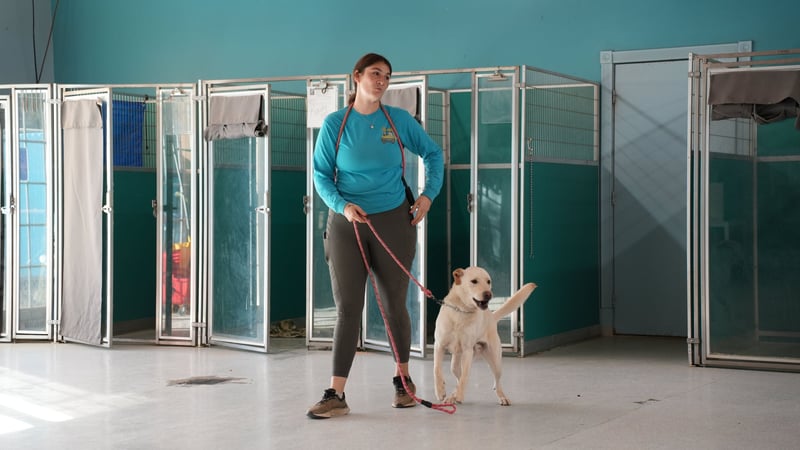
- A loose-leash walk past a kenneled dog
- A relaxed five-minute session with a hand-picked partner
- Full integration into group play
Most dogs get there in four to twelve weeks, and every dog's vaccinations are verified before they ever join a group. As one Scottsdale family put it in a Google review, Courtney P. wrote that the individual care of each dog is loving and caring, yet authoritative.
That kind of individual attention is not an accident, it is what a 10:1 ratio buys.
What to Ask Any Daycare About Their Ratio
Before you book anywhere, ask the facility a direct question: how many dogs is one staff member responsible for during open play, right now, today? A confident answer with a real number is a good sign. A vague answer about "plenty of staff" usually means nobody is tracking the ratio closely enough to state it. Here is how Partners Dogs answers each version of that question:
- What is the ratio during open play, right now? One trainer for every 10 dogs at both the Scottsdale and Cave Creek campuses, the best staffing ratio in Arizona.
- How are dogs grouped? By play style, size, and energy.
- What training do staff have in reading dog behavior? Every team member is trained to read complex dog behavior and handle an emergency calmly.
- Is there a separate track for dogs who are not ready for open play yet? Yes. DayCamp runs small-group training and coached social time until a dog reaches the tracked milestones for DaySchool's open play.
- Are vaccinations verified for every dog before they join a group? Yes, for every dog, before it ever joins a group.
A facility that can answer all five with specifics instead of "plenty of staff" is built for more than just getting through the day without incident. That has been the standard since 1997, across more than 70,000 dogs trained, reflected in 4.8 stars across 2,000+ reviews.
Frequently asked questions
What is Partners Dogs' trainer-to-dog ratio?
One trainer for every 10 dogs, held at both the Scottsdale and Cave Creek campuses across DaySchool and DayCamp. Every team member is trained to read complex dog behavior and handle an emergency calmly.
Why does a low dog-to-trainer ratio matter for a nervous or reactive dog?
Nervous and reactive dogs give off quiet stress signals well before anything looks like a problem from across a crowded room: a stiff posture, a fixed stare, lip licking, or pulling away from the group. A trainer watching 10 dogs can catch and redirect those signals early. A trainer watching 30 or more dogs is reacting only after the behavior is already loud.
What ratio do most standard daycares run?
Most standard or warehouse-style daycares run 20 to 50 dogs per staff member, because a larger room with fewer employees is cheaper to operate. Partners Dogs holds 10 dogs to 1 trainer, the best staffing ratio in Arizona.
How does Partners Dogs decide if a dog is ready for open play?
A PD360 assessment day evaluates play style, obedience, and temperament before any dog joins a group. Dogs who are not yet ready for off-leash play start in DayCamp, working toward tracked milestones: calm crate time, polite leashed greetings, and a relaxed session with a hand-picked partner, before graduating into DaySchool's open play.
Does the same ratio apply at both the Scottsdale and Cave Creek locations?
Yes. The 10:1 dog-to-trainer ratio is held at both the Scottsdale campus and the Cave Creek campus, across DaySchool and DayCamp.
How long does a dog typically stay in DayCamp before moving to open play?
Most dogs reach the milestones for DaySchool's open play in 4 to 12 weeks of DayCamp. Some dogs need longer, and progress is reviewed regularly so the pace matches the individual dog rather than a fixed schedule.
Ready when you are
Give Your Dog the Attention a Tight Ratio Makes Possible
A PD360 assessment day sets your dog's starting point, whether that is DaySchool's open play or the structure of DayCamp first.
Keep reading