In short
Brushing your dog's teeth goes smoothly once your dog is comfortable with the handling, not before. Use a dog-specific brush and dog-safe toothpaste, work in short sessions after your dog is already tired, and build the routine up gradually instead of forcing it in one sitting. It is the same handling groundwork Partners Dogs trainers build with dogs in the North Phoenix area every week.
Brushing your dog's teeth is the household chore most owners skip, and it is the one with the largest consequences. Plaque and tartar do not stop at bad breath. Left alone, they lead to gum disease and tooth loss, and veterinarians link untreated dental infection to problems in the heart, liver, and kidneys, because bacteria from an inflamed mouth do not stay in the mouth.
The good news is that this is a training problem more than a dental one. Almost every owner who gives up on brushing gives up because the dog fights the handling, not because the brushing itself is difficult. Get the dog comfortable, and the routine is quick.
Start with one piece of timing. Brush when your dog is already tired, after a long walk or a hard play session, rather than when your dog is fresh and looking for something to do. A tired dog has far less interest in arguing with you.
Pick the Right Brush for Your Dog's Teeth
Dog toothbrushes look like ours, but the head is smaller and the bristles are considerably softer, which matters a great deal on gums that are not used to being touched. A long-handled version reaches the back molars, where most of the tartar actually accumulates and where most owners never get to.
If your dog is not ready for a brush, do not force one. Start with a finger brush that slips over your fingertip, a dental wipe, or simply your finger wrapped in gauze. Something you can control precisely beats a tool your dog is bracing against. Work up to the brush later.
Use Dog-Safe Toothpaste, Never Your Own
Human toothpaste is not safe for dogs, no exceptions. It is formulated to be spat out, and your dog will swallow every bit of it. Fluoride is a problem in quantity, and xylitol, which appears in many sugar-free brands, is genuinely dangerous to dogs.
Dog toothpaste is made to be swallowed. It usually comes in flavors dogs actively want, poultry or malt rather than mint, which turns the paste into part of the reward instead of part of the fight. Look for one that lists tartar control on the label.
Next step
Let a Professional Handle the Parts Brushing Does Not Reach
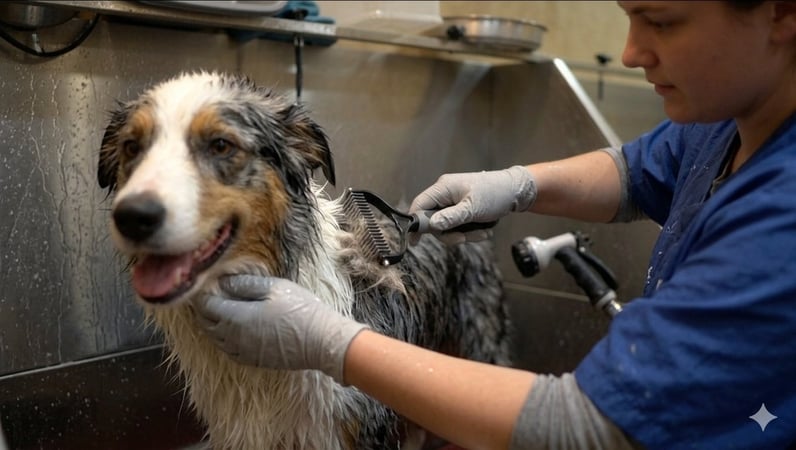
Home brushing keeps daily plaque down, but a professional visit clears buildup you cannot reach with a toothbrush and covers your dog's coat, ears, and nails at the same time.
Add a Dental Rinse Between Brushings
A dental spray is not a substitute for brushing, and anyone selling it that way is overselling. What it does well is cover the days brushing does not happen, slow plaque buildup, and freshen breath. Lift the lip, apply along the gum line, and leave your dog alone for a few minutes afterward so it stays where you put it.
Watch your dog the first few times. If you see heavy drooling, pawing at the mouth, or any other sign of discomfort, stop and check the product with your veterinarian before using it again. A visit to our Grooming team is also worth booking alongside brushing, since it covers the coat, ears, and nails a toothbrush never touches.
Teach Your Dog to Accept Handling First
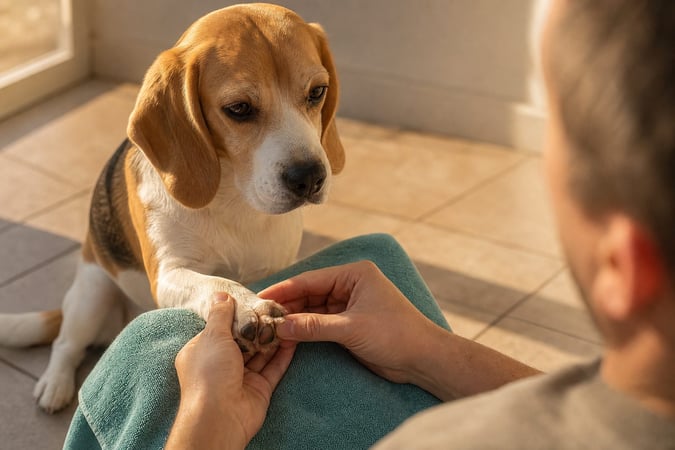
Every tip above assumes your dog will let you hold its face, and many dogs will not, at first. Build it in small steps across several days instead of trying to win it in one session.
- Touch the muzzle for one second, pay the dog, let go.
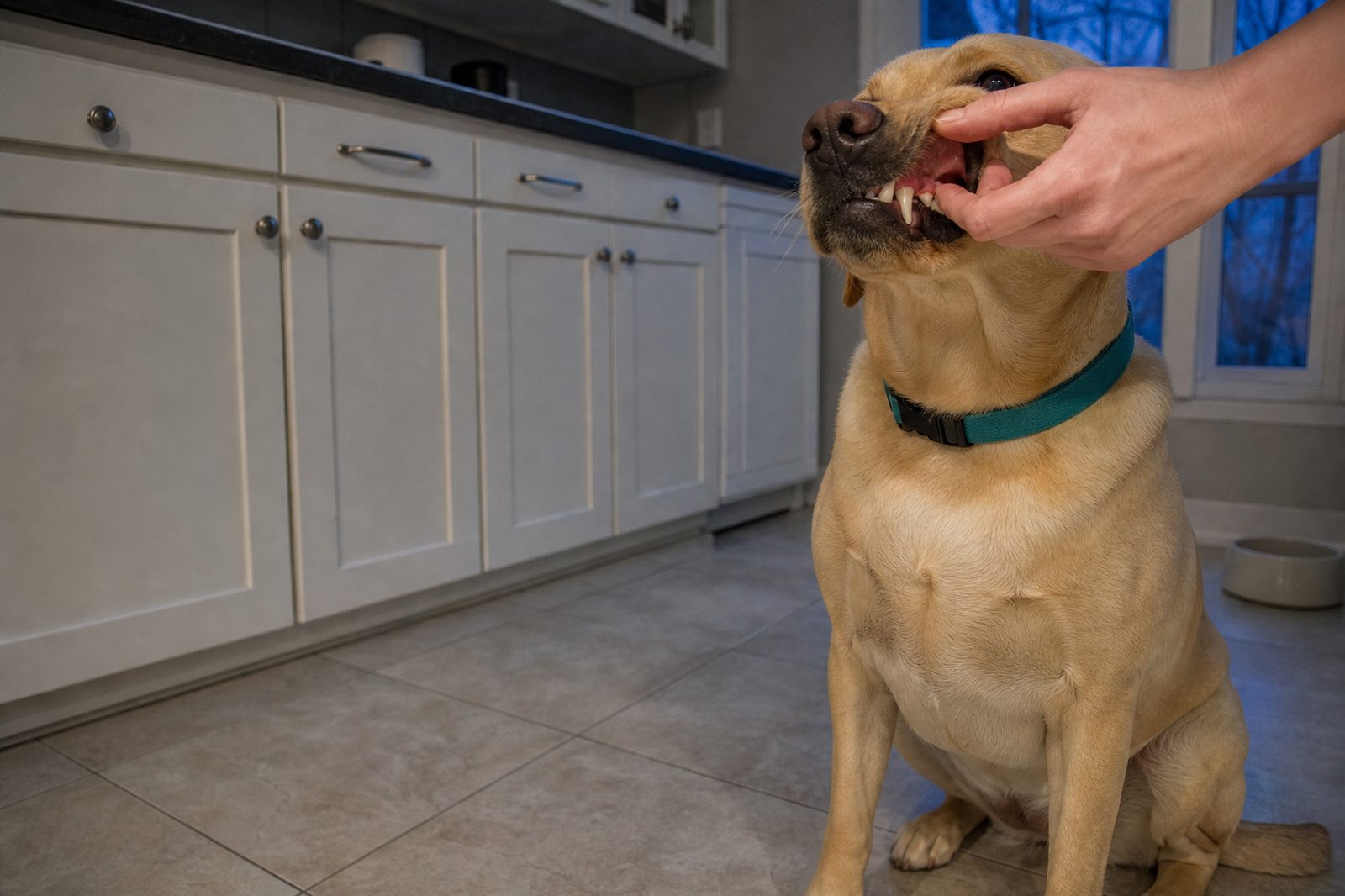
- Lift a lip, pay, let go.
- Run a finger along the outside of the teeth, pay, let go.
- Add paste on your finger, then the brush, one new thing at a time.
End every session while your dog is still comfortable, not after it has started to struggle. You are training the dog to accept the handling, and you can only train that while the dog is calm.
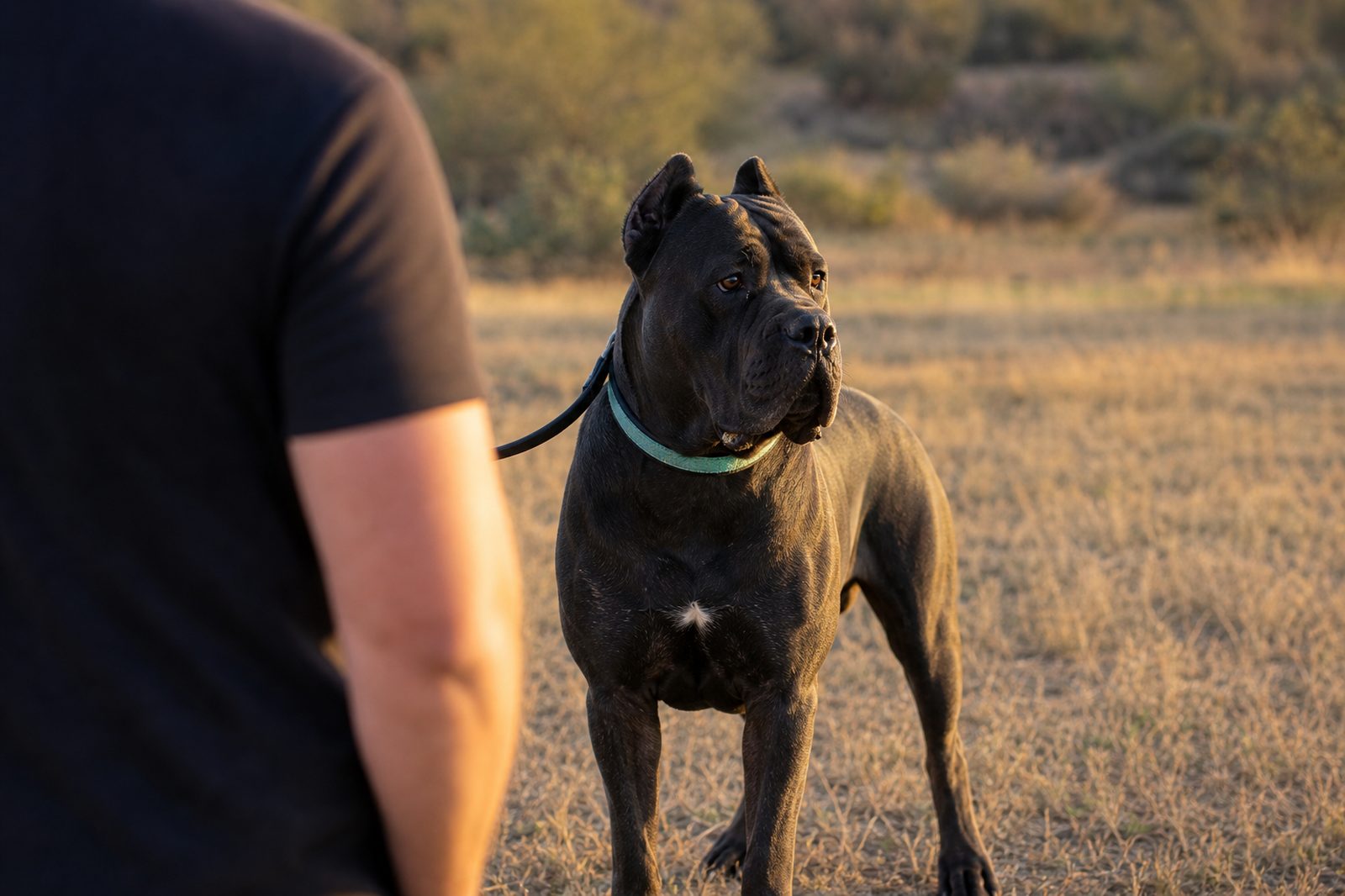
If your dog gets genuinely defensive when you reach for its face, snapping, stiffening, or freezing the moment you get close, that is a bigger conversation than dental care. A dog that guards its body from being touched is telling you something, and a PD360 Assessment is the fastest way to find out what is actually driving it before the reaction grows. Partners Dogs has run this same handling groundwork with dogs since 1997, from our original Cave Creek campus to our Scottsdale campus today.
For medical questions about your dog's mouth, your veterinarian is always the right call.
Frequently asked questions
How often should I brush my dog's teeth?
There is no single number that fits every dog, but the routine matters more than hitting an exact schedule. Daily is ideal if your dog tolerates it, and a few times a week still beats an inconsistent routine or none at all. Build the habit first and the frequency will follow.
What if my dog will not let me touch its mouth at all?
Back up to handling before you touch a brush to a single tooth. Start with one-second touches to the muzzle, pay the dog, and release, then build up in small steps over several days. If your dog snaps, stiffens, or freezes the moment you reach for its face, that is a handling and trust issue worth sorting out with a PD360 Assessment before you push further on your own.
Can I use my own toothpaste on my dog?
No. Human toothpaste is made to be spat out, and your dog will swallow it. Fluoride is a problem in quantity, and xylitol, found in many sugar-free brands, is genuinely dangerous to dogs. Use a toothpaste made specifically for dogs, which is formulated to be safe if swallowed.
Can a dental spray or rinse replace brushing?
No. A dental spray slows plaque buildup and freshens breath between brushings, but it does not remove existing tartar the way brushing does. Treat it as a backup for the days brushing does not happen, not a replacement for the routine.
When should I see a vet instead of just brushing at home?
See your veterinarian if you notice bleeding gums, visible tartar buildup, loose teeth, persistent bad breath, or your dog pawing at its mouth. Those are dental problems a toothbrush will not fix. Everyday handling and building the brushing habit is the training side, and that is where Partners Dogs can help.
Ready when you are
Give Your Dog's Whole Routine a Reset
If brushing keeps turning into a wrestling match, the fix usually starts with handling, not the toothbrush. Book a Grooming visit for the coat, ears, and nails, or talk to a trainer about the handling piece.
Keep reading