In short
Protect your dog's skin, coat, and paws in Arizona by limiting midday heat and pavement exposure, rinsing and checking paws after every walk, and keeping baths gentle and infrequent so you don't strip natural oils. Persistent itching, redness, or paw soreness is a job for a veterinarian, not another home remedy.
Why Arizona's Heat and Sun Stress a Dog's Skin, Coat, and Paws
Arizona is a beautiful place for a dog to live, wide skies, desert trails, and sun-soaked yards, but that same climate is hard on skin, coats, and paws. Partners families in Scottsdale and Cave Creek tend to notice the same patterns: dry or flaky skin, a dull coat, a dog licking or chewing at its feet, or sudden paw soreness after a short walk. These issues are not just cosmetic. Skin is your dog's largest organ and its first line of defense. When it is cracked, sunburned, or chronically irritated, your dog becomes more vulnerable to infection, discomfort, and the itching-driven restlessness that shows up as behavior at home.
Living in the desert means your dog faces three challenges every single day: intense UV exposure, very dry air, and surfaces that heat up fast. On a hot Arizona afternoon, asphalt and concrete get hot enough to injure paw pads well before the air temperature alone would suggest it, and summer pavement heat is one of the most common reasons Arizona dogs end up limping after an otherwise ordinary walk. Dry, low-humidity air pulls moisture out of skin and coat at the same time, and sun exposure can burn lightly pigmented areas like the nose, ears, and belly. Add in desert dust, native plant material, and seasonal allergies, and it is easy to see why skin and paw trouble is one of the most common reasons local dogs end up at the vet.
The good news: most of this is preventable with a few Arizona-aware habits, protecting your dog from direct environmental stress, building a simple home-care routine, and knowing when a problem needs a veterinarian instead of another shampoo.
How to Protect Paws From Hot Pavement and Rough Desert Surfaces
Paw care is where Arizona really differs from milder climates. Rough rock, cactus, and superheated pavement can all damage paw pads faster than most owners expect. Use the back-of-hand test before any walk on pavement, rock, or turf: if you cannot comfortably hold the back of your hand on the surface for more than a few seconds, it is too hot for your dog's paws too.
- Walk in the early morning or after sunset during the hottest months, and reroute to shaded dirt paths or grass when the sun is high.
- Keep nails trimmed so toes spread naturally, long nails change how paws land and make pads more vulnerable to injury.
- Rinse or wipe paws after hikes or yard time to clear dust, tiny cactus spines, and lawn chemicals, then dry between the toes so moisture does not sit in the creases.
- Ask about paw balms or protective booties if your dog does a lot of structured work on rough or hot surfaces.
- Do a 60-second nose-to-tail check after every outing: look for new bumps, redness, or limping, and peek between the toes for cuts, seeds, or thorns.
These habits catch small problems while they are still small, before a scraped pad turns into a limp or a real infection.
A Simple Home Care Routine for Skin and Coat
Home care should be simple, consistent, and gentle. A good rule of thumb is to think in layers: protect from the outside, support from the inside, and know when a problem needs medical help instead of another product.
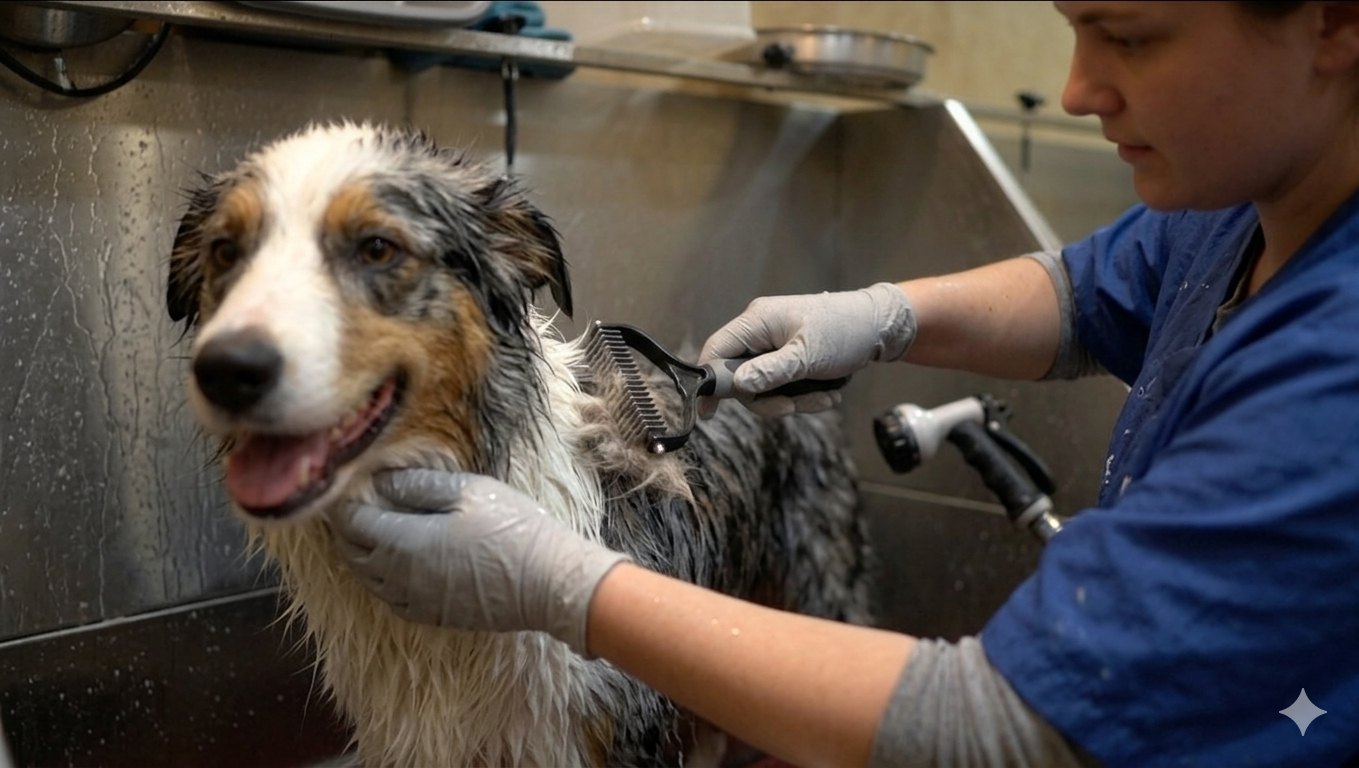
Start with bathing frequency. Most Arizona family dogs do not need frequent, heavy-duty baths. Over-bathing with a strong degreasing shampoo strips natural oils and can make dryness and itching worse. Aim for a gentle, dog-formulated, fragrance-free shampoo every three to six weeks unless your veterinarian says otherwise, and use damp cloths or vet-approved wipes for dusty paws and bellies in between. If your dog is in and out of dirt, cactus, and rough terrain often, a grooming visit with a professional who knows desert coats and paw pads is an easy way to stay ahead of buildup without over-bathing at home.
On nutrition and hydration, the basics still carry the most weight: a high-quality, complete diet formulated for your dog's life stage, and steady access to fresh, cool water, refreshed a few times a day since Arizona air pulls moisture out of a bowl fast. Regular parasite prevention matters too, even mostly-indoor dogs can pick up fleas or mites, and bite allergies can look exactly like a skin problem that has nothing to do with the desert at all.
Next step
Let a Professional Take a Look
If home care alone is not keeping up with your dog's coat, skin, or paw pads, a grooming visit is an easy way to reset and catch anything worth watching before it becomes a bigger issue.
Seasonal Care: What Changes From Summer to Winter
Keeping an Arizona dog's skin and paws healthy is not a one-season project, it shifts with the calendar. Summers demand heat, sun, and surface management. Winters, with indoor heating and even lower humidity, can dry skin out just as much in a different way.
In the hottest months, build your plan around timing, surfaces, and cooldowns. Walk early or late, use the back-of-hand test before every outing, and make a habit of scanning your yard and usual routes each season for new rough spots in concrete or areas where the sun now hits harder because of tree trimming or construction.
As the weather cools, it is easy to relax too much about skin and coat, but a heated home still dries a dog out. You may notice more static, a duller coat, or extra shedding. That is the cue to tighten the basics back up: consistent brushing for your dog's coat type, steady bathing frequency, and reliable hydration. If your dog is a regular in DaySchool, let the trainers know about any skin or paw sensitivities so they can factor rest and surface choices into the day.
When Skin or Paw Problems Need a Veterinarian
Most importantly, remember that persistent issues, ongoing itching, odor, hair loss, redness, or scabs, are medical problems, not grooming quirks. Rather than cycling through shampoos and internet remedies, schedule an exam so a veterinary team can look for allergies, infections, endocrine issues, or another underlying cause. Early diagnosis and a targeted treatment plan usually save a dog months of discomfort and an owner a lot of trial-and-error spending.
With a simple, consistent routine and a low threshold for asking questions, you can keep your dog's skin and paws healthier through every Arizona season, whether your dog is a high-energy trail partner, a reactive dog getting structured outdoor time through DayCamp, or a mostly-indoor senior who just needs safe, comfortable trips outside.
Frequently asked questions
How hot does Arizona pavement get for dog paws?
Pavement and concrete can heat up fast on a sunny Arizona day, hot enough to burn paw pads well before the air temperature alone would suggest a problem. Use the back-of-hand test before any walk: if you cannot hold the back of your hand comfortably on the surface for more than a few seconds, it is too hot for your dog. Walk in the early morning or evening instead.
How often should I bathe my dog in the desert?
Most Arizona family dogs do well with a gentle, dog-formulated bath every three to six weeks. Bathing more often, especially with a strong degreasing shampoo, strips natural oils and can make dry, itchy skin worse. Spot-clean dusty paws and bellies with a damp cloth or vet-approved wipe in between full baths.
Why is my dog licking or chewing at its paws?
Paw licking or chewing usually points to irritation, dryness from Arizona's low humidity, a foreign object like a cactus spine or seed lodged between the toes, or an allergy. Check between the toes for anything visible, and if the licking is frequent or ongoing, treat it as a reason to see your veterinarian rather than something to wait out.
Does Partners Dogs offer grooming for skin and paw care?
Yes. Partners Dogs offers grooming services at our Scottsdale and Cave Creek locations, including bathing and coat care that fits desert conditions. A grooming visit is a good way to stay ahead of buildup and catch skin or paw issues early without over-bathing at home.
What time of day is safest to walk my dog in an Arizona summer?
Early morning or after sunset is safest. Midday and early afternoon pavement temperatures are the most likely to injure paw pads, even when the air itself feels tolerable. If you are unsure, test the surface with the back of your hand before you let your dog walk on it.
Keep your dog comfortable
Give Skin, Coat, and Paws a Reset
A professional grooming visit clears buildup, catches early irritation, and keeps your dog comfortable through every Arizona season.
Keep reading