In short
The six things that break most often over the holidays are food, greetings, kids, containment, ID, and the calendar. Sort safe and unsafe foods, practice calm greetings, supervise every child-dog interaction, use the crate, confirm tags and microchip details, and book daycare or boarding early, and your household in the Carefree area has a much calmer season.
The holidays bring family, friends, food, and a low hum of anxiety about whether everything is going to hold together. We cannot help with the turkey. We can help make sure your dog is not the thing that goes wrong, whether the whole crew is landing at your place in Scottsdale or Cave Creek this year.
Six areas to get ahead of, ideally a few weeks before anyone arrives.
1. Know What Your Dog Can and Cannot Eat
Everyone at the table wants to share the meal, and some of it is fine while some of it means an emergency vet visit on a day when your regular clinic is closed.
Generally safe in small, plain portions:
- Turkey, skin removed
- Chicken, no bones
- Cooked sweet potato, no butter or seasoning
- Plain baked potato
- Plain pumpkin
- Cucumber, carrots, green beans
- Banana and apple, seeds removed
Keep away from your dog entirely:
- Alcohol, and yes, we have heard the stories
- Caffeine and chocolate
- Candy and anything sweetened with xylitol
- Grapes and raisins
- Onions, garlic, and chives
- Nutmeg and heavy spices
- Nuts
- Rich, salty, or sugary leftovers of any kind
The bigger risk is rarely what you feed your dog. It is what a well-meaning guest slips under the table. Tell people the rule before dinner starts, not after someone is already holding a piece of turkey skin under the tablecloth.
2. Train Calm Greetings Before the Day Arrives
If your dog mugs every person who walks through your door, the morning of the party is far too late to address it. Controlled greetings have to be built in advance, when the stakes are low and you have a spare hand.
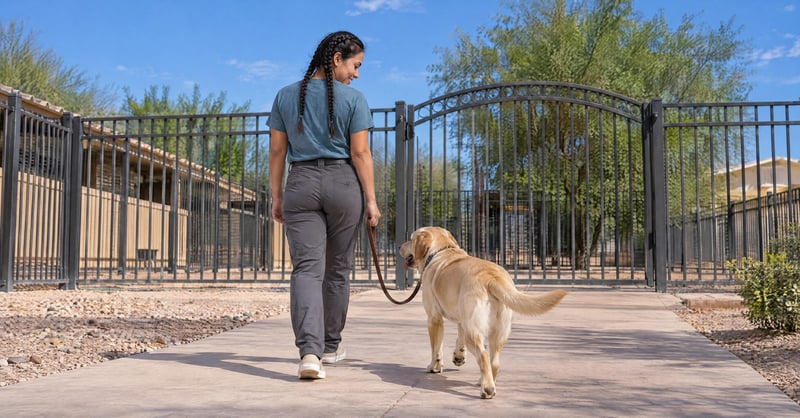
Practice with one family member at a time. Walk your dog toward them and reward a calm approach: four feet on the floor, no pulling, no shoving into their space. If your dog is genuinely rambunctious, work on leash and collar so you can interrupt the wrong choice and redirect before it becomes a rehearsal. Repeat until it is boring. A greeting your dog can do calmly with the family is a greeting they have a real shot at managing with a stranger at the door.
3. Supervise Every Interaction With Kids
Dog bites go up around the holidays, and it is not because dogs get worse in December. The house fills with noise, stress, and unfamiliar people, and small children who do not read warning signs get turned loose in the middle of it.
Even a dog who is excellent with people needs supervision around kids. Children lean on dogs, hug their necks, corner them, and pull at them, and they do not notice the whale eye, the lip lick, the stiffening, or the turn away that means a dog has had enough. A growl at that point is not aggression. It is a warning that the dog has run out of other ways to communicate.
Two jobs, then. Teach the children in your house how to approach a dog gently and when to leave one alone. And watch every interaction yourself, so that the moment your dog looks uncomfortable, you can move the child along and give your dog somewhere else to be.
If your dog has already started growling or stiffening around your own family, do not wait for the holidays to test it. That pattern gets worse without professional help, not better.
Need a hand this season
Get a Trainer's Eyes on Your Holiday Plan
If your dog already struggles with greetings, kids, or a full house, a short call before the holidays beats troubleshooting mid-party.
4. Use the Crate
Crating is the single most effective tool for getting a dog through a busy holiday, and the one people feel guiltiest about.
Set the expectation now: it can feel unkind to put your dog away while everyone else enjoys the evening. In practice, it is safer and calmer for the dog. They cannot steal food off the counter, they cannot knock your grandmother over, and you are not tracking them around a crowded room while trying to host. Dogs are denning animals. A quiet, covered crate in a back bedroom is a relief, not a punishment.
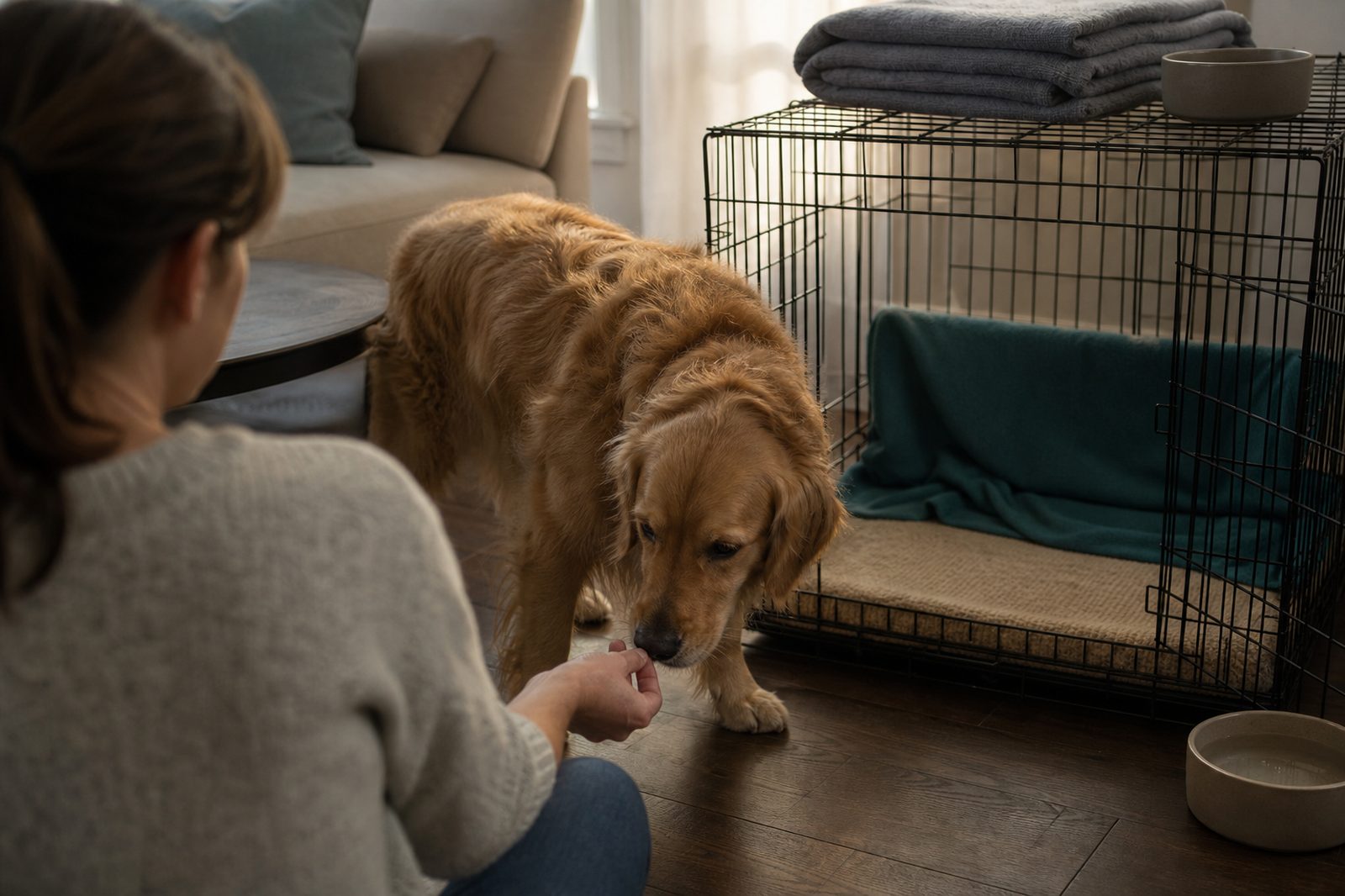
The catch is that this only works if you practice first. A dog crated for the first time on the day twelve strangers arrive will panic. Build the habit weeks ahead, with meals and chews in the crate, until settling in there is unremarkable.
5. Check Tags and Microchip Details
The holidays are peak season for lost dogs. Doors open and close constantly, guests do not check behind them, and a dog who has never shown any interest in escaping will slip out during the confusion.
Take five minutes now. Confirm the collar tag is secure and readable, confirm your dog is microchipped, and confirm the number registered to that chip is one you still answer. A chip with a dead number attached does nothing when it matters most.
6. Book Daycare or Boarding Early
If you are traveling, running errands all week, or simply know your dog will not cope with a full house, booking care ahead of time solves the problem outright.
If your dog is genuinely social and comfortable around other dogs and people, DaySchool covers the days you are cooking, cleaning, or hosting, and a tired dog is a much easier dog to have underfoot that evening. If your dog is reactive, fearful, undersocialized, or newly adopted, DayCamp is built for exactly that dog, structured and paced for dogs who cannot just be dropped into a big open room. A PD360 Assessment is the first step toward a DayCamp plan, and it is worth starting now rather than the week the family arrives.
Book early either way. Reputable care fills up for the holidays well in advance, and waiting means either a facility you have not vetted or a change to your plans.
Start Now, Not the Week Of
Every item on this list works better with lead time. Greetings, crate training, and daycare reservations all need weeks, not days. The households in Scottsdale and Cave Creek that get through the holidays calmly are the ones that did the boring preparation in November, not the ones scrambling the day the doorbell starts ringing.
Frequently asked questions
What foods are safe for my dog during the holidays?
Plain, unseasoned turkey with the skin removed, boneless chicken, plain cooked sweet potato or baked potato, plain pumpkin, cucumber, carrots, green beans, and banana or apple with the seeds removed are generally safe in small portions. Keep alcohol, caffeine, chocolate, xylitol, grapes and raisins, onions, garlic, chives, nutmeg, nuts, and rich or salty leftovers away from your dog entirely, and tell guests the rule before the meal starts.
How do I stop my dog from jumping on guests during the holidays?
Practice calm greetings before the day arrives, not on the day itself. Walk your dog toward one family member at a time and reward four feet on the floor and no pulling. Use a leash and collar if your dog is genuinely rambunctious so you can interrupt and redirect before the jump happens, and repeat it until it is boring. A greeting your dog can do calmly with family gives them a real shot at managing it with a stranger at the door.
Is it safe to crate my dog during a holiday party?
Yes, and it is often the safest option. A crate keeps your dog away from counter food, crowded rooms, and the stress of constant new people, and dogs are denning animals who generally find a quiet, covered crate calming rather than punishing. The key is practicing it for weeks beforehand with meals and chews, so the first time your dog is crated is not the day guests arrive.
My dog growls or stiffens around my own kids or family. What should I do before the holidays?
Do not wait for a bigger house full of people to test it. Growling or stiffening around family members is a warning that the dog has run out of other ways to communicate, and that pattern tends to get worse without professional help, not better on its own. Get an assessment and a plan before the holidays add more noise, more guests, and more unsupervised moments to the mix.
How far in advance should I book holiday daycare or boarding?
Book as early as you can, ideally weeks ahead. Reputable daycare and boarding fill their holiday calendar fast, and waiting until the week of usually means either a facility you have not vetted or a change to your plans. If your dog is social, DaySchool covers the busy days. If your dog is reactive, fearful, or undersocialized, start with an assessment so a DayCamp plan is in place before the calendar fills up.
What is the fastest way to prepare my dog's ID before guests start arriving?
Give it five minutes. Confirm the collar tag is secure and the text is still readable, confirm your dog is microchipped, and confirm the phone number attached to that chip is current. Doors open and close constantly during the holidays, and a dog who has never tried to bolt before can slip out in the confusion, so this is worth doing before the first guest arrives, not after.
Ready for the holidays
Give Your Dog Somewhere Good to Be This Season
Whether your dog just needs a calm day away from the chaos or a real plan for family reactivity, DayCamp begins with a PD360 Assessment, and it is worth booking before the holiday calendar fills up.
Keep reading
/Programs/Transform%20Camp/Safer%20home%20(1).jpeg?width=800&height=450&name=Safer%20home%20(1).jpeg)