What the record shows
A high-energy dog settles into a Tempe apartment when the checklist covers real skills, not good intentions: door control before the hallway, elevator manners on cue, and a bark response that respects a shared wall. Short structured sessions build actual fatigue faster than one long walk in nine hundred square feet. On the weeks a work schedule outpaces the apartment, Tempe families lean on DayCamp for open play and DaySchool for structured middle-of-the-week training.
A one-bedroom near Mill Avenue asks more of a dog than a house with a yard ever did. Every trip outside crosses a shared hallway and elevator, under someone else's ceiling. An untrained dog drags toward the door, lunges for the elevator, and barks at every hallway sound through drywall built for cost, not soundproofing.
Reilly L., Scottsdale, put it plainly after her own high-energy doodle went through daycare: "Partners is leaps and bounds above the other dog daycares out there. Everyone that works there is a trainer."
What does a complete apartment checklist include for a high-energy dog?
Six skills separate a dog who settles into shared housing from one who earns a letter from the property manager. Most advice stops at exercise. The skills that keep the peace are the ones nobody thinks to teach.
| Checklist item | Why it gets skipped |
|---|---|
| Door and hallway exit control | Owners train the walk, not the seconds before it |
| Elevator entry and exit on a settled cue | Most dogs only meet an elevator a few times a week |
| A bark response trained before day one of a complaint | Training starts only after a neighbor knocked |
| A daily exercise plan sized to the unit, not a yard | Owners assume walking is the only lever |
| Two or three purposeful indoor games | Hallway fetch looks like enough activity, but is not structured |
| A hallway greeting protocol for people and dogs | Greetings get practiced by accident, in the worst spot for it |
What should a high-energy dog do at the door before the hallway?
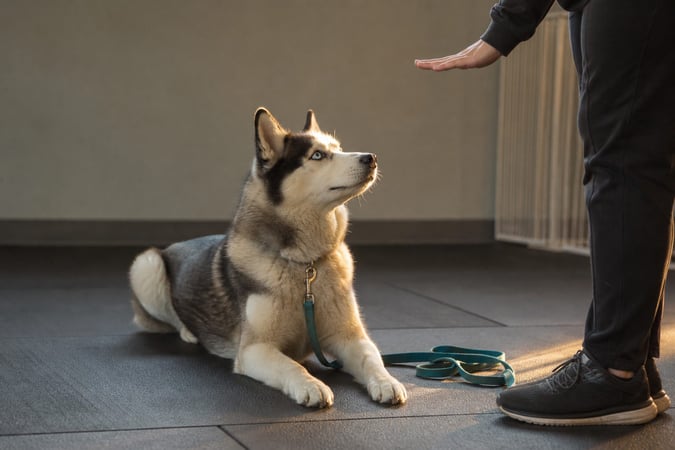
The three seconds before the door opens decide the whole hallway trip. A dog leaning into the leash with eyes locked on the doorframe hits the hallway the same way: forward, past whoever is walking by. The fix is a sit or place cue held until the dog's weight settles back, released only once the dog looks at the handler.
A Border Collie mix named Benny came through Foundation Camp with leash pulling and a habit of bolting through open doors and crates. Foundation Camp broke the door-bolting within the first few days and built the off switch his drive was missing, and his owners now describe a dog who responds to a plain no instead of testing it.
How do you teach elevator manners in a mid-rise or high-rise apartment?
An elevator is a box that moves, and most dogs have never been taught what to do with that. The doors open onto a space smaller than most closets, and the car lurches before anyone can reset. A dog who has only practiced calm entries at ground level will not automatically generalize that to a metal box.
Elevator work breaks into three skills: entering on a released cue instead of a lunge, standing still while the car moves, and exiting only on release. Each piece gets rehearsed at a quiet hour before it meets rush-hour crowding. Skip the middle step and a dog spins the first time the car moves, a pattern that repeats until someone interrupts it.
How do you stop shared-wall barking without a neighbor complaint?
A shared wall turns a dog's normal alert bark into someone else's problem within seconds. Footsteps in the hallway, a door closing two units down, a dog passing below a balcony: none of it registers in a house with a yard buffer, but in an apartment it is the trigger list for half the day. Maricopa County requires a six-foot leash or less off a dog's own property, putting an apartment dog within earshot of every neighbor on the floor.
The fix is controlling what the dog can see and rewarding quiet before the bark starts, not after. Blocking the sightline to the hallway door moves faster than yelling over a bark already underway. Dogs stuck on this pattern get a deeper walkthrough on the excessive barking behavior page.
Have a trainer look
Get an accurate read before guessing at the fix
A PD360 Assessment puts a trainer's eyes on the actual triggers instead of a checklist applied blind.
What tires a high-energy dog in nine hundred square feet?
A tired dog in an apartment gets built from structured reps, not one long walk. A 30-minute walk burns energy, but a high-energy dog usually has enough drive left to still bark at the mail carrier by six. What flips the switch is short sessions that work the brain as hard as the body.
| Activity | What it targets | Time needed |
|---|---|---|
| Hallway fetch or tug sprints | Burns physical energy fast | 10 to 15 minutes |
| Scent search with hidden treats | Works the nose and brain, no lap outside needed | 10 minutes |
| Structured place or settle work | Teaches the off switch a high-drive dog lacks | Short reps daily |
| A supervised DaySchool or DayCamp day | Structure the apartment alone cannot replicate | A full day, as needed |
A dog can be worn out physically and still not know how to lie down and stay down once the apartment goes quiet, the gap behind pacing and the restless energy a neighbor reads as constant noise.
When is Tempe daycare or DaySchool the better outlet than doing it all at home?
A checklist covers the apartment; it does not cover a ten-hour workday. A national daycare franchise down the street covers the physical outlet on an occasional off week. What a big open-play floor does not do is train any item on this list: volume over curriculum, staff trained in days rather than years, and open play for every dog at once rather than a 1:10 ratio tracking one dog's progress. DayCamp is trainer-supervised play built the same way; DaySchool folds the coached reps into the day itself.
A workday that runs long once or twice a week points to DayCamp; a schedule that eats the whole day, every day, points to DaySchool, where the coached reps happen while the dog is already out of the apartment.
Key takeaways
- Door control is trained before the leash goes on, not after the dog is already leaning into the hallway.
- Elevator manners break into three skills: entry, standing still through the motion, and exit on release.
- Maricopa County keeps dogs on a six-foot leash or less off their own property, putting an apartment dog within earshot of neighbors constantly.
- A tired apartment dog comes from short structured reps and settle work, not a single long walk.
- DayCamp covers open play; DaySchool folds training reps into a full day.
Frequently Asked Questions
Is dog daycare in Chandler worth the drive for a busy professional?
Yes, once the required temperament evaluation is done. Every dog needs that one-time screening before the first day of open play; after that, the drive fits the same drop-off window a Chandler commute already has room for.
Does DaySchool work if a workday runs long every single day, not just once in a while?
Yes, that is the schedule it is built for. A dog goes in before the workday starts and comes home with the day's reps already done, structure a ten-hour day in an apartment cannot replicate on its own.
How much floor space does a dog need for indoor games to work?
Less than most owners assume. A hallway the length of a one-bedroom unit is enough for fetch sprints, and scent games need almost none since they work the nose, not a running stride.
What is the biggest apartment training mistake with a high-energy dog?
Treating exercise as the whole solution. A dog can be tired and still not know how to lie down and stay settled once activity stops, which is the gap behind pacing and reactive barking after a long walk.
How soon can a high-energy dog handle a hallway greeting without a reaction?
It varies, but visible change tends to follow within the first few weeks of consistent practice, not days, fastest once door and threshold control are solid.
Get a spot on the schedule
Give a high-energy dog a place built for shared-wall living
DaySchool folds coached manners work into a full day of supervised play, so a dog comes home with the skills on this checklist and the energy already spent.
Keep reading