Private lessons win for a stable, already-social dog polishing manners in the exact spot the problem shows up. Board and train wins for a serious behavior problem, because a hard case needs more correctly-timed reps and more handlers than one weekly hour can give it. Which format fixes your dog faster depends on which of those two describes your dog, not which one sounds easier to commit to.
Which one works faster: sending your dog away for two weeks of board and train, or bringing a trainer into your living room in Scottsdale or Cave Creek? Families buried in pulling, mouthing, and general chaos usually want a straight answer before they spend a dollar, not a shrug and a pamphlet. The answer depends on what kind of problem you are solving, so start by naming which one you have.
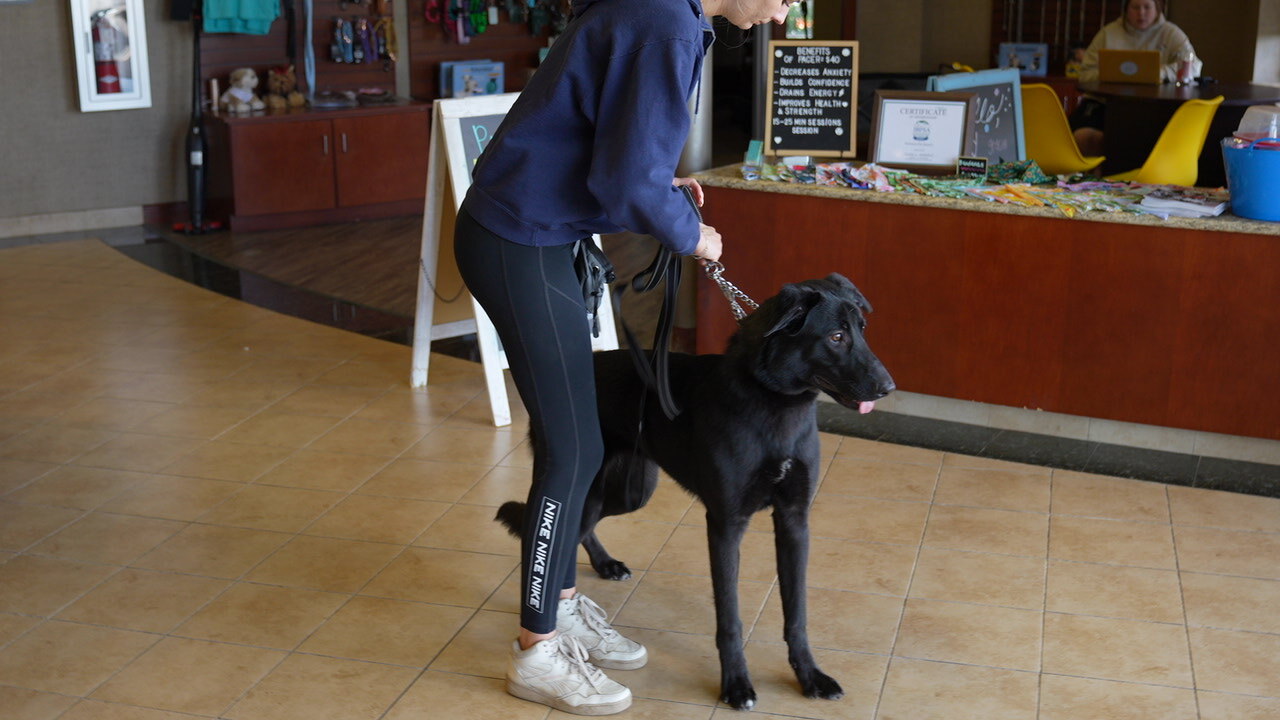
What Makes Private Lessons the Stronger Starting Point
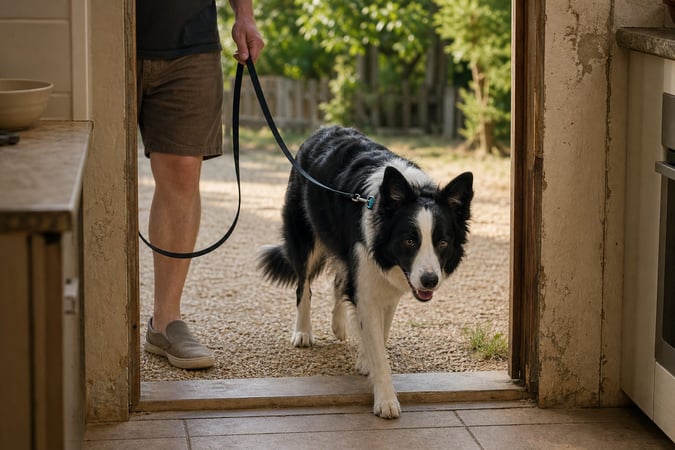
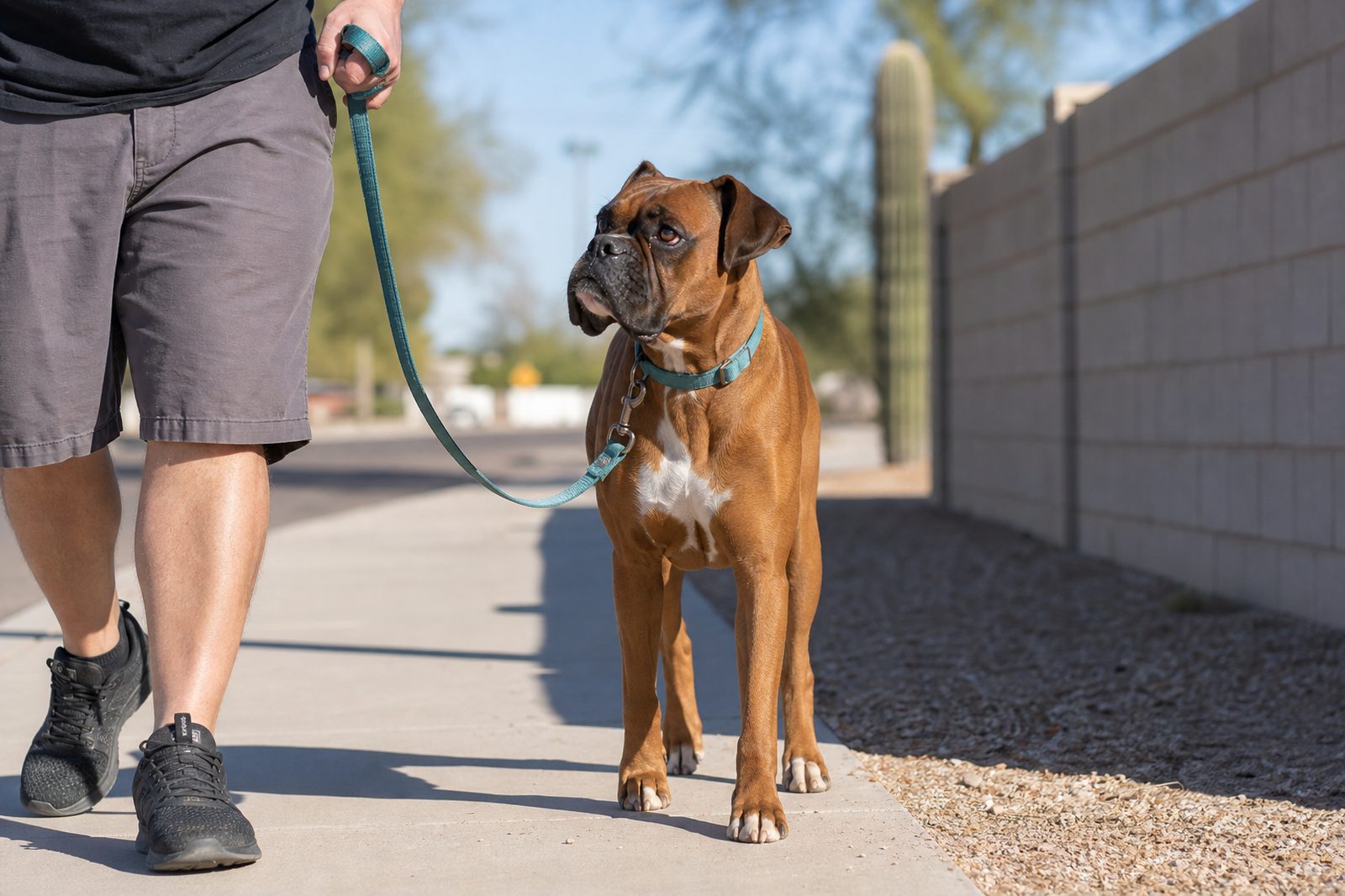
Private lessons meet your dog in the exact environment where the problem happens. A trainer works in your kitchen where the counter-surfing starts, your front hallway where the door-bolting starts, or your own leash on your own street. Scheduling bends around your week instead of the other way around, there is no boarding separation for you or the dog, and a single Private Lessons session costs less than a multi-week stay. For a family that just wants targeted coaching, not a program, that combination is hard to beat.
"We had Kalie come to our home and do a private lesson with Copper. She was very informative and gave us a lot of training tips. We would highly recommend her to anyone that needs some good training."
James, Cave Creek
That is the private-lesson case at its strongest: context-specific coaching, delivered where the behavior lives, with the owner doing the handling the entire time instead of watching from a video call two weeks later.
When Does Private Lessons Win Outright
A dog that is already stable and social does not need two weeks away, it needs one focused session. If your dog already walks calmly and greets guests without drama, and just has one narrow gap: jumping on grandma, or blowing off a "leave it" near the trash can, a single private lesson can close that gap without disrupting the household's routine at all. This is the case the board-and-train pitch tends to skip past: a dog with good foundations and one specific habit to sharpen is exactly what one-on-one coaching was built for.
"After completing Level One training, we enhanced our training with a private lesson. All of the trainers here at Partners are exceptional. Noah knew Rex from Level One, and could assist with his ongoing training. I would highly recommend for anyone who wants a loving, but obedient dog."
Thea S., Cave Creek
Rex was not a behavior case. He was a trained dog getting one more targeted pass on top of a foundation he already had, and one session did the job. That is a different problem than what the next section is about.
Why Behavior Cases Need More Reps Than One Session a Week
A serious behavior problem needs more correctly-timed repetitions than one weekly hour can produce. Once you move past manners polish into leash reactivity, resource guarding, or a dog that knows a cue and still will not hold it under pressure, the math changes. Private lessons run roughly once a week, which means the other six-plus days depend entirely on the owner reproducing the technique alone and under pressure. There is no second set of trained eyes watching for the small errors that let a behavior creep back in. Read the full mechanics of that gap in our breakdown of why a dog can know a command and still not do it reliably.
- Board and train delivers daily reps across the whole day, not one supervised hour.
- Multiple trainers work the dog by design, so the response generalizes to more than one voice and one room.
- Structured rest cycles between sessions keep a dog under threshold long enough to learn, instead of just managing arousal in the moment.
None of this means private lessons are weak. It means a behavior problem consumes more correct repetition than a once-a-week format was ever designed to deliver on its own.
Start with clarity
Not sure which case you have?
A PD360 Assessment scopes your dog's actual behavior before you commit to either format, so the plan matches the case in front of you instead of the format that sounds easier.
Does a Dog Trained Away From Home Come Home Trained
The fair criticism of board and train deserves a direct answer, not a dodge. The American Kennel Club's own guidance on board and train programs raises a real risk: a dog can leave a facility knowing a cue and still lose it at home if the owner never learns the same signals. Here is what actually closes that gap at Foundation Camp.
The handoff is built into the stay from day one. An in-person handoff lesson runs the owner through the exact cues and handling the trainers used, not a summary of them. Parenting-class workshops are scheduled during the two weeks, not offered as an afterthought. A daily report card tells parents what changed that day, so nothing is a surprise at pickup. An online library of the specific techniques used on their dog stays available after the fact, so handling does not depend on memory. And it does not stop at the door: private lessons, DaySchool, and group-class continuity keep the same cues live in the weeks after pickup, and PD360 progress reports give parents a readable record of where the dog actually stands, not a guess.
"We did the 2 week board and train and were blown away at how much he learned during his 2 week stay. The parenting classes we are doing with him have been awesome to reinforce what he learned and to keep us on the right track as owners."
Tracy B., Cave Creek
Buster's owners were not handed a finished dog and a wave goodbye. They ran the handoff lesson, kept the parenting-class workshops on the calendar, and used the report cards to know exactly what to reinforce, which is the whole point of building the transfer-home process into the stay instead of tacking it on after pickup.
What Structured Immersion at Foundation Camp Looks Like
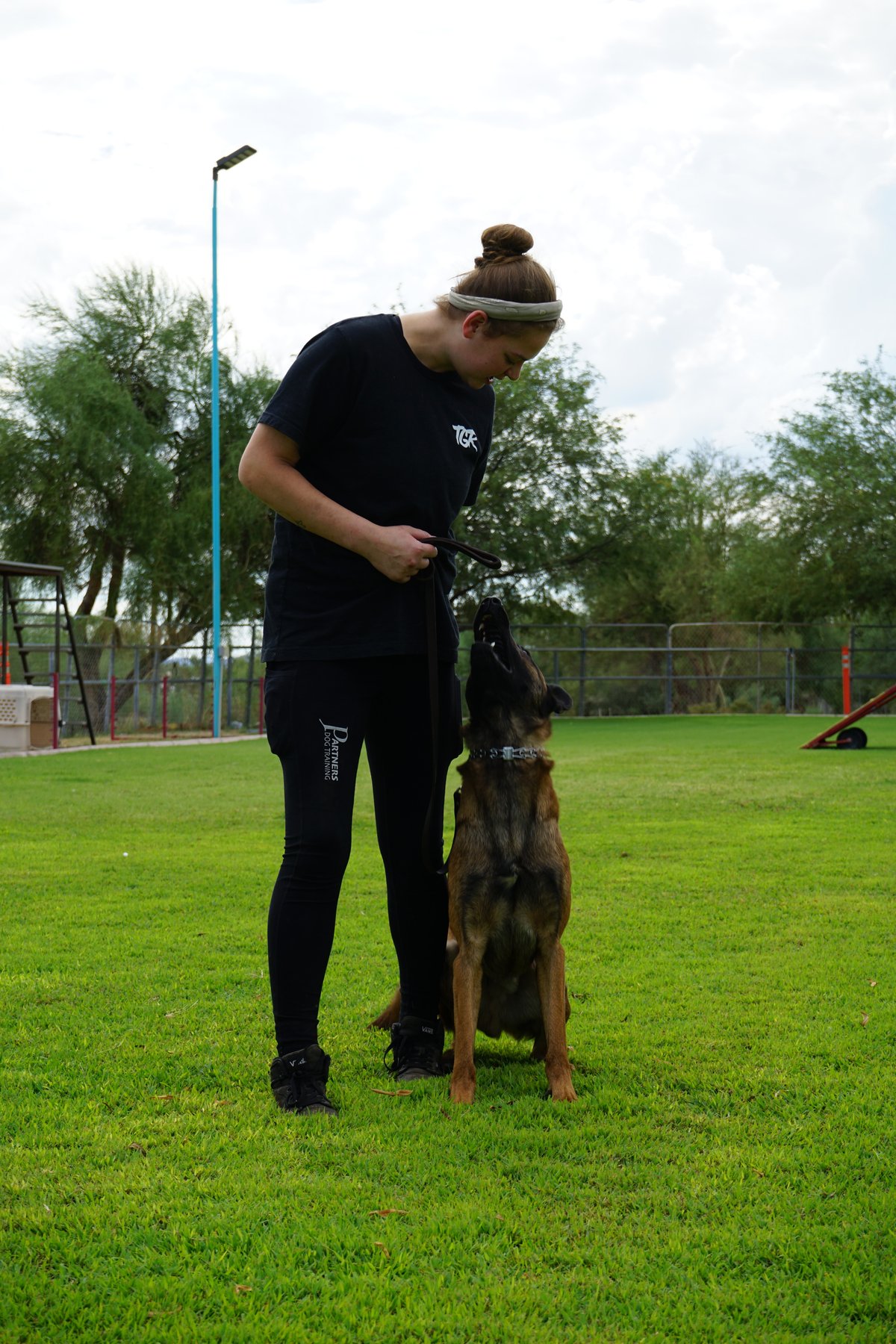
Structured immersion means daily repetition across handlers, not a dog left alone in a kennel run. At Foundation Camp, a dog works with more than one trainer across the stay, moves through the same cues in different rooms and different yards, and gets the kind of rep volume that a weekly home visit cannot physically match. The point is more correct repetitions in more contexts, which is exactly what makes a response hold up once the dog is back in your kitchen and not just in the training room.
"Highly recommend their foundations board and train camp!! Not only did our puppy come back home with new obedience skills, but he has LOVED coming back for doggie daycare days."
Lauren B., Cave Creek
Chaos's leash pulling and his reactivity toward other animals were not a manners issue that one session was going to unwind. They needed daily correction across enough contexts to generalize, and Ann's review credits the camp with training her alongside him too, so the fix survived the drive home.
So Which One Fixes Your Dog's Behavior Faster
Match the format to the case, not the case to whichever format sounds more convenient. A quick way to sort it:
- One narrow habit on an otherwise stable, social dog: start with Private Lessons.
- Leash reactivity, resource guarding, or a dog that ignores known cues under everyday distraction: Foundation Camp's daily reps and multiple handlers do more in less calendar time.
- Not sure which bucket your dog falls into: a PD360 Assessment scopes the behavior first, so the plan matches the dog instead of a hunch.
Both formats work. The one that fixes your dog faster is the one built for the size of the problem in front of you, and that is worth ten minutes of straight assessment before you book either one. It is also why the recommendation runs the other way just as often as it runs toward Foundation Camp: families rate the outcome 4.8 stars across 2,000+ reviews for both formats, not just the one with the bigger price tag.
Key takeaways
- Private lessons meet your dog in the exact environment where the problem happens, and a single session costs less than a multi-week stay.
- A serious behavior problem like leash reactivity or resource guarding needs more correctly-timed repetitions than one weekly private lesson can provide.
- Foundation Camp works a dog with more than one trainer across the stay, so the response generalizes beyond one voice and one room.
- Foundation Camp builds the transfer-home process into the stay itself: a handoff lesson, parenting-class workshops, daily report cards, and an online technique library, backed up afterward by private lessons, DaySchool, and PD360 progress reports.
- Families rate the outcome 4.8 stars across 2,000+ reviews for both Private Lessons and Foundation Camp, not just the format with the bigger price tag.
Frequently Asked Questions
Is board and train faster than private lessons for a serious behavior problem?
For genuine behavior problems like leash reactivity or resource guarding, yes, because Foundation Camp delivers daily repetition across multiple trainers instead of one session a week. Private lessons can still work on the same issue, it just takes longer since progress depends entirely on the owner's consistency between weekly visits.
Can private lessons work as well as board and train for a stable, social dog?
Yes. A dog with good foundations and one narrow gap, like ignoring a cue around one specific trigger, is exactly what one-on-one coaching was built for. Board and train's extra structure is not needed when the underlying dog is already stable.
Will my dog's training transfer back home after two weeks at Foundation Camp?
Yes, because the transfer-home process is built into the stay, not bolted on after it. Foundation Camp runs an in-person handoff lesson and parenting-class workshops during the stay: daily report cards and an online library of the techniques used on your dog keep the whole process visible. Cues stay live afterward through private lessons, DaySchool, and group-class continuity, with PD360 progress reports showing where the dog actually stands.
How do I know if my dog needs Foundation Camp or Private Lessons?
Start by naming the problem plainly: a single habit on an otherwise well-behaved dog usually points to Private Lessons, while reactivity, aggression, or unreliable listening under distraction usually points to Foundation Camp. A PD360 Assessment exists specifically to make that call instead of leaving it to a hunch.
Does board and train work if I only have a few weeks before a deadline, like a new baby or a move?
A firm deadline is one of the strongest reasons board and train tends to outrun private lessons, since the daily rep volume compresses weeks of once-a-week progress into a shorter calendar window. It still only holds if the handoff is genuine, so ask any program how the dog's training gets taught to you before pickup, not just to the dog.
How much does board and train cost in Scottsdale and North Scottsdale, and is it worth it?
Cost depends on your dog's specific case, since a PD360 Assessment scopes the plan and price to the behavior in front of you instead of a flat rate for every dog. For a genuine behavior problem, families consistently find it worth the investment: Foundation Camp's daily reps across multiple trainers deliver more correct repetition in two weeks than a once-a-week format can match, which is why families across Scottsdale, North Scottsdale, and Cave Creek rate the outcome 4.8 stars across 2,000+ reviews.
Get the right fix for your dog's actual problem
Foundation Camp gives a serious behavior case the daily reps and multiple handlers it needs. Private Lessons gives a stable dog the one focused session it needs. Start with an assessment and get the plan built for your dog's actual case.