The practical read
Boarding a dog with food allergies or a prescription diet is safe when the facility proves it follows an exact feeding protocol, not just promises to. Pack pre-portioned meals, a written feeding card, and medication in its original labeled container, and confirm bowls are washed separately before you book. A neighbor who already knows the routine is often the lower-risk choice for a two-night trip; a longer stay calls for a program built around prescription feeding.
What makes boarding a special-diet dog different from a regular stay?
Across the 70,000+ dogs Partners Dogs has boarded and trained since December 1997, the single biggest variable in a special-diet stay is not the kennel, it is the kitchen. A dog on a prescription diet (written for kidney disease, pancreatitis, or a confirmed food allergy) does not need a nicer suite. It needs a facility willing to run the exact protocol a family already runs at home, meal for meal, with zero substitutions. Regular boarding tolerates a little drift, a bowl rinsed instead of scrubbed; none of that is safe when a diet is protecting organs that cannot handle ordinary protein.
The American Kennel Club notes a true elimination diet has to exclude every food item outside the plan, treats and table scraps included, for the trial to mean anything, and that standard does not pause because a dog is away from home.
What is the safest way to board a dog with food allergies near Fountain Hills?
The safest option for a Fountain Hills family is a facility that names its feeding protocol out loud, not simply the one closest to home. The safety question comes down to three things a facility should answer without hesitation: who preps the meals, where they are stored, and what happens if a labeled container goes missing at drop-off.
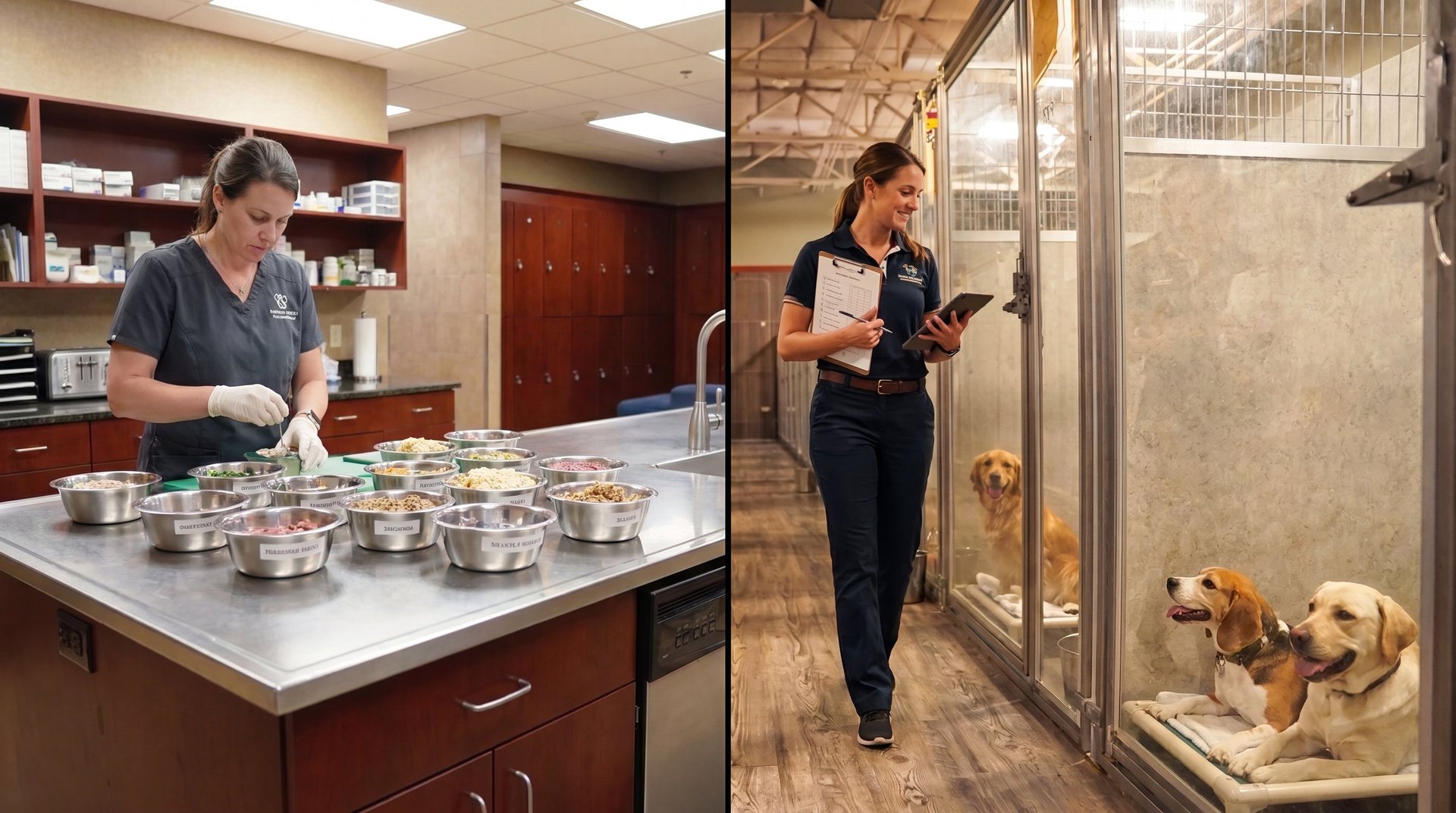
Partners Dogs boarding feeds raw, kibble, and prescription diets and administers medications as standard intake, two nights or two weeks. Get that answer before the tour, not after a deposit is down.
What should you pack when your dog boards on a prescription diet?
Pack the diet the way a hospital packs medication: pre-measured, labeled, and impossible to substitute. A prescription diet or an elimination plan only holds up if every meal arrives exactly as written.
- Pre-portion every meal into its own labeled bag or container, one per feeding.
- Write a feeding card with the exact brand, amount, and time for each meal, plus anything off-limits.
- Pack medication in its original, labeled container with dosage and timing written out, never loose.
- List every approved treat, chew, and food topper, and state plainly that nothing else should be offered.
- Send a few extra meals beyond the planned stay in case pickup runs long.
- Confirm in writing that the facility received and understood the feeding card before drop-off.
That last step matters most. A feeding card sitting unread in an intake folder is no different from no feeding card at all.
What should a boarding facility ask before it says yes to your dog?
A facility that takes prescription diets seriously will ask more questions than a family expects, not fewer. Good intake covers diagnosis history, current medications and schedule, and what a reaction looks like. It also covers a vet's contact for a mid-stay opinion and what happens if the dog refuses a meal, since a skipped dose is not minor.
If a behavior concern is riding along with the diet, a PD360 Assessment is an optional add-on rather than a requirement for boarding, worth mentioning at intake so staff are not guessing at both the diet and the dog's triggers mid-stay.
What signs point to a kennel that mixes bowls or shares a prep kitchen?
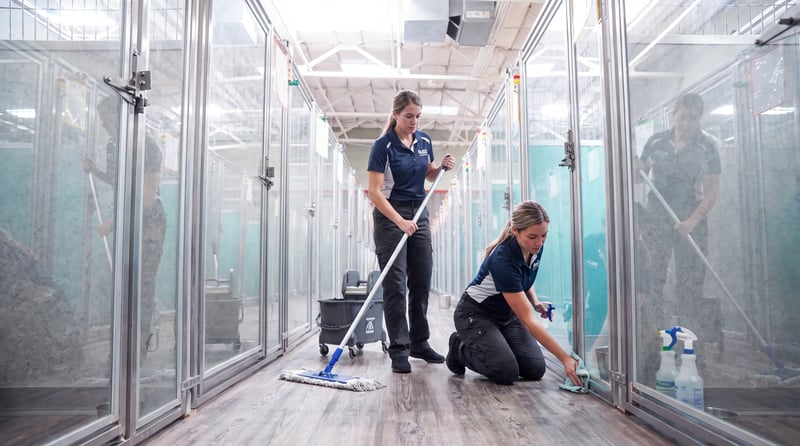
The clearest warning sign is a vague answer to a direct question. A staff member who cannot describe how bowls are washed, who shrugs at a shared prep kitchen, or who gets defensive about cross-contact is telling a family something true, as is a facility with no written feeding protocol.
Families new to this can browse the Partners Dogs FAQ for the intake questions most first-time boarding families ask, then use that list on any facility.
Is boarding always the right call for a short trip with a special-diet dog?
Not always. The answer depends on the length of the trip. For a straightforward two-night trip, a single-dog household with a neighbor who already feeds the dog on weekends and knows which bag in the pantry matters removes the handoff risk. Familiarity is its own safeguard there.
The calculation changes for a longer trip, a family without that neighbor, or medication that needs precise timing. Peak travel season, when holiday plans stack up early, is when a family assumes a spot will be there and finds out too late it is booked. A program built around prescription feeding is the safer default past a couple of nights.
How does Partners Dogs handle prescription diets and medication during a stay?
Partners Dogs feeds raw, kibble, and prescription diets exactly as sent, and administers oral and topical medications as standard at both campuses. One Cave Creek family wrote after boarding two German Shepherds for a seven-day stay that "both dogs have medical conditions and take multiple medications, so finding a place that truly pays attention to detail was important" (Joey S., Cave Creek). That is the standard intake protects.
Current rates are on the pricing page. A complicated diet is exactly what this intake process was built to catch.
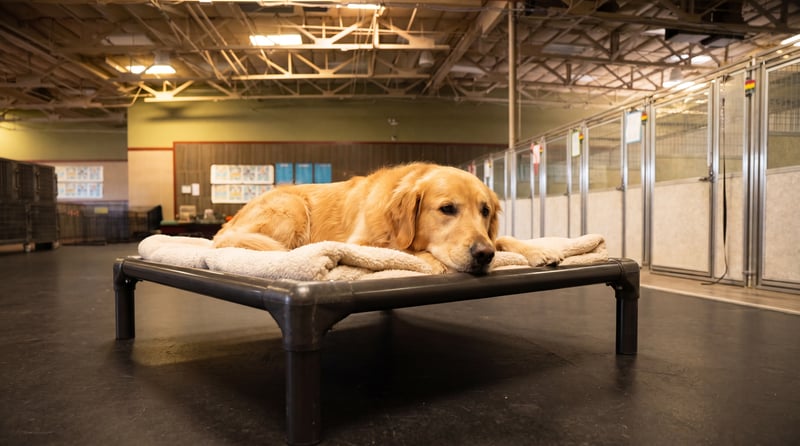
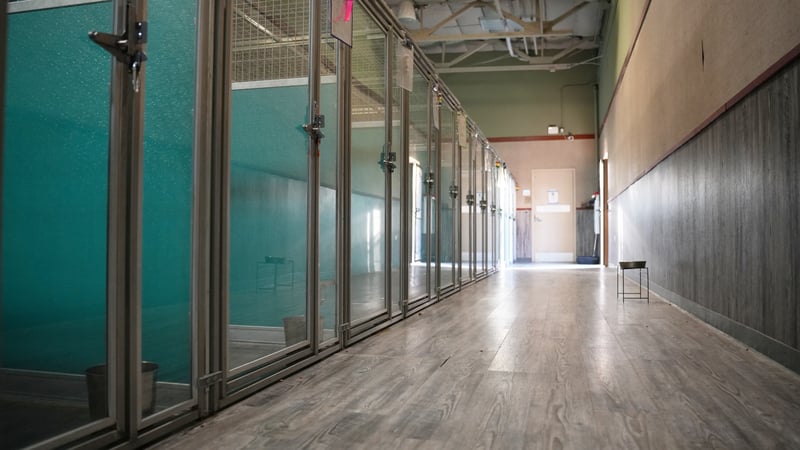
Look at the boarding floor
Not sure if a stay or a camp fits your dog
Answer a few questions about your dog's diet and temperament to get pointed at the right program.
Frequently Asked Questions
Is Partners Dogs boarding a good fit for a Fountain Hills or Glendale family with a special-diet dog?
For a Fountain Hills family the closest campus is Scottsdale, reachable along Shea Boulevard, and the fit comes down to feeding protocol rather than distance. For a Glendale family the drive is longer, but it buys prescription-diet handling a nearer kennel may not track at all.
Does Partners Dogs board dogs from Peoria on a prescription diet?
Yes. Distance is not a disqualifier for a Peoria family; what matters is sending the feeding card, pre-portioned meals, and medication in its original container, the same standard used for local Scottsdale and Cave Creek families.
Is boarding safe for an anxious dog in Fountain Hills that also needs a strict diet?
It can be, but the two needs are handled separately. An anxious dog benefits from a trainer-run floor and a predictable routine regardless of diet, while the diet needs its own written protocol; a facility should describe both plans without treating the anxiety as an excuse to relax feeding rules.
Key takeaways
- Pre-portion every meal and write a feeding card before the stay.
- Medication belongs in its original, labeled container.
- Ask whether bowls are washed separately and food is prepped in a dedicated area.
- A neighbor who knows the routine can beat boarding for a two-night trip; a longer stay favors a facility built for it.
- Partners Dogs feeds raw, kibble, and prescription diets and administers medication as standard practice.
Let us see the pattern
Book a stay built around your dog's diet
Bring the feeding card and pre-portioned meals. We handle the rest at either campus.
Keep reading