In short
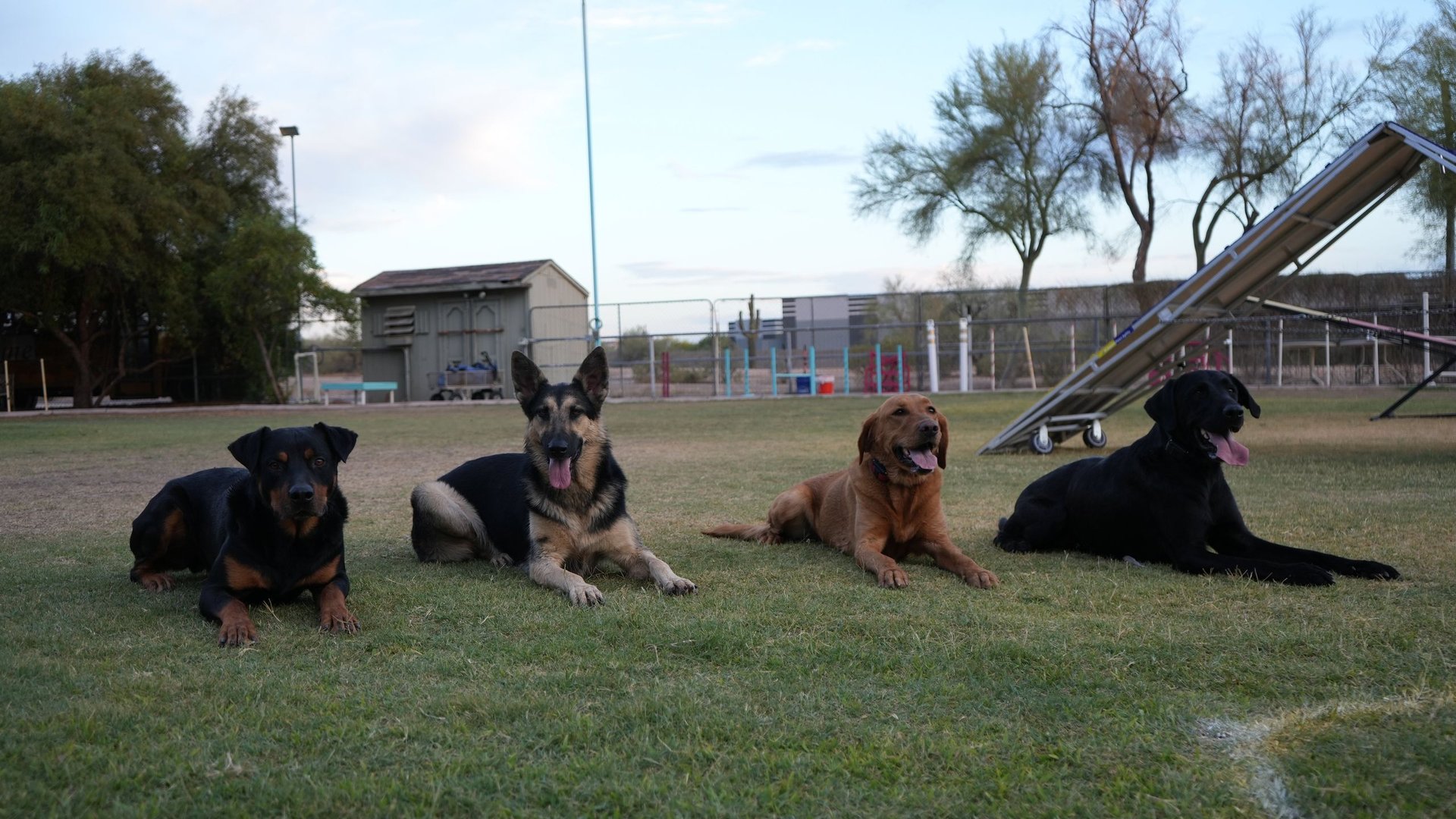
A calmer multi-dog household comes from management, not luck: separate feeding and resting zones, predictable daily routines, and a few reliable cues like "place" and "wait." In homes across the Paradise Valley area, with open floor plans and busy backyards, small tensions over food, doorways, or your attention escalate fast without structure, but most households settle down within a few weeks once the physical setup and the daily routine change.
Why Multi-Dog Homes Feel Chaotic (and What Actually Fixes It)
Sharing life with more than one dog can be wonderful: built-in playmates, different personalities, and a house that always feels full. It can also be where small tensions quietly turn into big problems, scuffles over food, arguments about who gets the spot next to you, chaotic door greetings, or dogs winding each other up until everyone is barking. In open Arizona homes with tile floors, big windows, and active backyards in Scottsdale and Cave Creek, those moments can feel especially loud and hard to interrupt.
Dogs in the same family do not simply "sort it out" if you stay out of it. Left alone, unclear rules and constant competition for resources tend to escalate rather than settle. Some pairs click easily, but many do not, and the cost of guessing wrong can be an injury, a rehoming decision, or a constant undercurrent of stress in your own living room.
The fix is treating your multi-dog home like a thoughtfully run space: clear zones, predictable routines, and proactive supervision instead of hoping for the best. The rest of this guide walks through exactly how to build that, starting with mapping what is actually happening in your house right now.
Map Your Home's Hotspots and Resource Risks
Before you change anything, spend a few days simply watching. Most multi-dog conflict traces back to a handful of predictable hotspots, not random bad luck. Note where your dogs tend to tangle or stiffen up, and who does what in the moments that matter.
- Which rooms or doorways cause bottlenecks when everyone moves at once, hallways, the kitchen, the front door.
- Who rushes to greet you first, and who gets pushed out of the way.
- Who guards toys, chews, or a favorite resting spot. This is a genuine safety issue, not just a quirk, and it is worth reading through our plan for food and toy guarding if you see stiff body language, freezing, or growling over an object.
- Which combinations of dogs relax easily together and which ones stay tense even at rest.
Once you know where the friction actually starts, you can design around it instead of reacting to it after the fact.
Set Up Crates, Gates, and Rest Zones for Every Dog
With your hotspots mapped, the next step is physical, not behavioral. A baby gate, a crate, and a clear walking path solve more multi-dog tension than any amount of correcting in the moment. In practice, that can mean:
- A baby gate separating the kitchen from the living room so you can prep food without a crowd underfoot.
- Crates or beds placed in opposite corners of a room for rest periods, not stacked next to each other.
- Clear walking paths between rooms so dogs are not squeezing past each other in tight spaces.
With that physical foundation in place, routines and training do the rest of the work.
Feeding and Resting Routines That Prevent Conflict
Feeding and rest routines prevent more conflict than almost anything else you can do. Feed each dog in a separate zone, different rooms, crates, or opposite corners of the same room with a sturdy barrier between them. Put bowls down, walk away, and give everyone a few undisturbed minutes. When they finish, pick up the bowls instead of leaving food out. This single habit stops hovering and keeps a pushy dog from turning every mealtime into a small power struggle.
Rest matters just as much. Create at least one protected sleeping spot for each dog where no other pet is allowed to bother them, an open crate in your bedroom, a dog bed in a gated office, or beds on opposite sides of the living room. Build quiet time into your daily schedule, after breakfast, midafternoon, and in the evening, so every dog gets a reset instead of staying keyed up all day.
Training Skills That Give You Real-Time Control
A short list of trained cues works like a remote control for a multi-dog household. Name recognition lets you direct one dog at a time without the whole group reacting. A solid recall lets you pull a dog away from a tense moment before it escalates. "Place" or "settle" gives every dog somewhere specific to go when energy spikes, at the door, during dinner, or when a visitor arrives.
Teach these in stages the same way our trainers do in every program: Teaching each cue with one dog at a time in a low-distraction room, Reinforcing it in pairs once the first dog is reliable, then Proofing it with the full group present and real distractions, and finally holding it in Maintenance with occasional practice so it does not fade. Skipping straight to "the whole pack, all at once" is the most common reason multi-dog training stalls before it starts.
Next step
Find out exactly what's driving the tension
A PD360 assessment maps what is actually happening between your dogs, not just what it looks like in the moment, and points you to the right next step for your household.
Doorways, Walks, and High-Arousal Moments
Doorways and walks deserve special structure because they are the two moments your dogs are most aroused at once. Train a simple "wait" at the front door and practice it daily until every dog pauses automatically and looks back at you for release. If managing everyone at once is too much while you are building new habits, split the group, two dogs out for a walk while the others rest, then swap. It is far easier to teach manners and read body language when you are not being pulled in three directions.
The same logic applies to kids and visitors. Give each dog a place to settle before the doorbell rings rather than letting the whole group crowd the entry, and supervise directly any time young kids and multiple dogs share a room with food, toys, or high excitement in play.
Build a Weekly Rhythm That Keeps Everyone Calm
Every dog in the house needs some one-on-one time, not just group time. A weekly rhythm that balances activity and rest keeps any one dog from feeling like they have to compete for every bit of attention. In an Arizona household, that can look like:
- Short, cooler-hours group walks for dogs who genuinely get along well on leash.
- Individual leash sessions for a dog still learning manners or struggling around the others.
- Rotating "special time" each evening, five to ten minutes of a game, a massage, or a short training session with just one dog while the rest rest.
Warning Signs That Mean It's Time to Call for Help
Even with smart setups and solid routines, there will be days a multi-dog home feels like a lot. Dogs hit new developmental stages, health changes affect behavior, and moves or schedule shifts stir up tension. Watch for these specific signs rather than waiting for a serious fight to tell you something is wrong:
- Frequent hard stares or freezing around beds, doorways, or food.
- Growling that keeps escalating instead of settling once the trigger is removed.
- One dog consistently blocking doorways or access to you.
- Any bite that breaks the skin.
Households that stay calm long term adjust early when they see these patterns, not after a serious incident. Start with your veterinarian to rule out pain, illness, or age-related changes that can fuel irritability, then bring in a trainer with real multi-dog experience.
How Partners Dogs Supports Multi-Dog Households
Every path into a Partners Dogs program for a multi-dog household starts with the same PD360 assessment that identifies what is actually driving the tension between your dogs and which program fits, rather than guessing. From there, families typically go one of a few directions. Some need private lessons in their own home to map out room layouts, feeding zones, and house rules with a trainer watching the actual dogs in the actual space.
Dogs who need extra structure around other dogs, especially reactive, fearful, or undersocialized ones, often build those skills in DayCamp. When conflict between household dogs is more serious, Behavior Camp gives a dog a boarded stay of focused, one-on-one work followed by coaching once they are back home. Every group setting at Partners keeps no more than ten dogs per trainer, so no dog is managing that much stimulation alone the way they might in your living room.
Through it all, the PD360 Pet Progress Tracking System keeps you in the loop with weekly check-ins and goal re-evaluation, so you can see the specific skills each dog is building and how that translates back into a calmer house, not a vague promise that things will improve.
Handled this way, a multi-dog Arizona household stops feeling like a constant balancing act. With clear routines, thoughtful management, and the right training support, your dogs can share beds, hallways, and backyards with far less friction, which is the whole reason most of us bring home a second or third dog in the first place.
Frequently asked questions
Why did my dogs suddenly start fighting when they used to get along?
Sudden tension between dogs who previously got along is usually tied to a specific trigger: new competition over food, toys, or a resting spot, a health change that makes one dog more irritable or in pain, or a shift in routine that has left everyone more keyed up than usual. It rarely means the dogs "don't like each other anymore." Mapping the hotspots in your home and rebuilding feeding and resting routines resolves most early-stage tension. Repeated growling that keeps escalating, or any bite that breaks the skin, means it is time to get a trainer or veterinarian involved rather than waiting it out.
Should I feed multiple dogs in the same room?
Feeding each dog in a separate zone, a different room, a crate, or a clearly divided space with a sturdy barrier, prevents most food-related tension. Put bowls down, let each dog eat undisturbed, and pick up the bowls when everyone is finished instead of leaving food out. This matters most with dogs who eat quickly, guard food, or tend to hover near a housemate's bowl.
How many dogs can safely live in one house?
There is no universal number. It depends on your space, each dog's individual temperament, and how much one-on-one time and structure you can realistically provide every day. A two-dog household with poor management can be more chaotic than a four-dog household with clear routines, crates, gates, and defined rest zones for everyone.
What's the difference between normal dog squabbles and real aggression?
Brief, noisy disagreements that end quickly with both dogs walking away on their own are common in most multi-dog homes and are not usually cause for alarm. The signs worth taking seriously are hard staring or freezing over food, toys, or space, growling that keeps escalating instead of settling once the trigger is removed, one dog consistently blocking another dog's access to you, or any bite that breaks the skin.
When should I get professional help for a multi-dog household?
Start with your veterinarian if tension appears suddenly, since pain or illness often shows up first as a behavior change. If conflict keeps building even after you improve feeding, resting, and doorway routines, or you see any of the warning signs above, a PD360 assessment identifies exactly what is driving the tension between your dogs and points to the right next step, whether that is in-home coaching or a structured camp.
Ready when you are
Turn your household back into a calm one
If growling, guarding, or doorway chaos have gone past what routines alone can fix, Transform Camp and Behavior Camp both start with a PD360 assessment so your dogs get the right level of help, not a guess.
Keep reading