In short
The right dog daycare for an undersocialized dog uses real behavioral screening, small matched playgroups, low staff-to-dog ratios, and trainers who catch stress signals before they escalate. Partners Dog Training runs this model at its Scottsdale and Cave Creek campuses, backed by 28 years of experience working with nervous and undersocialized dogs across Arizona.
What Is an Undersocialized Dog
An undersocialized dog has not had enough positive experience with other dogs, people, or new environments during key developmental periods. This can come from limited exposure as a puppy, a rough start before adoption, time spent in a shelter, or simply not getting out much.
Common signs include hiding, freezing, or reacting out of fear rather than aggression. Watch for:
- Hiding behind you or tucking their tail when meeting new dogs
- Barking, lunging, or growling out of fear, not aggression
- Refusing to engage with other dogs or shutting down completely
- Pacing, trembling, or heavy panting in new social settings
None of this means your dog is bad or broken. It means they have not learned how to navigate social situations yet, and dogs who show fear-based reactions around other dogs can absolutely learn to feel safe with the right support and the right pace.
Why Standard Daycare Often Fails These Dogs
Most daycares run on a simple model: dogs arrive, dogs play together, dogs go home tired. That works fine for confident, well-socialized dogs. For an undersocialized dog, it can set them back months.
High Dog-to-Staff Ratios Create Risk
Many daycares run one staff member for 15, 20, or more dogs at once. When your dog shows early stress signals like lip licking, whale eye, or a stiff posture, an overwhelmed attendant can miss it, and a missed signal can escalate into a fearful reaction or a real conflict.
Lack of Behavior Training Creates Chaos
Staff at standard daycares are often not trained to read canine body language or step in before problems start. They react to fights instead of preventing them, and for a nervous dog, one bad experience can undo months of progress.
Open Play Without Structure Overwhelms Nervous Dogs
Dropping an undersocialized dog into a big group of unfamiliar dogs is a lot like sending someone with social anxiety into a crowded party. The constant stimulation and lack of an escape route create real stress, not fun.
Look for Real Behavioral Screening and Low Ratios
The best daycare for an undersocialized dog looks different from a warehouse-style play yard. It starts before your dog ever sets a paw in a playgroup.
A Thorough Assessment, Not Just a Vaccine Check
A quality facility spends real time learning your dog's temperament, triggers, and comfort level rather than waving them straight into the group. Partners Dog Training's PD360 Assessment is a full-day evaluation where certified trainers observe your dog in different settings, talk through your goals, and build a plan matched to what your dog actually needs.
Staff-to-Dog Ratios That Actually Protect Your Dog
Ask for the number, not an adjective. Warehouse-style daycares commonly run 20 to 50 dogs per person. Partners Dog Training runs one trainer for every 10 dogs, the lowest ratio in the valley, which lets staff catch subtle stress signals and step in before they escalate, giving an undersocialized dog the individual attention they need to settle in.
Look for Trainers on the Floor and Small Matched Playgroups
There is a real difference between someone who watches dogs play and someone who understands dog behavior well enough to guide it.
Trainers, Not Just Attendants
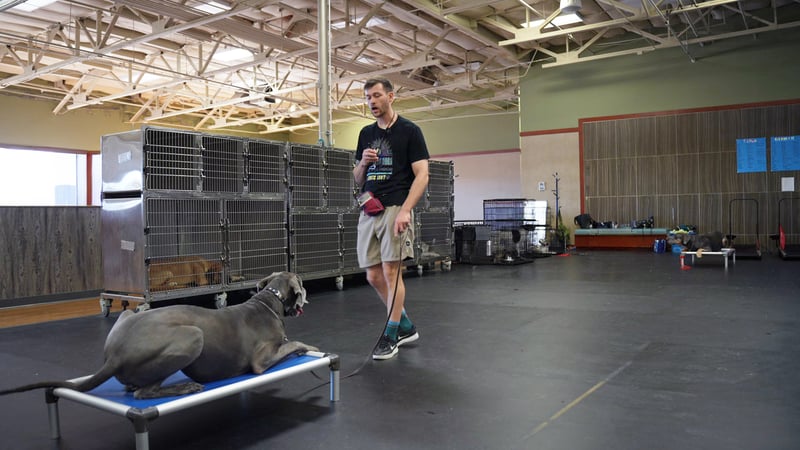
Look for daycares where certified trainers actively supervise play, not just count heads. A trainer can redirect a dog before a moment turns into a problem, and can coach your dog through a hard interaction instead of just breaking it up after the fact.
Small, Carefully Matched Playgroups
An undersocialized dog should never start in a group of 20. They need small playgroups matched by size, energy, and temperament, often starting with one-on-one introductions or groups of three to four calm dogs before working up from there.
How Structured Socialization Builds Confidence
Socialization is not just exposure to other dogs. It is positive exposure in controlled conditions, so your dog collects successful interactions instead of ones that reinforce fear.
A gradual introduction protocol matters more than a fast start. A typical path looks like:
- Day one: time with staff only, exploring the space at their own pace
- Day two: meeting one calm, confident dog in a controlled setting
- Day three: brief small-group time with close monitoring
- Ongoing: group size increases only as confidence builds
Predictable routines matter just as much as the introduction pace. When your dog knows what comes next, play time, rest time, meals, their anxiety drops, and every calm greeting or relaxed stretch of play should be noticed and rewarded so your dog learns that new social situations lead to good things.
Safety Screening Every Quality Daycare Should Have
Before your dog ever joins a playgroup, a quality facility should have real screening in place, for every dog, not just yours.
- Temperament assessments for every dog, so your nervous pup is never paired with a bully or an overly aroused playmate
- Verified vaccination records for rabies, distemper, bordetella, and canine influenza where applicable, checked, not just taken on the owner's word
- Daily health checks at drop-off, so a dog showing lethargy, coughing, or other illness does not enter the group
- Written incident protocols covering intervention, documentation, owner notification, and a relationship with a veterinary partner for emergencies
Training-Integrated Daycare at Partners Dogs
For an undersocialized dog, daycare with real training built in is not a luxury add-on, it is what actually moves the needle. Instead of pure free play, dogs work through structured activities led by trainers:
- Group obedience exercises that build impulse control around other dogs
- Controlled greeting protocols that prevent overexcitement
- Decompression breaks where dogs practice staying calm
- Play-and-train sessions that reward good social choices
DayCamp pairs structured group training with supervised social time, built for dogs who are still developing the self-control that open play demands, so your dog spends time with certified trainers instead of just marking time in a group. For an undersocialized dog specifically, that structure means one-on-one attention on the behaviors that matter most, at a pace that fits your dog rather than the group. Once your dog is genuinely social and ready for open play with daily training reinforcement, DaySchool is the next step.
Next step
Give Your Dog a DayCamp Day Built Around Them
See what a day of matched playgroups, trainer supervision, and real structure looks like for your dog, or talk it through with a trainer first.
Questions to Ask on a Daycare Tour
Do not be shy about asking detailed questions on a tour. A good daycare welcomes the curiosity, it shows you care about getting this right.
About Staff and Training
- What training do staff have in reading canine body language?
- Are certified trainers present during play hours?
- How do staff step in when a dog shows stress signals?
- What is the staff-to-dog ratio during active play?
About Playgroups and Structure
- How are dogs grouped for play, by size, energy, or temperament?
- What does the introduction process look like for a new dog?
- Are small-group or one-on-one options available for nervous dogs?
- How often do dogs get rest breaks from play?
About Safety and Communication
- What vaccinations are required, and how are they verified?
- What happens if my dog is injured or becomes ill?
- How will I hear about my dog's progress during the day?
- Can I see the play areas and meet staff before enrolling?
Red Flags to Watch For
Not every facility that calls itself a daycare is a fit for an undersocialized dog. Watch for these warning signs on a tour:
- No assessment required. A facility that takes any dog without a temperament evaluation is accepting unknown behavior profiles, and your dog could end up paired with one of them.
- Large, unsorted groups. A 70-pound high-energy dog playing with a 15-pound timid dog is a setup for trouble.
- Staff who cannot answer behavior questions. If your tour guide cannot explain how they recognize stress signals, the staff likely lacks real training.
- No training integration. Daycare without behavioral guidance is containment, not growth, for your dog.
- Reluctance to let you tour. A facility worth using shows you the play areas and introduces you to staff without hesitation.
Setting Your Dog Up for Success at Home
Even with the right facility, a little prep before day one goes a long way.
- Practice short separations. If separation anxiety is part of the picture, start with five minutes apart at home and build up gradually before daycare starts.
- Work on basic obedience. A dog who knows sit, come, and leave it has tools to navigate tricky social moments.
- Bring a familiar item. A blanket or toy with a familiar scent helps a nervous dog feel safer in a new place.
- Start with half days. Skip the 8-hour first day and build up as your dog's confidence grows.
- Communicate openly with staff. The more they know about your dog's history and triggers, the better they can support them.
What Progress Looks Like Over Time
Progress will not happen overnight, but with the right daycare you should see real change.
Early Signs
- Your dog enters the facility more willingly over time
- They show interest in other dogs instead of hiding from them
- Stress signals like panting, pacing, and a tucked tail ease up
- They come home tired but relaxed, not shut down
Longer-Term Change
- Appropriate play with well-matched playmates
- Social skills that carry over into walks and other outings
- More confidence in new situations outside daycare
- A calmer, stronger bond with you as overall anxiety drops
Partners Dog Training's PD360 Pet Progress Tracking System keeps you in the loop rather than guessing: weekly check-ins, goal re-evaluation, and grade level graduations, so you can see the wins as they happen instead of wondering if the work is paying off.
When Daycare Isn't the Right Fit Yet
Every undersocialized dog deserves a shot at daycare, but sometimes it is not the best starting point yet.
Consider alternatives first if your dog shows:
- Severe reactivity that does not ease with gradual exposure
- Aggression toward unfamiliar dogs, not just fear-based reactions
- A medical condition that limits activity or needs close monitoring
- Extreme shutdown that does not resolve with slow introductions
For dogs who are not daycare-ready yet, private training sessions build foundational social skills one-on-one, and for more serious behavior challenges, Behavior Camp and Transform Camp offer immersive, trainer-led programs that work through reactivity and problem behaviors before your dog steps into a group setting. From check-in through follow-up coaching, these programs run 12 to 16 weeks, combining the boarded training stay with structured follow-up sessions so the results hold at home.
Finding the Right Fit in Scottsdale and Cave Creek
Arizona dog owners have options, but not every daycare is built for a dog who needs extra support. Look for a facility that is also a training school, where certified trainers understand behavior modification and body language instead of just supervising play.
Prioritize personalized care over a cookie-cutter approach. Your dog needs individualized attention, thoughtful playgroup matching, and daily updates so you are never left wondering how the day went.
Partners Dog Training runs this model at its Scottsdale and Cave Creek campuses, backed by 28 years of experience, 70,000+ dogs trained, and a 4.8-star rating across 2,000+ reviews. Your undersocialized dog is not broken, they just need the right environment to learn and grow, and that is exactly what a training-first daycare is built to give them.
Frequently asked questions
How do I know if my dog is undersocialized or just shy?
An undersocialized dog typically shows fear-based reactions in new social situations, like hiding, trembling, or defensive body language, because they lack experience rather than because of their personality. A shy dog tends to be reserved but still handles new situations calmly. A PD360 Assessment can help sort out whether your dog needs socialization support or just has a quieter temperament.
Can an undersocialized adult dog still learn to socialize?
Yes. Puppies have a critical socialization window, but adult dogs can still build social skills through gradual, positive exposure. It takes more patience and time, but with structured socialization in a training-focused daycare, most undersocialized adults make real progress.
What is a safe staff-to-dog ratio for undersocialized dogs?
Ask for the number, not an adjective. Warehouse daycares commonly run 20 to 50 dogs per person. Partners Dogs runs one trainer for every 10 dogs, the lowest in the valley, which is what lets staff catch stress signals before they escalate.
How long does it take for an undersocialized dog to adjust to daycare?
Every dog is different, but most undersocialized dogs need two to four weeks of gradual introduction before they feel comfortable. Some take longer, and a quality daycare will not rush that process. Let your dog's comfort level set the pace, not the calendar.
What should a daycare assessment cover for an undersocialized dog?
A thorough assessment should evaluate how your dog reacts to new environments, other dogs, and handling by unfamiliar people, then identify specific triggers and comfort zones. Partners Dog Training's full-day PD360 Assessment observes your dog across multiple settings and builds a personalized plan from what it finds, not guesswork.
Is dog daycare safe for a dog with fear-based reactivity?
It depends on the facility and how severe the reactivity is. Mild to moderate fear-based reactivity often improves with the right daycare support and pacing. More severe reactivity may need a dedicated behavior program first, which is what Behavior Camp and Transform Camp are built for.
Ready when you are
Give Your Undersocialized Dog a Daycare That Trains, Too
Book a PD360 Assessment to map out your dog's plan, then start DayCamp with a clear starting point.
Keep reading