In short
DaySchool fits social dogs who want daily play and structure. A shy, senior, or homebody dog starts with a PD360 Assessment and Private Lessons before a rest-heavy DaySchool day. A reactive or undersocialized dog starts in DayCamp before general group play is safe or enjoyable. Arizona heat also shrinks the safe outdoor window, so the right mix often shifts by season for families in the Desert Ridge area.
How DaySchool, DayCamp, and Private Lessons Actually Differ
When Scottsdale and Cave Creek owners ask which kind of daytime care to choose, the real question is usually "what keeps my dog calm and safe while I'm gone, without wrecking my schedule or my budget." Each Partners Dogs option solves a different problem, and picking the wrong one for a specific dog can quietly create new problems instead of solving the old one.
DaySchool is trainer-run group play and training, and DayCamp is the more structured version for dogs who need a calmer start. Private Lessons are one-on-one coaching on campus, online, or in your home. DaySchool gives a dog play, rest periods, and trainer supervision away from home. DayCamp gives a dog who finds open groups overwhelming a smaller, more managed day with far fewer new dogs and new smells to process. Private Lessons build skills one-on-one, and they are how a quieter dog gets ready for a group day.
None of the three is automatically "better." A dog that thrives in a busy playgroup can be bored in a quiet, low-activity day, and a dog that finds groups overwhelming can shut down in the same setting that another dog loves. The match matters more than the label.
Which Option Fits Your Dog's Personality
The right choice comes down to your dog's social style, age, health, and how much stimulation they can actually enjoy, not what's cheapest or what a friend uses. A quick way to sort it:
- DaySchool: best for social dogs who enjoy play with other dogs, need daytime structure, and settle down easily once the group session ends.
- Private Lessons and a rest-heavy DaySchool day: best for homebodies, seniors, and anxious dogs, placed after a PD360 Assessment, with the trainer adjusting activity and rest to the dog.
- DayCamp: best for a dog who finds open groups too much and needs a structured, managed day with a trainer reading the dog, instead of a room full of strangers.
Watch your dog's behavior after a few tries the way you'd read a report card. Are they excited to go back, reasonably tired afterward, and back to normal eating and sleeping by the next morning? If not, that is useful information, not a dog being difficult, and it usually means the setting is a mismatch rather than the dog being "bad at daycare."
Why Staff-to-Dog Ratio Matters More Than the Marketing
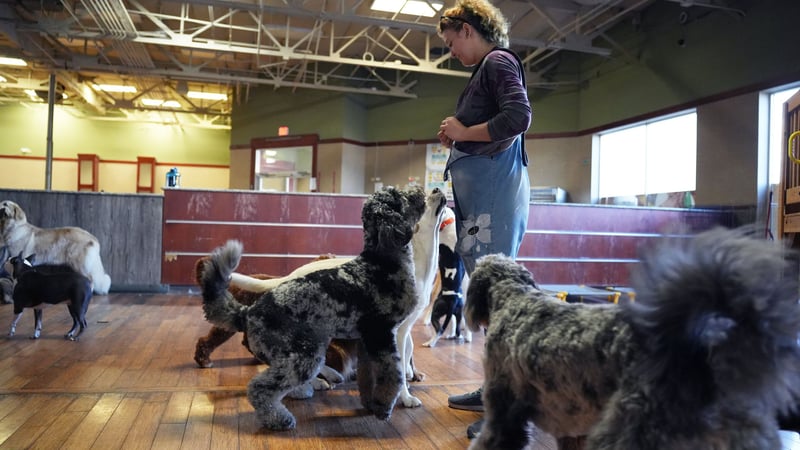
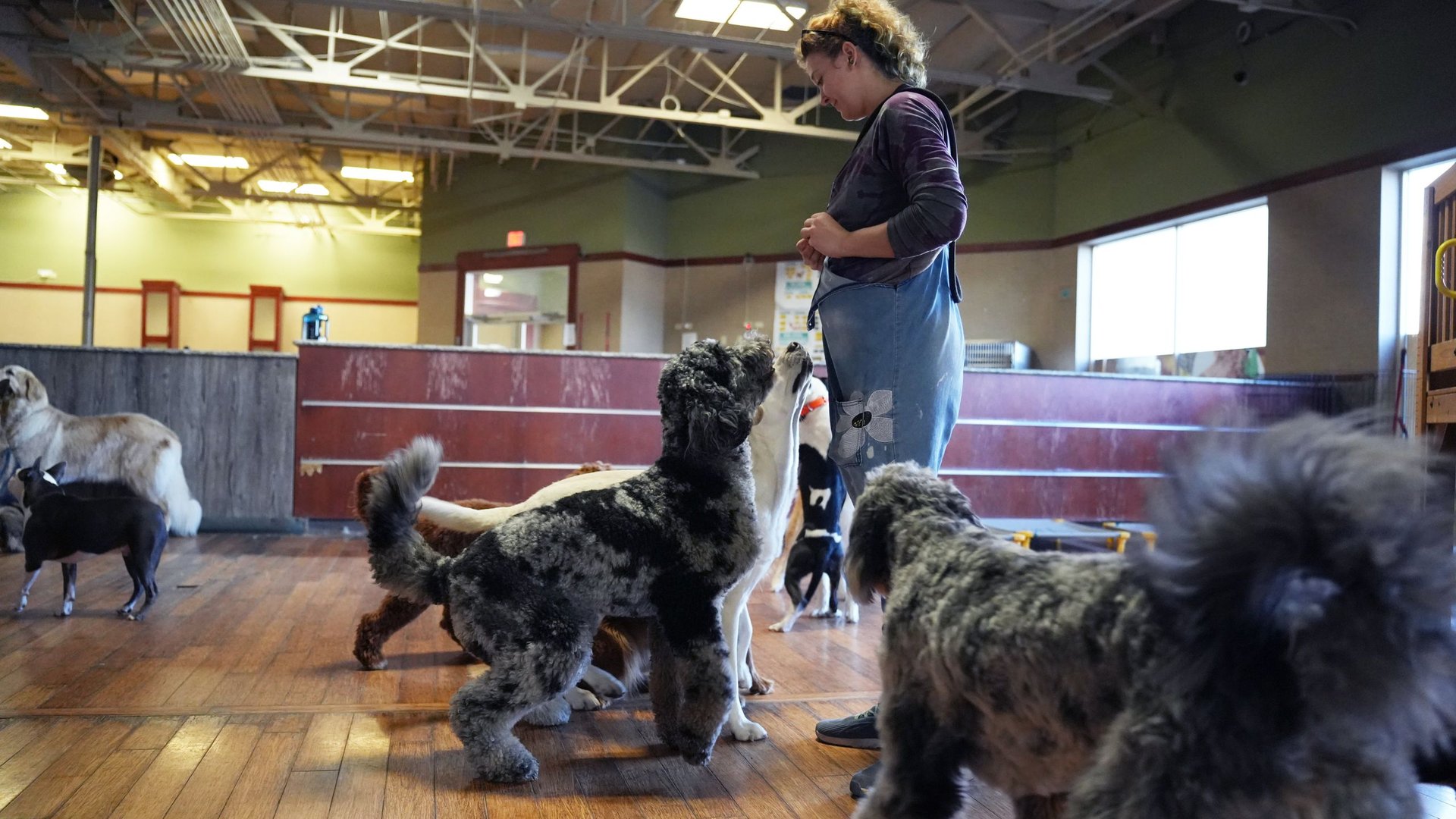
The number that actually predicts whether a dog has a good day at daycare is staff-to-dog ratio, not square footage or how nice the lobby looks. A lot of warehouse-style daycares run one staff member for every 20 to 50 dogs in a single open room. At that ratio, staff can break up a fight after it starts, but they can't catch the early body-language warning signs that prevent one. Partners Dogs runs at one trainer for every 10 dogs, which is why owners tell us they see calmer, more supervised play instead of a loud free-for-all.
That ratio is also why Partners Dogs splits daycare into two real programs instead of one generic room. DaySchool is daily play and training built for genuinely social dogs who are ready for group play. DayCamp is the structured version, built for dogs who are reactive, fearful, undersocialized, or newly adopted and need a calmer, more managed setting before general group play is a good fit. Because DayCamp is built around structure, getting started begins with a PD360 Assessment that matches your dog to the right level rather than a straight walk-in sign-up.
It's part of the same trainer-supervised standard that backs the 4.8-star rating across 2,000-plus reviews, and it's worth asking any daycare you're considering what their actual ratio is before you book.
What Does the Step Up From DaySchool to DayCamp Cost, and Does a Membership Change It?
The step up from DaySchool to DayCamp buys staff time focused on your dog, not a longer day or a nicer building. DaySchool is group play with a trainer-led curriculum, with behaviors tracked in PD360. DayCamp is the more structured version: a more managed day, with a trainer reading your dog throughout. The higher day rate pays for that structure and the trainer's time with your dog. Current rates for both are on the pricing page.
A membership lowers the DaySchool and DayCamp day rate, and the member discount applies to everything else you book. The discount is 10 percent on Plus, 20 percent on Premium, and 30 percent on Platinum, and one membership covers every dog in the household. Each tier also includes a set number of DaySchool or DayCamp days each month; the days and rates for each plan are on the pricing page.
Find the right fit
Match Your Dog to the Right Kind of Care
A quick look at your dog's temperament sorts out whether a social dog is ready for daily group play or a reactive, fearful, or undersocialized dog needs a more structured start first.
Arizona Heat, Schedules, and Real-Life Scenarios
Arizona life adds a few twists that a national comparison article never accounts for. Summer pavement heat compresses safe outdoor walking time into narrow early-morning or late-evening windows, apartment living puts dogs closer to shared spaces and other animals, and long commutes across the valley mean many dogs spend a long stretch of the day alone. Climate-controlled indoor play space stops being a nice-to-have and becomes the main reason daycare beats a backyard on a 110-degree afternoon.
A few real-world patterns we see at our Scottsdale location and Cave Creek location:
- High-energy, social young dog in an air-conditioned home: a couple of days a week of structured daycare plus enrichment at home on the off days.
- Senior dog with arthritis and mild anxiety: Private Lessons to set the routine, then a rest-heavy DaySchool day with short, cool activity, and a quiet Boarding suite with a written routine when you travel.
- Reactive dog in a busy apartment complex: DayCamp instead of open group daycare, with Private Lessons on the specific trigger until behavior improves.
None of these are permanent labels. A dog can move between them as training progresses, the seasons change, or life changes.
When to Switch Between DaySchool, DayCamp, and Private Lessons
Treat barking at pickup, house accidents, or skipped meals as information, not misbehavior, and revisit your choice as your dog ages or your routine changes. A dog who loved daycare as a two-year-old may prefer quieter, one-on-one care at ten. A dog who struggled at first can do well later, once training or maturity catches up.
If the anxiety only shows up when your dog is left completely alone, whether the absence is short or long, that's a specific and fixable pattern, and it's worth working through a real plan for separation anxiety rather than just adding more daycare days and hoping it fades.
For most Scottsdale and Cave Creek families, the best answer isn't one option locked in forever. It's a mix that shifts through the year: more DaySchool and DayCamp days in the cooler months, more indoor, climate-controlled DaySchool days during peak summer heat, and Private Lessons or a structured program when a specific behavior needs real work.
Frequently asked questions
Is DaySchool or DayCamp better for an anxious dog?
It depends on what triggers the anxiety. A dog who gets overwhelmed by groups of dogs starts with a PD360 Assessment and Private Lessons or DayCamp, then moves into DaySchool once the trainer says the dog is ready. A dog whose anxiety is specifically about being left alone needs a plan for that pattern directly, since more daycare days alone won't fix separation anxiety.
What is the difference between DaySchool and DayCamp?
DaySchool is daily group play and training for dogs who are already genuinely social and ready for group settings. DayCamp is the more structured version, built for dogs who are reactive, fearful, undersocialized, or newly adopted, and it starts with a PD360 Assessment so your dog is placed at the right level from day one.
How many dogs does one staff member supervise at Partners Dogs?
Partners Dogs runs one trainer for every 10 dogs. That ratio is lower than the 20-to-50-dogs-per-staff-member pattern common at large warehouse-style daycares, which is why play sessions stay supervised instead of turning into an unmanaged free-for-all.
Does DaySchool work during the Arizona summer?
For a dog who mainly needs a midday break, DaySchool covers it in climate-controlled indoor space, so summer heat never decides the schedule. Summer pavement heat closes off most safe outdoor time, so a dog who needs stimulation and social contact does better with trainer-run indoor play than with a short outdoor walk alone.
How do I know when to switch between DaySchool, DayCamp, and Private Lessons?
Watch what happens during and after care. Barking at pickup, house accidents, or skipping meals are signs the current setup isn't a good match right now. A short trial of a different Partners Dogs option is a better guide than guessing: check how your dog eats, sleeps, and behaves afterward.
Why does DayCamp cost more than DaySchool?
DayCamp is the more structured version, with a more managed day and a trainer reading your dog throughout, and the higher day rate pays for that structure. Current rates are on the pricing page.
Does a membership lower the DaySchool and DayCamp day rate?
Yes. A membership lowers the day rate for both, and the member discount applies to everything else you book: 10 percent on Plus, 20 percent on Premium, and 30 percent on Platinum. One membership covers every dog in the household, and each tier includes a set number of DaySchool or DayCamp days each month.
Next step
Give a Reactive or Undersocialized Dog a Structured Start
If open group daycare feels like too much right now, a structured program can get your dog ready for it instead of skipping straight to a room full of strangers.
Keep reading