The questions that matter on a Phoenix dog daycare tour are about staff ratio, staff training hours, and what happens when something goes wrong, not the color of the lobby walls. Ask for numbers, not adjectives, and watch for a facility that answers on the spot instead of promising to follow up. Partners Dog School holds a 1:10 dog-to-trainer ratio all day, requires 1,000 or more supervised hours before a trainer runs a floor solo, and tracks every dog's day against a grade-level curriculum through PD360 reporting; that is the standard to hold every facility you tour against, ours included.
Do you know your Phoenix daycare's actual staff-to-dog ratio, or just that the lobby smelled clean and the staff seemed friendly? If you commute out of Desert Ridge or North Phoenix and your dog spends the day in someone else's care, a five-minute walkthrough is not enough information to decide on. The eleven questions below are the ones a tour should answer with specifics, not a smile and a brochure. Bring them with you, written down, and score whatever facility you visit against specific answers.
1. What's Your Phoenix Daycare's Staff-to-Dog Ratio, and Is It Held All Day?
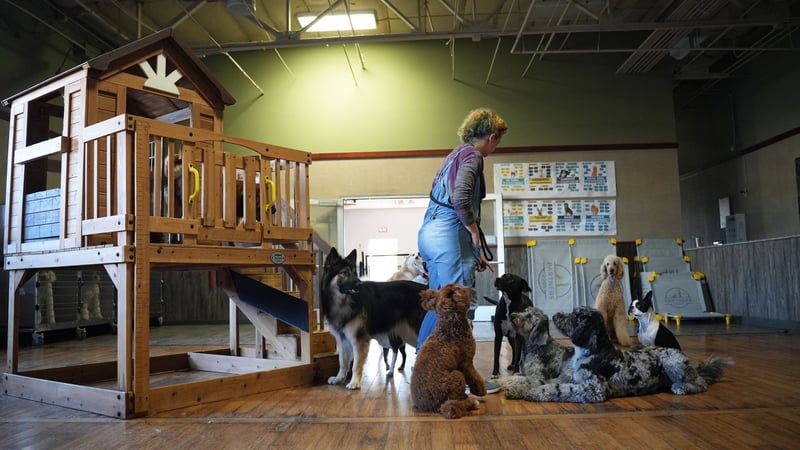
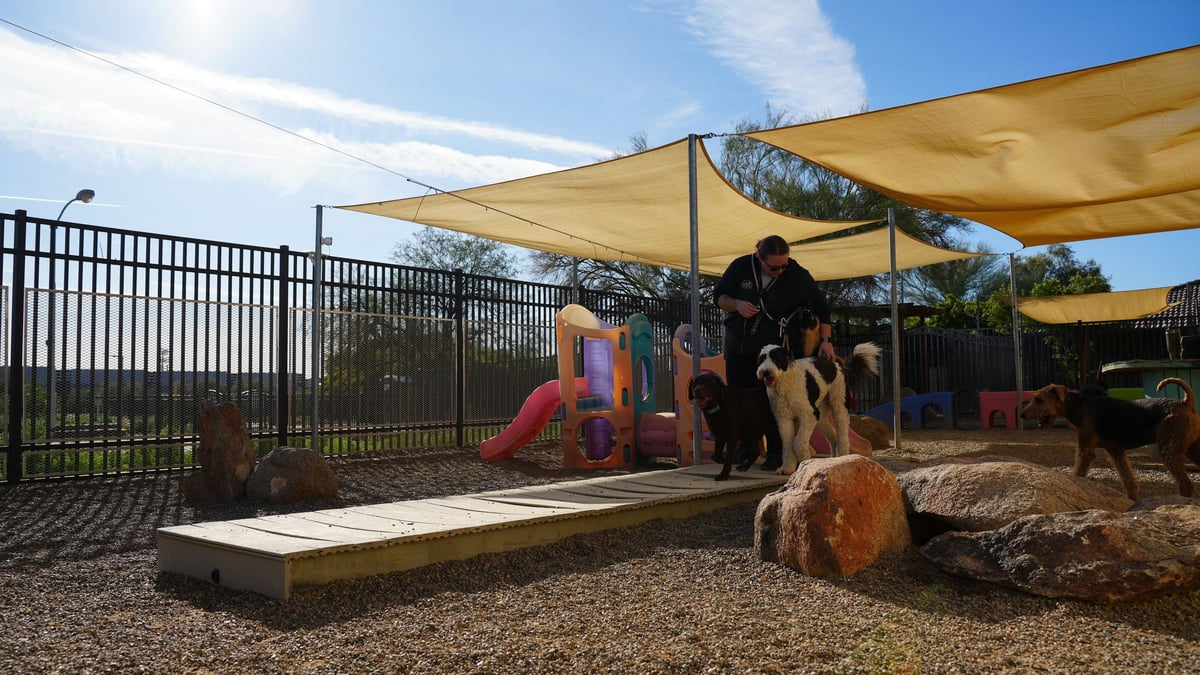
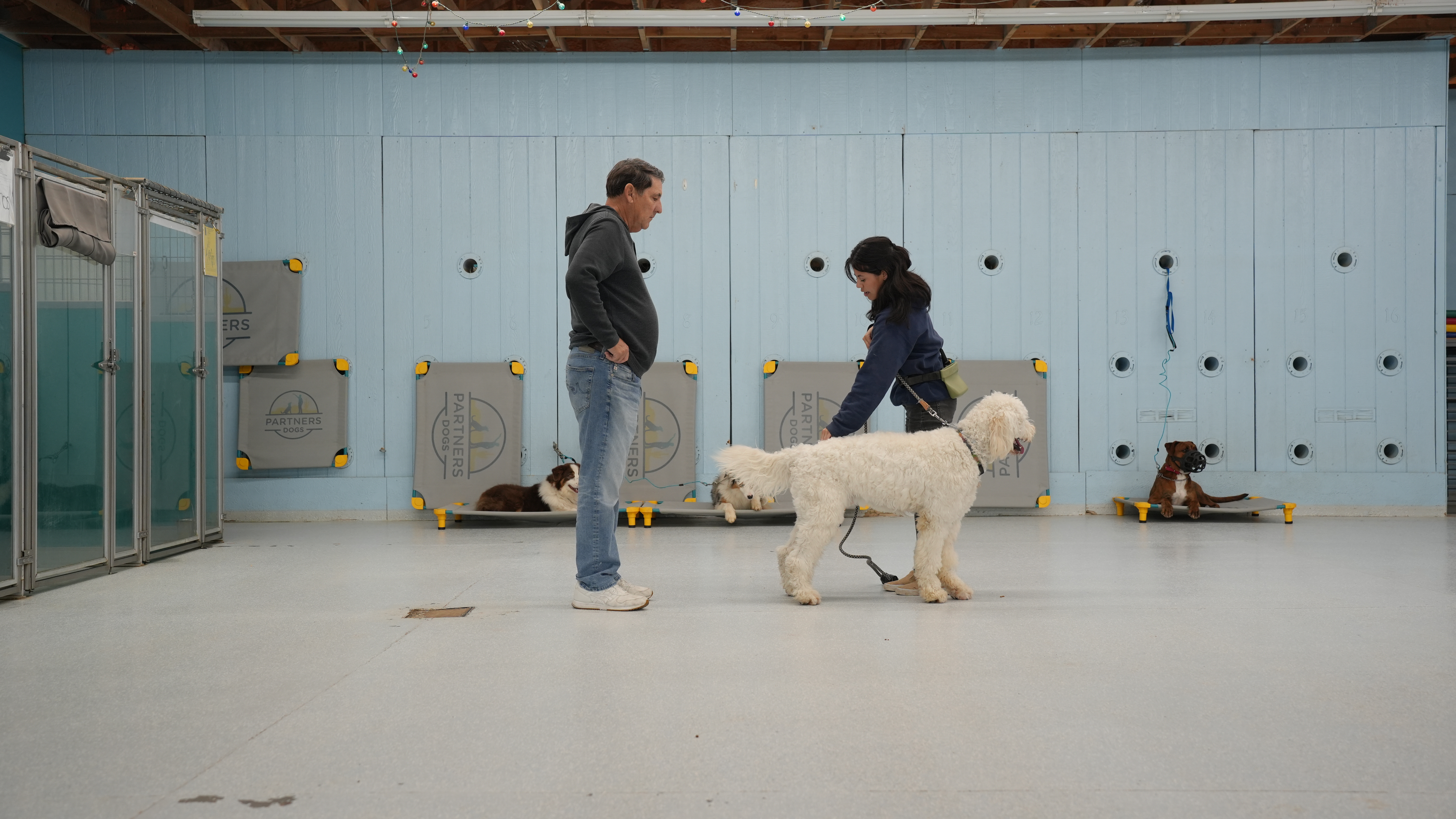
Ask for the ratio as a number, held at every hour of the day, not a reassurance that the floor "never feels crowded." There is no regulated ratio standard for dog daycare in Arizona or nationally, and the American Kennel Club's own daycare guide warns some facilities run as many as 30 dogs to a single attendant. A facility that answers with an adjective instead of a number has not measured it. Partners Dog School holds a 1:10 dog-to-trainer ratio, morning drop-off through evening pickup, on trainer-run floors, not attendants. Every dog's day is tracked against a grade-level curriculum and reported back through PD360.
What a good answer sounds like: a specific number held all day, for example "1:10, checked at every rotation," not "we never let it get too crowded."
2. How Many Hours of Training Does Floor Staff Have Before Supervising Solo?
A staff badge or a job title tells you nothing about hours logged; ask for the number instead. Even the industry's own knowledge-based trainer certification, the CPDT-KA, requires only 300 total hours: self-logged by the candidate and checked against a single attestation signature rather than an independent audit of the log. The exam itself is 200 multiple-choice questions with no hands-on component. Only a small fraction of CPDT-KA holders, about 2.9%, go on to the hands-on-assessed CPDT-KSA. A certificate tells you someone sought out and passed a program; it does not tell you how many hours they have actually spent managing dogs on a floor. Partners Dog School publishes three hour thresholds: 30 hours of coursework before a trainer works the facility at all, 1,000 or more supervised hours before reaching Instructor level and running a floor independently, and 2,000 or more hours across breeds and behaviors before Senior Instructor. Ask any facility you tour for its own number. A vague answer is itself an answer.
What a good answer sounds like: a specific hours threshold tied to a title, for example "1,000 supervised hours before running a floor solo," not a certificate name on its own.
3. Will My Dog Be Temperament-Screened Before Joining Group Play?
A facility that skips a thorough temperament check before your dog joins group play is skipping the step that prevents most bad days. A one-time glance across the lobby is not a screening. Partners Dog School evaluates every dog before group placement and keeps adjusting that placement as PD360 tracking shows the dog's grade-level progress change, not just once at intake and never again. Ask how long the evaluation runs, who makes the placement call, and whether your dog can move to a different group later if the first placement is not a fit.
What a good answer sounds like: a named evaluator, a described process with a time attached, and a stated path to re-place your dog later, not "we watch them for a bit and get a feel."
4. Is Staff Moving Through the Group, or Watching From the Side?
Supervision that means a person standing near the door is not the same as supervision that means a person walking the floor, reading body language, and interrupting rough play before it escalates. Active supervision catches the stiff posture and the fixed stare before a scuffle starts; passive supervision catches it after. Ask what a staff member is doing during a normal hour, not during your tour. Watch for staff moving among the dogs while you are standing there, not just when a visitor walks in.
"The staff was super nice and kept a close eye on my dogs while I went home to work!"
Melissa P., Cave Creek
What a good answer sounds like: a description of what a trainer-run floor does in a normal hour, not a job title. Partners Dog School floors are run by trainers, not attendants, at every hour of the day.
5. What's the Incident Protocol If a Scuffle Happens?
Ask what happens in the ten minutes after a scuffle, not just whether one has ever happened. A working protocol names who separates the dogs, who on staff is trained in pet first aid, which emergency vet the facility has a working relationship with, and how and when you get called. Partners Dog School maintains a referral network of more than 40 local veterinary practices for exactly this reason. If a facility cannot describe its own protocol without pausing, that pause tells you how prepared the floor is. We walk through our own version of this process, from separation to the vet call, in how we prevent and handle daycare incidents. Full intake and health-screening specifics for any facility you are considering, including our own, belong in a published FAQ, not just a verbal answer on tour day.
What a good answer sounds like: named steps and a named vet relationship, for example our 40-plus-practice referral network, not "that's never happened here."
6. Do Dogs Get Scheduled Rest, or Is It Play All Day?
Nonstop open play is not a benefit, it is a setup for over-arousal, and an over-aroused dog is more likely to be the one who starts the next scuffle. Ask how the day is structured: scheduled rest breaks in a quiet space, rotating smaller groups instead of one continuous free-for-all, and staff who can tell the difference between a tired dog and a wound-up one. This matters even more for a high-drive or adolescent dog that reads "all day play" as an invitation rather than a rest. Our guide on choosing a daycare for an active dog goes deeper on spotting structured enrichment versus volume-based open play.
What a good answer sounds like: a described rest schedule and group rotation, tied to a trainer reading the room, not "they just play until pickup."
Before you book
Walk the Floor Yourself
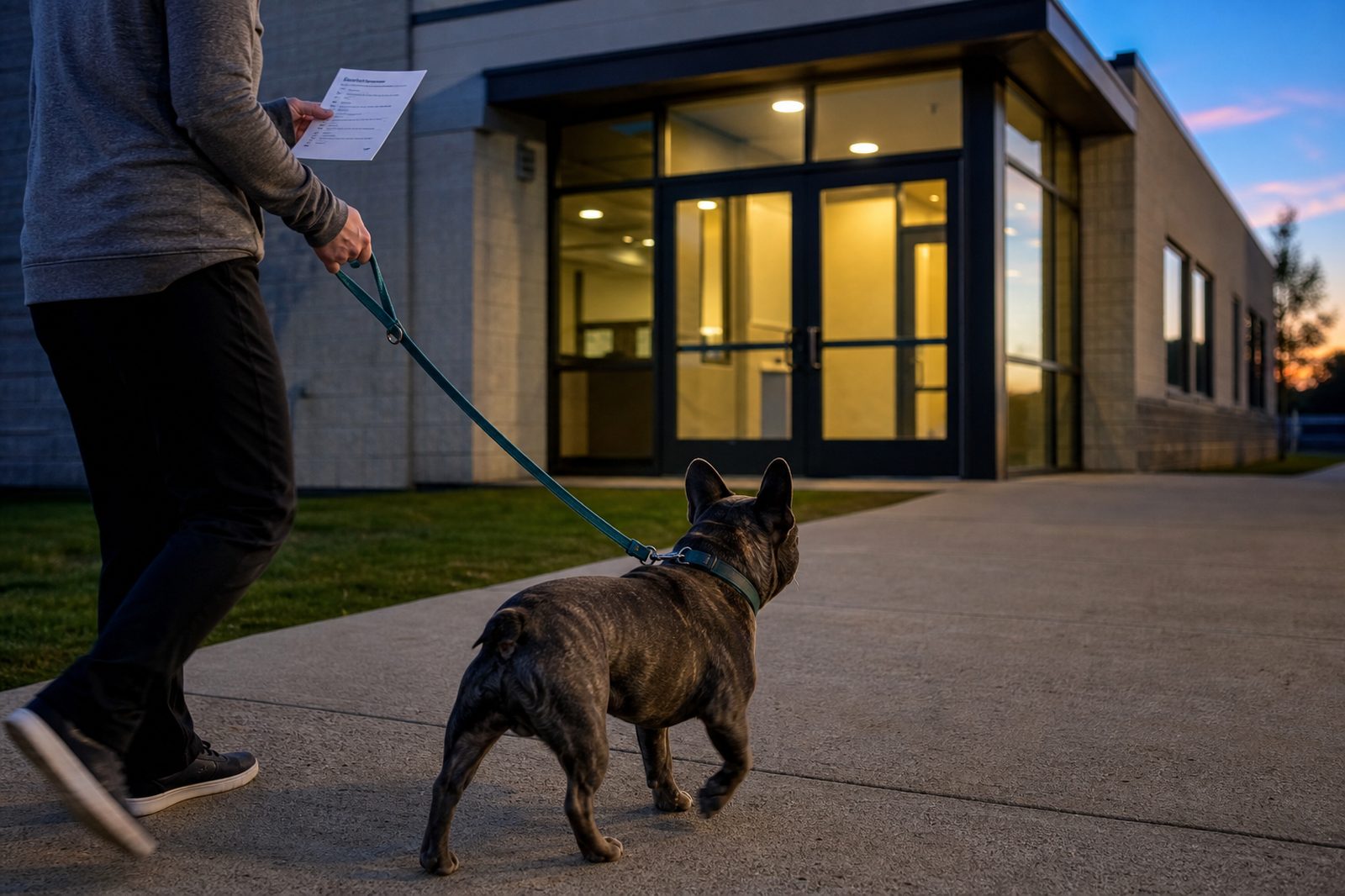
Bring this list with you. A Partners Dog School tour shows you the actual play floor, rest areas, and staff at work, not a staged five-minute walkthrough.
7. What Vaccines and Health Screening Do You Require Before Day One?
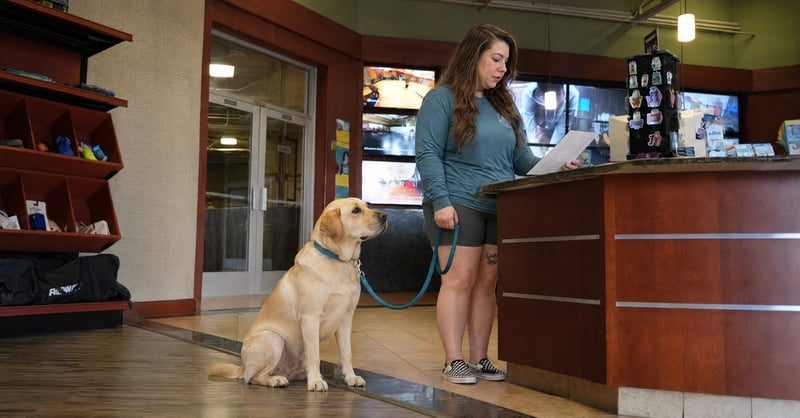
A daycare that will take any dog on any day without proof of vaccination is skipping the step that protects your dog's safety. Most reputable daycares require rabies, distemper-parvo, and bordetella at minimum, with canine influenza increasingly expected at busier facilities. Ask to see the actual intake form before you commit, not just hear the list read aloud. A facility that emails you a working checklist ahead of your dog's first day is showing you its process, not just describing it.
What a good answer sounds like: a written intake form you can see before you commit, not a list read aloud from memory.
8. Will My Dog Ever Be Crated, and for How Long?
Some crating during the day is normal; all-day crating with a daycare price tag is not what you are paying for. Ask when and why a dog gets crated: rest periods, a break from the group, or a genuine capacity limit on a busy day. Ask how long a typical crate period runs and whether it is the exception or the daily default. If the candid answer is "most of the afternoon," that is useful to know before you book, not after.
What a good answer sounds like: a stated reason and a stated duration, for example "rest breaks, twenty to thirty minutes," not a shrug.
9. What Will I See or Hear About My Dog's Day?
Ask what you get back at pickup: a photo, a written note, or just a leash handed to you at the door. Parents who stick with a daycare long term consistently mention this.
"My puppy had so much fun! The pet portal is great and you get pictures letting you know your dog is okay."
Taylor F., Cave Creek
That kind of comment only comes from daily attention, not a generic form email. A facility that cannot tell you one specific thing about your dog's day did not watch your dog that day.
What a good answer sounds like: one specific detail from that actual day, not a template message sent to every parent.
10. Can I Tour the Actual Play Floor, Not Just the Lobby?
A tour that stays in the lobby is a sales pitch; a tour that walks the actual play floor is due diligence. Ask to see where dogs rest, where they play, and where an incident gets handled. Do this on a normal weekday, not a staged walkthrough. Watch the group on the floor for five minutes before you ask a single question; it tells you more than most answers will. If a facility hesitates to let you see the actual floor, treat that hesitation as your answer.
What a good answer sounds like: an immediate yes and a walk to the floor right then, not a scheduled follow-up visit.
11. Is There a Path From Just Daycare to Skill-Building Later?
Pure open-play daycare and daycare built around a curriculum are not the same product, even when they cost about the same. Ask whether the day includes any structured training or enrichment, or whether it is exclusively supervised free play from drop-off to pickup. DaySchool at Partners Dog School builds daily training and enrichment into the day itself, so your dog is not just tired at pickup, they are further along. If your dog is already social and easygoing, straight daycare may be all they need for now. If you want the day to build toward something more, ask whether that path exists before you enroll.
What a good answer sounds like: a named curriculum with grade levels and progress tracking, like DaySchool's grade-level curriculum and PD360 reporting, not "we can talk about lessons later."
One thing this checklist cannot answer for you: whether the location and hours fit your day. A facility ten minutes from your Desert Ridge commute with drop-off and pickup hours that match a normal workday can matter more than a slightly better ratio across town, especially if a longer detour means daycare quietly stops happening at all. That trade-off is yours to make, not ours, and it belongs on your checklist alongside the eleven questions above.
Key takeaways
- Partners Dog School holds a 1:10 dog-to-trainer ratio, morning drop-off through evening pickup, on trainer-run floors.
- Trainers complete 30 hours of coursework before working the facility, 1,000 or more supervised hours before running a floor solo, and 2,000 or more hours to reach Senior Instructor.
- Every dog's day is tracked against a grade-level curriculum and reported back to parents through PD360.
- Partners Dog School maintains a referral network of more than 40 local veterinary practices for incident follow-up.
- Most reputable daycares require rabies, distemper-parvo, and bordetella vaccines at minimum, with canine influenza increasingly expected.
- DaySchool at Partners Dog School builds structured training and enrichment into the day instead of leaving it as supervised free play.
Frequently Asked Questions
What should I bring with me on a Phoenix daycare tour?
Bring this checklist, plus your dog's vaccination records if the facility offers a same-day trial day. Notes on the specific answers you get, not general impressions, make it much easier to compare facilities after you leave.
Is it reasonable to ask a daycare for its staff-to-dog ratio and staff training hours?
Yes. Any facility confident in how it operates should answer both questions specifically and immediately. Hesitation or a vague answer is itself useful information about how the floor operates.
How far in advance should I schedule a daycare tour before enrolling my dog?
A few days is usually enough. Call ahead so you see a normal weekday on the floor rather than a slow morning, and ask whether a trial day is available before you commit to full enrollment.
What counts as a warning sign during a daycare tour?
A tour that stays in the lobby, staff who cannot state their own ratio or training hours, and an incident protocol answered with "that's never happened" instead of a working process are all worth taking seriously.
Is dog daycare worth it for a busy working family near Desert Ridge?
Yes, when the facility is close enough to your commute to stay convenient and answers the ratio, training, and incident questions above without hesitating. DaySchool builds structured training into the same day, so a busy family gets supervised care and skill-building progress instead of just hours filled.
Beyond the checklist
See What a Daycare Built Around a Curriculum Looks Like
DaySchool holds the same specifics this checklist asks for: an actual staff-to-dog ratio, trained floor staff, and a structured day, not just supervised free play.