Dog daycare red flags cluster into three groups: staffing, screening, and structure. Watch for an unclear or overcrowded dog-to-staff ratio, no temperament check before enrollment, no way to watch play, and a dog that comes home more rattled than relaxed. Twelve specific signs, grouped below, show you which bucket a facility is falling short in.
Twelve signs, grouped into three categories, tell you almost everything you need to know before you leave your dog at a Phoenix-area daycare for the first time or the fiftieth. Families in Carefree and North Scottsdale booking a daycare-boarding combo ahead of a monsoon-season trip ask this exact question the most, because a bad match shows up fastest right before you leave town. The checklist below works at any facility, including one you already use.
Why Most Phoenix Daycares Mean Well, Even When Structure Falls Short
Most local daycares are staffed by people who like dogs, and plenty of easygoing, well-socialized dogs have a fine day at an open-play facility. That is not the concern here. The gap shows up in structure: open-play volume models are built to move a lot of dogs through a room, not to screen, rest, and individually supervise each one. A facility can have friendly staff and still run on a model that cannot catch a problem before it starts. If your dog has years of open-play daycare behind it with no bad days, settles instead of coming home wound up, and gets along with almost any mix of dogs, that dog and that facility are already a good match. Keep going and treat this list as due diligence, not a warning. Partners Dogs runs DaySchool as a trainer-led alternative built around the twelve checks below, but the checklist itself applies anywhere you are evaluating.

What Are the Staffing and Supervision Red Flags?
Staffing gaps are the fastest red flags to check because they show up in a single conversation. Ask these questions before you ask anything else.
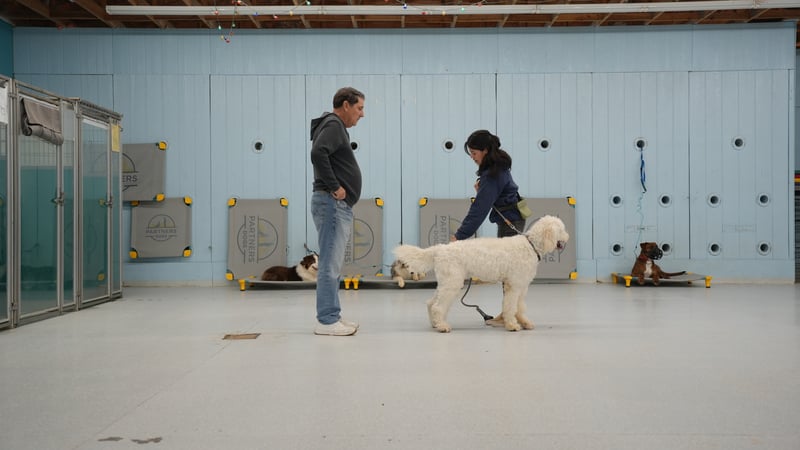
- Nobody can tell you the ratio. Ask directly how many dogs one handler supervises during open play. A vague "it depends" means the facility has not thought about it. Partners Dogs keeps a 1:10 dog-to-staff ratio in DaySchool and DayCamp and states it up front, so you know exactly how closely your dog is watched.
- The people watching play rotate constantly. High staff turnover means the handler supervising your dog today may not know your dog's history tomorrow. Ask how long handlers typically stay and what training they get beyond a first-week orientation.
- Staff are attendants, not trainers. A handler who can only separate dogs after a scuffle starts is doing containment, not supervision. Partners Dogs instructors log 30 coursework hours before working the floor and 1,000 supervised hours before earning the Instructor title, so the person reading your dog's body language has been trained to read it.
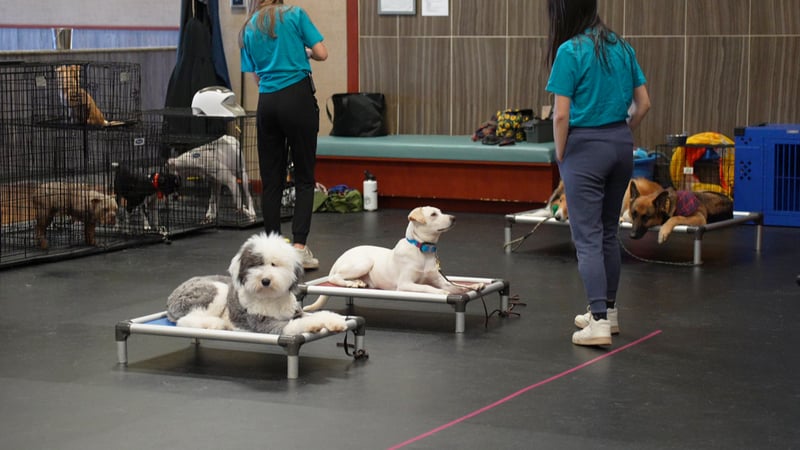
- Every dog is out for the same hours with no rest built in. A full day of unbroken open play wears dogs into over-arousal instead of calm tired. Ask whether the schedule includes structured rest cycles, not just a water break.
"Staff seem genuinely interested in my dog & were always focused on providing stimulus both mental and physical to the dogs. They also ensured no harm came to the dogs by ensuring they were separated and giving dogs time out if required."
Robert W., Scottsdale
What Screening and Admission Red Flags Should Worry You?
A facility that accepts every dog without looking closely cannot promise you a safe group, because it has not defined what safe means for that day's mix.
- No temperament check before your dog is accepted. The AKC's public guidance on choosing a daycare says a facility should assess a dog's behavior and personality before accepting them, not treat it as optional. A facility that takes any dog sight unseen also cannot tell you what kind of dogs your dog will be playing alongside.
- Vaccine records are never checked. Rabies, DHPP, and bordetella are the three vaccines most reputable daycares require and verify before a dog joins the group. If nobody asks you for paperwork, nobody is checking anyone else's either.
- Every dog lands in the same group regardless of temperament. A facility that does not sort dogs by size, energy, and behavior is betting nothing goes wrong in the mix. Reactive, fearful, or newly adopted dogs need a different setting; that is what DayCamp exists for, a structured day program built around the dogs open-play daycare is not designed to hold.
- There is no consistent baseline before day one. A five-minute trial visit tells a handler almost nothing about how a dog handles a full day of stimulation. Ask what a facility's evaluation measures, not just whether one happens. Partners Dogs runs a full PD360 Assessment for dogs headed toward Behavior Camp or Transform Camp, and a shorter daycare-specific evaluation for DaySchool candidates.
"Very professional. I love that all of the dogs go through an assessment before they are allowed to attend daycare. I feel very comfortable leaving my dog here knowing he’s in good hands."
Jeanne G., Scottsdale
Structured, not just supervised
See What a Trainer-Led Day Looks Like
DaySchool pairs daily play with trained supervision, structured rest cycles, and a 1:10 ratio your dog gets every visit.
What Facility and Health Red Flags Are Worth Watching For?
The facility itself will tell you almost as much as the staff do, if you walk through it with these four checks in mind.
- A strong odor or visible dirt in the play area. Some smell is normal in any space full of dogs. A smell that hits you at the door is not. Trust your nose on the first walkthrough.
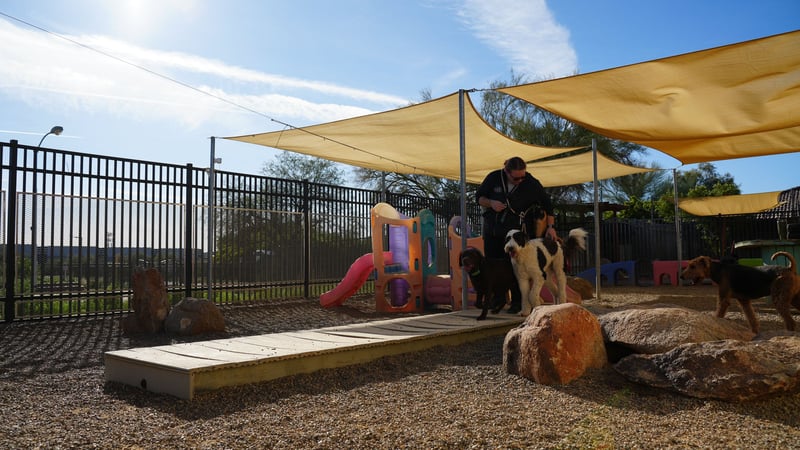
- You cannot watch play, in person or on camera. A facility that will not let you observe, even briefly, is asking you to trust a process you are not allowed to see. Purpose-built campuses like Partners Dogs' Scottsdale and Cave Creek locations are designed with sightlines for exactly this reason.
- No one can describe an emergency plan. Ask what happens if a dog gets hurt: whether a vet relationship is already in place, who makes the call, and how fast a dog can get seen. Partners Dogs works with a network of 40-plus local veterinary practices; any facility should have a comparable answer ready, not a shrug.
- Nobody can confirm a current kennel permit. The Maricopa County zoning ordinance requires a Kennel Permit for any commercial premises used for boarding, training, grooming, or bathing dogs. A separate county rule applies once five or more dogs are kept on a property. It is a fair, checkable question, and a legitimate facility keeps the answer on hand.
What Does Your Dog Tell You After a Visit?
Beyond the checklist, your dog is reporting on the day whether you ask or not. A dog that comes home newly fearful, limping, or unusually reactive toward other dogs is telling you something the tour did not. Some post-daycare crash is normal. A dog that stays glassy-eyed and wound up for hours instead of settling into a calm tired usually points back to one of the structure gaps above: too much unbroken stimulation, not enough individual attention, or a group that was never sorted by temperament in the first place. Partners Dogs carries 4.8 stars across more than 2,000 reviews, and the ratio and structure claims above show up in that feedback repeatedly, not only in marketing copy.
What Should You Do If You Already See a Red Flag?
If your dog's current daycare is showing two or three of the signs above, that is reason enough to ask direct questions or start looking elsewhere before a bad day turns into a pattern. Start with the ratio and the screening questions first, those two catch the most common gaps. If your dog is reactive, fearful, or was recently adopted, a general open-play evaluation was never built to catch what matters for that dog. A program built around structure, like DayCamp, exists for exactly that case. A short call with a trainer-run facility can usually tell you within a few minutes whether the structure holds up.
Key takeaways
- Partners Dogs runs a 1:10 dog-to-staff ratio in DaySchool and DayCamp and states it up front.
- Partners Dogs instructors complete 30 coursework hours before working the floor and 1,000 supervised hours before earning the Instructor title.
- The Maricopa County zoning ordinance requires a Kennel Permit for any commercial premises used for boarding, training, grooming, or bathing dogs.
- The AKC’s public guidance on choosing a daycare says a facility should assess a dog’s behavior and personality before accepting them.
- Partners Dogs carries 4.8 stars across more than 2,000 reviews.
Frequently Asked Questions
What is the single biggest daycare red flag to watch for?
If you can only check one thing, ask about the dog-to-staff ratio and watch how staff answers. A facility that cannot give a clear number, or gives a different answer each time you ask, usually has not thought hard about supervision. Partners Dogs runs a 1:10 ratio in DaySchool and DayCamp and states it without being asked twice.
Is it a red flag if a daycare will not let me watch playtime in person?
Yes. A facility comfortable with its own operation lets you see the play area, even briefly: through a window, a scheduled visit, or a camera feed. Refusing any form of observation is one of the clearer signs something about the day-to-day does not hold up to a look.
Does a strong odor always mean a daycare is unsafe?
Not automatically. Any space holding a group of dogs will carry some smell. The distinction is intensity: a light kennel smell is normal, while an odor that hits you at the door, paired with visible dirt or standing waste, points to a cleaning and staffing gap rather than a one-off bad morning.
What should I do if I already see a red flag at my dog's current daycare?
Ask the direct question first. Most of the signs above have a specific question behind them. If the answer is vague twice in a row, or your dog starts coming home differently after visits, treat that as enough information to raise it directly with the facility and book a tour of ours rather than waiting for a worse day to confirm it.
Is a Maricopa County kennel permit required for every dog daycare?
The Maricopa County zoning ordinance requires a Kennel Permit for any commercial premises used for boarding, training, grooming, or bathing dogs. A separate county rule applies once five or more dogs are kept on a property. It is a fair question to ask any facility, and a legitimate operation confirms its permit status without hesitation.
What makes a dog daycare the safest option, not just supervised?
The safest dog daycare option combines a stated dog-to-staff ratio, trainers rather than attendants on the floor, and a temperament check before enrollment. Partners Dogs keeps a 1:10 ratio in DaySchool and DayCamp, and its instructors complete 30 coursework hours before working the floor and 1,000 supervised hours before earning the Instructor title, so the person watching play has been trained to catch a problem before it starts.
For dogs who need more than open play
Give a Reactive or Undersocialized Dog the Structure Open Play Skips
If your dog needs more than a supervised free-for-all, DayCamp builds in the screening and structure open-play daycare leaves out. A PD360 Assessment sets the starting point.