In short
Daycare fits genuinely social dogs who play well in a group, while a dog walker fits dogs who do better with one-on-one attention or need a midday break rather than a full day out. Most Scottsdale and Cave Creek families end up mixing the two: a structured day program a few times a week for enrichment, and quieter days at home in between. The right call depends on your dog's temperament, not just your calendar.
What Dog Daycare Actually Offers
A good daycare day gives a social dog structured play, supervision, and a full day of physical and mental output instead of hours alone. For a dog who genuinely enjoys other dogs, that trade is a real quality-of-life upgrade over a long day home alone.
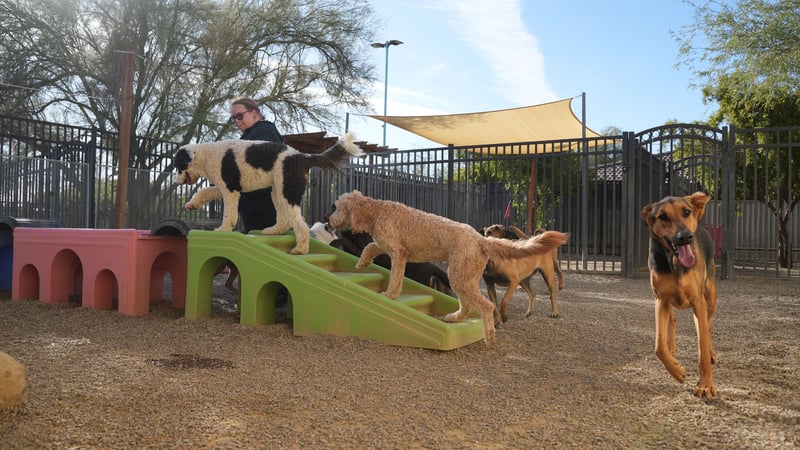
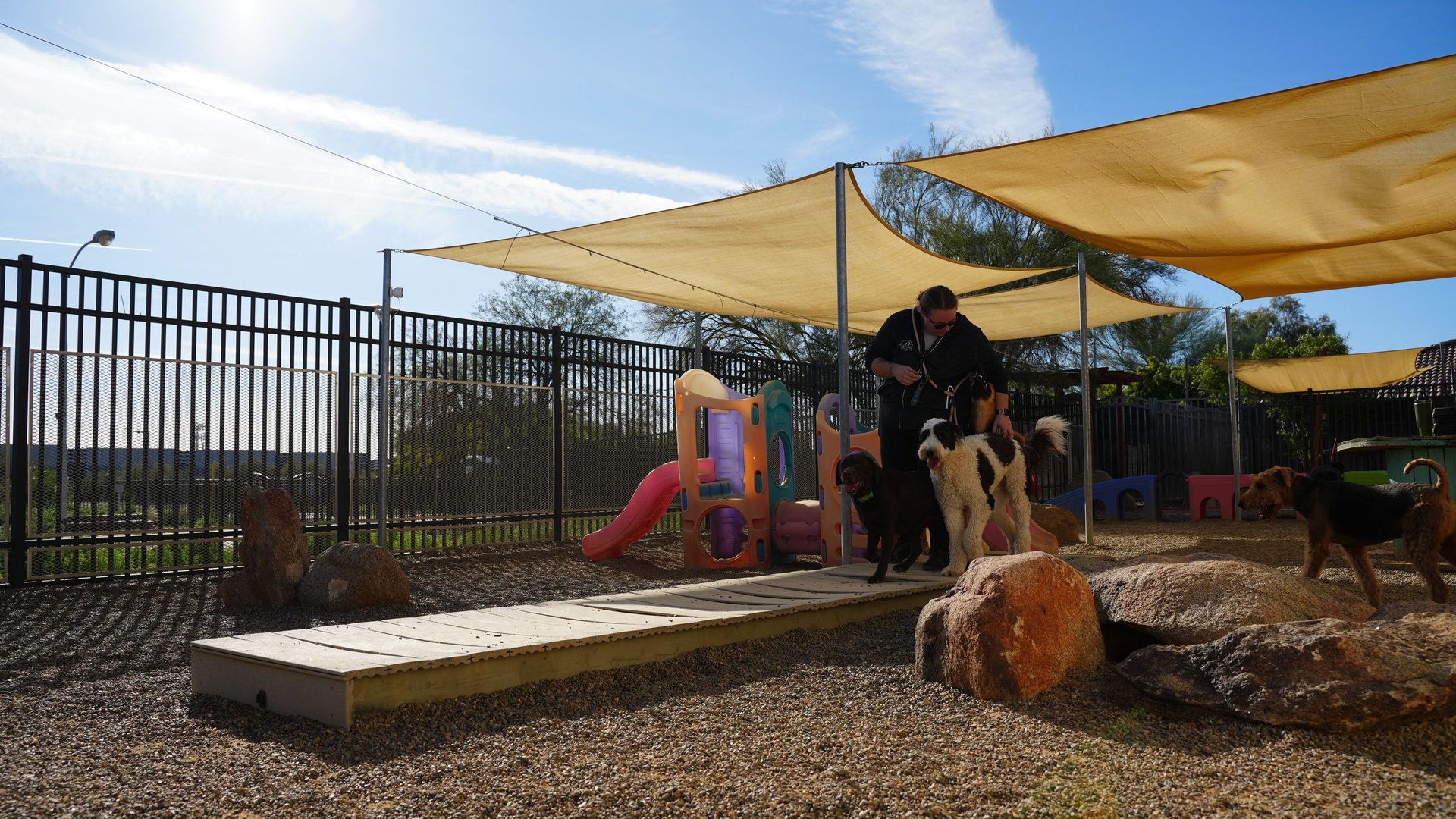
What separates a well-run day program from a dogs-in-a-room free-for-all is supervision ratio and structure. Partners Dogs runs DaySchool, our daycare-plus-training program for genuinely social dogs, with one trainer for every 10 dogs rather than the 20 to 50 dogs per handler that's common at warehouse-style daycares. That ratio is what lets staff actually intervene before a rough play session turns into a bad experience, and it's the difference between a dog who comes home tired and content and one who comes home wound up or worse.
A genuinely good daycare day usually includes:
- Small, temperament-matched play groups instead of one large free-for-all
- Shade, water, and rest breaks built into the schedule, not left to chance
- Staff trained to read canine body language and separate dogs before a scuffle starts
- Some structure or light training woven into the day, not just open play
Daycare is not automatically the right answer for every dog. A dog who finds groups of strange dogs overwhelming, who guards toys or space, or who is still building confidence around other dogs can find a loud, crowded play group stressful rather than fun. That is a real category of dog, and it deserves a different kind of day.
What a Dog Walker Provides
A dog walker gives your dog one-on-one time, a familiar route, and a midday break without the stimulation of a group setting. For dogs who do better with less noise and fewer strange dogs in their space, that is often the kinder option.
A solid walking arrangement covers the basics your dog needs on a long workday: a bathroom break, some movement, and a person checking in on them. In Arizona, timing and route matter as much as the walk itself. A walker who understands desert conditions plans around pavement heat, avoids the hottest part of the day, and picks shaded or grassy routes when they're available.
Where a walker tends to fall short of daycare is on the social and enrichment side. A quick visit covers the bathroom-break problem, but it does not give an active, social dog the hours of play and stimulation that a full daycare day does. If your dog is genuinely people- and dog-friendly and has energy to burn, a walker alone can leave real gaps in their day that show up as pacing, destructive chewing, or excess barking by the time you get home.
A dog walker is often the better fit when your dog:
- Gets overwhelmed or overstimulated in groups of unfamiliar dogs
- Is older, recovering from an injury, or has a medical condition that limits activity
- Is still building confidence and does better one-on-one than in a crowd
- Just needs a midday break, not a full day of care
Matching the Option to Your Dog
The honest starting point is your dog's temperament, not your work schedule. A schedule tells you how many hours you need covered. Your dog's temperament tells you what kind of day actually helps them.
A few honest questions make the decision clearer:
- Does your dog approach new dogs loose and friendly, or stiff and cautious?
- Does your dog come home from busy, high-stimulation outings settled, or wound up for hours afterward?
- Has your dog ever guarded food, toys, or space around other dogs?
- Does your dog struggle when you leave, or settle quickly once you're gone?
If your dog is undersocialized, fearful, reactive, or newly adopted, a crowded daycare floor is usually the wrong first step. That's the exact gap DayCamp is built for: a structured day program for dogs who need more calm and more one-on-one handling than a typical social daycare group provides, without asking you to give up a real day program altogether.
Dogs who struggle specifically with being left alone are a separate case worth naming directly. Pacing, barking, or damage to the house when you leave can point toward separation anxiety rather than a simple boredom problem, and neither daycare nor a walker fixes the underlying issue on its own.
Not sure which fits your dog
Get a clear read on your dog's temperament first
A PD360 Assessment gives you an honest, professional read on your dog before you commit to daycare, a walker, or a structured program. Current rates are on the pricing page, and the assessment fee credits toward same-day camp enrollment if that ends up being the right fit.
Planning Around Arizona Heat and Your Schedule
In Scottsdale and Cave Creek, the season matters almost as much as the dog. A plan that works in January can be unsafe by June if it depends on midday pavement time.
A few Arizona-specific realities worth building into your plan:
- Summer pavement heat makes early morning or evening the only safe windows for an outdoor walk for much of the year
- Monsoon storms can make an otherwise reliable walker schedule unpredictable for a stretch of the summer, which is worth planning a backup for
- A shaded, supervised indoor-outdoor daycare setup sidesteps the heat problem entirely on the days it matters most
For most working families in Scottsdale and Cave Creek, the realistic answer is a blend rather than an either-or choice: a couple of structured daycare days a week for a social dog to burn energy and stay sharp on manners, with quieter days at home the rest of the week. For a dog who does better one-on-one, that might mean a walker on the days you're out longest and a slower home routine the rest of the time.
When Your Dog Needs More Than Either Option
If daycare overwhelms your dog and a walker leaves real gaps in their day, that combination is worth naming, not working around indefinitely. It's usually a sign your dog needs more structured training underneath the care plan, not just a different care provider.
Foundation Camp, our 14-night board and train, builds the obedience foundation that makes future daycare days, walks, and everyday life calmer across the board. For dogs already showing reactivity, fear, or aggression around other dogs or people, that foundation work usually needs to come before daycare is even back on the table.
Frequently asked questions
Is dog daycare better than a dog walker?
Neither is universally better. Daycare tends to suit genuinely social, playful dogs who benefit from group interaction and a full day of activity. A dog walker tends to suit dogs who get overwhelmed in groups, are older or recovering from an injury, or just need a midday break rather than a full day out. The right choice depends on your dog's temperament, not a general ranking of the two services.
Can I use both daycare and a dog walker in the same week?
Yes, and many Scottsdale and Cave Creek families do exactly that. A common pattern is a couple of structured daycare days a week for a social dog's energy and enrichment, with a walker or quiet home days filling the rest of the week. The two are not mutually exclusive.
My dog doesn't do well with other dogs. What are my options besides daycare?
A dog walker is one option for daily coverage. For a fuller day program without the crowded group setting, DayCamp is built specifically for dogs who are reactive, fearful, undersocialized, or newly adopted, giving them structure and supervision without the free-for-all play group that a typical daycare floor runs.
What should I ask before hiring a dog walker in Arizona?
Ask how they handle extreme heat days, what times of day they walk, whether routes avoid hot pavement, what their group size looks like if they walk multiple dogs together, and how they handle an emergency or a behavior concern mid-walk. A walker who is thinking about Arizona conditions specifically, not just walking dogs generically, is worth the extra questions.
How do I know if my dog is ready for a daycare group setting?
A dog who approaches new dogs loose and friendly, has no history of guarding food or toys around other dogs, and comes home from busy outings settled rather than wound up is usually a good daycare fit. A professional assessment, like a PD360 Assessment, gives you an objective read instead of a guess if you're not sure.
Next step
Give your dog the day that actually fits them
Whether your dog needs a lively daycare group or a calmer structured setting, the fastest way to know for sure is an honest assessment, not a guess. Partners Dogs is rated 4.8 stars across 2,000+ reviews from Scottsdale and Cave Creek families who started exactly where you are.
Keep reading