Quick orientation
Structured enrichment at DaySchool means one thing: a scheduled mix of skill drills, scent work, matched play, and real rest blocks, and that is what makes it a defensible choice for a busy North Scottsdale professional who wants a trainer managing the day, not a staff member simply supervising a room.
Is structured enrichment just a fancier name for a toy bin?
It is not, and treating it that way is the most common mistake owners make on a tour. A basket of chew toys in the corner of a play yard is a nice gesture, but it is not a program. It does not tell a trainer which dog needs a rest block at 11am because he is starting to pace the fence line, or which dog is ready for a scent search because she has settled enough to focus. Structured enrichment is a schedule with a reason behind each block of it, built by someone watching the dogs, not a pile of objects left out for whoever wanders over. The marketing use of the word "enrichment" often means the second thing. The DaySchool use of it, done right, means the first.
What is structured enrichment for dogs, exactly?
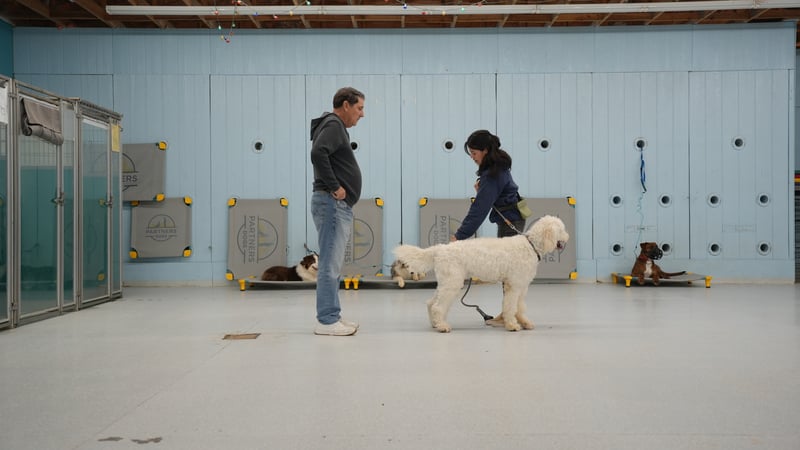
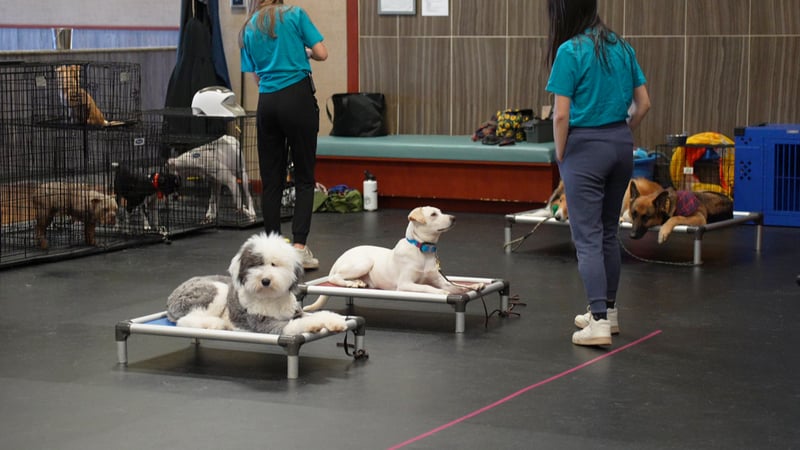
Structured enrichment is a planned rotation: skill work, scent activity, matched play, and supervised rest, run on a schedule a trainer sets and adjusts through the day. At DaySchool, that means a dog’s day is broken into blocks instead of one long stretch of free-for-all. A block might be five to ten minutes of recall or place work pulled from the dog’s grade level, a scent search using a muffin tin or a row of boxes, a supervised play session with dogs matched for size and play style, or a crate or mat rest period timed to when the trainer running the floor sees arousal climbing. None of that requires the dog to leave the building. What it requires is staff who are reading the room continuously, and a program willing to interrupt play before it needs interrupting, not after.
How is structured daycare different from open play?
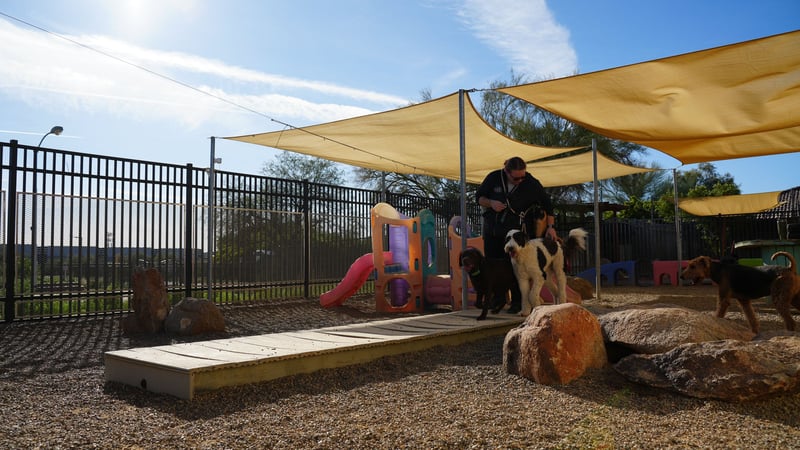
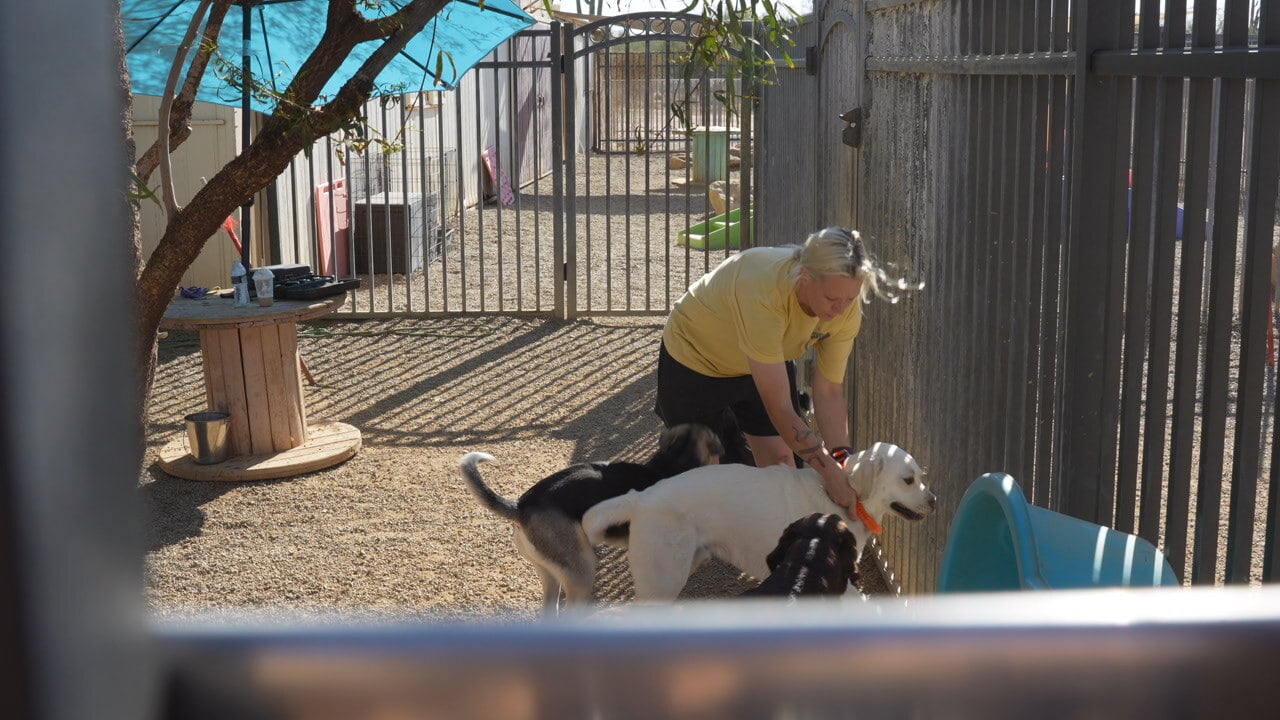
Open play runs on a clock and a headcount; structured daycare runs on what each dog is doing in that moment. A pure open-play model puts a group of dogs in a yard, checks on them periodically, and calls it a day when the hours run out. That model has real appeal: it usually runs cheaper, keeps looser hours, and does the job fine for an easygoing dog who mostly needs company for the day. Play style, size, and energy get sorted loosely at best. Rest happens only when a dog gets tired enough to stop on his own, usually well after he has already rehearsed being overstimulated a few times that day. DaySchool runs the opposite way. Playgroups get built and rebuilt around size, age, and play style. A trainer works the floor the entire time, and rest is scheduled in before a dog reaches the point of asking for it. The difference shows up at pickup. A dog who spent eight hours rehearsing over-arousal comes home wired. A dog who spent the day cycling through structured blocks comes home settled, the same kind of tired a dog gets after a long hike with a job to do, not the jittery, wound-up tired of a day with no shape to it.
| What happens | Open play | Structured DaySchool |
|---|---|---|
| Playgroups | Sorted loosely, if at all | Built and rebuilt around size, age, and play style |
| Rest | Happens when a dog wears himself out | Scheduled before arousal peaks |
| Who is watching | Periodic headcounts | A trainer working the floor the entire time |
| Pickup | Often wired or overstimulated | Tired from real activity, not over-arousal |
What activities count as structured enrichment?
Three categories carry the load: skill drills, scent work, and rest, and none of the three is optional if a program is calling itself structured. Skill drills pull straight from a dog’s grade level in our eight-level curriculum, so a dog working through place stays or a solid recall in DaySchool is practicing the exact skill a trainer is tracking toward moving from Teaching into Reinforcing, not doing a party trick for a treat. Scent work gives a dog a job that uses his nose instead of his mouth or his legs, which is a different kind of tired than running produces, and it works especially well for a dog who gets overstimulated by group play but still needs something to do with his brain. Rest is the piece owners underrate the most. A crate or mat period is not a punishment or a consolation prize; it is where a dog’s nervous system resets between activity blocks, and a floor without scheduled rest is a floor that is going to have more incidents, not fewer.
Take the next step
See exactly where your dog is starting from
A PD360 Assessment shows a trainer exactly where your dog sits on the grade curriculum before day one, so the skill drills, scent work, and rest blocks in a structured day match your dog instead of guessing.
What does a structured day look like for a busy North Scottsdale professional?
It looks like drop-off before a commute, a day the dog spends being taught instead of just tired out, and a pickup where a trainer can actually tell you something about how the day went. A family working out of North Scottsdale, Grayhawk, or DC Ranch does not usually have three hours in the middle of the day to run a dog through fetch and a training session. DaySchool covers office hours, Monday through Friday 7am to 6pm and Saturday 8am to 4pm, so a dog can go in on the way to work and come out on the way home. What happens in between is the actual value. A dog who spends two or three DaySchool days a week cycling through skill drills and scent work is getting more structured repetition in a week than most owners can fit into evenings and weekends combined, and a busy professional gets a dog that is easier to live with at 7pm instead of one still bouncing off the walls from an unstructured day.
What should the best DaySchool in North Scottsdale include?
Whether a family is coming from the 85255 corridor near Grayhawk and DC Ranch, from 85266, or from 85262, the checklist is the same: a working trainer-to-dog ratio, matched playgroups, and a curriculum, not just a clock. Our Scottsdale campus runs a 1:10 trainer-to-dog ratio, which means the person on the floor can read ten dogs at once instead of glancing across thirty. Every dog placed into daycare goes through a temperament assessment first, so a shy Pre-School-level pup is not getting grouped with a pushier College-level dog by accident. That is the same assessment style used at intake for our board and train camps. Callie’s story, a young pit mix, opens with her hackles going up from pure stimulation during that first read despite showing zero aggression, exactly the kind of signal a trained eye has to catch before grouping dogs together. For a dog still working through basics, our Pre-School Puppy program builds that foundation before a first DaySchool placement. None of this changes based on which North Scottsdale zip code a family is driving in from. What changes is the drive, and for most of North Scottsdale, that drive buys a level of structure an open-play facility closer to home usually cannot match.
How do you know a daycare that calls itself structured means it?
Ask what happens between the play sessions. That gap is where most facilities quietly drop the word "structured" and just run open play. A few questions separate the two on a tour.
- Ask what a dog does in the hour after lunch. If the honest answer is "more play," rest is not built in.
- Ask how playgroups get formed. Size and age alone is a weaker answer than size, age, and play style together.
- Ask who is on the floor and what their background is. A trainer running the floor is a different job than an attendant watching for fights.
- Ask whether a dog can be placed somewhere other than the main group after an assessment. If every dog gets the same yard regardless of temperament, the structure is thinner than the pitch.
A program that answers all four without hesitating is doing the work. One that answers with "we keep an eye on them" is running open play with better marketing.
Key takeaways
Structured enrichment means scheduled skill drills, scent work, and rest run by a trainer reading the room, not a bin of toys in the corner. Open play sorts dogs loosely and lets rest happen on its own; structured daycare schedules rest before a dog needs it. Skill drills draw from the same eight-level curriculum used across our programs, so daycare time doubles as practice time. A 1:10 trainer-to-dog ratio and a temperament assessment before placement matter more than the zip code a family drives in from. The clearest tour question is what happens between play sessions, not during them.
Frequently Asked Questions
Is structured enrichment matched to each dog, or do all the dogs do the same activities?
It is matched. A dog’s grade level, play style, and arousal level all shape the mix: skill drills, scent work, and rest cycles a trainer runs him through on a given day. That means two dogs in the same building are not necessarily doing the same thing at the same time.
Can a dog get overstimulated even inside a structured enrichment schedule?
It can happen, which is exactly why the schedule includes rest blocks before arousal peaks instead of after. A trainer working the floor watches for the early signs (stiffening, fixating, refusing to settle) and moves a dog to a rest period before it turns into a problem, rather than waiting for a fight to break one up.
What happens if my dog does not care about scent work or skill drills?
A trainer adjusts the activity, not the dog’s day off from structure. Some dogs take to scent searches immediately and others need it introduced with higher-value rewards or a simpler search first; either way, the goal is finding what engages that particular dog, not skipping enrichment for the ones who need more coaxing.
How many rest blocks does a typical structured DaySchool day include?
It depends on the dog and how the floor is running that day, since a young, high-energy dog and an older, calmer one do not need the same number of breaks. What stays constant is that rest is scheduled in ahead of time rather than added only after a dog has already worn himself out or started causing problems.
Put a date on it
See how the DaySchool routine fits your household
Current rates are on the pricing page. See how skill drills, scent work, and rest blocks line up with a schedule that works for your week, whether that is two days or five.
“I love their structured daycare where he not only gets to socialize appropriately with other dogs but also learn new things or reinforce things he already knows each time he’s there.”
Jeanne G., Scottsdale
Keep reading