Short version
Your dog has canine cough (commonly called kennel cough): vet guidance comes first, then rest, humid air, a harness instead of a collar, and isolation from other dogs. Most cases resolve in 1 to 2 weeks with supportive care, but red flags like difficulty breathing, lethargy, appetite loss, fever, or colored discharge mean a vet visit now.
- Call your vet before treating anything at home. This article supports the vet's plan; it never replaces it.
- The home-care protocol: strict rest, cool-mist humidifier or steamy bathroom air, harness instead of collar, water and soft food offered often, and full isolation from other dogs.
- Supportive care is comfort only. It is not treatment, and nothing here cures the infection.
- Red flags that need the vet immediately: breathing trouble, lethargy, no appetite, fever, thick or colored nasal discharge, a productive cough, or a cough that outlasts the expected recovery.
- Keep your dog away from other dogs until the vet clears the return. At Partners, dogs with infectious symptoms stay home and must be symptom-free for at least a week before coming back.
If your dog woke up with that dry, honking cough and you are wondering what to do right now, this is your guide. It walks you through the home-care protocol our trainers point Pet Parents to and the line between comfort care and veterinary treatment, plus the symptoms that send you to the vet the same day. For what canine cough actually is, see topic #67.
What should I do first when my dog starts coughing?
The short version: call your vet, describe the cough, and follow their plan. Nothing in this article diagnoses your dog.
A cough is a symptom, not a diagnosis. Canine cough is the most common cause, but collapsing trachea and heart disease make the same sound, and you cannot tell them apart by ear (see topic #67 for the full breakdown). Your vet rules those out. That phone call is step zero.
This is medic factors in action: we never plan training or care around a hurting dog without the vet. Medical problems get handled by medical professionals. We partner with your vet. We never substitute for one.
While you wait on the vet's direction, isolate your dog from other dogs. The canine-cough pathogens spread before symptoms show, through contact, droplets, aerosols, and shared surfaces (University of Florida shelter-medicine program, 2021). Separate multi-dog households, and stay out of dog parks, daycare, and playdates until your vet clears the return.
Rest is the prescription you can write yourself, and it is the one most Pet Parents skip.
What can I actually do at home for canine cough?
The short version: supportive care only. Comfort for your dog, not treatment of the infection.
Draw the line hard. Home care soothes symptoms while your dog's immune system does the work. It does not diagnose, prescribe, or treat. If you are reaching for anything from the human medicine cabinet, stop and call the vet instead.
Think of it like nursing a kid through the flu. The soup and the quiet room do not kill the virus. They keep the patient comfortable while the body does the real work. Anything that acts like treatment belongs to the vet.
Rest means rest: no dog park, no rough play, no long hikes while the cough persists. Keep the air humid, keep the routine boring, and let the dog's energy come back on its own schedule. A dog that feels better on day five can still shed the organism. The calendar, not the mood, decides the return date.
Here is the protocol, one action per step:
- Call the vet first. Describe the cough, when it started, and how your dog is acting otherwise. Get their direction before you do anything below.
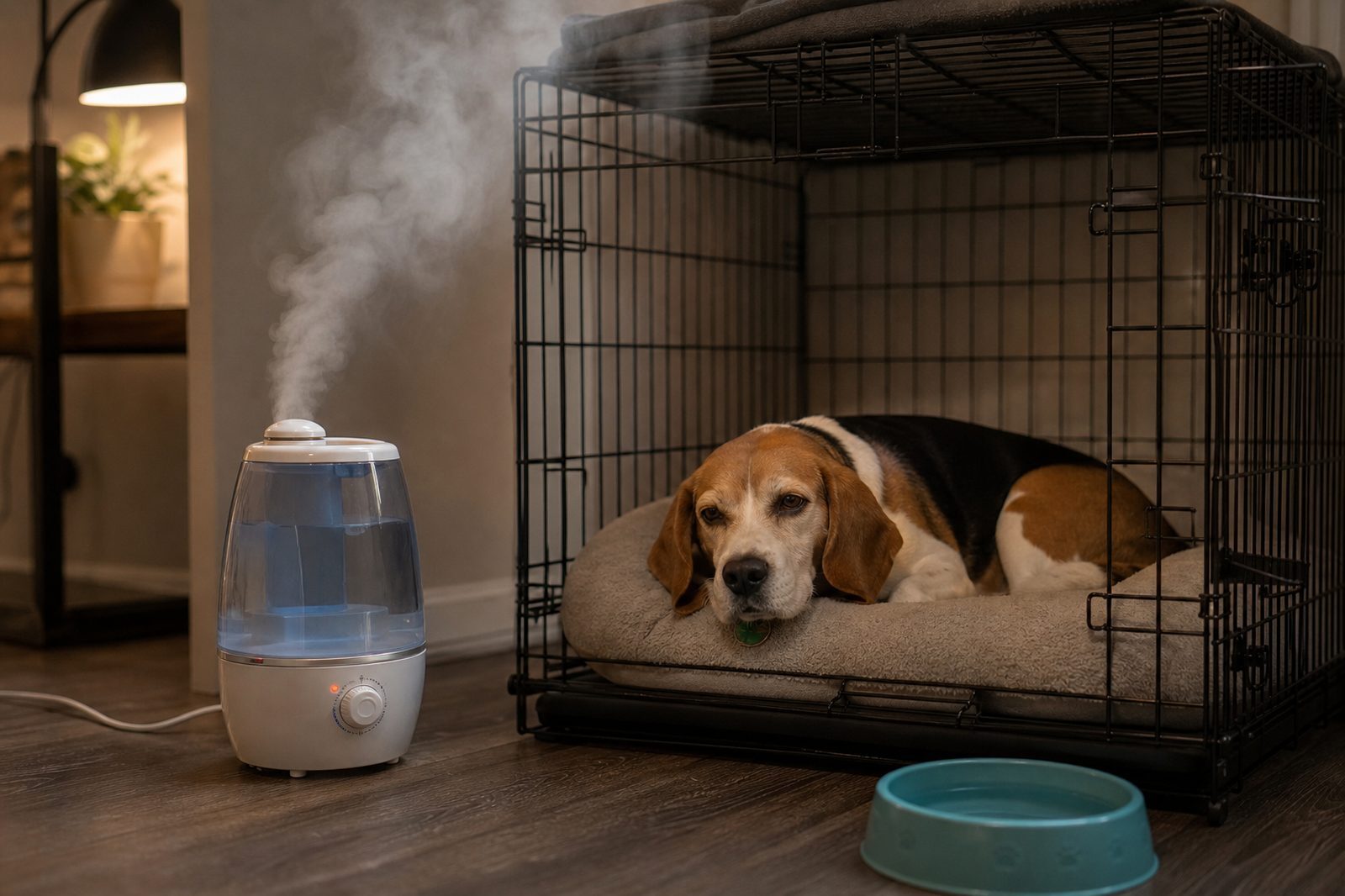
- Set up a quiet rest area. A crate or a calm corner. The cough gets worse with excitement and exercise, so keep things boring until the vet clears activity.
- Restrict activity. No dog park, no rough play, no long walks. Short leash walks for bathroom breaks only, at your vet's direction.
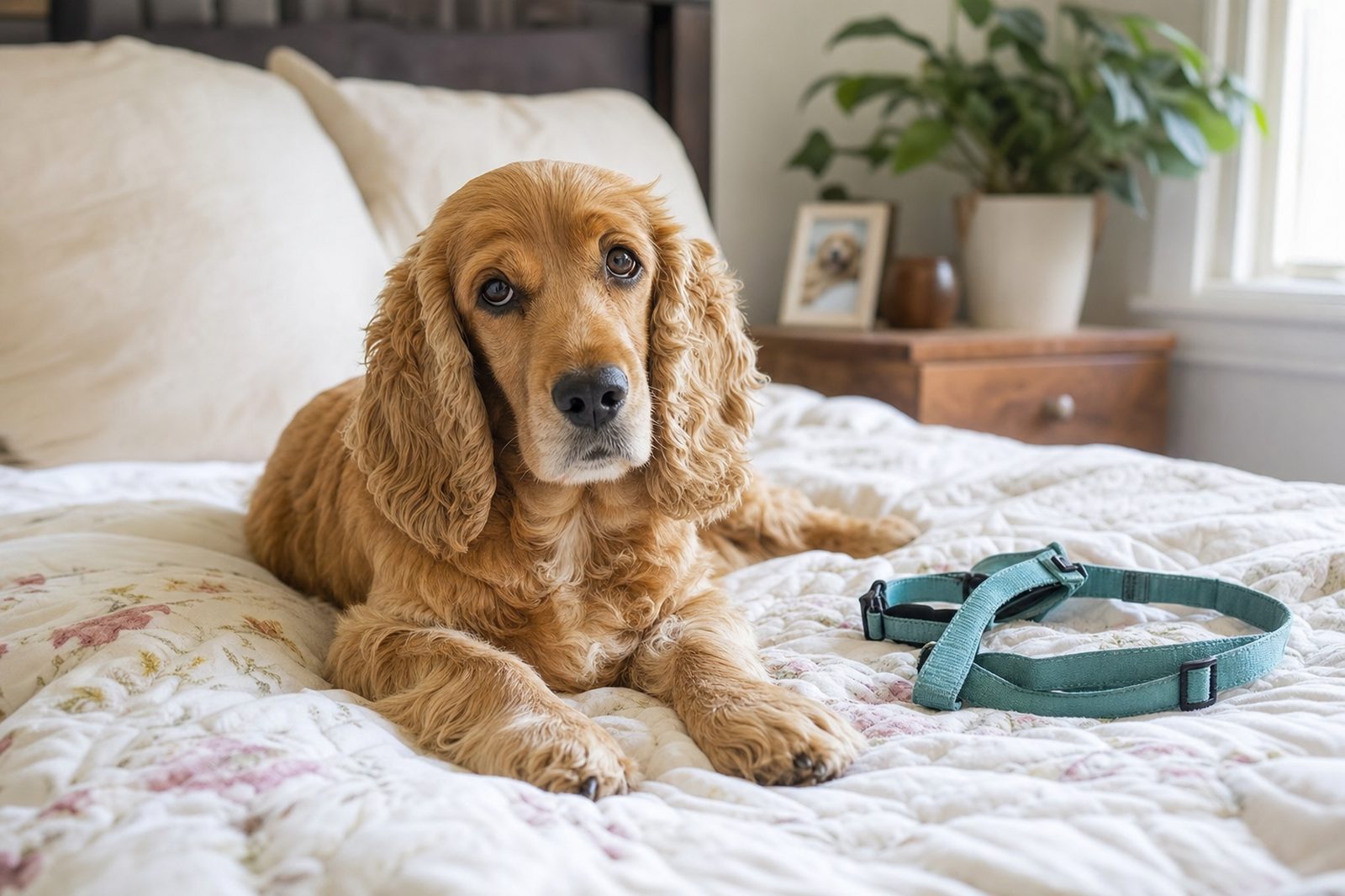
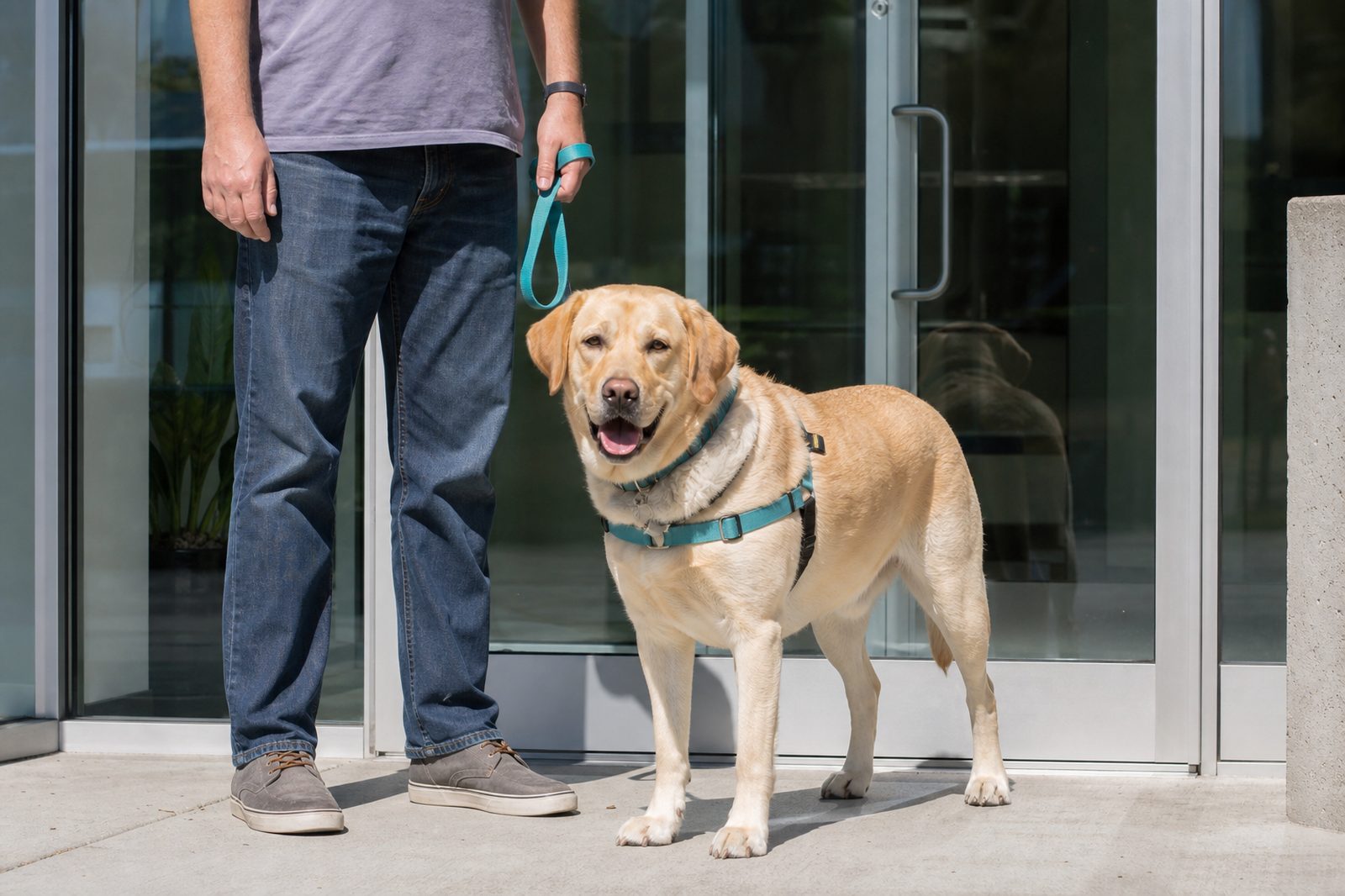
- Swap the collar for a harness. Pressure on the trachea triggers and worsens coughing. Walk and manage with a harness only until the cough is fully gone.
- Run a cool-mist humidifier near your dog's resting spot, or sit with your dog in a steamy bathroom for a few minutes, a few times a day. Moist air soothes irritated airways. If your dog is flat-faced, ask your vet whether steam is safe for your breed first.
- Offer water and soft, palatable food often. Keep hydration up and make eating easy on a sore throat. Fresh water or low-sodium broth both work.
- Track symptoms daily. Note the cough frequency, energy, appetite, and any new signs. This log is what your vet uses if the case does not resolve as expected.
- Isolate from other dogs. No dog parks, daycare, playdates, or nose-to-nose contact until the vet says otherwise. Handle the healthy dogs first, then the sick one, and wash your hands between them.
- Do not add medications or remedies on your own. No human cough medicine, nothing from the pantry shelf without your vet's explicit approval. Honey counts too: some vets okay a small amount as a throat soother (not for diabetic dogs or puppies under a year). Ask first. It soothes. It does not treat.
What will my vet actually do for canine cough?
The short version: most uncomplicated cases get rest and watchful waiting. Medication is for complications, not the cough itself.
Most dogs with uncomplicated canine cough recover with rest and supportive care at home, typically within one to three weeks. The vet's job is to confirm the case is uncomplicated and to step in when it is not.
Here is what the vet side of the partnership looks like, straight from veterinary practice:
- Cough suppressants or anti-inflammatories, if prescribed, to ease severe coughing so the dog can rest. These are the vet's decision, not yours. Never give human cough medicine on your own.
- Antibiotics only when a bacterial infection is confirmed or likely. Many cases are viral, and antibiotics do not touch viruses. For suspected Bordetella or Mycoplasma, doxycycline is the commonly recommended first choice in the peer-reviewed treatment literature.
- Further diagnostics if the cough does not follow the expected course: chest X-rays to rule out pneumonia, or PCR panels to identify the pathogen.
- A recheck if the cough lasts longer than expected or comes back after improving.
Two things that are not evidence-based: oral prednisone has not been found to shorten the course of illness, and there is no evidence that over-the-counter antitussives or expectorants help dogs with canine cough. Skip the pharmacy aisle. Call the vet.
Your first step
Vet first, then back to class
Call your vet, then rest your dog: supportive home care works only inside a vet's plan. If recovery leaves a training gap behind, a PD360 Assessment is where the reset starts.
When should I call the vet immediately?
The short version: most canine cough stays mild, but a short list of symptoms means the vet sees your dog now.
Canine cough can progress to pneumonia, and the progression shows up in specific signs. Watch for all of these:
- Difficulty breathing or increased breathing effort, including wheezing
- Blue or pale gums
- Lethargy or listlessness (a dog that "just isn't right")
- Loss of appetite or refusal to eat
- Fever or a dog that feels hot and looks sick
- Thick, colored (yellow or green) nasal discharge instead of clear
- A productive, wet cough instead of the dry honk
- A coughing fit that ends in collapse
Puppies, seniors, flat-faced breeds, and dogs with underlying health issues are at higher risk of complications, including pneumonia. If your dog is in one of those groups and starts coughing, do not wait for the home-care protocol to run its course. Call the vet the same day.
If symptoms persist beyond the expected recovery period or new signs develop, schedule a recheck. Complications are caught early by owners who report changes fast, not by owners who wait.
How long do I keep my dog away from other dogs?
The short version: the whole illness plus a buffer after. Your vet sets the exact timeline.
This is the part most Pet Parents underestimate. Dogs can keep shedding the infectious agents after they look better: some shelter programs ask fosters to keep recovering dogs away from group dog areas for at least two weeks after recovery. Tell anyone your dog was near in the contagious window: the daycare, the neighbor with the puppy, the friend whose dog shares your water bowl. Canine cough moves through communities, and the warning is the prevention. The practical guidance most vets give: isolate through the full illness and for at least 10 to 14 days after the last symptom, and let your vet confirm the return date.
Here is how to handle isolation at home:
- No dog parks, daycare, boarding, or playdates while your dog shows any symptoms.
- Separate multi-dog households and keep the sick dog's bowls, bedding, and toys separate. Handle the healthy dogs first, then the sick one, washing your hands between them.
- Walk at off-hours and keep distance from other dogs until your vet clears the return.
Our campuses run a plain rule: dogs showing any infectious symptoms stay home, and they must be clear of symptoms for at least a week before returning to any campus program. Every dog entering our facilities must be current on Bordetella, Rabies, and DHPP, with each vaccine given at least a week before the first day. Symptom-free plus current vaccines is how we keep classes running without outbreaks.
Route by fit
DaySchool and boarding are waiting
Once your dog is symptom-free for at least a week and current on Bordetella, Rabies, and DHPP, our campus programs are ready.
By the numbers
Sources: veterinary clinic guidance and peer-reviewed CIRDC literature (see fact pack).
Myth vs. fact about canine cough home care
| Myth | Fact |
|---|---|
| Canine cough needs antibiotics to get better. | Most cases resolve with rest and supportive care. Antibiotics help only when a bacterial infection is confirmed or a complication like pneumonia develops. |
| A little human cough syrup from the medicine cabinet is fine. | Never give human or over-the-counter medications without your vet's explicit direction. Some cough medicines are harmful to dogs. |
| Once the cough stops, my dog can play with other dogs. | Dogs can shed infectious agents after symptoms end. Keep your dog isolated for at least 10–14 days after the last symptom, and get your vet's clearance before any social contact. |
| Honey or home remedies treat canine cough. | Nothing at home treats the infection. Honey, with your vet's approval, is a throat comfort measure at most. |
| A coughing dog is fine to bring to class or boarding. | No. Canine cough spreads fast through direct contact, droplets, aerosols, and shared surfaces. Dogs with infectious symptoms stay home until they are symptom-free for at least a week. |
Mistakes that make canine cough worse
- Exercising through the cough. Activity triggers coughing fits and slows recovery. Rest is not optional; it is the protocol.
- Keeping the collar on. Tracheal pressure from a collar sets the cough off again and again. Switch to a harness until the cough is fully gone.
- Medicating without the vet. Human cough medicines and internet remedies can harm your dog. The vet prescribes. You comfort.
- Returning to social settings too early. Shedding outlasts symptoms. One "quick playdate" can seed an outbreak at the dog park.
- Ignoring the change. A dry cough that turns wet, a dog that stops eating, or a cough that outlasts its window is a vet recheck, not a wait-and-see.
Key takeaways
Key takeaways
- Call your vet first, describe the cough, and run everything below inside their plan. This article never replaces veterinary care.
- Home care is supportive only: rest, a cool-mist humidifier or steamy bathroom air, a harness instead of a collar, water and soft food, and daily symptom tracking.
- Never give human or over-the-counter medications without your vet's explicit direction.
- Call the vet immediately for breathing trouble, lethargy, appetite loss, fever, colored discharge, a productive cough, or coughing in puppies, seniors, flat-faced breeds, or dogs with health issues.
- Isolate through the illness and at least 10–14 days after the last symptom. Confirm the dog is symptom-free for a full week before returning, and keep Bordetella, Rabies, and DHPP current.
Frequently Asked Questions
How long does canine cough last, and when should I worry?
Most uncomplicated cases resolve in 1 to 2 weeks with rest and supportive care. Worry and call your vet if the cough gets worse instead of better, turns into a wet or productive cough, comes with fever, lethargy, appetite loss, or breathing trouble, or lasts beyond the expected recovery window. Puppies, seniors, and dogs with health issues should be seen the same day they start coughing.
Can canine cough turn into pneumonia?
Yes. Canine cough can progress to pneumonia, which is why red flags matter. Difficulty breathing, fever, lethargy, loss of appetite, and colored nasal discharge can signal that the infection has moved into the lungs. Puppies and seniors are at higher risk. These symptoms mean a vet visit now, not tomorrow.
Is it safe to give my dog honey or other home remedies?
Only with your vet's approval, and only as a comfort measure, never as treatment. Some vets okay a small amount of honey for throat soothing, but not for diabetic dogs or puppies under a year. Honey does not treat canine cough, and no home remedy substitutes for veterinary care.
When can my dog go back to DaySchool or boarding after canine cough?
After your vet clears the return. Dogs with infectious symptoms stay home and must be clear of symptoms for at least a week before coming back to DaySchool or boarding. Every dog entering our facilities must also be current on Bordetella, Rabies, and DHPP, with each vaccine given at least a week before the first day.
What is the first step if my dog is coughing?
Call your vet and describe the cough: when it started, how it sounds, and how your dog is acting otherwise. Then isolate your dog from other dogs and start the rest protocol. Do not diagnose it yourself and do not start any medication or remedy without your vet's direction. If the cough is disrupting your dog's behavior or confidence after recovery, a PD360 Assessment is how we rebuild from there.
Where to go from here
Canine cough is one of the most common things a social dog will catch, and most of the time it is exactly this: a call to the vet, two quiet weeks of rest, and a careful return to the social life. The Pet Parents who get in trouble are the ones who treat it casually, medicate on their own, or bring a still-shedding dog back to the group. You will not be one of those. Two quiet weeks feels long when the dog is bored. It is short compared to the outbreak you prevent.
Scottsdale: 8642 E Shea Blvd, 85260. Cave Creek: 4640 E Forest Pleasant Pl, 85331. Serving the Phoenix Valley.