The gist of it
70,000+ dogs have moved through Partners Dogs since a father and son opened the doors in Cave Creek in December 1997, and most trainers currently running a floor started as someone who had never professionally leashed a dog. The entry points into this field in Arizona are trainer, daycare staff, daycamp staff, and client success roles (at the Scottsdale and Cave Creek campuses), and none of them require a certificate to apply. The PDU coursework is the on-ramp into that system, not a replacement for the apprenticeship that happens once you are standing on the floor.
What entry-level dog training jobs exist in Arizona?
Search job boards for dog training work in Arizona and most of what surfaces is not training work at all. Listings mix in vet-tech postings, grooming positions, and behavior-specialist roles under any search with "dog" in the title, and many postings labeled internships are unpaid shadow programs run by academies rather than working facilities. The entry points into a working training and daycare business look different: a handler role on a daycare or daycamp floor, a client-facing job coordinating drop-offs and pickups, or a trainer-track apprenticeship starting with observation. Partners Dogs lists its own openings on the careers page, and the four categories named there cover the paths people walk in Scottsdale and Cave Creek.
Does Partners Dogs require certification before you can apply?
No. The careers page is explicit that no dog training experience is required for entry-level roles, because the company builds trainers through hands-on mentorship rather than expecting a certificate to arrive already finished. A prospective hire walks in with willingness to learn dog handling, comfort working long days on your feet, and the ability to follow a curriculum built by people who have done the job for years. The certificate, if one ever comes, is earned on the way through Partners Dogs University, not purchased before the first shift.
What do the four entry points on the careers page involve?
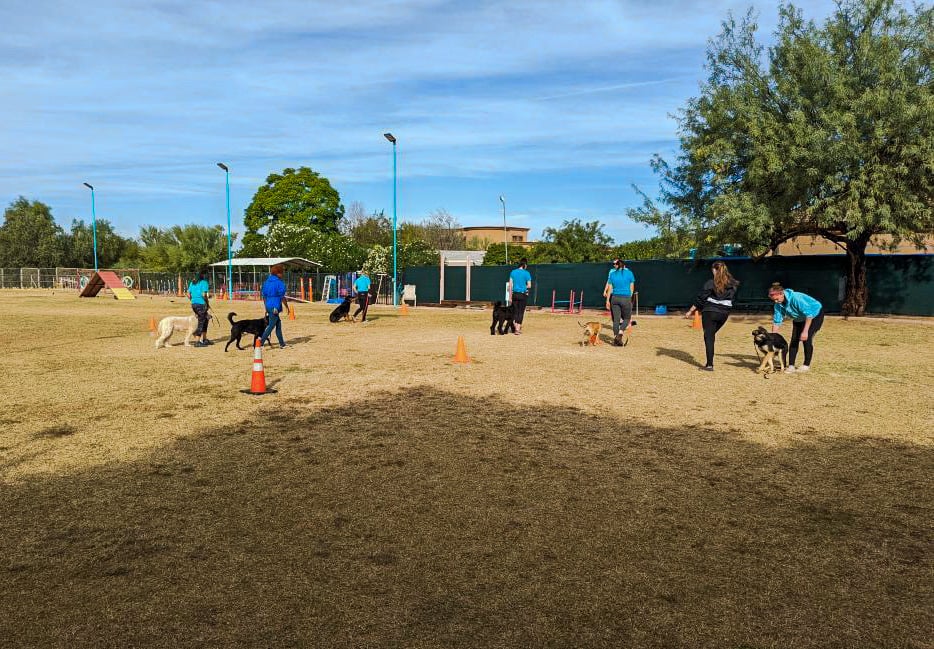
Each category carries a different day-to-day, but all four sit inside the same mentorship structure. A trainer-track hire starts by observing sessions before running anything solo. Daycare and daycamp staff supervise group play and read body language in real time, skills that carry directly into training work later. Client success roles sit at the front desk and on the phone, coordinating PD360 Assessments and camp intake, building a working knowledge of every program before a person specializes.
| Entry point | Experience required to start | What the role centers on |
|---|---|---|
| Trainer | None | Observation and hands-on hours building toward a caseload |
| Daycare staff | None | Group supervision and body-language reads on the floor |
| DayCamp staff | None | Structured play and rest cycles for boarding and camp dogs |
| Client success team | None | Intake, scheduling, and program knowledge campus-wide |
Book your visit
Curious whether these trainers are right for your dog?
Every entry-level hire above eventually works with real dogs and real families. If that is what brought you here, start with an assessment to see where your own dog fits.
What does the PDU coursework prepare you to do?
The coursework through Partners Dogs University is the on-ramp; the floor apprenticeship is the destination. It covers the vocabulary a new hire needs before stepping onto a working floor: the eight-level grade curriculum from Pre-School through Dogtorate, the four training stages (Teaching, Reinforcing, Proofing, and Maintenance), and how to read a dog's arousal level before a session goes sideways. It does not substitute for time on the floor; the apprenticeship that follows, alongside trainers who have logged well over a thousand supervised hours themselves, is where coursework turns into skill. Partners Dogs University lays out the fuller path.
Should you apply to the Scottsdale or Cave Creek campus?
Pick the campus that fits your commute, because the mentorship model is the same at both. Cave Creek is the founding campus, opened in 1997, one block north of Lone Mountain and Cave Creek Road, a natural choice coming from Carefree or North Phoenix. The Cave Creek campus runs several programs side by side: camps, DaySchool, boarding, grooming, and rattlesnake avoidance training. Scottsdale serves central Scottsdale, Paradise Valley, and the 101 corridor more directly, which matters if Fountain Hills or Desert Ridge is the shorter drive. Either campus runs the same hours: office and DayCamp Monday to Friday 8am to 5pm and Saturday 8am to 2pm, DaySchool Monday to Friday 7am to 6pm and Saturday 8am to 4pm, closed Sunday.
How does a daycare or daycamp role turn into a training position?
By showing up on the floor long enough to be trusted with more. Daycare and daycamp staff work inside the same 1:10 trainer-to-dog ratio that governs every program, already reading dogs for stress signals, resource guarding, and overarousal before anyone hands them a leash for training work. Staff who show an aptitude for that kind of reading typically get pulled into shadowing, then supervised sessions, then a caseload of their own. Most trainers running a caseload today started that same way. One example of where that path leads: a 21-night Behavior Camp stay for a Bull Terrier named Bruno, worked through resource guarding, leash reactivity, and territorial behavior down to a single slip collar by the last day, documented at Bruno's success story.
Get it scheduled
Choosing a program for your own dog?
The same staff who apprentice through this pipeline run every program on the roster. If you are picking one for your dog rather than applying for a role, the quiz narrows it down fast.
What makes Partners Dogs' mentorship model different from a quick certificate?
Supervised hours are the difference, measured in the thousands rather than a weekend. Certificate programs finish in a few days and produce trainers who have read the theory without logging the reps. Partners Dogs builds its own trainers through supervised hands-on hours, covered in full at how Partners Dogs certifies its own trainers. The proof shows up in what parents notice afterward: "Beau was trained by an excellent trainer, Caroline. She successfully taught my puppy many obedience commands and showed me how to manage some of his bad behaviors," Mary B., Scottsdale, wrote. That is what the apprenticeship model is built to produce, a trainer a family remembers by name.
What should you expect in your first weeks on the floor?
Expect to watch more than you do. Early weeks in any entry-level role lean heavily on shadowing: watching how a trainer reads a dog before a session, how daycare staff break up a group before tension builds, how a client success coordinator talks a nervous new-dog family through a PD360 Assessment day. The schedule follows whichever program you are assigned, six days a week with Sunday closed. What most people underestimate is how physical and observational that first month is. Reading a room full of dogs is a skill built through repetition.
Frequently Asked Questions
What entry-level jobs can someone with no dog training background apply for at Partners Dogs?
The careers page lists four entry points open to people with no background: trainer, daycare staff, daycamp staff, and client success. None require a certificate, since the company develops trainers through hands-on mentorship.
Does the PDU coursework replace the apprenticeship on the floor?
No. The coursework through Partners Dogs University covers curriculum vocabulary and the mechanics of reading a dog, but the apprenticeship happens on the floor, alongside trainers who have logged well over a thousand supervised hours.
Is Scottsdale or Cave Creek the better campus to start at?
Neither campus is objectively better, since both run the same mentorship model and hours. Cave Creek is the founding campus near Lone Mountain and Cave Creek Road, a natural fit coming from Carefree or North Phoenix. Scottsdale sits closer for central Scottsdale or the 101 corridor.
Can a daycare or daycamp role turn into a trainer-track position later?
Yes. Daycare and daycamp staff already work inside the same 1:10 trainer-to-dog ratio used across every program, and staff who show an aptitude for reading dogs typically get pulled into shadowing, then supervised sessions, then a caseload of their own.
Are formal dog training internships common in Arizona?
Rarely. Most entry points into this field across Arizona are paid roles: daycare, daycamp, kennel, or trainer-track work, rather than a classic unpaid internship. Building supervised hours matters more than the internship label on a job posting.
Key takeaways
The Arizona entry points are trainer, daycare staff, daycamp staff, and client success, all listed on our careers page, and no dog training experience is required. The PDU coursework is the on-ramp into the floor apprenticeship, not a substitute for it. Cave Creek is the founding campus near Lone Mountain and Cave Creek Road; Scottsdale covers central Scottsdale and the 101 corridor, and both run the same mentorship model. Daycare and daycamp staff already work inside the 1:10 trainer-to-dog ratio, the same pipeline that produces trainer-track hires. Formal internships are rare in Arizona; most entry points are paid roles built on supervised hours.
Make the call
See how the trainers behind these results are built
The mentorship path described above runs through Partners Dogs University. See the coursework and the supervised hours it takes to finish.
Keep reading