30 hours of coursework. 1,000 supervised hands-on hours before Instructor status. 2,000 hands-on hours across a wide range of breeds and behaviors before Senior Instructor. That is the ladder every trainer at our Scottsdale and Cave Creek campuses climbs through Partners Dogs University (PDU), our in-house certification pipeline built on supervised floor time with real dogs.
This is a walk through Partners Dogs University stage by stage: what a candidate studies before they touch a leash inside our Scottsdale or Cave Creek buildings, how many supervised hours separate a new hire from an Instructor, what raises the bar again for Senior Instructor, and what they learn to do with those hours. It also covers the honest part: PDU is not a credential every dog parent already recognizes, and why we publish the bars anyway.
What Is Partners Dogs University?
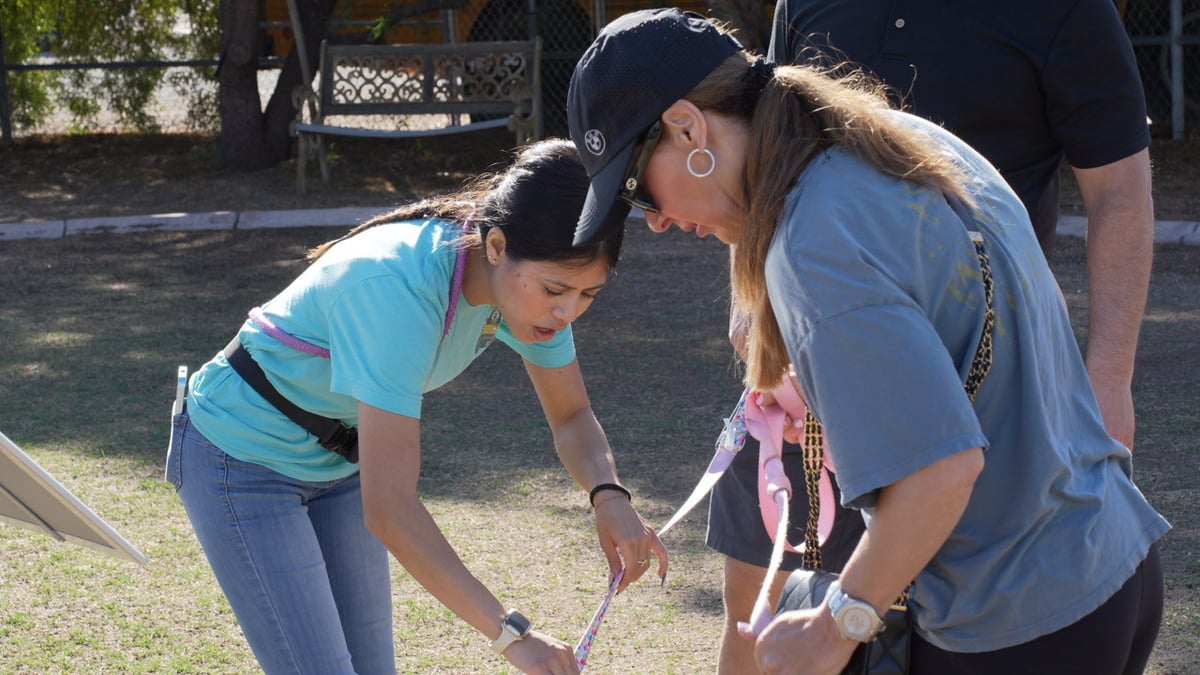
Partners Dogs University, or PDU, is the internal pipeline every trainer moves through before handling dogs independently at either our Scottsdale or Cave Creek campus. It is not a diploma mailed in and hung on a wall; it is a staged apprenticeship a candidate lives through inside our own facilities, under direct supervision, one dog and one skill at a time.
PDU exists to prove a trainer's value on the floor, in supervised hours with real dogs. Before a candidate leads a class, boards a dog overnight, or sits in on a PD360 Assessment, they have already logged supervised hours with dogs under a Partners Instructor. The pipeline runs through four checkpoints: coursework, supervised floor time, Instructor eligibility, and Senior Instructor eligibility. The rest of this article walks each one in order.
Once the coursework is done, every hands-on stage of PDU happens inside the same Scottsdale and Cave Creek facilities where your dog trains, including:
- The group fields
- The agility equipment
- The boarding runs
- The indoor training floors
A candidate learns hands-on skills on the same equipment and in the same environment your dog will use.
Why We Built Our Own Certification Standard
The most widely known credential in this field, CPDT-KA, is a real signal of commitment. It matters most for a solo trainer with no facility history behind them, and the industry genuinely needs a strong certification standard. That is exactly why PDU exists.
But look at what the bar itself requires. CPDT-KA eligibility runs on 300 hours of training experience that a candidate logs into their own online record, and the only outside check is a single Attestation Statement from one signer, a form that asks the signer to confirm the candidate has “demonstrated a positive relationship with clients,” not to verify the hours logged. The exam that follows is 200 multiple-choice questions with no hands-on component at all. CCPDT does offer a hands-on-assessed add-on, CPDT-KSA. But by the certifying body’s own 2024 count, only 154 of its 5,383 active CPDT-KA holders (roughly 3 in 100) have ever had their hands-on skill directly evaluated by anyone outside their own practice.
The credential also constrains what a holder can try afterward. CCPDT’s own Appendix B position statement says a certificant who uses an e-collar outside its narrow, last-resort framework “risks losing his or her certification,” with that certificant’s name published on CCPDT’s own website as the consequence. That is not only a competence bar: it is a philosophy membership. A facility whose main case for itself is a letter set invites the exact questions a Pet Parent should be asking: supervised hours, dogs handled, and documented outcomes matter more than the letters do.
Our two campuses in Scottsdale and Cave Creek run at a volume most solo trainers never see. We built PDU to turn that volume into a measurable standard our whole team is held to. Every hour a candidate logs is supervised, tracked, and tied to specific skills before it counts toward the next stage. What actually predicts whether a trainer succeeds is hands-on hours across a wide variety of breeds, behaviors, personalities, and home situations: the kind of range a letter set cannot certify but supervised volume demonstrates every day. As one Cave Creek reviewer put it:
“School is run professionally by a knowledgeable front desk and an excellent cadre of trainers.”
That is what training density is meant to build across an entire team.
Stage One: 30 Hours of Coursework Before the Floor
Before a PDU candidate works with a single dog inside our buildings, they complete 30 hours of dedicated online coursework covering the fundamentals a trainer needs before supervision starts, from how dogs learn to reading canine body language.
Nobody skips this stage, regardless of outside experience. The coursework builds one shared vocabulary across our whole team, so a dog hears the same cues from every trainer in Scottsdale or Cave Creek. That consistency matters most in a new trainer's first sessions, when a dog has no way to know whether the person holding the leash is on day one of PDU or year five.
Stage Two: Supervised Hours at Training Density
Coursework ends and supervised floor time begins next. A PDU candidate works directly under an Instructor, handling dogs in live sessions: group classes, camps, and the outdoor training field.
Density is what separates this stage from most training experience outside our walls. Partners Dogs trains thousands of dogs a year across our Scottsdale and Cave Creek campuses, so the pace of exposure here runs well ahead of a solo trainer's caseload: more dogs, more breeds, and more behaviors move through a candidate's hands inside a single busy season than most private-practice schedules produce across several. Hours logged here carry weight toward the next stage because of what they cover: a wide mix of ages, temperaments, and behaviors.
A candidate might work with a fearful rescue one hour and a confident working breed the next, inside the same facility, under the same supervision. That range is the point: judgment that holds up across dogs a trainer has not met before, because they have already met so many.
Stage Three: Earning Instructor Eligibility
A candidate becomes eligible for Instructor status after logging at least 1,000 supervised hands-on hours. That number marks the point where a trainer has handled enough dogs, in enough situations, to run a session independently.
Those hours build the judgment a session leader needs. The same classes, camps, and daily sessions described above build that judgment over time. A candidate reads a dog's stress signals earlier, adjusts a plan mid-session, and communicates clearly with a Pet Parent. Watching an Instructor make those calls in real sessions, hour after hour, is what prepares a candidate to make them on their own.
For families booking a service, this is the checkpoint that matters most day to day: the line between a trainer still under direct supervision and one trusted to run a session on their own.
Stage Four: Senior Instructor Across Every Breed and Behavior
The bar rises again for Senior Instructor: at least 2,000 hands-on hours working with all the dogs, breeds, and behaviors our two campuses see. Instructor eligibility confirms a trainer can run a session well. Senior Instructor confirms they have done it across the full range our campuses handle, including the cases that take the most judgment to get right.
Senior Instructors take on the hardest cases our campuses see. That includes:
- The dogs the PD360 Assessment routes into Behavior Camp or Transform Camp
- Multi-dog households with a bite history
- Temperaments that call for a trainer who has already seen the pattern before
Reaching Senior Instructor takes twice the hours of Instructor eligibility, spread across breeds and behaviors most trainers rarely see in volume, among them:
- Giant breeds
- Working lines
- Resource guarders
- Dogs with a documented bite history
This is also where the grade-level curriculum and our PD360 Pet Progress Tracking System become second nature: a Senior Instructor moves a dog through Teaching, Reinforcing, Proofing, and Maintenance without stopping to check what stage comes next.
Stand on the training floor
Meet the Trainers Working With Your Dog
Every trainer on our floor is somewhere on this pipeline, from coursework through Senior Instructor. Meet the team, or ask a specific question about where your dog's trainer falls on it.
What PDU Candidates Learn
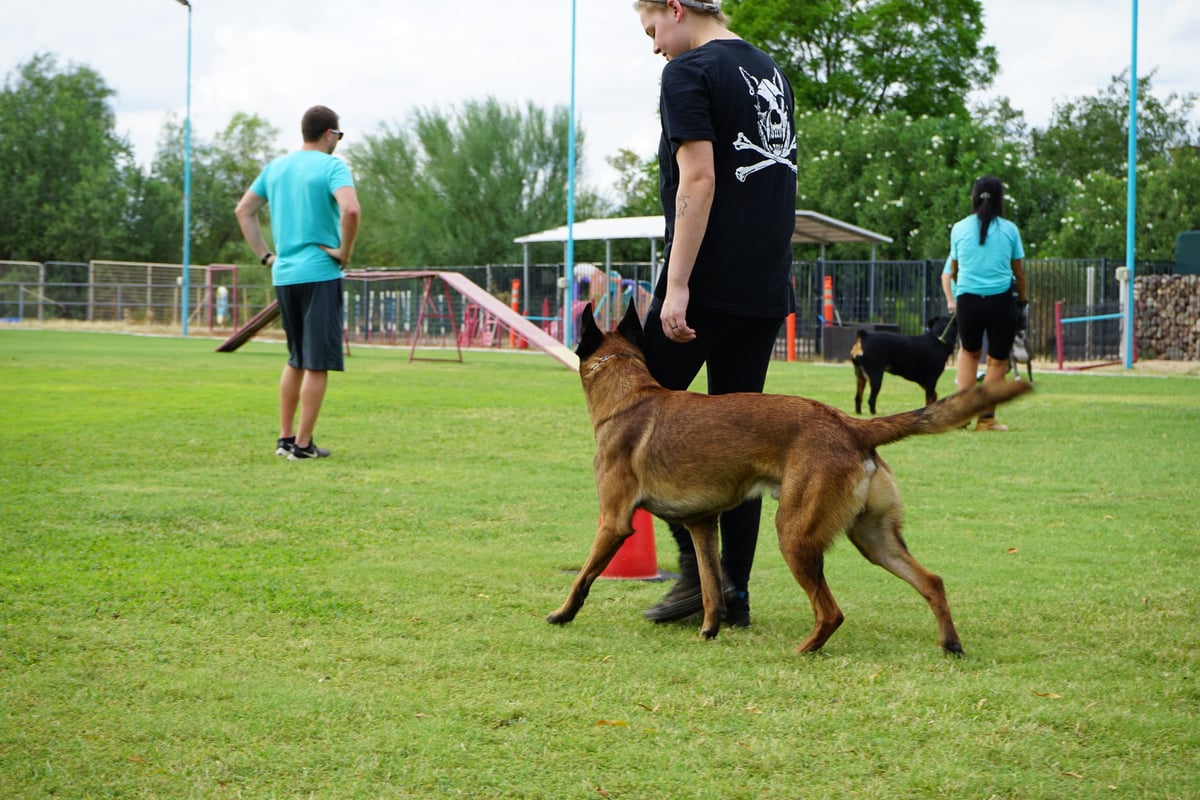
Hours are only half of PDU. The other half is what a candidate spends those hours learning, and every candidate covers the same core curriculum before running a session solo:
- The behavior science behind why a behavior is happening
- The four stages every skill moves through: Teaching, Reinforcing, Proofing, and Maintenance
- Our eight grade levels, tracking more than 130 individual behaviors
- How to run and read a PD360 Assessment, and how the resulting PD360 Pet Progress Tracking System record should read as a dog moves forward
- Generalization: testing and building a behavior across everyday environments
Generalization gets its own attention because a skill proven only in a quiet room still has work left. A dog that sits reliably during a lesson but ignores the same cue on a Scottsdale patio still has more to learn. PDU candidates are trained to test behaviors across everyday settings before calling a skill done, the same generalization work that keeps a dog's progress moving once camp ends or class lets out.
Is PDU the Same as a Nationally Recognized Certification?
No, and we want to be direct about it. CPDT-KA and similar third-party credentials are independent and portable between employers, a real signal of commitment, especially for a solo trainer with no facility history behind them. PDU is neither of those things. It is built and administered by us, and it is not recognized as widely as the credentials most dog parents already know by name.
We publish the PDU bars anyway because our case rests on hours and documented outcomes, not name recognition. Ask any trainer directly: how many supervised hours have they logged, how many dogs have they handled this year across Scottsdale and Cave Creek, which breeds and behaviors, and how they document a dog's progress over time. At Partners, that record is the PD360 Pet Progress Tracking System. A companion piece on this blog (Dog Trainer Certifications Compared) lays CPDT-KA, CPDT-KSA, and CBCC-KA out against PDU column by column, including where a third-party credential is the better choice for a specific reader. This article stays focused on our own bars and why we hold to them.
Where an independent credential wins outright is exactly the scenario it was built for: hiring a solo trainer with no facility history to check against, no team of colleagues who have already seen their work, and no supervised-hours ladder like PDU behind them. In that specific situation, a portable third-party credential is often the only outside signal a Pet Parent has to go on, and it is a legitimate one.
What Families Notice
None of this is visible to a Pet Parent standing at pickup, so here is what families say once they have been through it. Reviewers rarely mention hour counts. They mention what those hours produce.
“The group training is excellent and consistent between all the trainers.”
“The staff is extremely knowledgeable and friendly and put the dogs and customers first.”
Consistency across trainers is what supervised hours are built to produce. A dog at Partners learns to listen to every trainer on the floor. Every trainer at either campus has moved through the same pipeline: the same coursework, the same supervised hours, and the same PD360 process. A family can walk into Scottsdale or Cave Creek and get the same standard from whoever is holding the leash. That standard holds whether your dog is finishing Foundation Camp this month or coming back for a refresher years later.
Key takeaways
- Every PDU candidate completes 30 hours of dedicated coursework before working with a dog inside our Scottsdale or Cave Creek buildings.
- Instructor eligibility requires at least 1,000 supervised hands-on hours logged under a Partners Instructor.
- Senior Instructor eligibility requires at least 2,000 hands-on hours across a wide range of breeds and behaviors, twice the Instructor threshold.
- Senior Instructors handle the hardest cases, including dogs the PD360 Assessment routes into Behavior Camp or Transform Camp.
- PDU is an in-house standard, not a nationally recognized credential like CPDT-KA, so we publish the hour requirements for Pet Parents to check directly.
Frequently Asked Questions
What is Partners Dogs University (PDU)?
Partners Dogs University, or PDU, is the in-house certification pipeline every trainer works through before handling dogs independently at our Scottsdale and Cave Creek campuses. It starts with 30 hours of dedicated coursework, then moves through supervised hands-on hours. Reaching at least 1,000 hours brings Instructor eligibility, and at least 2,000 hours across a wide range of breeds and behaviors brings Senior Instructor eligibility.
How many hours does it take to become an Instructor at Partners Dogs?
A candidate becomes eligible for Instructor status after logging at least 1,000 supervised hands-on hours, on top of the 30 hours of coursework completed before any floor work begins.
What is the difference between an Instructor and a Senior Instructor?
An Instructor has logged at least 1,000 supervised hands-on hours and can run sessions independently. A Senior Instructor has logged at least 2,000 hands-on hours across all the dogs, breeds, and behaviors our campuses see. These are typically the more complex cases the PD360 Assessment routes into Behavior Camp or Transform Camp.
Is PDU the same as a nationally recognized certification like CPDT-KA?
No. PDU is an in-house standard we built and administer ourselves, and it is not recognized as widely as third-party credentials like CPDT-KA. We publish the PDU hour requirements so Pet Parents can ask about supervised hours, dogs handled, and documented outcomes directly, rather than relying on name recognition alone.
Can I apply to become a trainer at Partners Dogs without prior certification?
Yes. Prior certification is not required to begin PDU. A candidate starts with the same 30 hours of coursework and moves through the same supervised hours whether or not they already hold an outside credential. Current openings are listed on our careers page when available.
Join the pipeline
Start Your Own Path Through PDU
If you have ever wondered what it takes to train dogs full time, the coursework, the supervised hours, and the checkpoints in this article are the path we ask every candidate to walk. Explore open roles, or talk to us about where your dog fits into a program built by trainers who came up through it.