The numbers
300 hours is the common certification floor, self-logged by the candidate and checked with a single attestation signature. Partners Dogs University asks for more: 1,000 supervised hours to reach Instructor and 2,000 hands-on hours across breeds and behavior cases to reach Senior Instructor. Partners Dogs also requires 30 hours of dedicated coursework before a candidate works with a dog at either our Scottsdale or Cave Creek facility. The rest of this guide breaks down what those hours mean and why hands-on breadth, not a self-reported count, is what predicts a trainer's readiness.
Three numbers define dog trainer certification: 300, 1,000 and 2,000. Partners Dogs University measures our own trainers in supervised hands-on hours at our Scottsdale and Cave Creek campuses. This guide walks through what each number means and why hands-on breadth across dogs, breeds and behaviors predicts a trainer's readiness more than a self-reported hour count ever could.
The Common Floor: About 300 Hours and an Exam
The most widely known dog trainer certifications set a floor of roughly 300 hours of dog-training experience, most of it logged for a candidate with no facility behind them yet. That is a fair starting bar for someone building a solo practice.
Look closer at how that floor is measured and the picture changes. The 300 hours are self-logged by the candidate into an online training log, not independently tracked. The only outside check is a single attestation, one signature from one person, and that signer is asked only to confirm the candidate handled dogs safely, not to verify the specific hours claimed. The exam that follows is 200 multiple-choice questions with no hands-on component at all. A hands-on-assessed version of the credential does exist, built on video-recorded exercises a candidate films at a location of their own choosing. But only a small fraction of certificants, roughly 3 in 100, hold it. For the rest, the credential confirms a candidate passed a written test, not that anyone watched them work a dog. That gap is exactly why hands-on breadth, not a self-reported hour count, is what predicts whether a trainer can handle the dog actually standing in front of them: how many different dogs they have put hands on, which breeds and behaviors they have worked, and whether someone experienced was watching while they did it.
Our Hour Bars at Partners Dogs University
Partners Dogs University sets a different kind of bar, one built on supervised hands-on hours instead of a written test. Every candidate clears three hour bars on the way to Senior Instructor. Here is what each one requires:
- 30 hours of dedicated online coursework, completed before a candidate works with a dog in either facility.
- 1,000 supervised hands-on hours, logged before a candidate becomes eligible for Instructor.
- 2,000 hands-on hours across dogs, breeds, and behaviors of every kind before a candidate becomes eligible for Senior Instructor.
Every one of those hours happens on our floor in Scottsdale or Cave Creek, under supervision, with another trainer watching the work. The full pipeline, stage by stage, is laid out in how we certify trainers at Partners Dogs University.
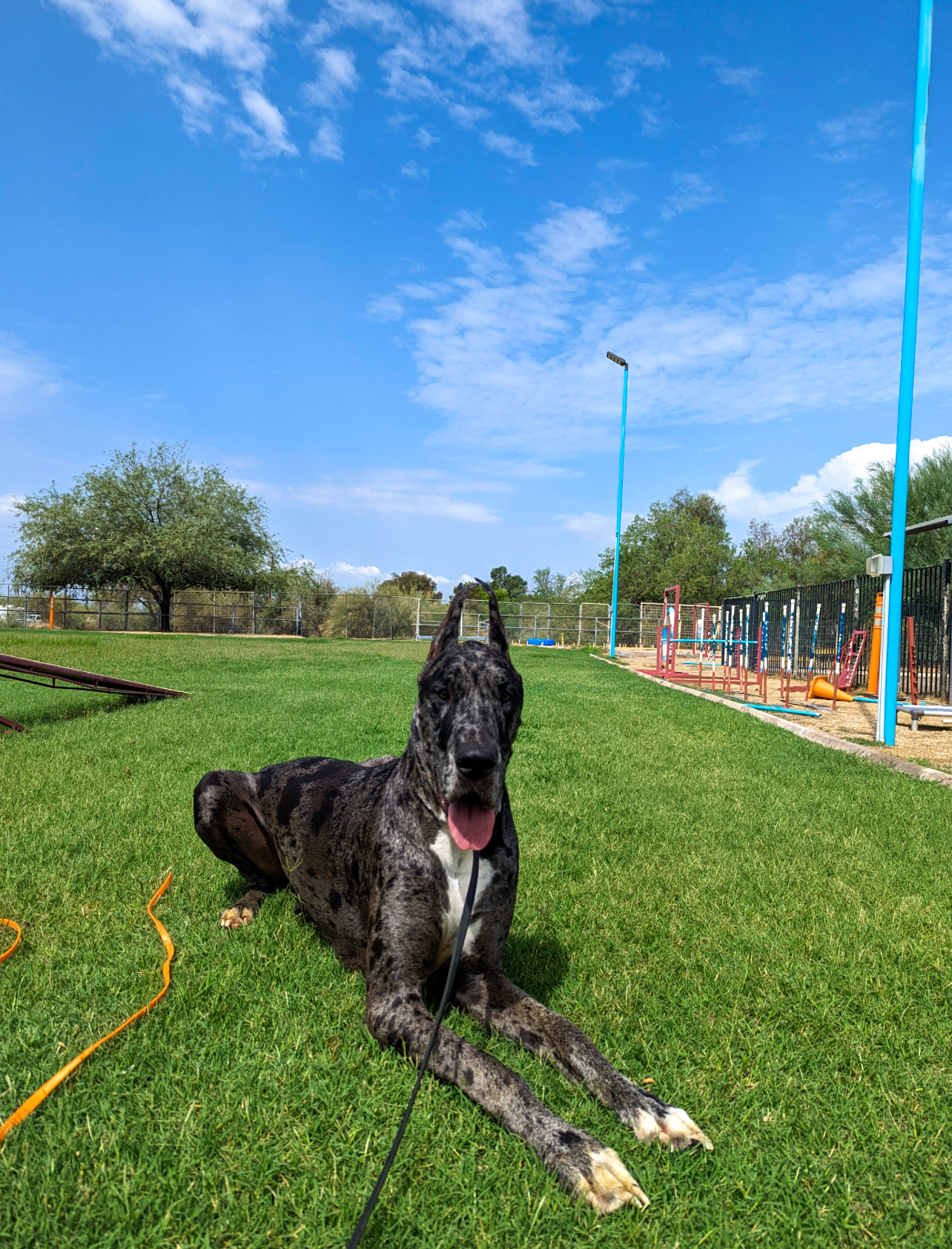
Why the Type of Hour Matters
A supervised hour spent handling a fearful adolescent dog inside a busy training facility teaches something a solo hour spent repeating a sit-stay in a quiet living room cannot. An exam can confirm a candidate knows the theory behind desensitization, or knows how a dog's stress signals typically escalate. It cannot confirm how that candidate handles the dog in front of them when the theory meets a leash, a distraction, and an outcome that has to be managed in the moment.
The Density Math Behind Those Hours
Thousands of dogs move through Scottsdale and Cave Creek every year, so a candidate's first season here overlaps with more breeds and behavior patterns than many trainers meet in a decade. Do the arithmetic on one private hour a week: about fifty hours in a year. A candidate logging full days on our floor, where thousands of dogs move through two campuses annually, can close in on the 1,000-hour instructor bar within months. Another trainer watches the whole time. That reflects what density does to a learning curve: more repetitions, more variation, and more chances for a supervising Instructor to catch a habit before it hardens.
This is the training density behind how we build a trainer, the same volume that lets our team of trainers recognize patterns in your dog's behavior quickly, because they have already seen that pattern many times before.
What a Candidate Does During Those Hours
The 30 hours of coursework happen before a candidate ever touches a leash, and floor hours put that coursework to work under a rotating cast of Instructors and Senior Instructors rather than a single mentor. A candidate who learns from only one person inherits that person's blind spots along with their strengths, while one who rotates through a team picks up several approaches to the same problem and learns which one fits which dog. The full curriculum a candidate moves through is laid out in the certification guide above.
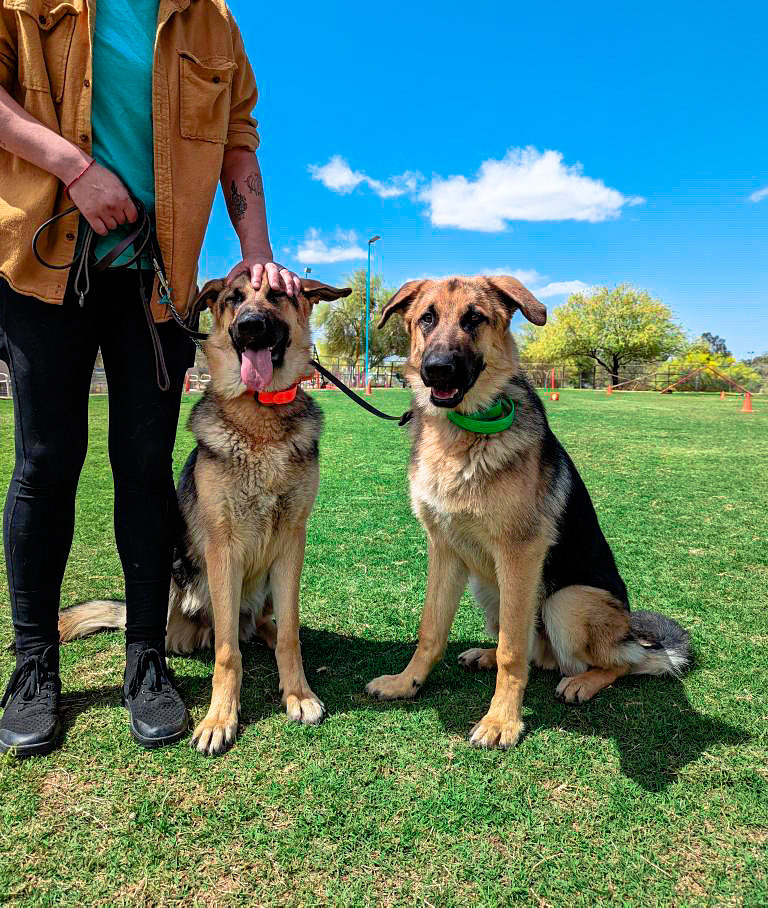
Walk the floor yourself
What Those Hours Look Like in Person
A campus visit call shows you what these hours look like on our Scottsdale or Cave Creek floor, no pressure to enroll. Prefer to start online first? The quiz points you toward the right program for your dog.
How to Ask Any School About Trainer Hours
A certificate on a website tells a parent almost nothing about the trainer standing in front of their dog. The more useful questions are about hours and dogs, not letters after a name. Ask any school, ours included, these questions before you commit:
- How many total supervised hands-on hours has this trainer logged, and over what time period?
- How many different dogs have they personally worked with in the last three months?
- Which breeds and behaviors have they handled hands-on, not just observed from across the room?
- Who supervised those hours, and are they still on staff?
- Do the drive time, the pickup hours, and the published rates fit your household's routine?
Hours are not the only variable that matters. A single, narrow issue, like a dog that will not settle in the car or a family that needs one visit a week at home, can be a better fit for Private Lessons than for a camp built around volume.
Why We Publish These Numbers Anyway
Partners Dogs University is not recognized as widely as the credentials described earlier in this guide, an in-house certification built for our own facilities rather than designed to travel with a graduate to another school. We publish the hour bars anyway because a title with no attached number tells a parent nothing they can check.
If you want to see how our own Instructors and Senior Instructors got there, our team page and our careers page both show the path candidates take through Partners Dogs University.
Key takeaways
- The most widely known dog trainer certifications set a floor of about 300 attested hours plus a passing score on a written exam.
- Partners Dogs University requires 30 hours of coursework before a candidate works with a dog, 1,000 supervised hands-on hours for Instructor eligibility, and 2,000 hands-on hours for Senior Instructor eligibility.
- Supervised hours mean another trainer is present correcting technique in real time, unlike hours a candidate simply logs on their own.
- Every one of those hour bars is cleared on the training floor at either the Scottsdale or Cave Creek campus.
- The variety of breeds and behavior cases a candidate handles matters as much as the total number of hours logged.
Frequently Asked Questions
How many hours does it take to become a dog trainer?
The most common answer is about 300 hours of attested dog training experience plus a passing score on a multiple-choice exam. Partners Dogs University adds three more bars on top of that floor: 30 hours of coursework, 1,000 supervised hands-on hours before Instructor eligibility and 2,000 hands-on hours before Senior Instructor eligibility.
What is the difference between logged hours and supervised hours?
Logged hours are attested by the candidate, the time they say they have spent with a dog. Supervised hours mean another trainer is present, correcting technique as it happens, and that presence is what changes what an hour actually teaches. Partners Dogs counts only supervised hours toward the 1,000-hour Instructor bar, detailed in our Partners Dogs University certification guide.
Why does the number of different dogs matter as much as the number of hours?
A thousand hours with one easy Labrador teaches less than a thousand hours across breeds, ages, and behavior cases. Variety is what turns hours into judgment, and it is why floor volume matters when you compare trainers.
Do all dog trainer certifications require hands-on hours?
The most widely known credentials require logged hours of experience, but the assessment itself is usually a written exam, not a hands-on evaluation. That is what makes supervised hands-on hours a separate, useful question to ask on top of any certification a trainer holds.
What should I ask a dog training school about their trainers' hours?
Ask how many total supervised hands-on hours the trainer has logged and how many dogs they have personally worked with recently. Also ask which breeds and behaviors they have handled hands-on, who supervised those hours, and whether the schedule and published rates fit your household.
See it in practice
Two 30-Minute Meets, a Revised PD360 Score
A PD360 Assessment opens with a 30-minute meet between you, your dog, and a Partners Dogs Instructor, the same Instructors who cleared these hour bars. Pick-up brings a second 30-minute meet with a verbal breakdown of what the day showed and a revised PD360 score.