
The short answer
Are e-collars bad for dogs? It depends on the collar, the level, the conditioning, and the hands on the remote. Studies show real welfare costs at higher intensities and poor timing, no proven efficacy advantage for recall, and one study where only the e-collar stopped a dangerous chase.
- The best-controlled studies (Cooper et al. 2014; China et al. 2020) found no efficacy advantage for e-collars in recall, but more behavioral stress in the e-collar groups.
- A 2024 Arizona State study found only the e-collar group stopped a hard lure chase. Both sides have published critiques of each other's methods.
- We read the December 2025 ACVB letter to the AVMA and a May 2026 Phoenix paper calling for bans in full, and answer their claims with the studies themselves.
- We found no controlled trial of the protocol we use: conditioned first, then layered over a reinforcement base at the lowest working level. A research gap, not a verdict.
You asked a fair question and you deserve a straight answer, not a sales pitch from either camp. This is for the Pet Parent in Scottsdale or Cave Creek who has heard e-collars called torture devices by one side and miracle tools by the other. If you have ever flinched at the idea of an e-collar while quietly wondering whether it could give you your off-leash hikes back, this article is for you. Below: the studies, the studies that pushed back, the December 2025 letter from the American College of Veterinary Behaviorists, a May 2026 Phoenix paper calling for bans, where the research falls short, and how we use e-collars. For our framework, see our methodology.
What do the biggest e-collar studies actually find?
The short version: in the best-controlled head-to-head studies, e-collars did not beat reward-based training for recall, and the e-collar groups showed more behavioral stress.
Cooper et al. (2014), in PLoS ONE, split 63 pet dogs with recall problems into three groups of 21: e-collar trainers, the same trainers without e-collars, and reward-based trainers (Cooper et al., 2014). After two 15-minute sessions a day for four to five days, 92 percent of owners reported improvements, with no significant efficacy difference across groups. The e-collar dogs spent significantly more time tense, yawned more, and explored less.
What most summaries leave out: cortisol did not differ significantly between groups. The stress difference was behavioral, not hormonal. This is how a senior trainer at Partners reads a tool study: not "did it work" but "what were the hands on the remote doing, and did the dog know what the stim meant." And the study's preliminary phase, nine dogs given high-intensity stimuli without pre-warning cues, showed clear negative behavioral changes and elevated cortisol. Intensity and conditioning mattered.
China, Mills, and Cooper (2020) reanalyzed the same 63 dogs: the reward-based group responded better to "come" and "sit" after a single instruction, with shorter latencies and fewer signals (China et al., 2020). Their conclusion: no evidence e-collar training is "either more efficient or results in less disobedience, even in the hands of experienced trainers."
Vieira de Castro et al. (2020) filmed real sessions at seven training schools sorted into reward-based, mixed, and aversive-based programs. Dogs in the aversive schools showed more stress behaviors, more time tense, more panting, larger post-training cortisol rises, and more pessimistic cognitive-bias scores (Vieira de Castro et al., 2020). Caveat: not a randomized trial, and it did not isolate e-collars from the other aversive methods those schools used.
| Study | Tested | Found | Did not test |
|---|---|---|---|
| Cooper et al. 2014 (n=63) | E-collar vs reward-based for recall | No efficacy advantage; more behavioral stress; cortisol not significantly different | Predation, aggression, long-term retention |
| China et al. 2020 (same dogs) | Efficacy detail: commands, latency, disobedience | Reward-based group faster and cleaner; no evidence the collar is more efficient | Anything beyond recall and obedience |
| Vieira de Castro et al. 2020 (7 schools) | Real sessions: reward-based vs mixed vs aversive-based | Aversive-school dogs: more stress behaviors, higher cortisol, more pessimistic bias | E-collars isolated from other aversive methods |
| Johnson & Wynne 2024 (ASU) | E-collar vs two reward-based protocols for a hard lure chase | Only the e-collar group stopped the chase; few stress signs beyond the stimulation | Graduated low-level working levels; long-term follow-up |
What does the research on the other side say?
The short version: one 2024 study found e-collars were the only thing that stopped a dangerous chase. Published critiques argue the famous anti-collar studies tested the wrong behaviors.
Johnson and Wynne (2024), out of Arizona State University in Tempe, trained dogs across six sessions to stop chasing a fast-moving lure. The e-collar group stopped after one or two sessions. Both reward-based groups failed completely, in training and in every test (Johnson & Wynne, 2024). Video coding found few stress-related behaviors in any group. The authors concluded e-collars "may be an appropriate tool in the hands of expert trainers" for behaviors with serious welfare stakes, like chasing cars or animals.
Read it carefully. Those dogs received the same starting stimulation intensity, adjusted on trainer perception, not the graduated low-level approach used in Cooper and China. This study does not support the tap-on-the-shoulder version we use, and it does not prove long-term safety. It supports something narrower: for one dangerous behavior, under expert hands, the collar worked where food-based training did not.
China 2020 has taken published criticism too. Sargisson and McLean (2021), in the same journal, argued its conclusions reach past its data. The paper tested recall and obedience, but e-collars' most cited use is preventing predation and aggression, where a New Zealand program paired one or two stims with a target stimulus and produced avoidance lasting up to three years. Cooper, Mills, and China published a formal response. Be skeptical of anyone who cites China 2020 without mentioning the debate.
The research argues about the collar. It should be arguing about the hand on the remote.
What did the ACVB actually say about e-collars in December 2025?
The short version: the American College of Veterinary Behaviorists wrote the AVMA saying the literature shows real welfare risks and no efficacy advantage. We read the whole letter. Here is what it claims, and where we agree and part.
The letter, signed by the ACVB Board of Regents and dated December 2, 2025, responded to AVMA President Dr. Bailey's comments about e-collars on an October radio show (full letter). Its central claim: the literature "is clear" that e-collars carry significant risks of fear, aggression, physical pain, and long-term welfare harm, and perform no better than reward-based methods.
On "the collar or euthanasia": no evidence shows e-collars reduce euthanasia risk, and the standard of care for serious cases is referral to a board-certified veterinary behaviorist. Fair on the medical side: when the change is sudden, new and out of character, your vet takes a look, and we take the case into the recommended program either way. But that is an absence of evidence, not evidence of absence: no study could ethically run an e-collar-versus-euthanasia trial.
On "humane use where the dog knows why": timing and intensity cannot be precisely controlled in typical homes, or reliably even in professional hands. The letter's strongest argument, and the exact reason we condition every tool before use, work at the lowest level the dog notices, and never hand a collar to an owner without coached timing. Poor timing causes harm. That argues for skilled use, not for banning the tool. The letter makes a related point about the warning tone paired with a stim: classical fear conditioning that can generalize to the handler or environment. The mechanism is real. Whether it happens depends on the conditioning protocol, the intensity, and what the tone predicts.
On road safety and recall: Cooper 2014 showed recall reliability did not improve with e-collars versus reward-based training. Accurate. But recall training and stopping a dog mid-chase at a dead sprint are different problems, and the ASU study is the counterweight the letter does not fully engage.
The letter also cites a multi-million-dollar Hernandez v. Radio Systems settlement over alleged misleading PetSafe safety claims (final approval January 2026). The company denied wrongdoing; a settlement is not a court finding of unsafe products. The letter says "following allegations," and so do we.
Where we land: the letter's literature summary is broadly accurate, and unconditioned, high-intensity, poorly timed use harms dogs. We part at its conclusion that e-collars "should not be recommended for any training context." That is a policy position. We found no study that tested the conditioned, low-level, reinforcement-based protocol and found it fails.
What did the May 2026 Phoenix position paper claim?
The short version: a Phoenix-area trainer published a lengthy paper arguing US states should ban e-collar sales and use and license all trainers under force-free standards. Its study summaries check out. Its policy leap goes further than the studies do.
In spring 2026, Will Bangura of phoenixdogtraining.com (Mesa, Arizona) published "The Scientific Case Against Aversive Dog Training Equipment and Methods," in a Legislative Edition (April 2026) and a Practitioner Edition (May 2026) (Legislative Edition PDF). We read the full Legislative Edition. Its two asks: US states should ban the sale and use of e-collars, prong collars, choke collars, and citronella collars in commercial training, and should license dog trainers under force-free model standards of practice.
Its strongest material is about real-world use. A 2018 French survey of 1,251 e-collar users found 71.8 percent operated the collar with no professional advice, 75 percent had tried two or fewer alternative methods first, and 7 percent of the dogs had physical wounds. A separate analysis of 13 commercial collar models found an 87-fold range in stimulus energy at maximum settings, with no manufacturer disclosure. No FDA regulation, no Consumer Product Safety Commission standard, and no US state technical standard exists for these devices. We agree: an unregulated device in untrained hands is exactly where the harm data comes from.
The honest disagreement: the studies tested specific behaviors (mostly recall) at specific intensities, while the ask is a ban in "any training context," including safety-critical cases where the ASU study found the alternative failed. That generalization goes past what the data carries. To the paper's credit, it acknowledges Cooper 2014's cortisol results did not reach significance. The physiology story is more complicated than either side's slogans. On licensure: we already hold our trainers to a documented standard, 30 hours of coursework plus 1,000 supervised hours to make an instructor and 2,000 to make a senior instructor. But a licensure standard that bans a quadrant of learning theory by law is a philosophy with enforcement power, and philosophies should not be legislated.
For the AZ angle: Arizona has no law banning e-collars and no trainer-licensing law. The bans the paper catalogs sit in places like Wales, Quebec, Switzerland, Germany, and several Australian states. No Arizona legislation currently proposes either step.
Where does the research honestly fall short?
The short version: both camps keep testing their own version of e-collar use. The version a skilled trainer actually uses, conditioned first and worked at the lowest working level over a reinforcement base, we found in no controlled trial.
Ask every study above one question: did anyone test an e-collar that was conditioned first, set to the lowest level the dog notices, layered onto a positive-reinforcement base, and timed by a skilled trainer? We found none. The anti-collar studies test manufacturer-nominated or school-based use, often at working intensities. The pro-collar ASU study used a fixed starting intensity with no graduated working-level protocol. Both sides test their own version and announce the results as universal.
Intensity is the variable the literature keeps tripping over. Cooper's preliminary phase showed high-intensity, unannounced stims produced the worst outcomes, while the lower-setting, pre-warned main phase produced milder ones. Welfare cost scales with intensity and predictability. That is what our protocol controls for, and what the published studies fail to isolate.
The surveys deserve the same skepticism in reverse. Owner-reported studies correlate aversive methods with more behavior problems, but correlation is not causation, and lumping matters. In Herron's 2009 survey, e-collars triggered aggressive responses in 7 to 10 percent of attempts, while hitting or kicking did so in 43 percent. Treating those as one category, "aversives," buries the tool-specific question you are asking.
The oldest study in the pile, Schilder and van der Borg (2004), used high-intensity stims on working guard dogs over twenty years ago. It measured something real, but not a modern low-level collar used as conditioned communication.
What survives every honest reading: no controlled study has shown an efficacy advantage for e-collars in the behaviors tested, and Cooper's data shows welfare costs rising with intensity and falling with pre-warning and conditioning. Narrower than either camp's slogans. It is also what the data supports.
Step one
Talk through the method before you buy the tool
Book a PD360 Assessment and ask a senior trainer exactly where an e-collar would or would not fit your dog. No tool is prescribed before the assessment.
How does Partners Dogs use e-collars?
The short version: as one communication tool among many, conditioned first, at a tap-on-the-shoulder level, never the starting point, only in skilled hands.
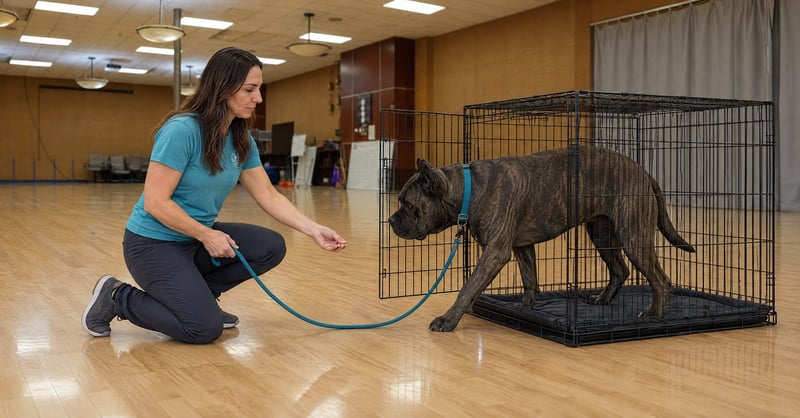
Positive reinforcement is the primary method and the base of every program we run. The order of operations: Teach, then Reinforce, then Proof, then Maintain, tracked in the PD360. An e-collar never enters before the dog has been taught the alternative and the collar has been conditioned, meaning the dog understands what the low-level cue predicts and how to turn it off. The working level is the lowest level the dog notices.
Where does the collar fit? Distance work, where a leash cannot reach and your voice will not carry: off-leash recall proofing, snake-avoidance conditioning, behaviors where a missed cue has safety consequences. It does not fit puppies learning first skills, dogs never conditioned to it, or any case where the owner has not been coached on timing. The Hard Lines hold on every dog: no dominance theory, no setups designed to make the dog fail, no training in anger, no dogma about the tool in either direction.
Trainer skill decides what any tool builds. The French survey data says most collars sit in uncoached hands. The collar is a cue, never a teacher; the teacher is the human at the other end of the remote, and the plan keeps them in the loop until the dog needs neither. That is why every tool is conditioned before use, and why the assessment comes before the equipment. The conditioning protocol is the same in every camp: a Foundation Camp dog building off-leash reliability gets the identical fair-conditioning sequence as a Behavior Camp dog working through reactivity; the tool follows the dog's goals, not the program's name. For the full position argued line by line, see our AVSAB humane-training response.

What do the numbers say?
Not one tool prescribed before the assessment.
What myths about e-collars get it wrong?
| Myth | Fact |
|---|---|
| E-collars are devices built to hurt dogs. | Modern collars produce a wide range of stimulation levels. Cooper's data says welfare costs rise with intensity and fall with pre-warning and conditioning. |
| Studies prove e-collars always cause aggression. | In Herron's 2009 survey, e-collar corrections triggered aggression in 7 to 10 percent of attempts, versus 31 to 43 percent for hitting, alpha rolls, and growling at the dog. |
| Reward-based methods always work better. | For recall and obedience in the head-to-head trials, yes. For stopping a hard chase in the 2024 ASU study, the reward-based groups failed completely. |
| The science is settled. | The science points one direction on welfare costs at higher intensities and shows no efficacy advantage for the behaviors tested. The conditioned, low-level protocol has never been tested. That is a gap, not a verdict. |
| Aversive means abusive. | Aversive is a technical term: anything the dog works to avoid. A leash pop, a withheld treat, and a low-level collar cue are all aversive in the technical sense. Abuse is a different category. |
What mistakes make e-collar use worse?
- Buying a collar online and picking a level by guess. Thirteen commercial models span an 87-fold range in stimulus energy at maximum, and most users get no professional guidance. A guessed level on an unmeasured device is a lottery ticket your dog pays for.
- Skipping the conditioning. Putting a collar on a dog never taught what the cue means is not training. It is startling an animal and calling it communication. Condition first or do not use it.
- Punishing after the fact. A correction seconds after the behavior teaches the dog that corrections are random. Timing is the whole skill, which is why the owner gets coached before the tool goes home.
- Using the collar as the plan. The collar is one quadrant of a four-quadrant method. A program that is only the collar is correction-only training with better marketing.
What fits your dog
Match the program to the dog
Off-leash reliability and safety-critical behaviors are a full-method project: every tool conditioned first and worked at the lowest level the dog notices, tracked in the PD360 across nine dimensions, the same protocol in every camp, fitted to the dog's goals. Foundation Camp runs that method for the reliability side: the conditioning, the reps, the proofing. If your dog's challenge is reactivity rather than manners, the same protocol runs in Behavior Camp: the tool follows the dog's goals, not the program's name. Your assessment routes you to the right program.
Key takeaways
Key takeaways
- The best-controlled studies found no efficacy advantage for e-collars in recall training, but more behavioral stress in the e-collar groups. Cortisol results were mixed, not damning.
- A 2024 ASU study found e-collars were the only method that stopped a hard chase; both sides of the literature have published critiques of each other's methods.
- The December 2025 ACVB letter's literature summary is broadly accurate, but its call for a ban in "any training context" is a policy position, not a study finding.
- The May 2026 Phoenix paper's strongest material is about unregulated real-world use; its ban proposal generalizes past what the studies tested.
- We found no controlled trial of a conditioned, reinforcement-based protocol run at the lowest working level. Honest people on both sides should admit that gap.
- Our position: tool-agnostic, never the starting point, conditioned first, tap-on-the-shoulder level, trainer skill decides.
Frequently Asked Questions
Are e-collars bad for dogs?
It depends on the use: intensity, conditioning, and timing change the answer more than the device does. Controlled studies show welfare costs, mostly behavioral stress, that rise with intensity and fall with conditioning and warning cues, and no efficacy advantage for recall. But no conditioned, low-level protocol has been tested. The research has not answered the skilled, conditioned, low-level question.
Do e-collars cause aggression in dogs?
They can, and the risk is not uniform. In a 2009 survey of behavior-clinic clients, e-collar corrections triggered aggressive responses in 7 to 10 percent of attempts, far below hitting or alpha rolls in the same survey. Risk climbs with high intensity and poor timing. Unconditioned use is worst. With any aggression history, book a PD360 Assessment before touching tools.
Is there a humane way to use an e-collar?
The closest thing the evidence supports: condition the dog to the cue first, work at the lowest level the dog notices, build the behavior with reinforcement before the collar ever appears, and learn timing from one of our trainers. Never start with the collar, never guess the level, never use it in anger.
What is the first step if I am considering training tools for my dog?
Book a PD360 Assessment. A senior trainer reads your dog across nine dimensions and tells you honestly whether a tool like an e-collar fits your dog, your behavior goals, and your handling skill. No tool is prescribed before the assessment, ever.
Are e-collars legal in Arizona, and could they be banned here?
Yes, e-collars are legal in Arizona, and Arizona has no trainer-licensing law. Bans and restrictions exist in places like Wales, Quebec, Switzerland, Germany, and several Australian states. A May 2026 position paper by a Phoenix-area trainer argues US states should ban them and license trainers under force-free standards. No Arizona legislation currently proposes either step.
Where to go from here
You came for a straight answer on e-collars. Here it is in one paragraph: the studies show real costs and no proven advantage for the uses they tested, and one study shows the collar succeeding where rewards failed on a dangerous behavior. The version we use has never been tested at all. Dogma in either direction is a sales pitch. The assessment tells you what your dog actually needs.
Scottsdale: 8642 E Shea Blvd, 85260. Cave Creek: 4640 E Forest Pleasant Pl, 85331. Serving the Phoenix Valley.