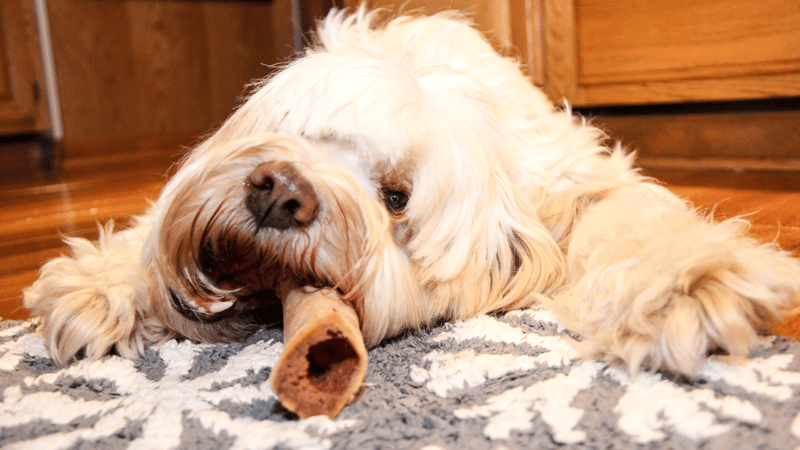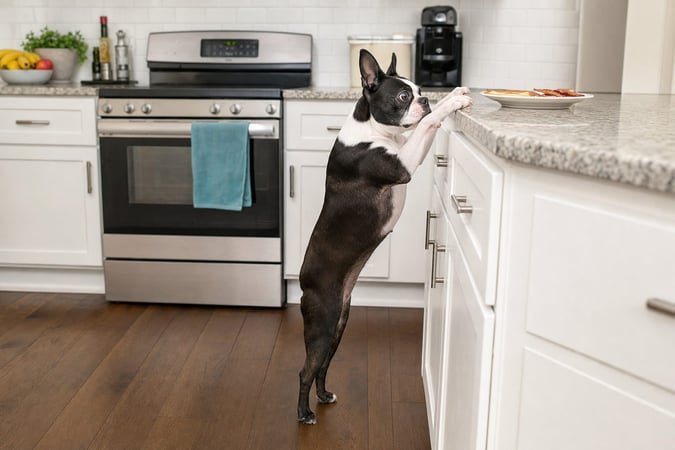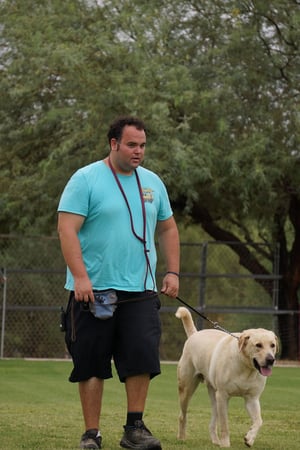
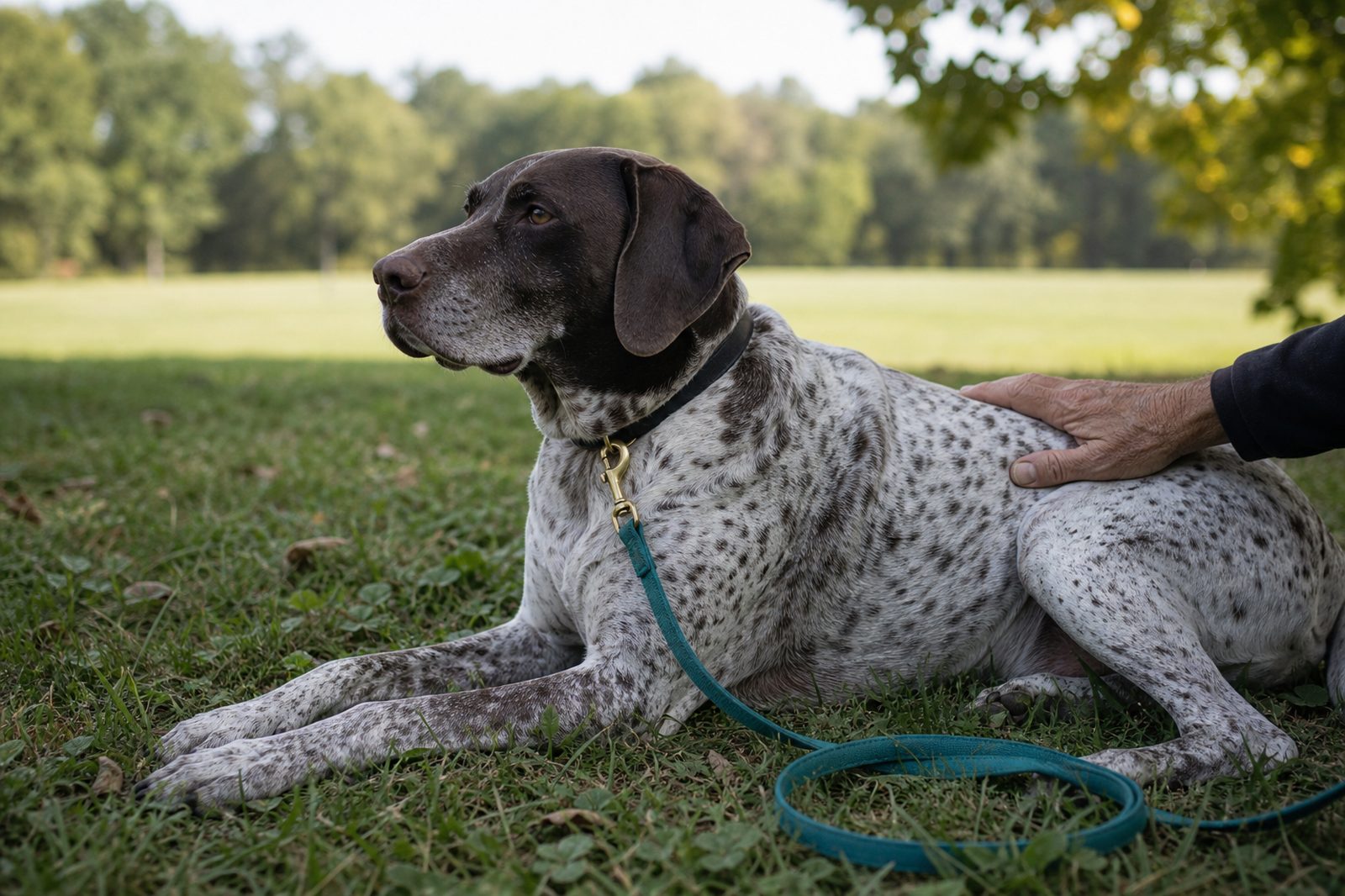
Dog training for retirees works best when it centers on routine and structure built by a facility that generalizes commands across handlers and settings, not solo drilling at home.
Picture this: you retire in March. By June the house feels too quiet, so you and your spouse drive out to a rescue and come home with a two-year-old shepherd mix. Nobody in the house has trained a dog in over a decade, and the last dog you raised was a puppy, back when the kids still lived at home. This dog is not a puppy. He is grown and strong, but he is also uncertain, pulling toward every jogger on the block. He does not know a single command. You love him instantly, and you quietly wonder if you made a mistake.
That scene plays out across Arizona every year, and it is a good one, not a cautionary tale. Where it goes sideways is the plan, or the lack of one: an assumption that raising or retraining a dog now works the same way it did at 30, with the same energy for daily drilling and the same physical margin for a dog that lunges.
Are You Searching for the Right Thing?
"Training for seniors" almost always means training an aging dog, not training a dog for an older owner, and the two searches lead to very different advice. Type that phrase into a search bar and most results are written for dogs with fading eyesight and stiffening joints: shorter sessions, hand signals a dog with dimmed hearing can still see, gentle activities like scent games done from a chair. Useful information, just not for the couple bringing home their first dog in years.
This piece is about the other search: a retiree, new or newly returning to dog ownership, picturing easy mornings near Cave Creek Regional Park instead of a dog dragging them toward the trailhead, who wants a calm, well-mannered companion and a training path that fits a body and a schedule that have both changed. If your dog is the one getting older, that is a different topic. If you are the one with more time now and less patience for chaos, keep reading.
What Does a Calm Companion Actually Look Like?
A calm companion is not a low-energy dog, it is a dog with a predictable routine and a handful of default behaviors that hold up under normal daily life. A lot of retirees assume the fix is choosing a mellow breed and hoping for the best. Breed and size do matter, more on that below, but temperament on paper is not the same as a trained dog. A naturally laid-back dog with zero structure still jumps on guests, still bolts through an open door, still drags toward every squirrel. Structure is what turns a dog's baseline personality into livable, everyday behavior.
The University of Michigan's 2018 National Poll on Healthy Aging surveyed adults ages 50 to 80 about pet ownership and found something worth sitting with: among older adults who live alone, 76 percent said their pet helps them stick to a routine, compared to 60 percent of those living with others, and 82 percent reported a sense of purpose from their pet. The structure runs both directions. A well-trained dog gives an owner routine, and a routine-driven owner gives a dog the consistency it needs to settle. Neither half works without the other.
Full poll data (University of Michigan National Poll on Healthy Aging, 2018)
What Should You Consider About Size and Energy?
Size and strength matching matters, and the useful version of it is being straight with yourself at intake about what you can physically manage day to day, not picking the smallest dog available. Breed-and-size content aimed at older owners leans on lists: the smaller, mellower breeds up top, the bouncy working dogs left off entirely. There is logic in that. A large, high-drive adolescent dog throwing its full weight into a leash pull on a rocky trail out toward Spur Cross Ranch Conservation Area is a fall risk for anyone dealing with balance or joint concerns, and the same is true on a flat sidewalk in town.
But many retirees already have the dog, inherited from a family member or chosen with the heart before the head, and a ranked list does nothing for them now. The better move is an assessment at intake: what this dog's energy and pull strength require from this owner, and what plan closes that gap.
Why Does a Facility Work Better Than Practicing Alone?
A dog that only practices with one handler in one house learns to behave for that person, in that room. The skill does not automatically travel to a walking trail, a grandchild's visit, or a vet lobby. Trainers call this the generalization problem, and it is the reason a well-meaning retiree working solo with a training book so often stalls out around week three. The dog is not being stubborn. It has not learned that "sit" means sit everywhere, only that it means sit in the kitchen with one specific person holding one specific treat.
There is a competing argument worth naming: recall and basic control commands protect the handler, not just the dog, and it holds up as far as it goes. A retiree who can call a dog back reliably or ask for a solid "wait" at a curb has reduced their own trip and fall risk. Where it runs out is the how. A command taught once, at home, to one person is a start, not a finish. Reliability needs that command tested against distraction, with multiple handlers, in multiple settings, which a facility is built to deliver and a solo weekly session is not.
A stable, easygoing dog with an engaged owner can do fine in a good group class, worth saying plainly rather than overselling every case. The distinction is less about the dog's difficulty and more about how much daily repetition the owner wants to hand off. A retiree who would rather let a team of trainers run the reps than spend months drilling solo is the reader this piece is written for.
A family-run campus matters here too. Our Cave Creek campus sits on the property Leighton Oosthuisen and his family founded the school on back in 1997, and he still lives there, a family business on one site for close to three decades rather than a franchise handing a new dog to whichever employee is on shift. For an owner nervous about trusting a stranger with a brand-new dog, that continuity carries weight, and it shows up in the numbers too: Partners Dogs holds a 4.8-star rating across 2,000+ reviews, most of them from families who started out exactly where you are now.
What Do the First Few Weeks Look Like?
The most sustainable plan for a retiree is an ongoing rhythm the dog and owner settle into together, not a single intensive event followed by silence. A few pieces make up that rhythm in practice:
- A short intake conversation about the dog's current behavior, energy level, and what the owner can physically manage day to day.
- A structured plan that starts with the basics (loose-leash walking, a reliable settle, greeting manners) rather than assuming the dog already has a foundation.
- Repeated exposure to different people and environments, so commands generalize instead of staying kitchen-only.
- Coaching aimed at the owner as much as the dog, so the handler leaves each session knowing exactly what to do differently.
For a lot of retirees that rhythm looks like DaySchool, our daycare-and-training program for genuinely social dogs. It runs Monday through Friday 7am to 6pm and Saturday 8am to 4pm at both the Scottsdale and Cave Creek campuses, so the daily structure happens without an owner running every rep solo. A dog gets consistent handling from a trainer-run floor, and comes home tired in the good way, having practiced with several different people in a different setting than the living room.
For an owner who wants one-on-one coaching, at their own pace, in their own home or on their own schedule, Private Lessons is the better fit: a trainer working alongside you, showing you exactly how to hold the leash and time a correction, the direct answer to the recall-and-control argument above.
Build the routine
Give Your New Dog a Daily Structure You Do Not Have to Run Alone
DaySchool pairs daily enrichment with structured training repetition, so the calm, well-mannered dog you pictured gets built through consistent daily practice, not a single weekend push.
How Do You Teach a Dog to Just Settle?
The single most concrete skill behind a calm household is a reliable place command, teaching a dog to go to a designated spot and stay there, relaxed, until released. It is the one piece of this plan an owner can picture immediately: guests arrive and the dog goes to its cot instead of the door, dinner happens and the dog settles on its mat instead of begging at the table, the vacuum comes out and the dog rides it out calmly from its spot.
Place is taught in stages, the same Teaching, Reinforcing, Proofing, and Maintenance progression every command at Partners moves through:
- Teaching: the dog learns what the cot means with no distraction in the room, rewarded for staying put.
- Reinforcing: a handler adds mild distraction, footsteps, a dropped object, someone walking past, while the dog holds the spot.
- Proofing: the dog is tested against real interruptions (doorbells, other dogs, visitors) before the skill counts as reliable.
- Maintenance: the command gets exercised regularly in everyday moments, guests arriving, dinner, the vacuum, so it does not fade.
Skipping from a quiet-room success straight to a full Thanksgiving dinner is the single most common reason place training stalls out at home.
One review from a retired Partners client living full time in an RV captures this well:
"Our 2 dachshund came in for the 3 week training to hopefully make them behave more appropriately. It's very important they do since we are retired and live in an rv and traveling the USA. They have improved but we as owners also need to do our part. Thank you"
Terri G., Cave Creek
The training builds the skill. The owner still has to hold up their end at home, which is why coaching the handler matters as much as coaching the dog.
First-time owner Marien L. put a similar experience this way after her Afghan Hound's first week:
"I loved receiving our first week update video that showed us tremendous progress in understanding key commands and definitely set our minds at ease... We look forward to enjoying many years to come with a canine companion we can communicate with thanks to Partners program"
Marien L., Scottsdale
A companion you can communicate with, not a dog that merely tolerates the house.
If your new dog runs hotter than expected (more bounce, more bark, more trouble settling than the calm-companion plan assumed), that does not mean the plan failed. It means the starting point needs a second look. Our guide to helping a hyperactive dog settle covers what that looks like.
Key takeaways
- A calm companion comes from routine and structure, not from breed selection alone.
- Commands taught with one handler in one room do not automatically generalize to a trail, a vet lobby, or a grandchild's visit.
- Size and pull strength are worth an honest, physical assessment at intake rather than a ranked breed list.
- Place is taught in four stages: Teaching, Reinforcing, Proofing, and Maintenance, in that order.
- Consistent daily repetition, whether at DaySchool or with a private trainer, closes the gap faster than solo weekly drilling.
Frequently Asked Questions
Is dog training for seniors different from training an older dog?
Yes, and the two get confused constantly online. Content for aging dogs focuses on adapting for fading vision, hearing, or joints. Training for an older owner focuses on building a calm, well-mannered dog matched to the owner's own pace and physical capacity, regardless of the dog's age.
Is it too late to train a dog well if I am retired and out of practice?
No. Dogs learn from consistent structure at any owner's age, and a retiree often has more available time for a routine than a working adult does. What changes is how much daily repetition you run solo versus hand to a facility built to generalize commands across handlers and settings.
Should I pick a small or low-energy breed if I am worried about handling a strong dog?
Size and energy matching is worth considering, and a large, high-drive dog that pulls hard on leash can be a genuine fall risk. But the useful version of that advice is a plain conversation about what you can physically manage day to day, whatever dog you already have or are considering, not a ranked list of the smallest breeds.
What is the difference between DaySchool and Private Lessons for a new retiree?
DaySchool is a daily program at our Scottsdale and Cave Creek campuses pairing daycare with structured training repetition, handled by trainers rather than run solo at home. Private Lessons is one-on-one coaching, at your pace, focused on teaching you the handling skills directly. Many retirees start with private lessons for the fundamentals, then move into DaySchool for ongoing structure, or use either on its own.
How much does DaySchool or Private Lessons cost?
Current rates for both programs are on our pricing page, since rates are reviewed periodically and change over time. The pricing page breaks down what each program includes so you can compare the daily-structure option against the one-on-one option before deciding.
What if my new dog turns out more high energy than I expected?
That is common, especially with an adopted adult dog whose full personality only shows once it settles into a new home. It does not mean the plan failed, it means the plan needs to account for a higher-drive dog. A trainer can adjust pace and add settle-specific work, like a structured place command progression, to close that gap.
Next step
Bring Home the Calm Companion You Pictured
A short intake conversation is where the plan starts, matching a real routine to your dog's actual energy and your own pace, not a generic template.
Next reads for new dog owners