Partners Dogs runs one trainer for every ten dogs at DaySchool, and every staff member sits on the same instructor pipeline that runs the boarded camps. DayCamp fits an easygoing, well-socialized dog who mainly needs supervised playtime and a tired-out afternoon. A dog that needs more structure, or comes home wound up instead of settled, is where DaySchool earns the difference in staffing depth.
1,000 supervised hours. That is what a new hire on the Partners Dogs instructor pipeline logs before being certified to run a group on their own, and every DaySchool staff member comes up through that same pipeline. It is not a knock on staff at any other daycare. It is a business-model fact: open-play franchise daycare is built to scale fast across hundreds of locations with consistent branding, and consistent branding across that many locations tends to favor a shorter, standardized onboarding path over a multi-year one. A Scottsdale dog owner comparing options should understand that fact before comparing prices, because it explains almost everything else about how the two models feel from the inside.
What Sets a Trainer-Run DaySchool Apart From Franchise Daycare?
The difference is not the play yard, it is who is standing in it and what they were trained to do. Franchise open-play daycare groups dogs into a shared space for supervised free play, with staff watching for obvious trouble. A trainer-run DaySchool also includes supervised play, but every day is built around instructor-led programming: structured group management, rest cycles, and staff who came up through the same track that runs board-and-train camps. Both get called "doggy daycare" in casual conversation. Only one of them is staffed and structured like a school.
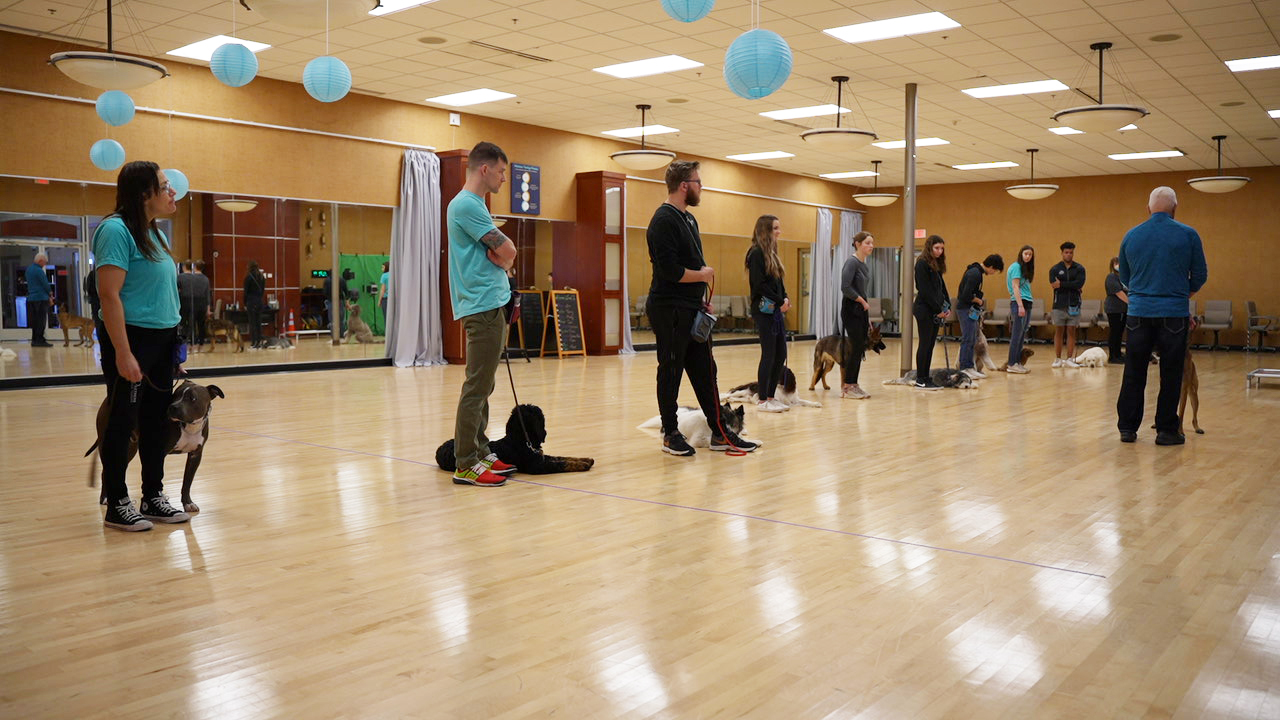
This matters more in Scottsdale than the marketing suggests. A dog riding a shuttle in from a home office in North Scottsdale or Old Town needs a full day of appropriate stimulation, not a supervised kennel run, so it does not come home to 6 p.m. zoomies through the living room. The staffing model behind the daycare determines which outcome you get.
When Is DayCamp the Right Choice?
A stable, social dog who mainly needs supervised playtime and a tired body fits DayCamp. Convenient locations, consistent branding, webcams, and extended drop-off hours are what franchise open-play daycare leads with, and they are worth naming plainly instead of waving away. The American Kennel Club's own guidance on choosing a doggy daycare does not require staff to hold formal behavior credentials either, it asks only that staff be trained in basic care and safety and, ideally, in reading canine body language.
Open-play volume daycare works well for one profile of dog: friendly with other dogs, able to settle on its own after play, and free of any history of resource guarding, fear, or overexcitement that spirals into reactivity. For that dog, it is a reasonable, lower-cost way to cover exercise and socialization while you work. That is not a hedge. It is the honest answer for plenty of dogs.
What Does "Trainer-Run" Mean Behind the Scenes?
At Partners Dogs, every DaySchool staff member is on the same instructor pipeline that trains the dogs in our boarded training camps, not a separate, lighter-trained daycare-only track. That pipeline runs from 30 coursework hours before a new hire works the floor to 2,000 supervised hours before Senior Instructor certification, the same ladder our certified trainer vs. daycare attendant breakdown covers in full.
These are our own internal instructor requirements. Franchise open-play daycare, built to staff hundreds of locations quickly, is not required to match that depth, and the American Kennel Club's own guidance on choosing a doggy daycare tells owners exactly that: ask what training staff have actually completed rather than assume it from the branding or the building. Stated side by side, the depth gap explains why one model can staff hundreds of locations on a fast timeline and the other cannot.
Walk the floor with us
Tour a Trainer-Run DaySchool Day
Watch how a trained instructor manages group play, rest cycles, and settle time before you decide what your dog needs.
Why Does Staffing Depth Matter for a Dog Home Alone All Day?
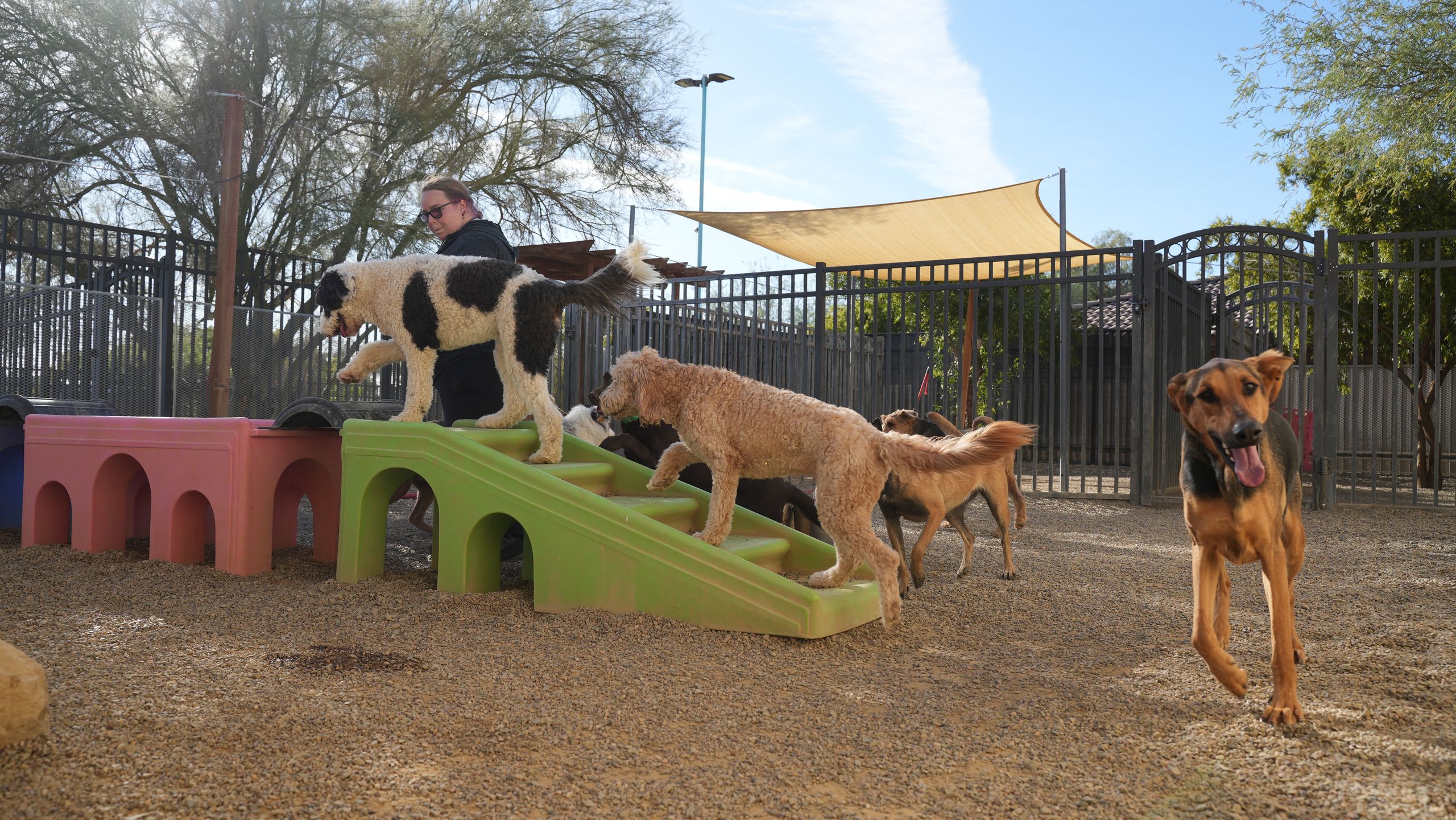
A busy professional's dog often spends the bulk of its waking day at daycare, not just a few hours, while you work. That raises the stakes on what happens during those hours. Open-play volume models are built to keep a large group of dogs moving and supervised, not to notice the specific moment one dog crosses from playful to overstimulated. Staff trained in hours, not years, can competently break up an obvious scuffle. The subtler signs, a dog rehearsing high arousal for six straight hours with no structured downtime, take deeper training to catch.
Reviewers notice the same mechanism from opposite angles.
"The staff is great and we especially like the staff to dog ratio."
Kim D., Cave Creek
"The reinforcement he gets during structured day care ( love it) keeps him on the straight and narrow."
Martha D., Scottsdale
That ratio, one trainer for every ten dogs, is the mechanism behind both comments. Our DaySchool vs. franchise daycare comparison breaks down exactly why that ratio changes a dog's day.
If your dog already comes home wired instead of tired, that pattern is worth reading about directly on the overexcitement behavior page, which walks through why constant high-arousal play without rest cycles can rehearse the exact problem you are trying to solve.
How Does a Trainer-Run DaySchool Handle Structure and Rest?
Structured group management means dogs cycle through play and rest instead of running at full arousal for the entire visit. That is the practical output of an instructor-run floor: staff who can read a dog's arousal curve and place group makeup, timing, and rest breaks around it, the same skill set they use running a board-and-train camp. Franchise open-play daycare is not built around that cycling by design; its whole value proposition is continuous, unstructured group play for the length of the visit.
- Group composition based on temperament and arousal level, not just size or breed.
- Scheduled rest and settle periods built into the day, not left to staff discretion in the moment.
- Staff able to pull a dog for a short one-on-one reset before a small issue becomes a pattern.
- The same PD360-informed programming that shapes camps applied to a daycare day, not a separate, lighter system.
Kathy P., a Cave Creek client, described this exact combination in her review: "I love that he can blow off some pent up energy playing with his friends in a controlled setting in doggie daycare." Controlled setting is the operative phrase. Volume and control are not opposites, but they take deliberate structure to run together, and structure is what an hours-trained onboarding process is not designed to teach.
Is Franchise Open-Play Daycare Safe for My Dog?
Safety at any daycare, franchise or trainer-run, comes down to staff training depth and group management, not the sign on the building. This is not a claim that franchise daycare is unsafe. It is a claim that the questions worth asking are the same ones the AKC's own daycare-selection guidance recommends: what training do staff actually complete, how are groups formed and supervised, and what happens the moment a dog's body language changes. A facility built for fast, consistent staffing across many locations answers those questions differently than one built around an instructor pipeline, and it is worth asking directly rather than assuming from branding.
Reviewers put the mechanism in plain terms.
"Great training organization, professional instructors, and top notch facilities."
Kartune M., Cave Creek
That instructor pipeline is the trade a trainer-run DaySchool is built around, structure alongside play, not instead of it. Partners Dogs holds 4.8 stars across more than 2,000 reviews, and the pattern in those reviews about staffing and structure is consistent enough to be worth reading in full on the reviews page.
Key takeaways
- Partners Dogs runs one trainer for every ten dogs at DaySchool, a ratio built for individual attention, not just supervised group play.
- Every DaySchool staff member trains on the same instructor pipeline that runs Partners Dogs' boarded camps: 30 coursework hours before working the floor, 1,000 supervised hours to reach Instructor certification, and 2,000 hours to reach Senior Instructor.
- DayCamp fits a stable, well-socialized dog that mainly needs supervised playtime and a tired afternoon.
- A trainer-run DaySchool builds scheduled rest and settle periods into the day, while franchise open-play daycare is built around continuous, unstructured group play.
- Partners Dogs holds 4.8 stars across more than 2,000 reviews, with staffing and structure a consistent theme in that feedback.
Frequently Asked Questions
Is franchise daycare a bad choice for my dog?
Open-play daycare is built around convenience and consistent branding across visits. A stable, well-socialized dog that mainly needs supervised playtime fits DayCamp. A dog that needs individual structure, has a history of overexcitement or reactivity, or comes home from daycare more wound up than tired needs DaySchool.
How is staff training different between franchise daycare and a trainer-run DaySchool?
Franchise open-play daycare is built to staff many locations on a fast, standardized timeline, so its onboarding tends to be shorter and more consistent from location to location. A trainer-run DaySchool staffs from the same instructor pipeline that runs its boarded training camps: 30 coursework hours before working the floor, 1,000 supervised hours to become a certified Instructor, and 2,000 hours across breeds and behaviors to reach Senior Instructor. The depth of that pipeline, built for individualized structure rather than just supervised play, is worth asking about directly at any facility you tour.
Does a lower dog-to-staff ratio actually change what happens during the day?
Yes. Partners Dogs runs one trainer for every ten dogs at DaySchool, which allows staff to read individual arousal levels, build appropriate rest cycles into the day, and pull a dog for a short reset before a small issue becomes a repeated pattern. A high-volume ratio makes that level of individual attention structurally difficult regardless of staff intent.
My dog comes home from daycare more wired than tired. What does that mean?
It often means the day was spent in continuous high-arousal play with no structured settle time, which can rehearse overexcitement rather than resolve it. A trainer-run program builds rest cycles into the day specifically to prevent this pattern. If it is a recurring issue, it is worth reading through the overexcitement behavior page and considering whether a more structured day program fits better than open-play volume daycare.
How does Partners Dogs decide which group my dog joins at DaySchool?
Group makeup runs through the PD360 process, which the same instructor pipeline uses to place dogs into board-and-train camps, so a dog's temperament and energy level shape which group and rest schedule they join at DaySchool rather than a general intake form deciding it. That is part of what separates instructor-built programming from open-play grouping.
Is trainer-run DaySchool worth paying more than franchise open-play daycare in Scottsdale?
It costs more because it staffs more. A trainer-run DaySchool runs one trainer for every ten dogs and pulls staff from the same instructor pipeline that runs its boarded camps, so the higher price reflects a lower ratio and years of training depth, not a markup on the same service. For a stable, easygoing dog that just needs supervised play, DayCamp is the practical choice. For a dog that needs structure or comes home wound up, the staffing depth is what the extra cost buys. Exact program pricing is available on the DaySchool page.
Ready for more structure
Give Your Dog a Day Built Around a Plan
If your dog needs more than supervised play to come home settled, DayCamp adds behavior-focused structure on top of the same instructor pipeline that runs DaySchool.