In plain terms
Three things explain it. A dog that learns a cue from one person in one room has learned a habit with that person, not a portable skill. Board-and-train in Phoenix, Scottsdale, and Cave Creek is worth it partly because more than one trainer works the same dog on the same criteria, and that repetition is what teaches a cue to travel. The best programs hand that skill off on purpose, to a spouse, to kids, to a trainer the dog has never met, before the dog goes home.
Why a dog only listens to one person
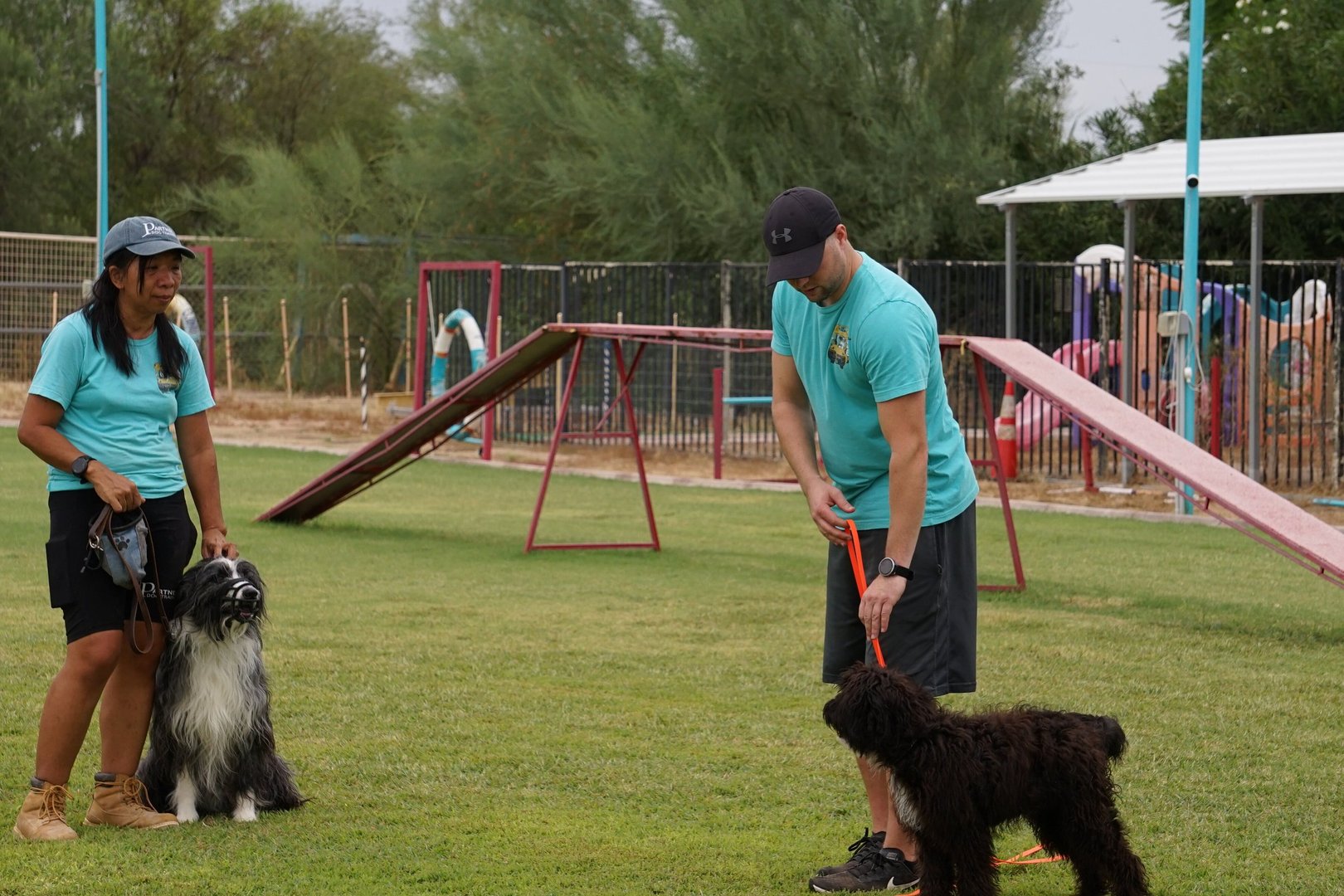
Partners Dogs runs 50+ trainers across our Scottsdale and Cave Creek campuses, and on almost any given day in Foundation Camp or Behavior Camp, a dog is working with at least two of them before the stay ends. That is not a scheduling accident. A dog that learns "down" from one person, in one room, with one tone of voice and one set of hand signals, has learned an association specific to that person and that setup. Change the voice, change the posture, change the room, and the dog is often starting closer to zero than the family expects. This is the complaint we hear most from parents who tried training solo or hired a single in-home trainer: the dog was doing great right up until a spouse gave the same command, or a stranger showed up at the door, or the family walked into a vet waiting room instead of the living room where every rehearsal happened.
A single in-home trainer is a fair choice when there is no behavior problem to solve: sessions are convenient and cost less per visit than a residential stay. The trouble shows up only when that one relationship has to cover a spouse, a stranger at the door, or a vet lobby the dog has never seen.
Families notice the opposite pattern when more than one handler is part of the plan from day one. "This option provided her with valuable socialization and exposure to multiple handlers," wrote Anica M., Scottsdale, after boarding her puppy for training.
What "generalization" really means in dog training
Generalization is the word trainers use for a behavior that keeps working outside the exact setup where a dog first learned it, and it never happens on its own. Three things can shift on a dog mid-cue: the environment, the handler, and the level of distraction. Master a recall in a quiet backyard and the dog has proven exactly one thing: that recall works in that backyard, from that person, with no competing smells. Take the same dog to a wash near Cave Creek with quail underfoot, or a trailhead in North Phoenix with another hiker's dog thirty feet away, and the recall has to be rebuilt against real competition. Swap the handler for a spouse who never practiced the release word, and it rebuilds again. None of that means the dog is stubborn; it means the training only ever tested one variable at a time, and real households need all three handled together.
Why do board-and-train programs use multiple handlers on purpose?
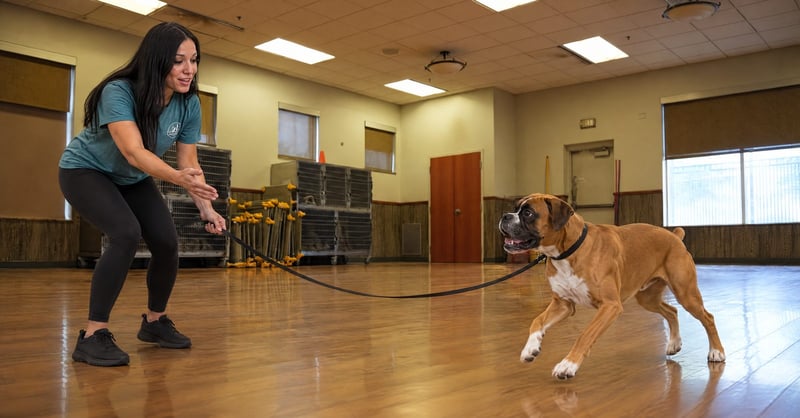
Because a dog that only ever answers to one person has learned a relationship with that person, not obedience, and a relationship does not automatically transfer home. A Foundation Camp stay is built around staffing changes, several trainers instead of one, while the criteria for each command stays identical. A trainer who introduces a skill hands the dog to another trainer who runs the daily reps, and a third trainer often runs the transition-day session with the family present, on purpose, before the dog ever leaves campus. It is the closest thing to a dress rehearsal for the exact problem most home training never solves: a cue that only holds for the one person who taught it.
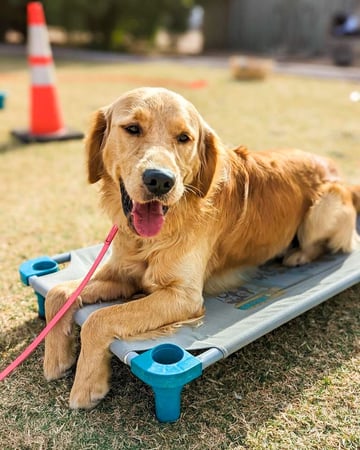
Bubbles, a four-and-a-half-month-old Golden Retriever, is a clean example. Head trainer Hannah framed the goals at intake (jumping, mouthing, leash pulling, crate barking, plus a family request for French commands), and Kenzie ran the day-to-day sessions building heel, sit, down, stay, place, and thresholds. On transition day Kenzie ran Bubbles' full command list together with a second trainer, Sammy, then coached Sammy hands-on through the French cues: new vocabulary for Sammy, not for Bubbles. That handoff, a second trainer stepping in for the parts Kenzie had already built, is generalization built into a single fourteen-night stay, not a special exception. Read the full Bubbles success story for the day-by-day arc.
Bring the dog in
Give your dog more than one voice it trusts
A PD360 Assessment shows exactly where the gap is (a handler problem, an environment problem, or both) before your dog ever starts a program.
Is board-and-train worth it if my dog already listens to me at home?
Board-and-train is worth it in Phoenix, Scottsdale, and Cave Creek when the problem is that your dog listens to one person and tunes out everyone else, not whether the dog can learn the behavior at all. A Phoenix family with a dog that sits for mom and blows past dad is not describing a stubborn dog; they are describing a cue proofed with one handler only. A Scottsdale household juggling a nanny, grandparents, and two working parents needs a dog that answers to whoever holds the leash. A Cave Creek family near open desert, where a loose dog can reach a wash or a rattlesnake-prone trail in under a minute, cannot afford a recall that works for one person alone. The fix is not more repetition with the same handler; it is structured exposure to different handlers while the criteria stay consistent.
What makes a board-and-train program the best fit for a multi-person household?
The best board-and-train option in Phoenix, Scottsdale, or Cave Creek is the one that puts your dog in front of more than one competent handler before it ever comes home. That single question filters the field faster than price or facility photos. Ask how many staff members will work the dog directly, not just supervise it. Ask whether the transition-day session runs with a trainer your dog has already met, or a new one, since the new-trainer test is the harder and more useful one. Ask what graduation looks like: paperwork handed over at pickup, or a live run-through where a family member is coached through the same commands a trainer just demonstrated.
| What is being tested | One trainer, one household | Board-and-train, multiple handlers |
|---|---|---|
| Who gives the cue | The same voice every session | Rotating trainers working the same criteria |
| Where the cue gets practiced | Usually one home, one yard | Kennel, daycare floor, campus grounds, in-home visit |
| Who the dog meets mid-program | Family members only, after the fact | Staff, other dogs, and visiting family, during the stay itself |
| Handoff before graduation | Rarely formalized | A scheduled session where a different trainer runs the full command list |
How training transfers to a spouse, kids, or a stranger at the door
Transfer home is built into the program, not left to chance after the family drives off campus. A stay that uses multiple handlers on purpose typically closes with a version of this sequence:
- A full command review, run by a trainer the dog worked with for only part of the stay.
- A hands-on session where the trainer coaches the family member holding the leash, not the dog, so the mechanics land with the person who has to repeat them at home.
- A written or verbal handoff protocol covering thresholds, greetings, and whatever triggered the original call, from jumping to leash reactivity.
- A follow-up plan, through a group class or a private lesson, to catch the drift that shows up two or three weeks after graduation, before it becomes a habit again.
Skip any of those steps and the family is back to square one: a dog that worked for the trainer stops working once different hands pick up the leash. Two related reads cover this: how to keep dog obedience strong at home, and, for the reverse case, why a dog trained at home doesn't listen outside. Neither problem is about a smart dog versus a slow one; both come down to how many variables the training ever tested.
Key takeaways
- A dog trained by one person, in one place, has proven the behavior works for one person in one place, nothing more.
- Generalization across handlers, environments, and distraction levels has to be trained on purpose; it does not happen by repetition alone.
- Board-and-train programs that rotate trainers on the same criteria are running a built-in test of exactly the transfer most home training skips.
- A handoff session, where a family member is coached through the commands, matters more than a report card at pickup.
- Follow-up classes or private lessons in the weeks after graduation catch the drift before it becomes a habit again.
Frequently Asked Questions
How many different trainers work with my dog during a camp stay?
It varies by program length and what the dog needs, but a two-week Foundation Camp stay typically involves at least two or three staff members handling the dog directly, not just supervising a kennel run, with a transition-day session designed to test the dog against a trainer it has not worked with the whole time.
Will my dog listen to my kids the same way it listens to a trainer?
Not automatically, and no program can promise that in one visit. What board-and-train builds is the foundation for it: a dog that has already generalized cues across more than one adult handler needs far less rebuilding to work with kids than a dog that only ever heard commands from one person, and the handoff session is the place to start practicing with kids present, on leash, under a trainer's eye.
Does using multiple handlers confuse a dog?
It confuses a dog only when the handlers use different criteria, different words, or different timing for the same behavior. Partners Dogs trains to one shared standard per command across staff, so a dog meeting a second or third trainer is practicing consistency, not learning conflicting rules.
Can I request that only one trainer works with my dog the whole stay?
You can ask, and a lead trainer will still own the plan and know the dog's history best, but limiting contact to one person removes the exact generalization work that makes training hold once the dog leaves that person's side, so we build in other handlers by design rather than by exception.
Is exposure to multiple handlers different from just being around a lot of daycare staff?
Yes. Daycare staff supervise play and safety; they are not necessarily running the dog through the same trained commands with the same criteria. A board-and-train handler rotation is deliberate skill practice with more than one competent trainer, aimed at the specific behaviors the family asked us to fix.
Keep reading