Your dog isn't ignoring you outside, it never learned the cue applies anywhere but the room it was taught in, and the fix is practicing in new environments with distraction, not more repetition at home.
Every reactive-dog owner we talk with has run this experiment already: the sit, the down, and the come are rock solid in the kitchen. All of it disappears the second the leash clips on. It shows up right around the age a dog starts testing the world outside the house, and it convinces a lot of good owners that either the dog is being defiant or the training itself failed. Neither is true. Here is what is happening, and where the fix lives.
What "Doesn't Listen Outside" Means
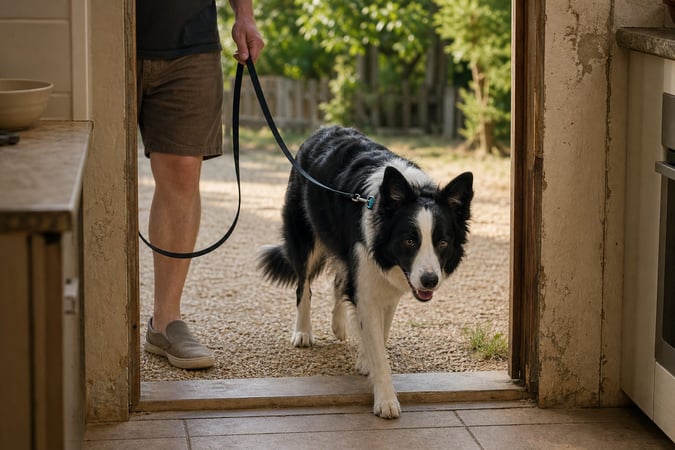
A dog that sits every time in the living room but blanks on the same cue at the end of the driveway has not forgotten the command, it never learned the command applies anywhere else. The American Kennel Club's public training guidance is direct about this: dogs do not generalize a behavior across new places on their own, so a cue taught in the kitchen gets filed away as meaning sit in the kitchen, not sit anywhere. That is not a training failure and it is not the dog being stubborn. It is exactly what should be expected from how dogs learn: through the specific room, tone of voice, flooring, and smell the behavior was practiced in. Dogs do not carry an abstract rule out the door with them.
Say the same cue on a quiet street near Pinnacle Peak and everything that made the living room version work is gone: the calm room, the familiar smell, and the total absence of competing information. A squirrel, another dog, or a stranger on the sidewalk is frequently more reinforcing in that moment than anything the owner is offering, and the dog has never practiced choosing the cue over that kind of competition.
Why Cues Don't Transfer Out of the Room You Taught Them In
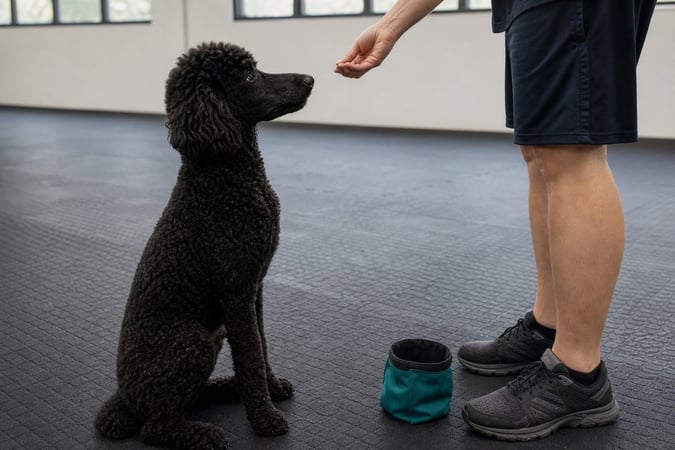
Generalization has to be built on purpose, it does not happen automatically no matter how many reps a dog gets in one place. The AKC's public proofing guidance describes the same gap from a different angle: owners typically practice at whatever difficulty level is already comfortable, then are surprised when the dog cannot hold the behavior once a new variable shows up. Three variables determine whether a cue holds outside the house:
- Duration: how long the dog holds the behavior before being released
- Distance: how far the dog is from the handler when the cue is given
- Distraction: what is competing for the dog's attention at the moment of the cue
A command that is rock solid at zero distance, zero distraction, and two seconds of duration in the kitchen has not been tested against any of the three. Most home training plateaus right here, not because the dog is incapable, but because the owner never has a structured reason to push all three variables at once, in a place that challenges the dog.
When You Can Fix This Yourself
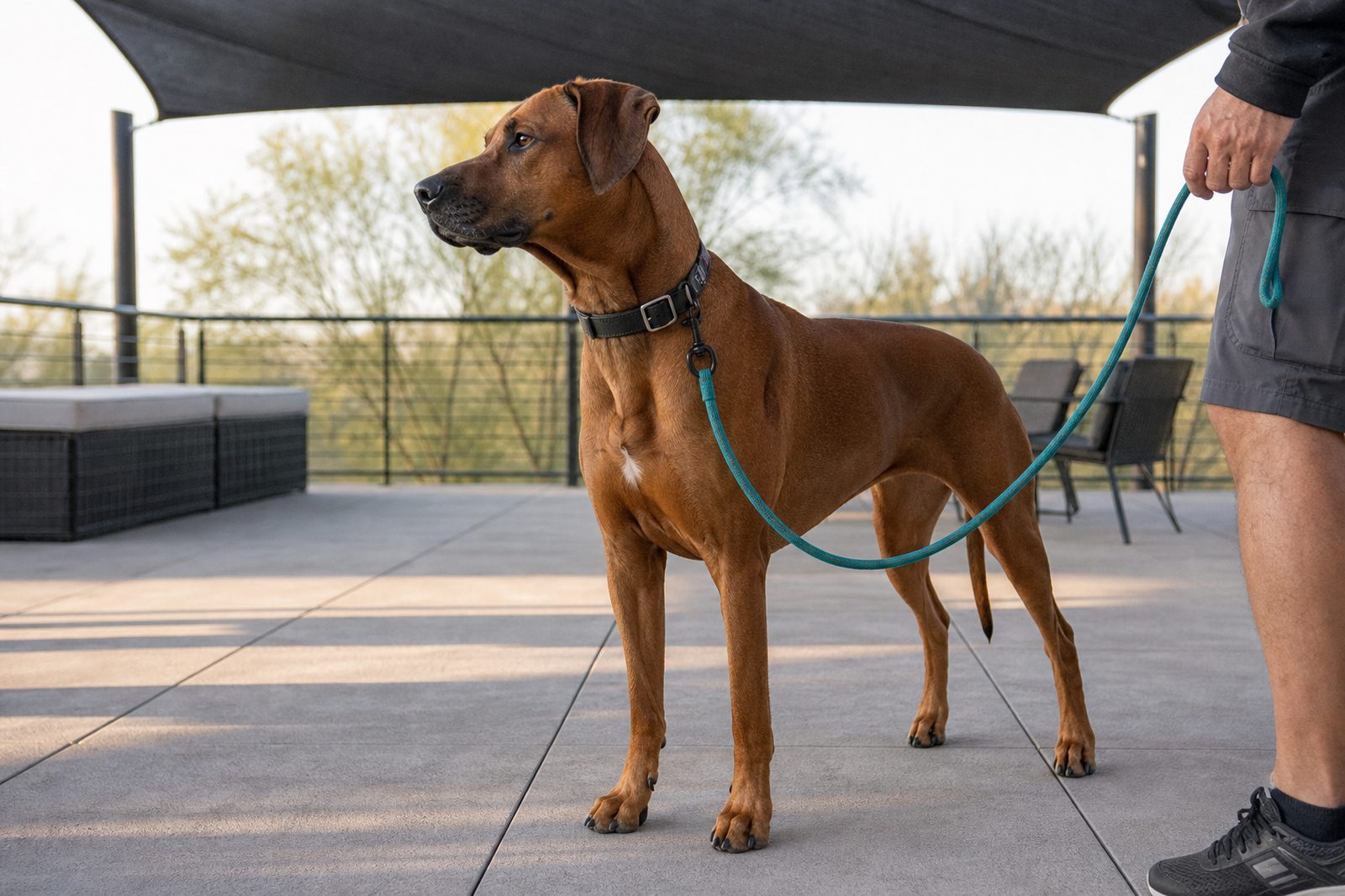
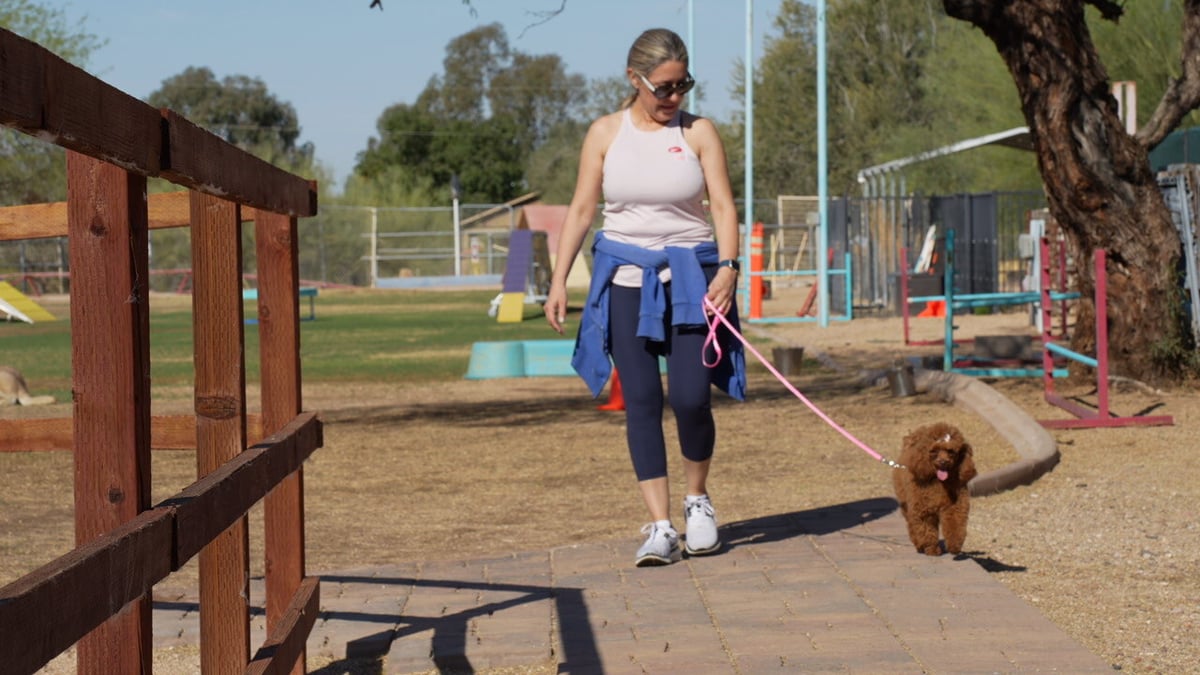
A stable, social dog with no reactivity can close this gap at home, it just takes a deliberate progression instead of more of the same practice. Build duration, distance, and distraction up one at a time, in a low-stakes order. See what building reliable listening in everyday life requires before assuming the dog needs a program at all: start in the driveway before the sidewalk, the sidewalk before a park, and a quiet park before a busy one. Raise the reward value to match the new difficulty; a piece of kibble that worked in the kitchen usually will not outcompete a passing dog on a trail at Cave Creek Regional Park.
This path works for dogs who are under-proofed, not for dogs who are also reactive. If the dog is lunging, barking, or shutting down the moment a trigger appears, the problem is no longer an unfinished proofing plan. It is a different problem that needs a different fix.
Where this fits
Build Listening That Holds Up Anywhere
If your dog needs volume and environmental variety a weekly practice session can't cover, Foundation Camp builds that in on purpose, with multiple handlers and structured immersion instead of one more session in a familiar room.
Why Environment Is a Trigger, Not the Cause
For a dog that is truly reactive, the environment is not causing the problem, it is triggering a response that was already there, and no amount of extra repetition in a familiar room reaches it. A dog trained by one person, in one room, at home learns to behave for that person, there. Meaningful change requires controlled trigger replication across environments, multiple handlers by design, and the volume of reps a once-a-week home visit or a self-paced practice schedule cannot reach on its own.
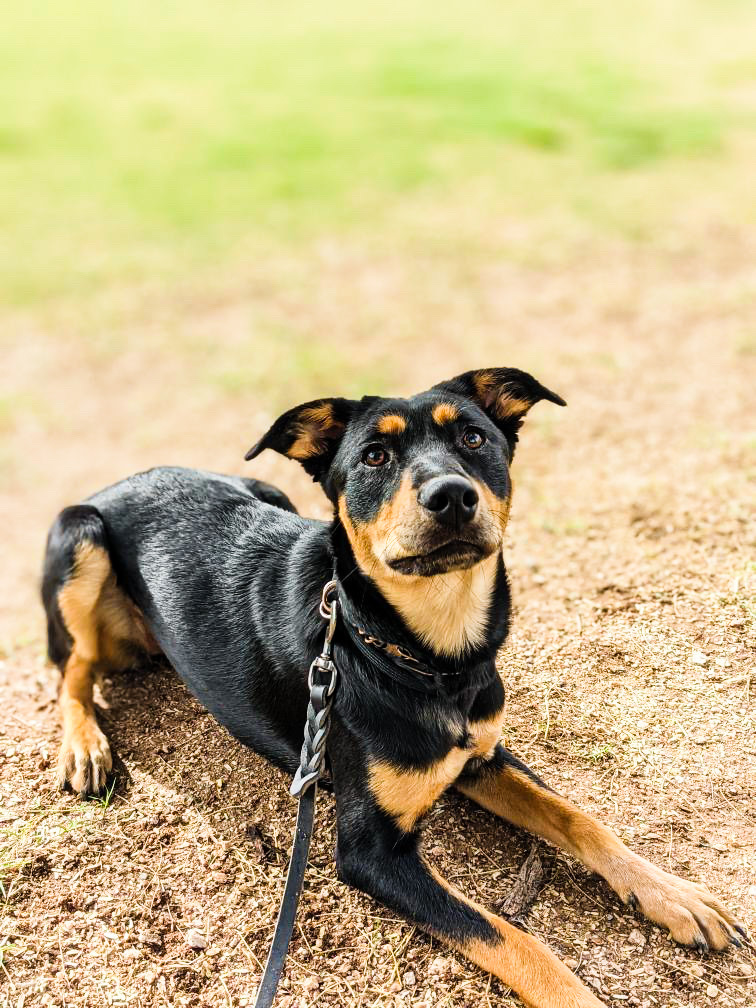
This is where Foundation Camp is built differently than a home session: structured immersion across a full stay means the dog rehearses the same cue in a training room, a hallway, an outdoor yard, and on a walk. More than one handler gives it, inside the same week. Foundation Camp does not replace the do-it-yourself path above for a dog that only needs proofing, it exists for the volume and variety that path cannot deliver on its own.
What Multiple Handlers and Daily Reps Change
The pattern below is not an isolated case, it shows up across Partners Dogs' 4.8-star, 2,000+ review track record. A dog that only ever hears a cue from one voice has only proofed it against one voice. When a second and third handler give the same cue the same way, the dog learns the cue means the behavior, not "the behavior when that specific person asks." One Partners family described the outcome directly.
"He is so well behaved now and actually listens."
Becky J., Cave Creek
That exposure is the mechanism behind the change, not a side benefit of boarding.
Rep volume matters the same way. A dog that practices a recall once a week gets roughly 52 chances a year to generalize it. A dog in a structured, multi-day program compresses that many repetitions into days: across rooms, distances, and distraction levels a single weekly session cannot cycle through. One eight-month-old puppy, described after camp this way:
"Very manageable on walks and handles distractions like a champ."
Alissa D., Scottsdale
Bringing It Home: Why the Skills Don't Stay at the Facility
The strongest objection to a structured program is fair: does a skill learned away from home come home with the dog? It is a fair question, and transfer has to be built into the program on purpose, not assumed. That means an in-person handoff lesson before the dog leaves, follow-up coaching, and materials the owner uses at home, not just a trained dog and a wave goodbye.
One family whose dog spent three weeks in a board and train program put it this way:
"All of their support materials and videos help us reinforce his new training at home."
Ka'ryn C., Scottsdale
That is the difference between a dog that generalizes once, in the room it was taught in, and a dog whose owner has the tools to keep proofing it everywhere else. If the "won't listen outside" turns out to be closer to reactivity than under-proofing, Behavior Camp addresses that directly instead of asking the dog to repeat a proofing plan that was never going to reach it.
Key takeaways
- A cue taught in one room does not carry over on its own, duration, distance, and distraction each have to be practiced on purpose in new places.
- Duration, distance, and distraction are the three variables that determine whether a cue holds up outside the house.
- Foundation Camp runs 14 nights and compresses the rep volume across multiple handlers and environments that a once-a-week session cannot match.
- A dog that only ever hears a cue from one handler has only proofed it against that one voice, additional handlers teach the dog the cue itself is the rule.
- Partners Dogs' outcomes reflect a 4.8-star, 2,000+ review track record.
Frequently Asked Questions
What's the difference between a dog that needs proofing and one that's reactive?
A dog that just needs proofing knows the cue but has never practiced it against unfamiliar distance, duration, or distraction. It looks confused or slow to respond outside, not panicked. A reactive dog has a genuine trigger response: lunging, barking, or shutting down the moment something specific appears. No amount of extra practice on the untested cue reaches that response. The first is a proofing gap. The second needs behavior work.
Can I fix this myself without a facility?
Yes, if your dog is stable and social and the issue is under-proofing rather than reactivity. Build duration, distance, and distraction up one variable at a time. Start in low-stakes places, moving from the driveway to a sidewalk, a quiet park, and then a busier one. Raise the reward value as the difficulty rises. This do-it-yourself path is the correct fix for a dog that just needs more environmental variety, not a fallback for one that has never had structured training.
Why does training with more than one handler make a difference?
A dog that only ever hears a cue from one person has only proofed the cue against that one voice, one set of body language, and one relationship. When multiple handlers give the same cue the same way, the dog learns the cue itself is the rule, not a request tied to a specific person. That is a large part of why a dog can come home from a structured, multi-handler program and respond to the whole family, not just the person who trained it at home.
How long does it take before a cue holds up outside the house?
There is no universal number, it depends on how far behind the proofing is and whether reactivity is involved. A dog that just needs environmental variety can often close the gap over several weeks of deliberate, structured practice at home. A dog that needs controlled trigger replication and multiple handlers gets that volume compressed into a structured stay, Foundation Camp runs 14 nights, precisely because a once-a-week session cannot reach the same rep count in that time.
Does my dog need to start over from scratch outside, or just practice more?
Neither, exactly. The dog already knows the behavior mechanically, it does not need to relearn what "sit" means. What it needs is new context reps: the same cue, in new rooms, at new distances, with new distractions. The behavior needs to generalize past the room it was taught in. Treat it as expanding the cue's range, not restarting the dog's training.
What's the best board and train option for a reactive dog in Phoenix, Scottsdale, or Cave Creek?
Partners Dogs runs board and train programs from campuses in Scottsdale and Cave Creek, serving the greater Phoenix area, and a reactive dog needs a program built for trigger work specifically, not general obedience polish. Behavior Camp is built for that: controlled trigger replication, multiple handlers, and the structured stay volume a once-a-week session cannot reach. A PD360 Assessment sorts out whether a dog needs that level of program or just proofing before you commit to either path.
If it looks like reactivity
Sort Out Proofing From Reactivity First
Not every dog that ignores cues outside needs a full behavior program, and some do. A PD360 Assessment sorts out which one you're dealing with before you commit to either path.