Private Lessons can genuinely help a dog with mild reactivity. But once a dog has a bite history, guards resources, or shows serious aggression, the case needs more: a full team, supervised hours in the thousands, and structure around the clock. That is the standard of care a single weekly home visit was never built to provide.
Can a home trainer fix a dog with a bite history? It is the question a Phoenix metro Pet Parent types into a search bar at midnight, after an incident that already happened and a decision that cannot wait. Here is the honest answer in two halves: exactly where Private Lessons are the right call, and the specific point where a single person on a weekly schedule runs out of structural room, no matter how good that person is.
When Private Lessons Are the Right Call
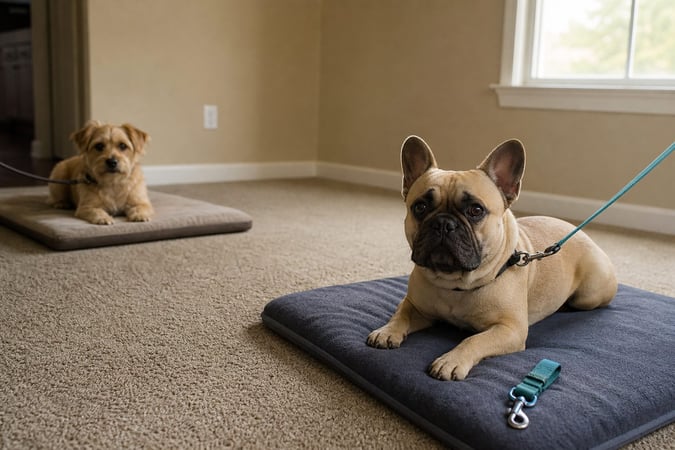
A dog with mild reactivity, no bite history, and an engaged owner can do very well with focused Private Lessons. One-on-one attention in a familiar room, a flexible schedule, and a lighter commitment than a boarded program are real advantages, and plenty of dogs are simply calmer on their own turf than anywhere new. For a manageable case, Private Lessons with a Partners Dogs trainer, on campus, online, or in your home, are the right fit.
Trisha D. from Cave Creek describes exactly this scenario:
"For the first two months I could only take her outside after dark because she was so timid but then I called my friend Leighton A Oosthuisen at Partners Training and asked about private lessons. We were paired up with Jen Shelton who totally changed my Tori's life! She is now a goofy playful pup that loves other dogs and people."
Trisha D., Cave Creek
That is the profile a lighter format was built for: no bite history, a motivated household, a reactivity level that responds to repetition without needing round-the-clock structure. Partners Dogs offers this same one-on-one format through Private Lessons, for families whose dog fits that description and does not need a boarded program to get there.
Where a Weekly Home Visit Runs Out of Room
A dog that learns to sit and stay for one trainer, in one room, once a week has not learned the behavior. It has learned that behavior for that person, in that room. Environment is a trigger, not the cause. What shows up on a walk, at the front door, or around a stranger got wired into that context, and it surfaces in that context. Changing it for good takes controlled exposure to the same trigger, repeated across different environments and different handlers, at a rep volume a single weekly visit cannot generate on its own.
K P. from Cave Creek lived that gap before finding a different path:
"I took him to three trainers, all who appeared to despise him as much as he despised them. Nothing worked. The three week boot camp at Partners has made some difference in my very stubborn guardian."
K P., Cave Creek
That is not a knock on any individual home trainer's skill, it is a volume problem built into the format itself. A serious case needs structured immersion, full days of supervised repetition across multiple trainers and settings, not sixty minutes a week, however well those sixty minutes are used.
What Changes Once There Is a Bite History or Resource Guarding
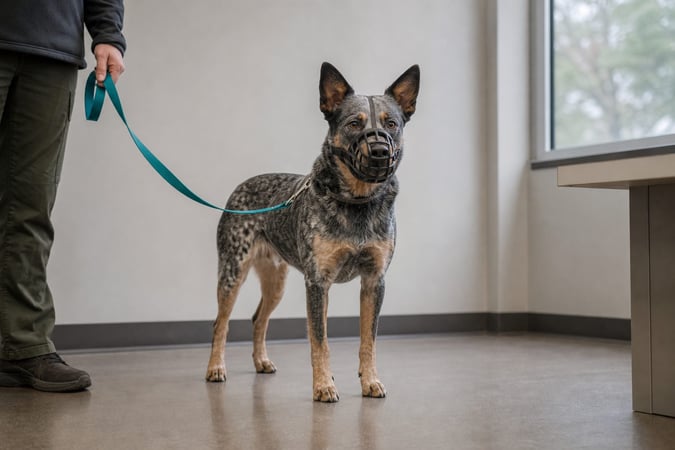
Severity is the actual line, and it is not a line invented to sell a bigger program. Across 70,000-plus dogs since 1997, the pattern holds: once a dog has bitten, or guards food and objects hard enough to threaten a bite, the case needs more contact hours and more environmental control than any single person, however good, can carry alone on a weekly cadence. That is a staffing-and-structure problem, not a skill problem.
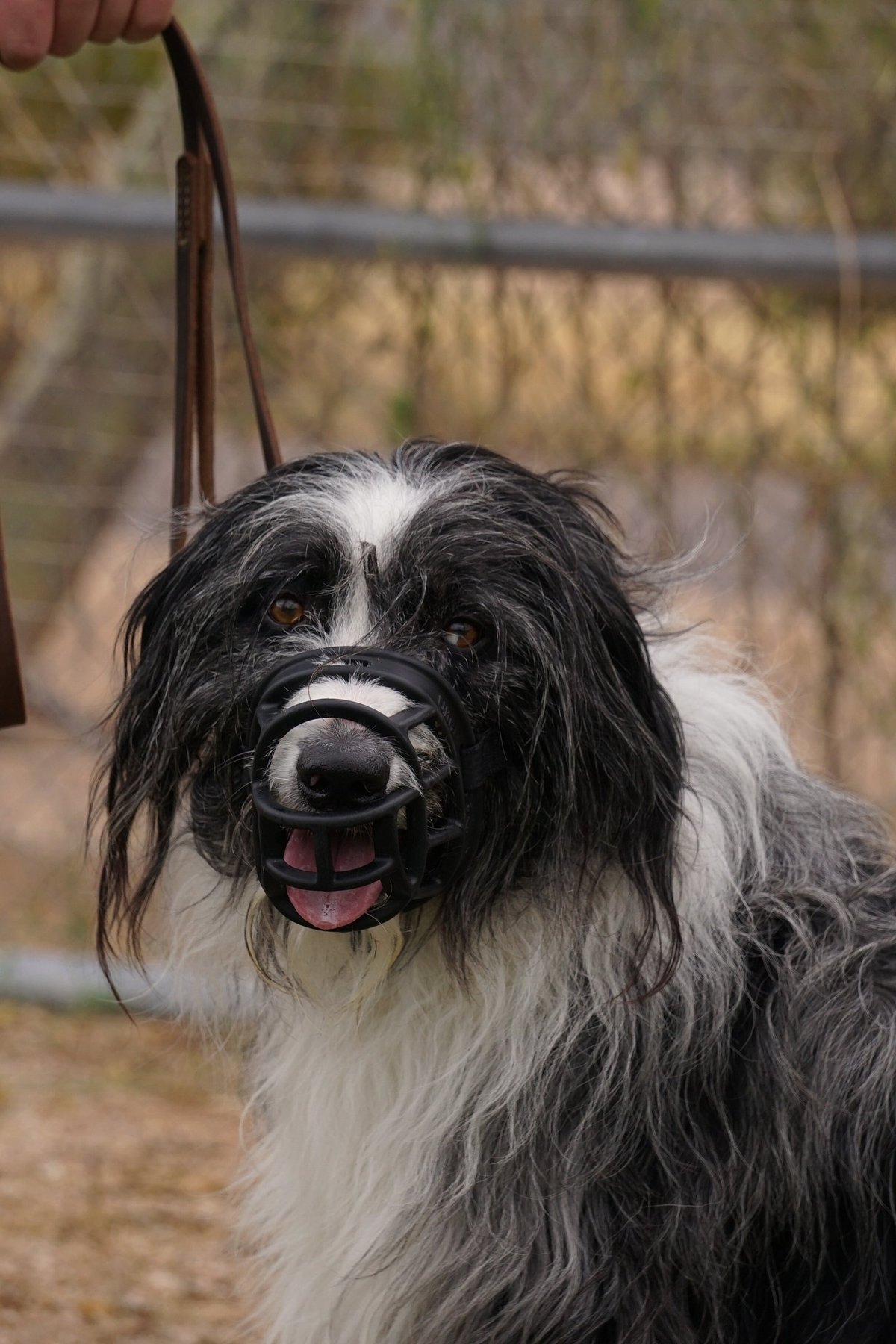
What a once-a-week visit cannot structurally provide is control over the highest-risk moments: the resource guarded at six in the evening, the stranger at the door, the trigger that does not wait for the trainer's scheduled hour. It also cannot guarantee consistent handling from every person the dog interacts with day to day. Lulubelle R., who directs a Cave Creek rescue that refers dogs to Partners Dogs, has watched that gap up close from the rescue side: “We sometimes encounter dogs with aggression issues. We have used Partners to help us get these dogs under control and get them to the point where they are manageable and adoptable!… One of the biggest examples was our Lance. He was on the euthanasia list at county. We pulled him and realized he needed training! After doing camp at Partners and getting the training he needed he finally found the perfect home!” A dog already on a county euthanasia list is about as far from “fixable with a weekly visit” as a case gets, and it is exactly the kind of case Partners Dogs takes on rather than declines. Only a handful of dogs, across nearly three decades, have fallen outside what a trained team can safely work with. Families weighing this decision can see that record reflected in 4.8 stars across more than 2,000 reviews from Scottsdale, Cave Creek, and the wider Phoenix metro.
If your dog has already bitten or guards resources
Get the Right Level of Support for a Bite-History Case
A severe case needs contact hours and control a weekly visit cannot generate. See what a structured, boarded program involves.
What a Certification Actually Verifies, and What It Doesn't
The dog training industry needs a strong certification standard. That gap is real, and it is exactly why Partners Dogs University exists. But when a home trainer's pitch leans on a credential alone, it is worth understanding what that credential actually checks before trusting it with a bite-history case.
Take the most common one: CPDT-KA, from the Certification Council for Professional Dog Trainers. Its own 2025 candidate handbook sets eligibility at 300 hours of training experience, and hours spent training a candidate's own dog do not count toward that total. Those hours are self-logged into an online training log, with a single "Attestation Statement," one signature from one other certificant or professional, standing in for independent verification. The form itself attests only to a "positive relationship with clients," not to the accuracy of the logged hours. The exam itself is 200 multiple-choice questions, no hands-on evaluation required to hold the credential. CCPDT does offer a hands-on-assessed add-on: the CPDT-KSA, graded from self-filmed video exercises. But by the organization's own 2024 count, only 154 of 5,383 active CPDT-KA holders have gone on to earn it, a little under 3 percent.
The credential comes with a methodology string attached, too. CCPDT's own position statement on electronic-collar use requires certificants to rule out several other approaches first and never run more than one device on a dog at a time, and it states plainly that “a CCPDT certificant who violates these directives in this position statement risks losing his or her certification,” with that certificant's name then published on CCPDT's own website alongside the reason. A pure skills verification does not usually carry a public-naming enforcement clause tied to which tools a trainer is willing to reach for. A credential built that way is doing double duty: part competence check, part membership in one methodology family. That second part can quietly narrow what a trainer is willing to try on a dog whose case needs more than one approach.
None of that means the letters are worthless, or that the trainer behind them lacks skill. It means a written, multiple-choice exam and one signed attestation are not the same thing as supervised, hands-on hours across a range of dogs. A bite-history case deserves the second kind of verification, not only the first. At Partners Dogs, instructor hours build in stages: 30 hours of coursework before ever working the floor, 1,000 supervised hours before reaching Instructor, and 2,000 hours across a range of breeds, behaviors, and severities before Senior Instructor. Those hours are logged and supervised inside the building, not self-reported from a candidate's own practice.
A program whose main case for itself is a letter set, rather than outcomes and supervised hours, is worth a second question. What matters more is a team a Pet Parent can actually meet. A program that can show the hours is answering the question a certification alone cannot.
What a Severe Case Actually Needs
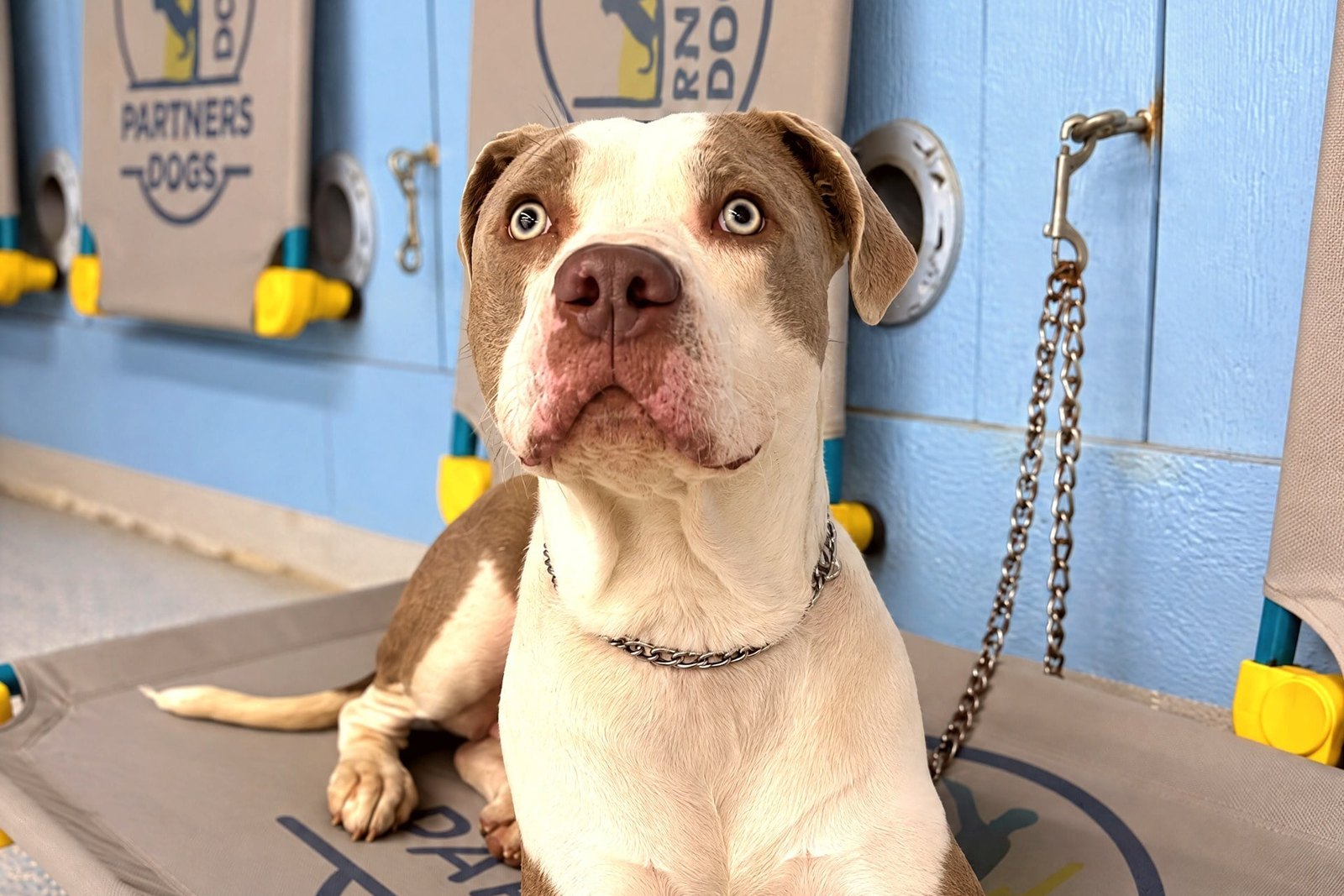
A bite-history or resource-guarding case needs what a solo operator structurally cannot provide, not because of who they are, but because of what one person can do. It needs a team instead of an individual: multiple trainers who have all worked the dog, so no single person's schedule, sick day, or vacation stalls the case. It needs staffing around the clock, not a booked hour once a week, because a dog's highest-risk moments do not wait for an appointment. It needs a purpose-built environment, not a living room, so triggers get introduced and controlled on purpose instead of showing up by accident. And it needs a way to measure progress that is not one trainer's memory: a grade-level curriculum and PD360 tracking that scores the dog's actual stage, Teaching, Reinforcing, Proofing, Maintenance, so a Pet Parent can see the work, not just hear about it.
Ashley J. from Cave Creek describes what that looked like for her own dog, a 7-year-old Shih-Tzu with a history of biting when he did not get his way:
"I honestly thought he was a lost cause because he is already 7 years old… During the 2nd and 3rd week we got to go in and talk with Noa so she could update us on Bear's progress and then we could actually see his training in action. I was completely BLOWN AWAY!… Partners gave not only Bear the tools, but gave us the tools to have a happy and successful relationship with our dog!"
Ashley J., Cave Creek
Notice what is actually in that story: an evaluation before intake, a named trainer with a team behind her, weekly progress updates a Pet Parent could see, and pet parent classes once the boarding portion ended so the training transferred home instead of staying at the facility. That is what "we take the dogs nobody else will" looks like from the inside: a team, a building built for exactly this work, a way to track it, and a plan to teach the family, not just the dog, before anyone goes home.
Questions to Ask Any Trainer, Including Us
A serious case deserves real due diligence before any one person is trusted alone with it, and that includes us. None of the questions below are an attack on solo trainers as a category, plenty are careful, skilled professionals. They are the questions any trainer or program should be able to answer plainly for a case involving real risk, and we expect you to ask us the same ones:
- Do they carry liability insurance specific to dog training or behavior work?
- What happens to your dog's case if they are sick, injured, or unavailable for a week?
- Do they have a written bite-incident protocol, and will they show it to you?
- If they hold a certification, is it a hands-on-assessed credential, or a written, multiple-choice exam only?
- How many other dogs, and how many other severe cases, are they actively handling at once?
Vague answers are useful information on their own. A facility-based program answers all five by design: a staffing bench instead of one person, documented protocols, hands-on hours a Pet Parent can ask about directly, and a full team behind a single dog's case.
How Behavior Camp and Transform Camp Fit a Severe Case
Not every serious case needs the same program, and the right one is set by an assessment tailored to that dog, not by which package sounds more urgent. The PD360 Assessment is the gated evaluation that scopes severity and points a Pet Parent toward the right fit: Behavior Camp for moderate reactivity and aggression that is serious but not yet crisis-level, or Transform Camp for the bite-history and resource-guarding cases that need the deepest level of structured immersion plus follow-up coaching once the dog comes home. Neither program opens with a promise of a cure; both open with a direct look at the dog in front of the trainers.
Janyth H. from Cave Creek describes what that team-based attention looks like from the inside: “My JRT has aggression issues and I came here for help based on vet recommendations. They bought in to my situation immediately.… They have brainstormed my situation at staff meetings and offered some insightful realistic solutions.… others on the staff know my situation and talk to me about different ideas.” That is not one trainer holding a case alone. It is a staff that talks a case through together, and it is exactly why the assessment step exists before any program is assigned, not after.
A dog's own case for tracking a resource-guarding or aggression pattern also lives in the Dog Aggression Assessment and Training spoke, which covers what an evaluation for this specific behavior looks like in more depth than a single article section can.
Frequently Asked Questions
Can a home trainer fix resource guarding on their own?
Focused Private Lessons can help with mild resource guarding, especially early on with a motivated owner. Once the guarding involves a bite or a credible bite attempt, the case needs the contact hours and environmental control a full team provides, not continued sessions at the same weekly pace with one person.
How is Transform Camp different from weekly in-home lessons?
Transform Camp is a boarded program built for severe or crisis-level cases: a team of trainers instead of one person, staffing around the clock, a purpose-built campus, and PD360 tracking against a grade-level curriculum, plus follow-up coaching once the dog is home. Weekly in-home lessons typically work one dog, in one environment, on a weekly cadence. That can mean meaningful progress for many dogs, but far fewer repetitions and far less environmental control than a severe case usually needs.
Does a certification mean a home trainer is ready for a bite-history case?
Not on its own. The most common credential, CPDT-KA, is earned through 300 self-logged hours (time spent training the candidate's own dog does not count), one signed attestation statement, and a 200-question written exam, no hands-on evaluation required. A hands-on-assessed add-on credential exists, but only around 3 percent of certificants hold it. A certification is a fair baseline question to ask, not a substitute for asking about supervised hours, insurance, and a written bite protocol.
Does my dog need a PD360 Assessment if I already tried a home trainer?
Yes. Prior in-home sessions are useful history to share, but they do not replace a formal evaluation. The PD360 Assessment scores the dog's current severity and points to Behavior Camp or Transform Camp, regardless of what training the dog has already had.
Will a home trainer visit be enough for a dog that has already bitten someone?
A weekly home visit can still play a supporting role, but a single person on a weekly schedule is not built to carry a bite-history case on its own. That case needs a team, supervised hours, and structure around the moments a once-a-week appointment cannot cover.
Start with an assessment
Find Out What Level of Support Your Dog Needs
A PD360 Assessment scopes the severity of the behavior and points to the right program, with no guaranteed outcome promised up front.