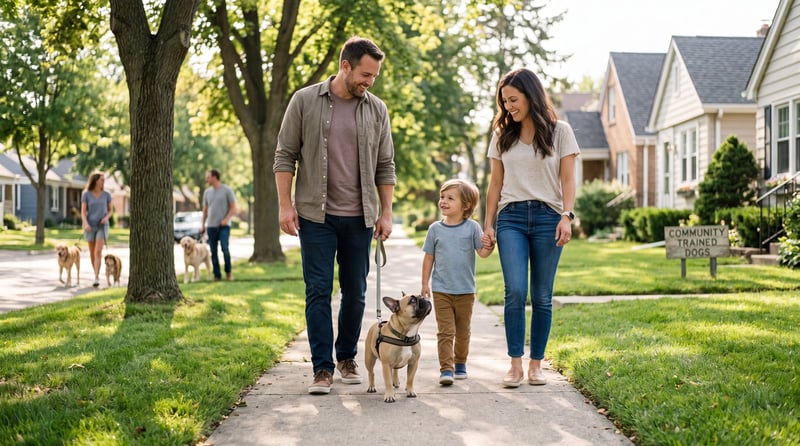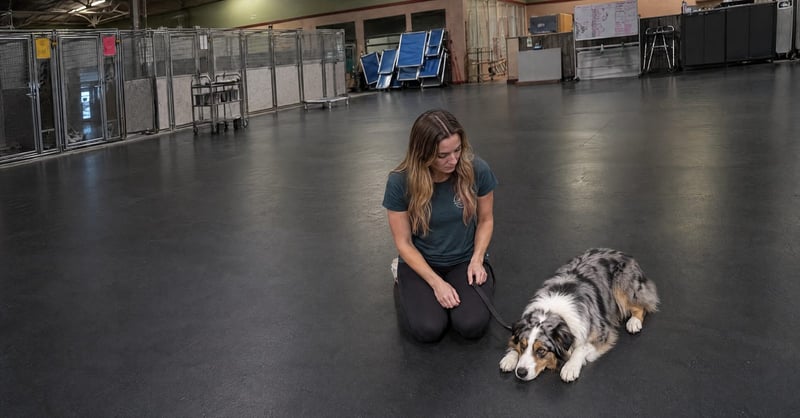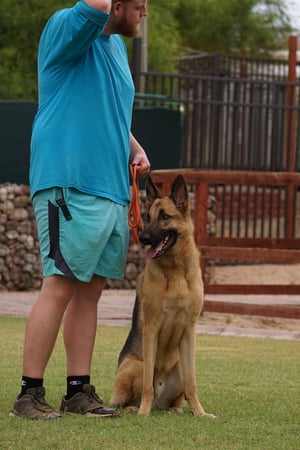
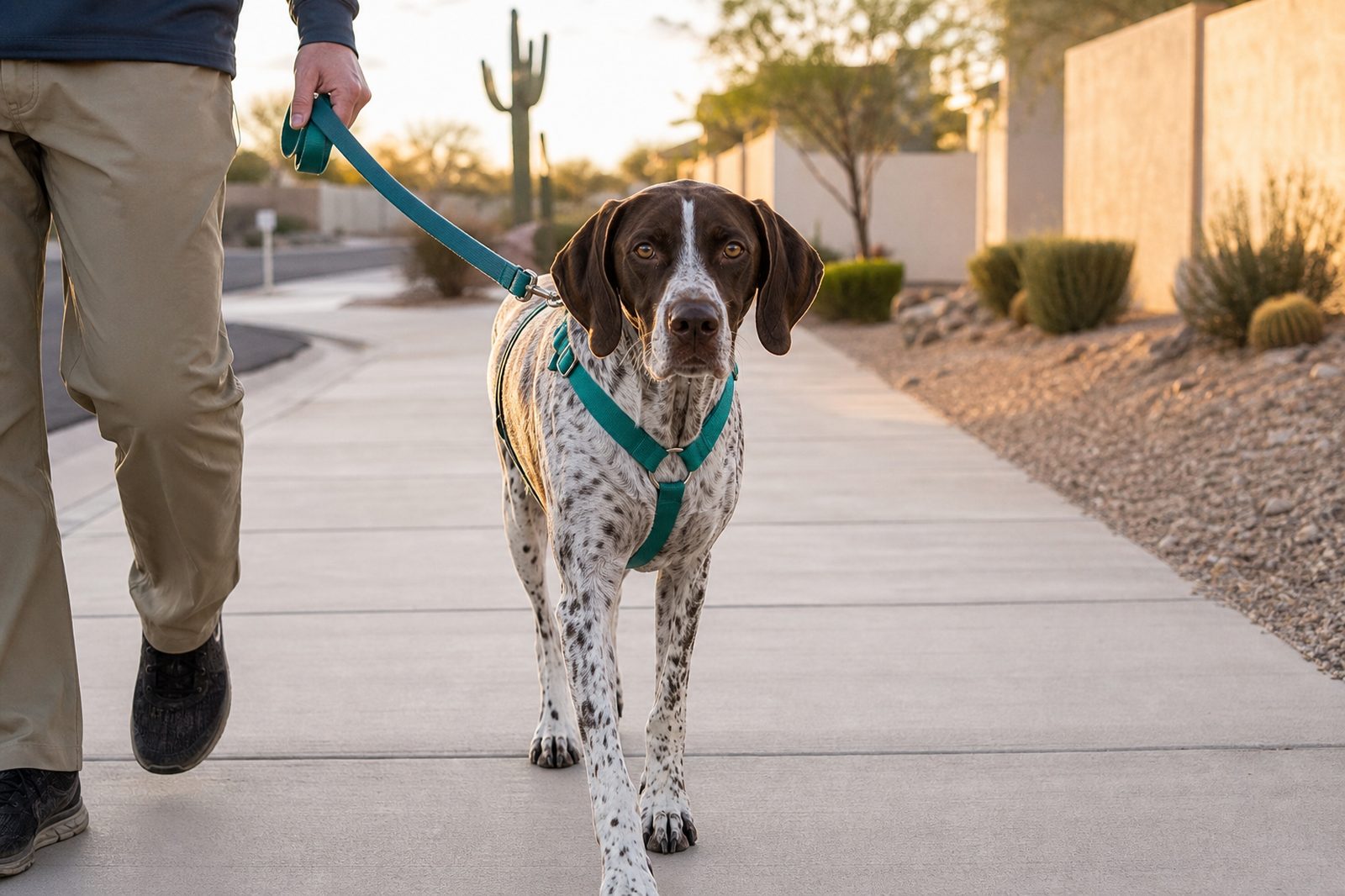
Ask any trainer who works in your home, ours included, nine questions before you book anything: insurance, education or certification, training methods, current caseload, backup coverage, incident protocol, veterinary coordination, session observation, and progress reporting. A skilled solo trainer can give you a solid answer on methods and manners. The questions tied to certification depth, backup coverage, and incident response are where one person, however good, runs into a structural wall: no bench to call on, no supervised-hours volume behind a self-logged application, and no second trainer standing by when the first one is out sick. That gap is exactly why Partners Dogs runs Private Lessons through a full staffed team instead of one person's calendar.
One-on-one training at home in Scottsdale, Cave Creek, or anywhere else across the Phoenix metro area can do solid work, and plenty of local pet parents get good results that way. Before you book a first session with any trainer, run this list on a phone call. Nine plain questions, plainly answered, tell you whether you're hiring a well-supported program or one very good person working entirely alone, and how thin that person's paper trail actually is once you ask what's behind it.
Why Do These Questions Matter, Even for a Great In-Home Trainer?
A familiar living room, one-on-one attention, and a schedule built around your calendar: these are real advantages of in-home lessons. For a stable dog with one narrow goal, that can be the right call, and Private Lessons can run in your home, on campus, or online. Ask these questions of any trainer, in-home or facility-based, because the answers show how much stands behind the person actually working with your dog, and how little can stand behind one person working alone. A trainer working through Private Lessons at a staffed program answers every one of them the same way no matter which trainer you're paired with, because a multi-trainer team backs the answer, not one person's schedule that week. The relationship also starts differently: a formal PD360 Assessment before the first lesson, not a first-visit read, answers several of the questions below before you even ask them.
Does the Trainer Carry Liability Insurance?
A trainer working in your home needs their own liability coverage, because your homeowner's or renter's policy may not cover an injury or property damage that happens during a paid training session. This is a plain, non-accusatory question: ask for proof of coverage the same way you'd ask a contractor. A trainer with nothing to hide answers immediately. One who bristles, changes the subject, or says insurance "isn't really necessary" for what they do has told you something worth knowing about how the rest of this list is going to go.
What Education or Certification Do They Have?
Dog training has no licensing requirement, so a certification is the only paper trail a buyer gets, and that trail is thinner than the letters suggest. Ask which body issued it and what the requirement actually was. The most common credential in the industry is CPDT-KA, issued by the Certification Council for Professional Dog Trainers. It requires 300 hours of training experience, self-logged by the candidate into an online training log and backed by a single attestation statement from one outside professional standing in for an hour-by-hour audit. CCPDT's own 2025 handbook for candidates confirms the exam itself is 200 multiple-choice questions with no hands-on component: a written knowledge test, not a demonstration of skill with a dog in the room. A hands-on-assessed add-on credential does exist, but CCPDT's own certificant counts put it at roughly 2.9 percent of CPDT-KA holders, meaning the large majority of trainers carrying the industry's most common letters have never had their hands-on work directly evaluated by the certifying body itself. None of that makes the letters worthless. It means a certification alone is a starting point, not the whole case, and a trainer who leads with a letter set instead of supervised hours and named outcomes is worth a second question about what's actually behind it. The industry genuinely needs a strong bar here: it's exactly why Partners Dogs University runs its own instructors through 30 coursework hours before they ever touch the facility floor, 1,000 supervised hours to reach Instructor, and 2,000 hours across breeds and behaviors to reach Senior Instructor. All of it is logged and supervised inside a working program, not self-reported into an online form.
How Do They Describe Their Training Methods?
Ask them to describe their methods in their own words, not with a label, and listen for whether feedback runs in both directions or only one. The American Veterinary Society of Animal Behavior's position statement on dominance theory recommends steering clear of trainers who lean on dominance or pack-leader framing, and that guidance holds regardless of setting. A useful answer covers three things: how the trainer introduces a new behavior, how they respond when the dog gets it wrong, and how that response changes as the dog moves from Teaching a new skill through Reinforcing, Proofing under distraction, and Maintenance over time. A trainer who can only describe the first of those stages hasn't been asked to solve for a dog that doesn't improve on schedule.
How Many Dogs Are They Handling at the Same Time?
A solo trainer's calendar is the practical ceiling on your dog's attention, no matter how talented that trainer is. Ask how many active clients they're currently juggling and how session prep, notes, and follow-up communication fit around that caseload. A staffed program spreads that load across a full floor of trainers working under one shared curriculum, with around-the-clock staffing at a purpose-built campus behind them, so no single dog's progress rides on one person's bandwidth that week.
What Happens If They Get Sick or Go on Vacation?
One person means one point of failure: ask directly what happens to your training schedule if they're unavailable for a week. A solo operator's honest answer is usually "we reschedule," because there's no one else to send. That's a structural gap, not a knock on the trainer's skill. A multi-trainer team keeps your dog's schedule moving even when one specific person is out, because the program was built with a bench, not a single irreplaceable person.
Still deciding
See Which Path Fits Your Dog
If you're weighing one-on-one lessons against a longer program, a short quiz or a formal assessment gives you more to go on than a gut call.
What Is Their Protocol If Something Goes Wrong?
A safety incident during a session needs a protocol, not an improvised response from whoever happens to be in the room. A solo operator, by definition, is whoever happens to be in the room. Ask what happens if a dog bites, snaps at a family member, or reacts to something during the visit. Find out who gets called, what the next step is, and how it gets documented. A vague answer or a shrug is itself an answer. This is a structural question, not an accusation, and a solo in-home trainer can absolutely have a solid answer here. The point is to ask before you need one, not after, and a program with a documented protocol and a full team on-site can act on it immediately instead of one person improvising alone in your living room.
Do They Work With a Veterinarian?
A trainer who coordinates with a veterinarian catches medical causes behind a behavior change instead of training around them. Sudden aggression, a new fear response, or a dog that abruptly stops listening can have a medical root, not just a training gap. Ask whether the trainer has a working relationship with a vet for those red flags, or whether that connection is entirely on you to make. Partners Dogs maintains referral relationships with more than 40 local veterinary practices for exactly this reason.
Can You Observe a Session Before You Commit?
Watching a session, not a sales call, tells you more about a trainer's methods than any description of them. Watch the dog's body language: a loose, wagging tail and relaxed ears read very differently than a tucked tail or flattened ears. Watch the owner's tone too: upbeat and encouraging reads differently than frustrated or apologetic. A trainer who welcomes an observer has nothing to hide. One who discourages it, or only offers a phone consultation before you sign, is worth a second question about why.
How Will They Measure and Report Progress?
Ask exactly how progress gets tracked and reported, not just promised. A vague "he's doing great" after each visit is not progress reporting. Ask whether you get written notes, specific behaviors tracked across sessions, or something you can look back on a month later to see what changed. Partners Dogs pairs every program with a PD360 Pet Progress Tracking System record, scored against a grade-level curriculum, that parents can read at any point, not a verbal recap that fades by the next visit.
"This place is wonderful. My 2 year old Yorkie mix was fearful of other dogs and strangers and very reactive. Her trainer, Noa, was outstanding at relating to her and I was amazed at the progress my dog showed. The trainers are friendly and willing to answer all your questions. I highly recommend Partners Dog Training."
Nancy S., Cave Creek
When Are Private Lessons the Right Fit?
A stable, social dog with one narrow goal and an owner who values convenience over intensity is a good fit for Private Lessons with a Partners Dogs trainer, backed by a team and a PD360 record. Basic manners for a dog with no behavior concerns, a single obedience skill, or a refresher for a dog that already knows the work: Private Lessons are exactly the right call. The questions above don't exist to talk you out of one-on-one training. They exist so you know exactly what kind of support stands behind the person coaching your dog before you start: one person's calendar and one person's judgment call in an emergency, or a multi-trainer team, a documented safety protocol, purpose-built campuses, and 28 years and 70,000+ dogs of institutional experience behind every session. That's true whether the door is in North Phoenix, Paradise Valley, or anywhere else across the Valley. Still weighing formats? The short program quiz sorts that out faster than another phone call.
Key takeaways
- Ask about liability insurance first, since a homeowner's or renter's policy may not cover a training-related injury or property damage.
- Dog training has no licensing requirement. The industry's most common credential, CPDT-KA, requires 300 self-logged hours verified by a single attestation and a 200-question written exam with no hands-on component; only about 2.9 percent of holders also carry the hands-on-assessed add-on.
- A solo trainer's active caseload is the practical limit on how much attention your dog gets in a given week; a multi-trainer team spreads that load and staffs around the clock.
- Partners Dogs runs instructors through 30 coursework hours before facility work: 1,000 supervised hours to reach Instructor, and 2,000 hours across breeds and behaviors to reach Senior Instructor.
- Every Partners Dogs program pairs training with a PD360 Pet Progress Tracking System record, scored against a grade-level curriculum, that parents can read at any point.
Frequently Asked Questions
Do I need to ask an in-home dog trainer about insurance?
Yes. A trainer working in your home should carry their own liability insurance, since a training-related injury or property damage may not be covered by your homeowner's or renter's policy. Asking for proof of coverage is a standard, non-accusatory question, the same one you'd ask any contractor working in your home.
What certifications should I look for in a private dog trainer?
Dog training isn't a licensed profession, so there's no government credential to check, and the industry's most common credential is thinner than it looks. CCPDT's own 2025 handbook lists CPDT-KA eligibility as 300 hours of experience, self-logged by the candidate and verified by a single attestation rather than an hour-by-hour audit, followed by a 200-question written exam with no hands-on component. Only about 2.9 percent of CPDT-KA holders go on to earn the hands-on-assessed add-on credential. A certification is a real signal worth asking about, but ask for supervised hours and named breeds or behaviors worked, not just a letter set.
What's a red flag when interviewing an in-home dog trainer?
Leading with a letter set instead of supervised hours and outcomes is one red flag. So is hesitation on the direct questions: a trainer who bristles at being asked about insurance, gives a vague answer about what happens if something goes wrong during a session, or discourages you from observing a session before you book has told you something worth weighing. None of those responses proves bad training on its own, but together they mean the questions in this checklist are worth asking before you sign up, not after.
Should I ask to watch a training session before I book one?
Yes. Watching a session tells you more about a trainer's methods than a phone consultation or a website description ever will. Pay attention to the dog's body language and the owner's tone during the visit. A trainer who welcomes an observer before you commit is showing you exactly what you're signing up for.
How many dogs does an in-home trainer usually work with at once?
This varies by trainer and is worth asking directly rather than assuming. A solo trainer's active caseload is the limit on how much attention your dog gets in a given week, since session prep, notes, and follow-up all compete for the same hours. A staffed program spreads that load across a full multi-trainer team working under one shared curriculum instead of one person's schedule.
What's the best dog training option in Phoenix, Scottsdale, Cave Creek, or North Phoenix?
The best option depends on what your dog needs, but a staffed program answers every question on this checklist the same way no matter which trainer you're paired with. Partners Dogs serves pet parents across Scottsdale, Cave Creek, North Phoenix, and the broader Phoenix metro area. Private Lessons here come backed by a multi-trainer team, around-the-clock staffing at purpose-built campuses, liability coverage, and a formal PD360 Assessment before the first lesson. Private Lessons can still be the right fit for a stable dog with one narrow goal; ask us these same questions.
One trainer, or a full program
Get One-on-One Training With a Full Program Behind It
Private Lessons at Partners Dogs pairs you with a trainer inside a staffed program, so your schedule, your questions, and your dog's progress never depend on one person's calendar.