Private lessons at a facility and an in-home trainer solve different parts of the same problem for a reactive dog. An in-home trainer offers a familiar room and full privacy; private lessons add distraction, more than one handler, and a built-in plan for taking the skill past your front door. Which one to start with depends on how mild or serious the reactivity is.
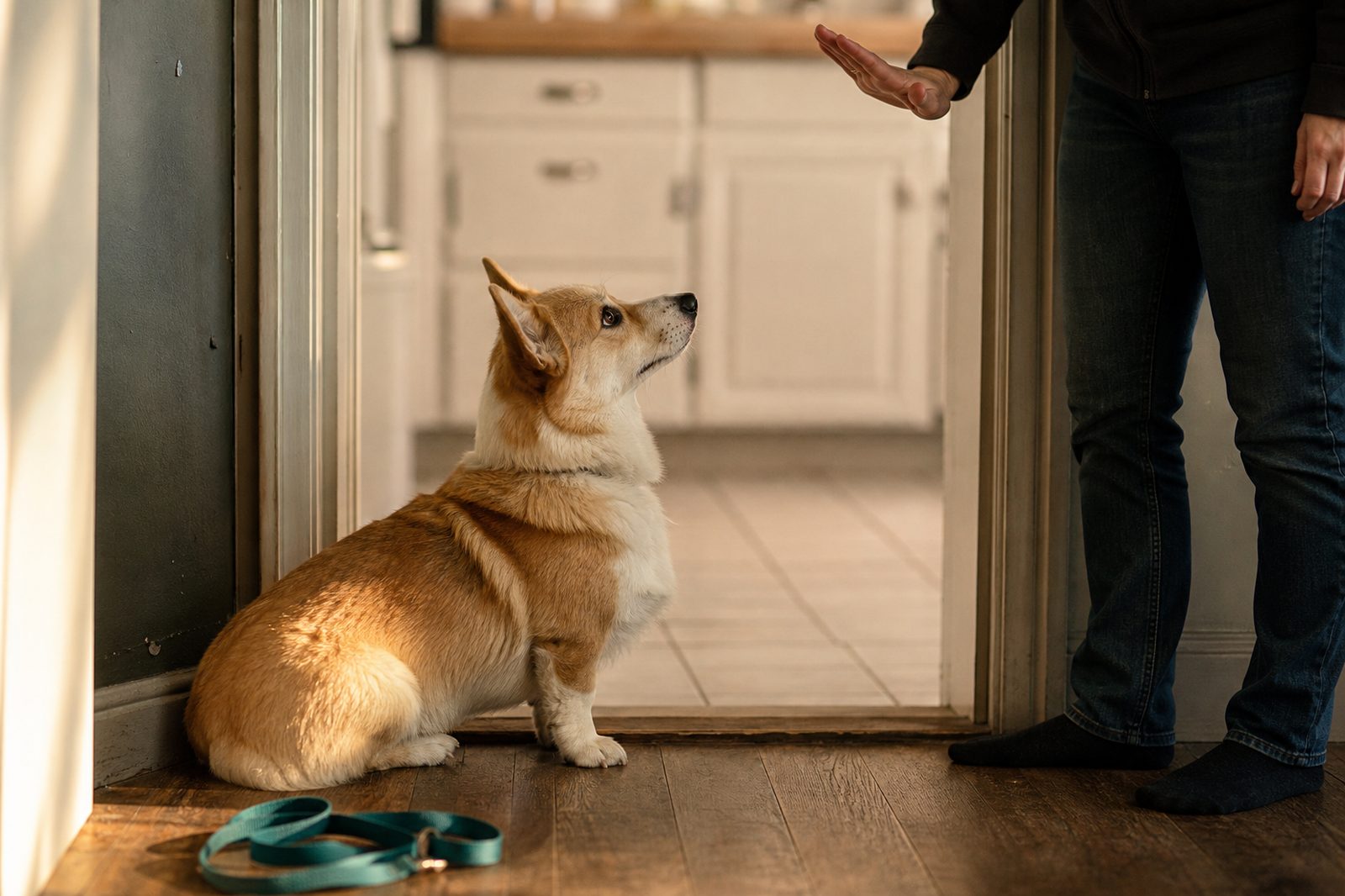
The doorbell rings on a Tuesday evening in Cave Creek and the leash in your hand goes tight before the door even opens. Your dog was settled five minutes ago, working through a sit-stay in the living room with a trainer she already knows. At the threshold she is a different dog. That gap between calm indoors with one familiar person and reactive at a door or on a sidewalk is the question behind this comparison: whether a trainer who comes to that living room, or private lessons built around more distraction and more hands, closes it faster.
What's the Difference Between an In-Home Trainer and Private Lessons?
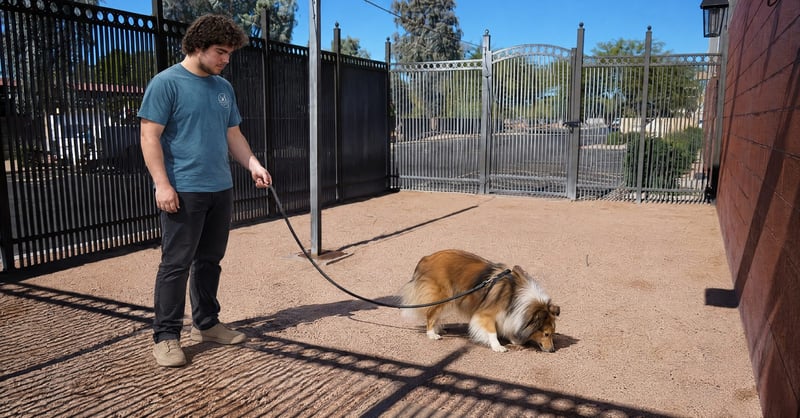
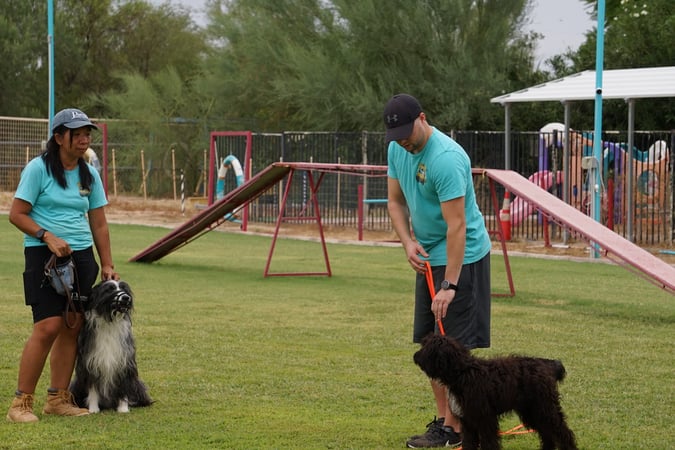
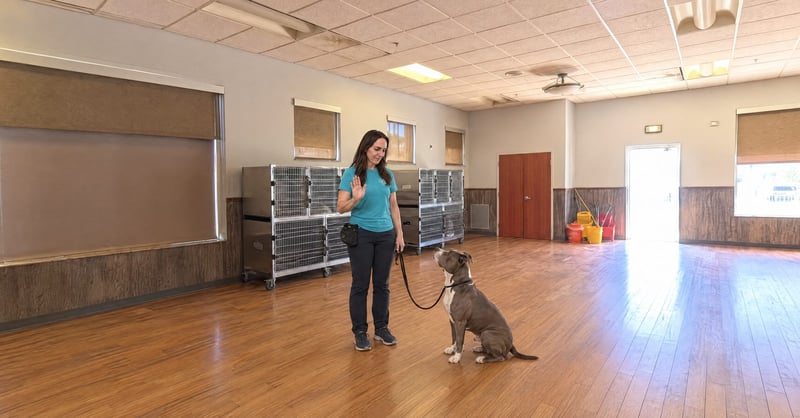
An in-home trainer works with your dog inside your house, usually on a weekly schedule; private lessons put you and your dog with a dedicated instructor in a training environment built for the session. Both are one-on-one. The difference is the room. An in-home trainer never has to introduce anything but your household: your dog's own furniture, your own driveway, your own doorbell. Private lessons happen somewhere built for training, with a controlled amount of activity around you: other dogs working at a distance, other people moving through, a space designed to add exactly as much distraction as your dog is ready for that day.
Partners Dogs runs Private Lessons as the facility format, and in select cases the same instructors also come to a family's home for a session. One Partners Dogs family describes what the facility format itself delivers.
"Our private lessons with elise were a game changer."
Katie S., Cave Creek
The choice in this piece is not whether Partners will ever visit your house. It is which environment does more for a reactive dog once the lesson ends.
What Private Lessons Do Well
Private Lessons offer privacy, full flexibility around your schedule, and content built only around your dog's specific issues, on campus, online, or in your home. For a stable dog working one narrow habit, that is often the fastest fix. Reactivity is a different case, and what closes it is structure a single visiting trainer cannot replicate on their own: a multi-trainer team so more than one person has actually seen your dog work, a documented plan instead of one instructor's memory, a backup handler ready when the primary is out, around-the-clock staffing instead of a once-a-week appointment, and a purpose-built training environment that manufactures the real-world distraction a living room cannot.
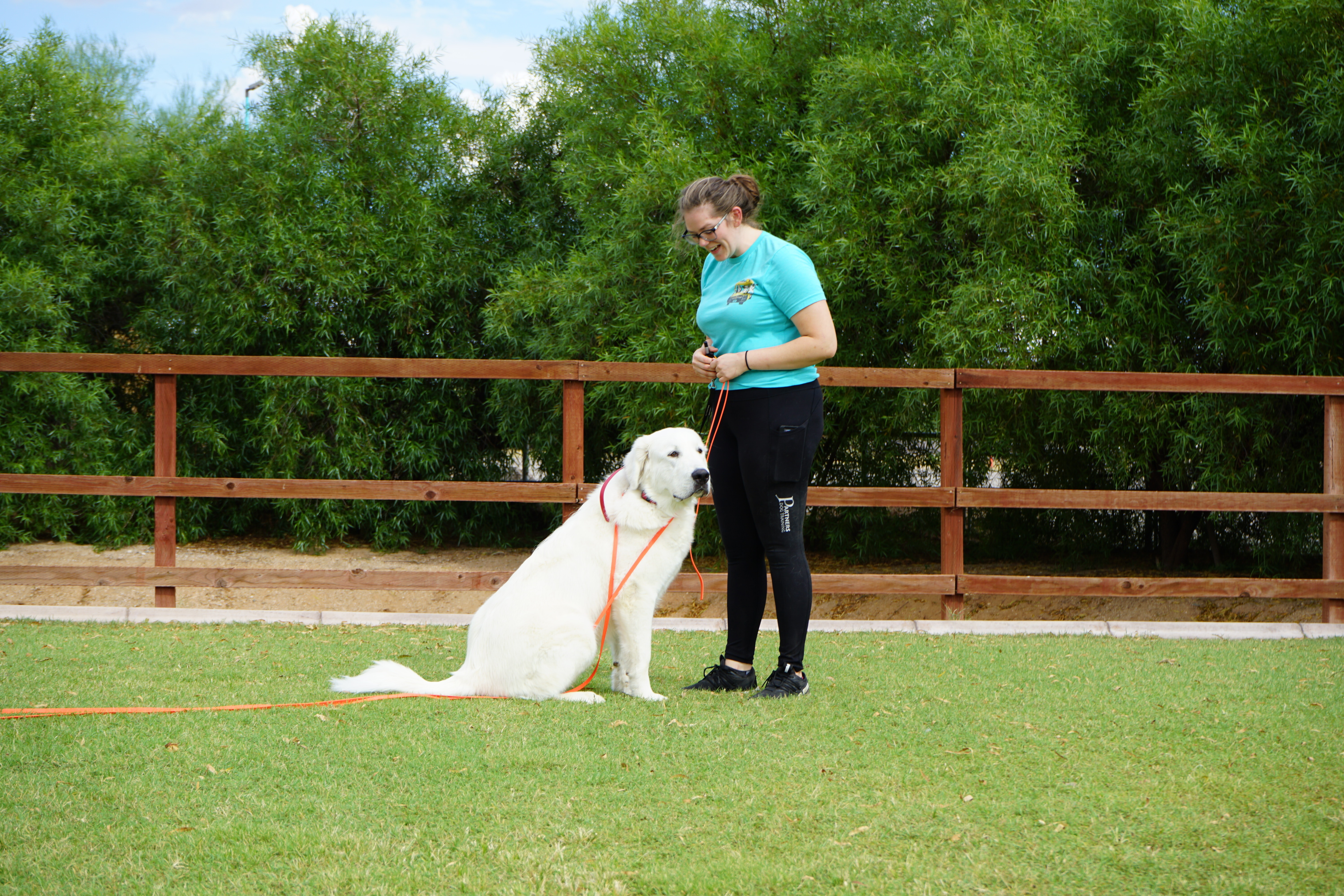
Cost also tends to run differently. A mobile trainer bills for the drive as much as the session, which usually pushes the per-visit rate above what a shared facility charges once overhead is spread across many families' bookings in the same building on the same day. That math cuts both ways depending on how far the trainer has to travel and how many sessions a plan needs, which is what the cost section further down works through.
What to Ask Before You Hand a Reactive Dog to One Person
Dog training is not a licensed profession. Anyone can hang out a shingle and start charging for sessions, regardless of background, education, or experience. A solo operator deserves the same due diligence you would give any single-person business handling something this important. Over 28 years and 70,000+ dogs trained, Partners Dogs has built the opposite of a one-person file: a multi-trainer team so more than one instructor has seen your dog work, a documented plan instead of one person's memory, a named backup handler for when the primary trainer is sick or booked, and around-the-clock staffing so a case never sits waiting on one person's calendar.
- Do they carry liability insurance for training and behavior work?
- What happens to your dog's plan if they are sick or unavailable the week of a session?
- Has a second trainer ever seen your dog work, or does the whole case live in one person's head?
- Is there a plan for what happens if a stranger walks up mid-session and your dog reacts?
- How many other dogs are on their books at once?
A capable in-home trainer might answer some of these well. A facility built around a staffed team answers every one of them by design instead of by asking one person to carry the whole file, which is the structural gap this section is naming, not a claim about any individual's skill.
Why a Skill Learned in One Room Doesn't Always Come Outside
Environment is a trigger, not the cause. A dog that sits calmly for a trainer in your living room has learned to sit calmly for that person, in that room. Behavior science calls this a generalization problem: dogs do not automatically transfer a skill learned in one context to a different one, they need deliberate practice across different places, different people, and different levels of distraction before it holds everywhere. Moving a dog into more challenging real-world settings once the basics are solid, rather than staying in one low-distraction room indefinitely, is exactly what a purpose-built training environment with more than one handler is built to do.
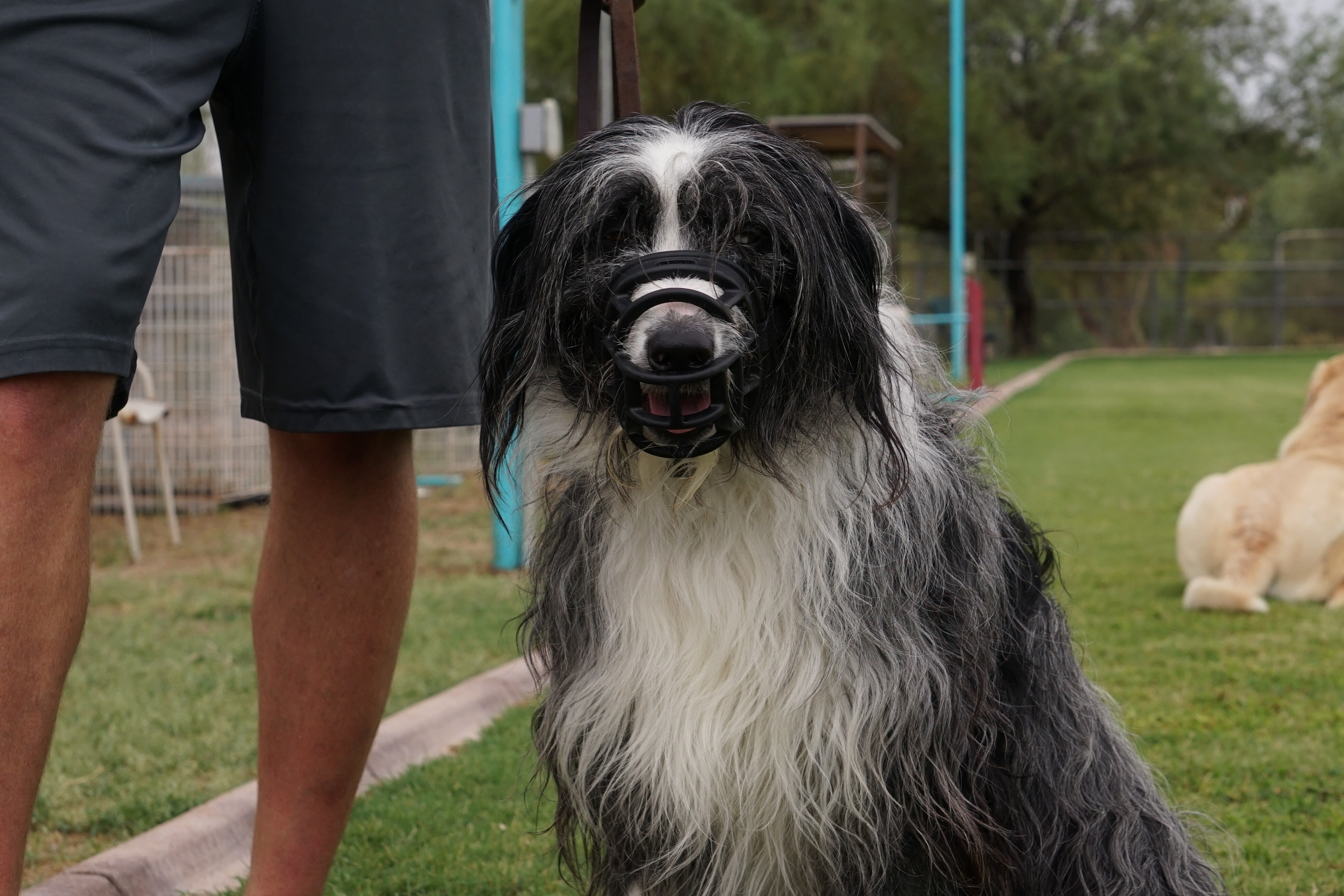
That is the gap Holly M. from Cave Creek closed by switching formats. Her dog is reactive to unfamiliar dogs, and she had already worked with a private trainer at home before trying Partners Dogs' facility-based lessons.
"After just a few private lessons with Meghan we are already seeing great results. There are always a lot of dogs there, which is great for working on reactivity. But at the same time, it doesn't feel 'swamped' and there are plenty of areas to work one-on-one as well."
Holly M., Cave Creek
A weekly cadence adds up slowly too. Kelly M. from Scottsdale describes that ceiling from a different weekly program before finding Partners Dogs.
"The training I took her too (not Partners) became exhausting for us as it was one hour a week class. Sparr wasn't making any progress on her anxious behaviors."
Kelly M., Scottsdale
One hour a week is not a skill problem in the trainer; it is a volume problem in the format.
For a leash-reactive dog specifically, what closes the gap is supervised reps around real distraction: other dogs at a distance, foot traffic, a doorbell that rings without warning. The leash reactivity behavior guide covers what that staged exposure looks like in more depth.
How the Skill Gets Home, Either Way
Anyone arguing for an in-home trainer has one strong point: whatever your dog learns has to work in your house, not just in a training room. That is true, and this piece is not trying to talk you out of it. The question that matters is whether facility-based private lessons skip that step, and they do not. Every plan includes handoff coaching so what your dog practices in a controlled space transfers to your own front door, your own leash, your own routine.
Melanie L. put it simply after private lessons with a Partners Dogs instructor.
"I took my pup here for private lessons with Emily and she was amazing. She helped our issue of pulling on the leash and even worked on a few more things with us as well."
Melanie L., Cave Creek
The lesson happened at the facility; the fix showed up on her own walks. That is the design, not a lucky outcome: structured practice around distraction first, then a specific plan for carrying it home, instead of asking a family to bridge that gap on their own.
Match the format to the dog
Scope the Reactivity First
A PD360 Assessment scopes how serious the reactivity is before you commit to a format, so the plan matches the dog in front of you.
What Drives the Cost of Each Format
Neither format is free, and the clearest way to compare them is by what drives the price, not a single number that goes stale the moment rates change. An in-home trainer bills for travel time on top of the session itself, and can typically only fit a handful of appointments into one day once drive time between houses is factored in. That cost structure tends to push the per-visit rate higher than a facility session, where overhead is shared across many families using the same space and staff on the same day.
The other cost that matters is total sessions needed, not the price of a single visit. A format that adds more reps per week, more handlers, and more real-world distraction per session can close the gap in fewer total visits than a once-a-week home appointment, even if the per-visit price looks similar on paper. Current rates for Private Lessons and every other Partners Dogs program are posted on the pricing page, since numbers shift and a blog post is a poor place to keep them current.
Reactivity is triggered by things a living room cannot reproduce: another dog rounding a corner in Cave Creek, a jogger appearing fast on a trail, a stranger at the door. Working the trigger only where the trigger cannot show up teaches calm in the wrong context. That is the dividing line this whole comparison comes down to: a narrow, stable, low-stakes habit travels well with an in-home trainer. Reactivity and safety concerns need the multi-trainer team, the around-the-clock staffing, and the purpose-built environment a facility is built to provide.
Key takeaways
- Private lessons happen at a Partners Dogs facility, where a reactive dog practices around real distraction instead of an empty living room.
- An in-home trainer bills for travel time on top of the session, which often pushes the per-visit rate above a facility session.
- Dog training is not a licensed profession, so checking a solo in-home trainer's insurance, backup coverage, and documented plan is worth doing before booking.
- Partners Dogs has trained 70,000+ dogs since 1997 with a staffed team, instead of one instructor carrying a case alone.
- A PD360 Assessment scopes how serious a dog's reactivity is before choosing between private lessons and an in-home trainer.
Frequently Asked Questions
Does Partners Dogs offer private lessons at my house?
In select cases, yes. Most private lessons happen at a Partners Dogs facility so a reactive dog can practice around distraction, but some instructors will come to a family's home for a specific session when that fits the plan better.
Is an in-home trainer usually cheaper than facility-based private lessons?
Not automatically. A mobile trainer bills for drive time on top of the session, which often pushes the per-visit rate above what a facility charges once overhead is shared across many families booked in the same space. The bigger cost factor is usually the total number of sessions a plan needs, not the price tag on a single visit.
Why did my dog behave for the trainer at home but not on a walk?
Behavior that only shows up in one environment usually means the dog learned to behave for one person, in one room, rather than learning the skill itself. Lasting change needs practice across different places, people, and distraction levels, which is why facility-based lessons build those variables in from the start.
Is an in-home trainer ever the right choice for a reactive dog?
Usually not for the reactivity itself, since the trigger a reactive dog needs to practice around rarely shows up inside a living room. Private Lessons with a Partners Dogs trainer can still be the right fit for a separate, narrow skill in a stable dog, just not as the primary plan for reactivity.
Do I need a PD360 Assessment before booking private lessons?
It is not required to book a private lesson, but for a reactive dog it is worth doing first. The assessment scopes how serious the reactivity is and points toward the right starting plan: private lessons, Behavior Camp, or another program, before you commit to anything.
Who offers dog training in Cave Creek that can handle a reactive dog?
Partners Dogs runs Private Lessons at its Cave Creek facility, where a reactive dog practices around real distraction, more than one handler, and a plan for carrying the skill past the front door. A PD360 Assessment is the fastest way to scope how serious the reactivity is before picking a starting plan.