In short
Most dog behavior problems respond to the same three-step framework: correction, patterning, and reward. Interrupt the wrong choice before it finishes, replace it with a behavior your dog can do instead, and reward that new choice until it becomes automatic. Partners Dogs trainers across the North Phoenix area have used this structure with more than 70,000 dogs.
Why Dog Behavior Problems Keep Coming Back
Jumping on guests, chewing the furniture, bolting out the door, pulling on the leash. They feel like separate emergencies when you are living with them, but nearly every one of them traces back to one of two places.
Breeding. It is not a comfortable subject, but a meaningful share of the behavior issues we see start with poor breeding decisions made long before the dog reached your house. Temperament is inherited, and no amount of good intentions erases that starting point.
A lack of structure. This is the far more common cause. We love our dogs, so we let things slide. The one time on the couch becomes the couch being his. The one skipped correction becomes a habit. None of it is malicious, and all of it compounds.
Spoiling your dog is not the problem. Spoiling your dog for free is. Your dog can absolutely have the couch, the bone, the affection, and the freedom. He just needs to do something to earn them, because that is what keeps you relevant in his eyes. If you are not sure which of the two is driving your dog's specific behavior, a PD360 Assessment is built to find out before you guess your way through a fix.
The Only Training Equipment You Actually Need
Before training, people want to know what to buy. The right gear depends entirely on the dog in front of us, so we fit collars and leashes with clients individually during Private Lessons rather than by recipe.
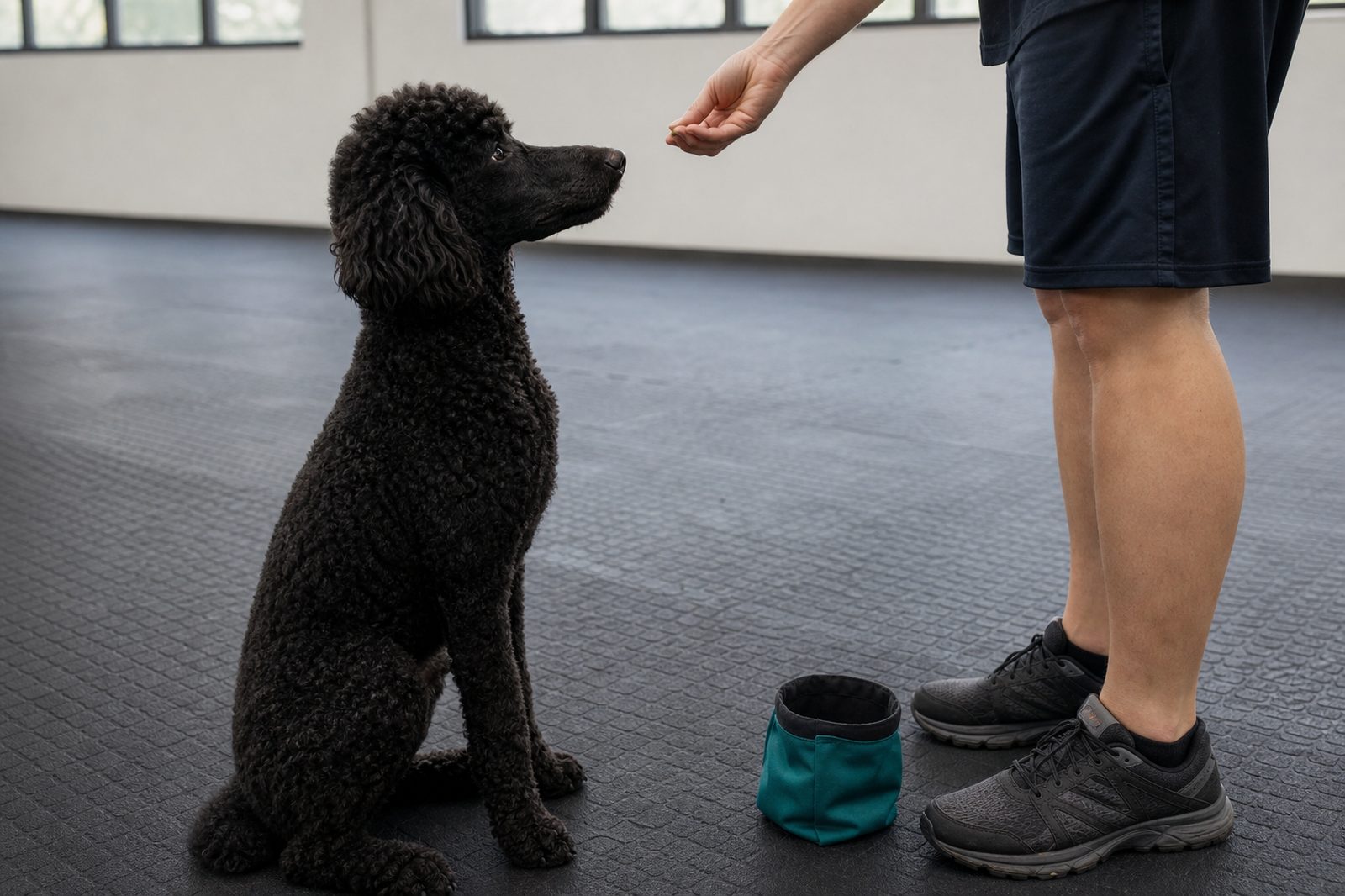
What we can tell you generally: use a sturdy six foot leash and a reward your dog genuinely cares about. Your dog's own kibble is the most overlooked reward there is. Feeding meals through training makes him work for his food and makes you more valuable, and a slightly hungry dog is a more willing dog. For harder moments, a higher value food or a ball or tug gives you more to work with. Keep rewards in a pouch, because slow delivery ruins good timing.
One flat rule: a harness is designed for pulling, so if your dog pulls in a harness, the equipment is working against you.
Step One: Correct the Behavior Before It Finishes
To stop a behavior, your dog has to learn that it does not work. But the goal is not to correct the behavior as it happens, or worse, after it is finished. The goal is to correct it before it starts or before it escalates. That means your timing and your ability to read the triggers have to be sharp.
Here is what that looks like in practice. Say your dog lunges whenever he sees another dog on a walk, an everyday version of leash pulling under pressure. Knowing that, you walk looking for the trigger rather than reacting to it. The moment you spot another dog, your attention goes to your own dog. The second his head comes up and he locks on, you correct and immediately flood him with obedience: heel, sit, down, stay, watch, resets, anything that puts his attention on you instead of on the trigger.
- Stopping an unwanted behavior requires actually addressing it, not just hoping it fades on its own.
- Keep your own emotions out of the correction. Tension travels straight down the leash, your dog feeds off it, and an anxious handler can trigger the exact reaction they were bracing for.
Next step
Find Out Which Root Cause You're Actually Dealing With
A correction only works if it is aimed at the right thing. A PD360 Assessment maps your dog's specific triggers and gaps before you build a plan around them.
Step Two: Pattern the Right Response
Correcting the same behavior over and over is exhausting and it teaches your dog very little. Once you have interrupted the wrong choice, you need to give him a right one and repeat it until it becomes the default.
Take a dog who destroys the house whenever you leave, a classic case of destructive chewing. Correcting the chewing after the fact accomplishes nothing, since your dog cannot connect your reaction to a decision he made hours earlier. Instead, crate him while you are gone and give him a bone or an appropriate chew toy. The chewing drive is real and it needs somewhere to go, so you point it at something he is allowed to have. That is patterning: replacing the behavior rather than just suppressing it. The same logic applies to a dog who bolts out the door the second it opens. You cannot correct your way out of a habit without also patterning the calmer alternative you actually want in its place.
Step Three: Reward What You Want to See Again
You have interrupted the wrong choice and redirected into a right one. Now pay for it.
Imagine your dog jumps on every new guest. You know it is coming, so as he starts to load up you correct and redirect him into a sit. The instant he sits, mark it with a bright marker word and reward. That is what turns a redirected behavior into a reliable one.
It cannot be a one time thing. The next time a guest arrives and your dog does not jump at all, reward that even more heavily, because you are paying for a decision he made on his own. Just watch the intensity of your reward. If your celebration winds him up enough to launch him back at the guest, dial it down.
Putting the Three Steps Together
Correction, patterning, and reward form one sequence, not three separate tactics. A jumping problem, a chewing problem, and a door bolting problem all get solved by running the same structure, just aimed at different triggers. It is the framework our trainers have used with more than 70,000 dogs since our Cave Creek campus opened its doors in 1997, now alongside a second campus in Scottsdale.
The three steps are simple to describe and genuinely hard to execute well, because almost all of the difficulty lives in timing and in reading your dog accurately in the moment. That is the part a trainer accelerates most, and it is why most Pet Parents get further, faster, with a second set of trained eyes on the leash.
Frequently asked questions
What are the three steps to solving a dog behavior problem?
Correction, patterning, and reward. You interrupt the wrong choice before it finishes or escalates, replace it with a specific right choice your dog can do instead, and reward that right choice consistently until it becomes the default response.
Why do dogs develop behavior problems in the first place?
Most behavior problems trace back to one of two places: inherited temperament from breeding, or a lack of consistent structure at home. Structure is the far more common cause, since small inconsistencies, like the one time on the couch or the one skipped correction, compound into habits over time.
What training equipment do I actually need to get started?
A sturdy six foot leash and a reward your dog genuinely cares about, often just their own kibble delivered from a treat pouch for good timing. The right collar depends on the individual dog, which is why gear gets fit one dog at a time rather than off a generic list. A harness is designed for pulling, so a dog that pulls in a harness is working against the equipment, not with it.
Should I correct my dog for a behavior problem after it already happened?
No. A correction only teaches your dog something if it lands before the behavior starts or right as it escalates. Correcting after the fact, especially minutes or hours later, does not connect to the decision your dog made in the moment and teaches nothing.
Can I fix a dog behavior problem on my own, or do I need a trainer?
Many Pet Parents can apply this framework on their own once they know it. Where most people get stuck is timing and accurately reading their dog's triggers in real time, which is exactly what a trainer is trained to see. A PD360 Assessment is a good way to find out which root cause you are dealing with before you build a plan around it.
Ready when you are
Turn the Framework Into a Plan You Don't Have to Run Alone
Correction, patterning, and reward move faster with a trainer reading your dog's timing for you. Foundation Camp and Behavior Camp both build the structure this method depends on.
Keep reading