In short
Loose-leash walking is a trainable skill, not a fixed personality trait. Stop moving the moment the leash goes tight, reward your dog for choosing to walk near you, and practice during Scottsdale's cooler morning and evening hours so the habit holds up on real neighborhood walks.
Why Arizona Walks Feel So Hard on Leash
Ask a room of Scottsdale dog owners what frustrates them most about walks, and pulling on the leash lands near the top of the list. Getting towed down sun-baked sidewalks or yanked toward every bush, jackrabbit, and passing dog is exhausting, and it gets riskier once hot or slick pavement is involved. Pulling happens because it works: every time your dog leans into the leash and the world keeps moving forward, that behavior gets rewarded. Repeat that pattern a few hundred times and pulling becomes the default response, not a personality flaw.
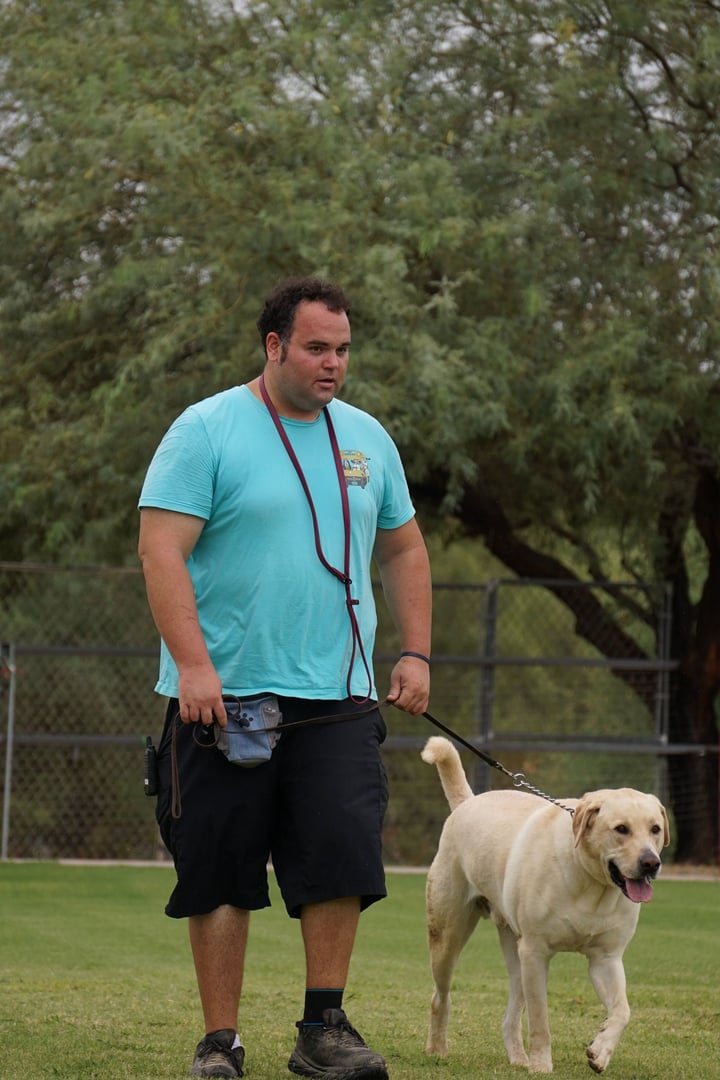
Loose-leash walking is not a rigid competition heel. The goal is a relaxed bubble where your dog can move, sniff, and be a dog while keeping slack in the leash and checking in with you regularly. That balance matters most in Scottsdale and Cave Creek neighborhoods, where you are also steering around hot asphalt, cactus, and the occasional jackrabbit while still letting your dog enjoy the walk.
The Loose-Leash Walking Protocol
Loose-leash walking breaks down into four teachable steps: position, paychecks, the tight-leash stop, and gradual distraction. Work through them in order, starting somewhere calm, before you take the show on the road.
- Warm up somewhere boring. On a shaded patio, in the garage, or in your living room, feed a few treats for your dog standing calmly at your side before you ever reach for the door. This teaches your dog that being near you with a loose line already pays.
- Pick a side and pay for it. Choose left or right, let the leash hang in a relaxed J shape, and lure your dog into that position with a treat. Take one step; if the leash stays loose, mark it with a cheerful "yes" and feed again at your hip.
- Stop the moment the leash goes tight. Right now, pulling is working: every forward step brings new smells. Change that by planting your feet the instant your dog hits the end of the leash. Wait. The second they turn back toward you or slacken the line, mark and move again.
- Add real-world variety in small doses. Turn corners, weave around mailboxes, and change pace so your dog learns to track you instead of paving a groove straight down the sidewalk. Keep early sessions to five or ten minutes and end while you are both still winning.
Real-World Scottsdale Walking Routines That Last
Training does not end once your dog can walk nicely down a quiet block. Build the skill into a routine that survives real Arizona conditions.
- Anchor training walks to the cooler hours. Sunrise and after sunset both put less heat in the pavement and usually mean fewer distractions. Treat these as practice sessions, not just bathroom breaks, and bring treats every time.
- Swap a second walk for indoor enrichment on triple-digit days. One well-trained walk beats two rushed ones on a scorching afternoon, and it protects your dog's paws.
- Build in sniff breaks on purpose. Use a release cue like "go sniff" for a short, controlled wander, then cue "let's walk" and return to loose-leash position. Alternating structure with real freedom makes dogs more willing to focus when you ask.
- Plan for setbacks. Monsoon thunder, a new dog on the block, or a stretch of missed practice can undo progress temporarily. When that happens, shorten the route, raise your treat value, and go back to quieter streets until the habit rebuilds.
If your dog lunges or barks at another dog or a delivery truck mid-walk, give yourself space. Cross the street, step into a driveway, or turn around rather than muscling through it. That is a different problem than leash pulling, and it is worth working on separately with the right program.
Next step
Not sure if this is a training fix or a bigger behavior issue
A PD360 assessment gives you a clear read on what is actually driving the pulling, whether it is excitement, undersocialization, or something that needs a structured program, before you spend weeks guessing.
When a Walk Needs More Than a Leash Tweak
Pulling on the leash and reacting to another dog are related but not identical problems, and they get solved differently. If pulling is the main event and your dog is otherwise calm on the walk, the protocol above is usually enough with consistent daily practice. The dedicated guide on how to stop leash pulling covers the same ground in more depth if you want a deeper troubleshooting pass.
If pulling shows up alongside lunging, barking, or freezing at specific triggers, that is a different conversation than a loose-leash tune-up. Foundation Camp gives your dog 14 nights of focused, in-house practice on foundational obedience, with follow-up coaching so the skills transfer back to your own Scottsdale sidewalks. If you would rather work in your own neighborhood with a trainer at your side, private lessons let a trainer walk your actual route with you and correct your handling in real time.
Frequently asked questions
Is loose-leash walking the same as a heel command?
No. A heel asks your dog to stay glued to your leg and watch your face the whole time, which is useful for short stretches near traffic but exhausting to hold for a full walk. Loose-leash walking is more relaxed: your dog can move within the length of the leash and sniff, as long as the leash itself stays slack and they check in with you regularly.
How long does it take to stop a dog from pulling on the leash?
It depends on the dog and how consistently you practice, but many families see a real shift within a few consistent weeks of short, daily practice sessions. Dogs that have pulled successfully for years usually take longer to unlearn the habit than a young dog just starting out.
What is the best time of day to walk a dog in Scottsdale during the summer?
Early morning around sunrise and after sunset both keep pavement temperatures lower and cut down on midday heat stress. On triple-digit days, treat a shorter walk at one of those windows as the main event and use indoor enrichment to fill the rest of the day instead of a second hot-pavement loop.
What if my dog only pulls toward other dogs, not the whole walk?
That points toward reactivity rather than a general pulling habit, and it usually needs a different approach: creating distance from triggers, building calm associations, and sometimes structured, hands-on coaching. If that pattern sounds familiar, it is worth having a trainer assess your dog directly rather than continuing to troubleshoot it alone on the sidewalk.
Do I need special equipment to teach loose-leash walking?
A sturdy four to six foot leash and a well-fitted harness or collar are enough to get started. What matters more than the gear is consistency: stopping every time the leash goes tight and rewarding your dog generously for choosing to walk near you.
Ready for hands-on help
Get real walking skills, not just less pulling
Foundation Camp builds the obedience skills that make loose-leash walking automatic, then hands you the follow-up coaching to keep it going at home. If bigger behavior issues are part of the picture, Behavior Camp addresses those directly.
Keep reading