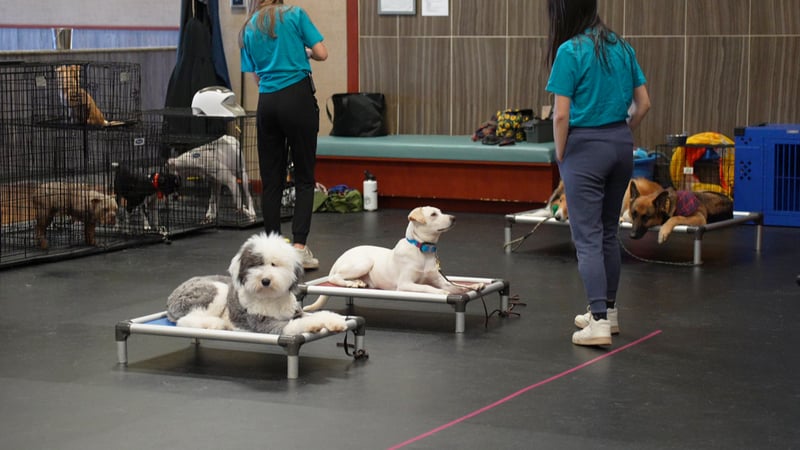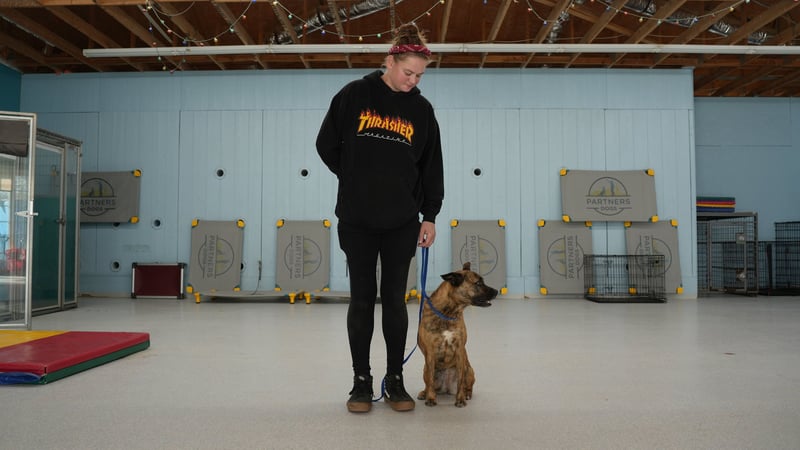
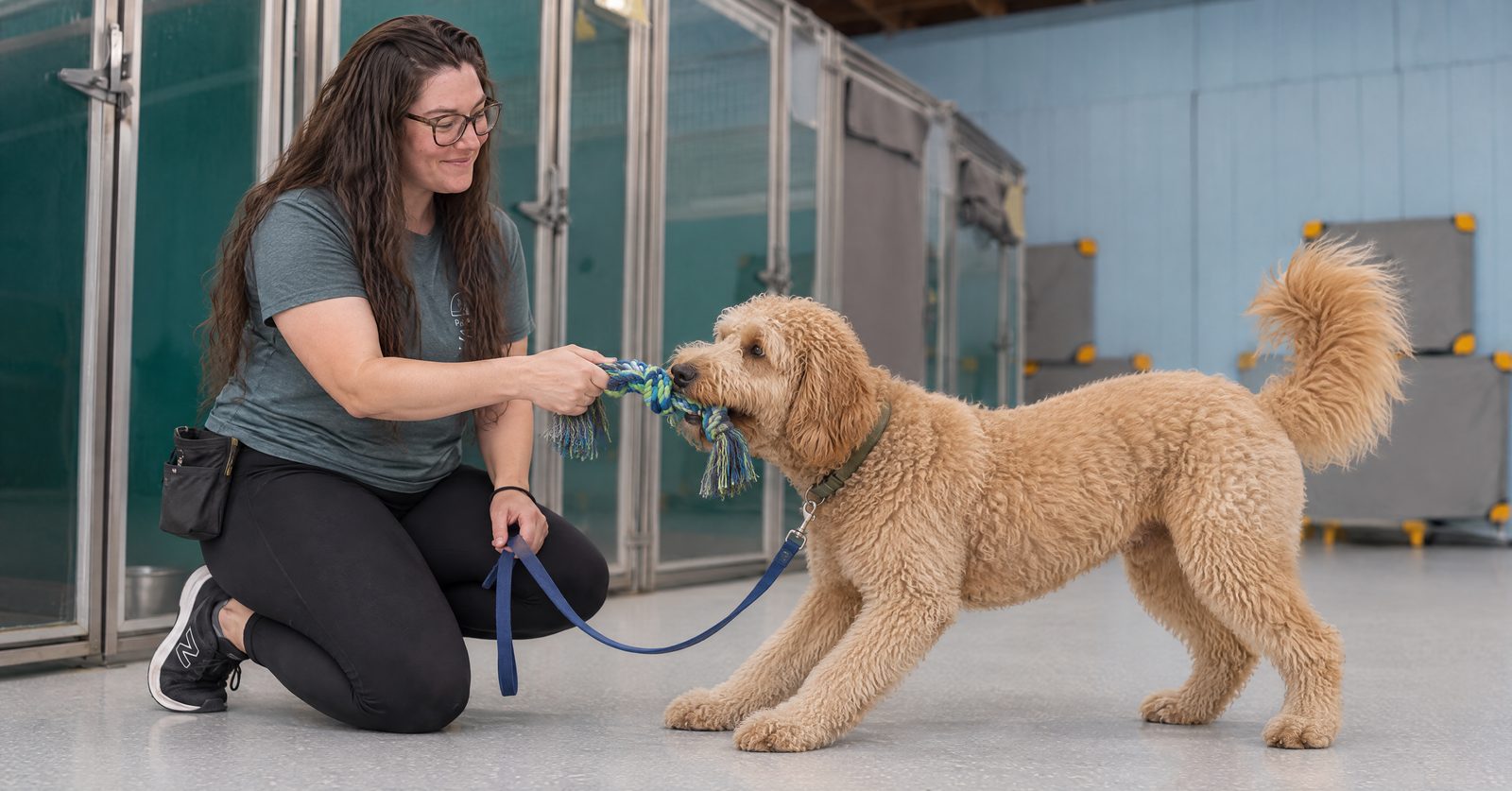
What you need to know
Your puppy will stop biting when the teeth do their job and the training does yours: fun and attention disappear the instant teeth touch skin, every single time, while you redirect to an acceptable default.
- Puppy biting is normal: exploration, teething, and play. Mouthy puppies are not aggressive puppies.
- Teeth on skin means every good thing stops. Go still. Leave for 20 to 30 seconds. Stay calm.
- Redirect to a default: teach the puppy what wins (toy, chew, sit) so the mouth has a legal job.
- The biting fades as teething finishes (about 6 to 8 months) and training compounds. No fixed date exists.
Your puppy grabs your hand with those needle teeth, and the first thought is: is something wrong with this dog? Nothing is wrong. Nobody brings home a puppy dreaming of bandaged hands. Puppy biting and mouthing are how young dogs explore the world, survive teething, and start every game they know. The biting stops when two things happen: the adult teeth finish coming in, and you train through the window instead of waiting it out. For the framework behind every term below, see our methodology.
Why does my puppy bite so much?
The short version: your puppy bites because a mouth is the only tool it has.
Three drivers run almost all puppy biting:
Exploration. Puppies test the world with their mouths the way a toddler tests it with fingers: hands, pant legs, shoe laces, the rug.
Teething. Puppies grow 28 baby teeth, then shed them for 42 adult teeth. Baby teeth are fully in by about 6 weeks, start falling out around 12 to 16 weeks, and the full adult set is in place by about 6 to 8 months (AKC, retrieved 2026-09-16). During the swap, sore gums drive chewing and mouthing hard. This is the peak land-shark window.
Play. Play is physical, and mouthing is how puppies play with littermates. Your hands look like a teammate.
None of this is aggression. Aggression is stiff, hard-eyed, and escalating. Mouthing is loose, bouncy, and aimed at whatever moves. Read the body, not the teeth. This is the first read a trainer makes on a PD360 Assessment day when the complaint is biting: body language before teeth, because the mouth is never the whole story.
What rule actually stops puppy biting?
The short version: teeth on skin, and every good thing stops. Every time.
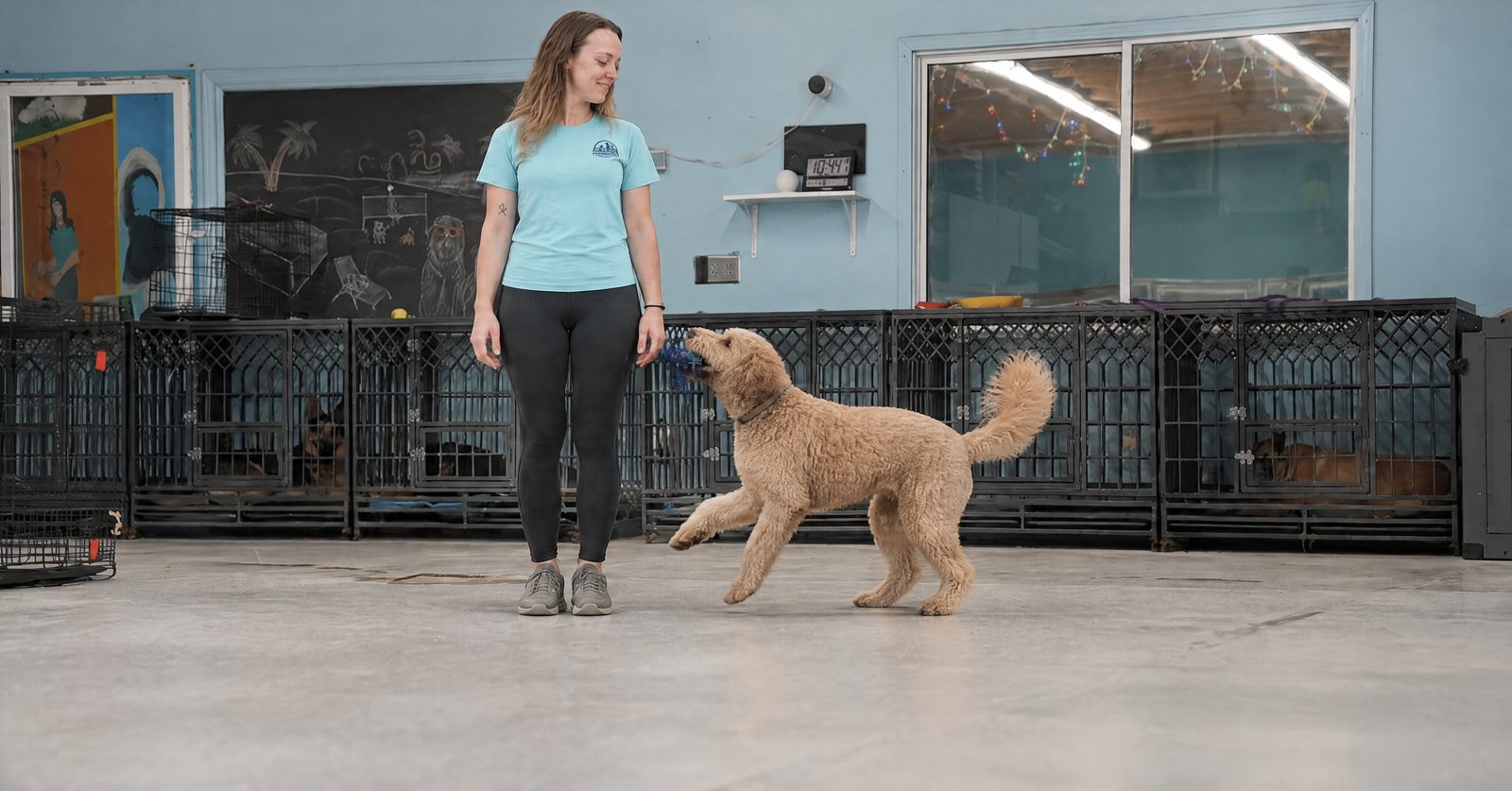
You go still and silent. If the puppy keeps biting, you calmly leave the room for 20 to 30 seconds. No drama, no lecture.
This is the Teaching stage: low distraction, one clear lesson, repeated until it is obvious. The pattern you want installed: teeth on human skin buys nothing, ever.
Consistency is the entire game. If teeth earn a reaction from your kids but cost attention with you, the puppy learns the household is a slot machine and keeps pulling the lever. One family meeting solves most of the failures we see.
Teeth on skin means the game ends. Every time. No exceptions. That sentence is the whole training plan.
Stated plainly on balance: fair, well-timed correction is a legitimate part of training adult dogs. It is never the starting point with a young puppy in the Teaching stage. A puppy that has never been taught the alternative cannot learn from a correction. Build the understanding first.
How does the redirect protocol work?
The short version: stop the old behavior, then hand the puppy a legal job for its mouth.
Removing the paycheck ends the biting. Installing a default response ends it permanently. A default response is the behavior a dog offers automatically when it does not know what to do. Run this protocol exactly, every time:
- Go still and silent. The instant teeth touch skin, freeze. No yelp, no fast hands. Movement is a reward to a puppy built for chase.
- Remove yourself for 20 to 30 seconds. Step over a baby gate or out of the room. Calm. The timeout is boring, not scary.
- Return and redirect to the default. Hand the puppy a rope toy, a chew, or ask for a trained sit and pay it with a treat.
- Reward the mouth-off moments. When your puppy chooses the toy or licks instead of biting, pay that. Mark it with your marker word.
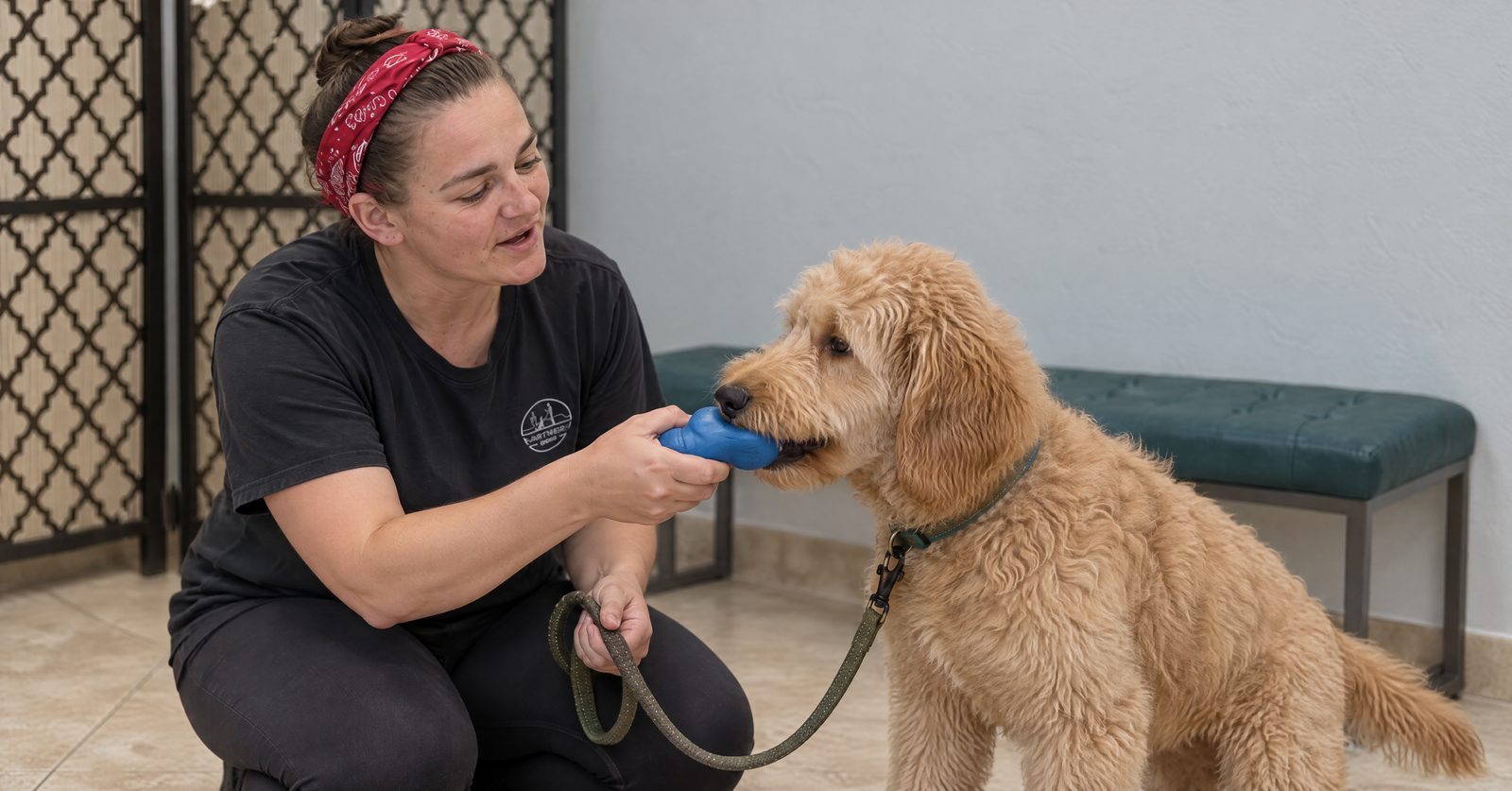
For the classic puppy-mouthing-hands pattern, redirect before the bite lands: the crouch, the stare at your moving hand, the pounce. Present the toy first and make it more fun than the hand.
If the biting spikes at the same time every evening, the puppy is probably overtired. A wired puppy that cannot settle needs a nap, not more training.
What should you NOT do when your puppy bites?
The short version: anything that scares or excites the puppy teaches nothing about the mouth.
- Do not yell. Yelling is arousal. To an overexcited puppy, a loud owner looks like the best part of the game.
- Do not tap or hit the nose. Pain from a hand teaches the puppy that hands near the face are dangerous. That trade buys you a mouth-shy adult with a worse problem than biting.
- Do not alpha roll the puppy. Pinning a puppy on its back is intimidation, not communication. It teaches the puppy that bigger creatures grab it, which is raw material for fear-based reactions later.
- Do not hold the muzzle shut. The puppy learns hands on the face mean trouble, and learns nothing about what the mouth should do instead.
- Do not play rough hand games. Wrestling with bare hands, then punishing the mouth, is a rigged game. Play with toys. Keep your hands for petting and paying.
All five fail for the same reason: they add arousal or fear without installing the alternative behavior. The puppy learns the owner is loud or scary, and keeps biting anyway. The game never ended.
When does the biting stop?
The short version: it fades as the teeth settle and the training compounds, not on a fixed date.
Honest timeline first: there is no day the biting just ends. What the sources agree on, in ranges:
- The adult teeth are fully in by about 6 to 8 months (AKC, retrieved 2026-09-16). Most puppies ease their chomping once teething is done (Rover, retrieved 2026-09-16).
- The exploratory biting phase runs to about 8 to 10 months, and owners who train young typically see the habit shift after a year (Dr. Jordan Beauchamp, DVM, via Rover, retrieved 2026-09-16).
Two forces decide where your puppy lands in that range. Teething is the floor: sore gums drive mouthing no matter what you do, so the peak window around 12 to 20 weeks is the hardest stretch. Training is the ceiling: puppies do not simply outgrow biting without guidance. Teeth settle the urge. Training settles the habit. For the full first-16-weeks sequence, see our puppy training timeline.
Expect the worst of it between roughly 3 and 6 months, clear improvement as the adult teeth land, and a mostly mouth-free dog by the first birthday if you held the line. If a 10-month-old still bites with the same intensity as at 4 months, the training did not land or something else is driving it.
When is puppy biting NOT normal?
The short version: normal biting is loose, bouncy, and playful. Anything else gets a professional assessment.
Puppy biting crosses the line from developmental to diagnostic when you see any of these:
- Escalating intensity. The biting gets harder week over week instead of softer, despite consistent still-and-remove work.
- Guarding. The puppy bites when you reach for food, toys, or a resting spot. That is possession behavior, not play, and it needs a different plan. See our guide on resource guarding in dogs.
- Fear or freeze. Biting that comes with a tucked tail, cowering, freezing, or snapping when cornered. Fear-driven biting is a different case, and the protocol above does not apply.
- Targeting kids or vulnerable people. A puppy that cannot be managed around children is a safety case, not a waiting case.
This is the assessment gate: if the biting is escalating, hard-eyed, guarding-driven, or fear-driven, book a PD360 Assessment instead of grinding the protocol harder. A senior trainer reads the dog across nine dimensions and tells you honestly what you are looking at.
One medical note: pain, ear infections, and retained baby teeth (a baby tooth that never fell out beside the adult tooth) can make a puppy mouthier or more reactive to handling. If the biting spikes suddenly or the puppy cries when the mouth is touched, see your vet. We partner with your vet on medic factors; no article replaces that exam.
What myths about puppy biting get it wrong?
| Myth | Fact |
|---|---|
| Puppies grow out of biting on their own. | The urge fades with maturity and teething. The habit fades only with training. |
| A puppy that bites will become an aggressive dog. | Normal puppy mouthing is loose, bouncy play. Real aggression shows as stiffness, hard stares, and escalation: a different case entirely. |
| Yelling "no" teaches the puppy to stop. | Yelling adds arousal, the fuel biting runs on. The puppy learns the owner is loud, not that the mouth is the problem. |
| You should let the puppy "mouth gently" to learn bite inhibition. | Bite inhibition is real, but the end goal is no teeth on skin. Teach jaw control through toys and chews, then hold the line. |
| Biting means the puppy is dominant or disrespectful. | Biting means the puppy is a puppy: exploration, teething, play. Framing it as defiance pushes owners toward confrontational fixes that do not work. |
What mistakes make biting worse?
- Inconsistent households. One person enforces the rule, another lets the puppy chew on fingers "because it is cute." Biting that pays half the time is a behavior the puppy keeps.
- Chasing a biting puppy. Running looks exactly like the game it wanted. Stand still, remove yourself, return boring.
- Punishing after the fact. A correction two minutes later connects to whatever the puppy is doing now. The consequence has to land within a second of the teeth.
- Skipping the redirect. Stopping the bite without teaching a default leaves the puppy with no legal job for its mouth. It invents one, usually worse.
- Only training when it is bad. Practice the toy redirect and the rewarded sit when the puppy is calm, so the default is fluent before excitement spikes. For keeping early work low-pressure, see puppy fear periods.
Next step
Match the program to the dog
Normal mouthing or something more? Escalating intensity, guarding, or fear-driven biting is not a puppy phase: a PD360 Assessment puts a senior trainer on the case to read what is driving it and match the program to the dog. For normal mouthing, puppy group instruction trains the still-and-remove protocol with professional guidance, so your whole household holds the same line.
Key takeaways
Key takeaways
- Puppy biting is normal: exploration, teething (28 baby teeth swapped for 42 adults), and play. It is not aggression.
- The method: teeth on skin and all fun stops. Go still, remove yourself for 20 to 30 seconds, stay calm.
- Redirect to a default: teach the puppy what wins (toy, chew, sit). Teaching-stage work at low distraction.
- Consistency across every person in the house is the whole game.
- Yelling, nose-tapping, muzzle-holding, and alpha rolls add arousal or fear and install nothing.
- The biting fades as teething finishes (about 6 to 8 months) and training compounds, not on a fixed date. Escalating, guarding, or fear-driven biting gets a professional assessment, not a longer wait.
Frequently Asked Questions
When do puppies stop biting?
Most puppies ease their biting once the adult teeth are in, around 6 to 8 months, with the exploratory phase winding down by 8 to 10 months. Teeth alone do not end the habit. Puppies trained through the window stop far sooner than puppies that are simply waited out.
Is my puppy being aggressive when it bites me?
No. Normal puppy biting is loose, bouncy, and playful. Aggression looks different: stiff body, hard stare, growling over resources, or snapping when cornered. See reactive dog vs aggressive dog for the full tell list. If it looks like aggression, get a professional assessment.
Why does my puppy bite my hands when I pet it?
Moving hands look like play. Go still the instant teeth touch skin, end the petting, and redirect to a toy. Pet for three seconds, then pause. Only keep petting while the mouth stays off, and pay the calm moments with a treat.
Should I yell no or tap my puppy's nose to stop the biting?
No to both. Yelling adds arousal, which fuels biting, and nose-tapping teaches the puppy that hands near the face are dangerous. Neither installs the alternative behavior. The working protocol: go still, remove attention for 20 to 30 seconds, redirect to a legal default, reward the calm choice.
What is the first step if the biting will not stop?
Start with Pre-School Puppy, where trainers install the protocol with your whole household: the student in a biting case is not just the puppy, it is the family around it. If the biting is escalating, tied to guarding food or toys, or comes with fear or freezing, the first step is the PD360 Assessment instead, so a senior trainer can read what is actually driving it.
Where to go from here
The biting window is short, and the habits built inside it are long. Train the protocol now, hold the line with every person in the house, and the teeth land on a puppy that already knows the rules. If the biting looks wrong instead of young, let a senior trainer read the dog before you guess.
Scottsdale: 8642 E Shea Blvd, 85260. Cave Creek: 4640 E Forest Pleasant Pl, 85331. Serving the Phoenix Valley.