The short answer
Yes. Start socializing your puppy before the vaccination series is finished, but keep every exposure inside trusted, controlled settings with dogs you know are healthy and vaccinated.
- AVSAB's position: the first three months are the prime socialization window; puppies should be socialized before they are fully vaccinated, with classes from 7-8 weeks.
- AVSAB's conditions: current vaccines, parasite-free puppies, disinfected indoor surfaces, no dog parks.
- Partners' answer: agree on early, answer on venue. Trusted circles from 8 weeks; group classes at 20 weeks.
- The disease facts: parvo spreads via feces and surfaces and survives months; maternal antibodies can block early vaccines, so the series runs to 16+ weeks.
This is for Pet Parents in Scottsdale and Cave Creek with an 8-week-old puppy and two conflicting instructions. AVSAB answers with controlled classes from 7-8 weeks; we answer with trusted circles from 8 weeks and group classes at 20 weeks. Below: AVSAB's position quoted fairly, then our answer and the exact plan. Want a professional read on your puppy first? Start with a PD360 Assessment.
What does AVSAB say, and where does Partners differ?
The AVSAB puppy socialization position, in their words. From the Position Statement on Puppy Socialization (© 2008; retrieved 2026-09-16):
- The window: "The primary and most important time for puppy socialization is the first three months of life."
- The recommendation: "The American Veterinary Society of Animal Behavior believes that it should be the standard of care for puppies to receive such socialization before they are fully vaccinated," with classes from 7-8 weeks (one vaccine set 7+ days prior, plus deworming).
- The risk calculus: with maternal immunity, primary vaccination, and appropriate care, AVSAB calls infection risk "relatively small" next to the risk of death from a behavior problem. It also claims behavior issues are the top cause of death for dogs under three, uncited.
- The safety conditions: puppies current on vaccines and parasite-free, disinfected indoor surfaces, no dog parks.
Where we answer. Our position: socialize as early as possible inside trusted circles of known, healthy family and friend dogs; group classes at 20 weeks, once the series is behind the puppy. Nothing here keeps a puppy in a bubble; letting young puppies mix freely with unknown, unvaccinated dogs raises disease risk. Early AND safe.
Safety is conditional. AVSAB makes early classes safe only when every puppy is current on vaccines and parasite-free, surfaces are disinfected indoors, and dog parks are off the table. A class of 8-week-old puppies from unknown households is not the controlled setting the statement describes. Trust is the control.
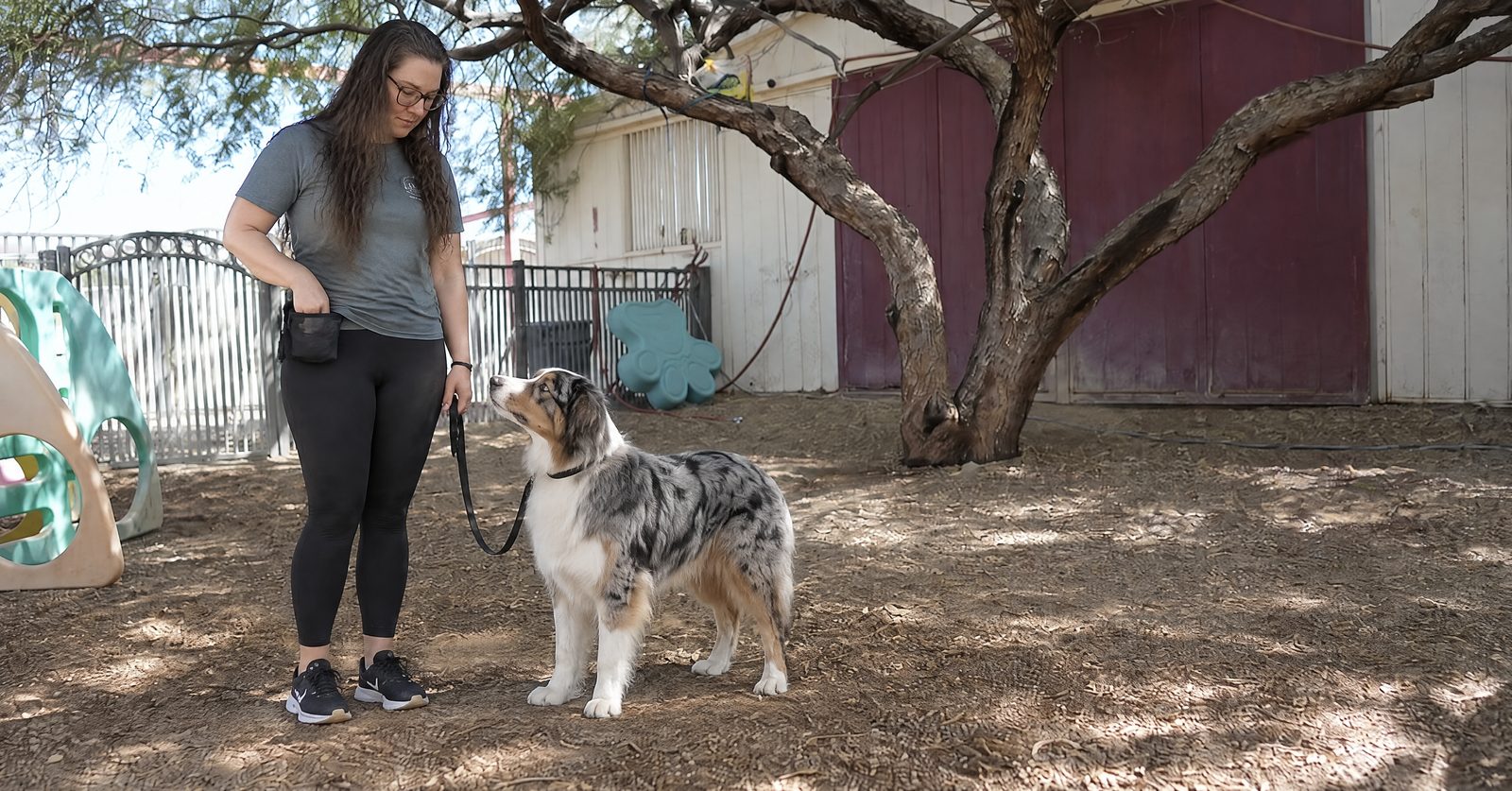
Think of it like a swimming lesson. A lifeguarded pool with an instructor who knows your kid is not the same as a crowded lake, even though both are water.
The disease ledger deserves equal weight. AVSAB is a veterinary behavior organization; its members treat the fallout of missed socialization daily, so the statement leans on the behavior-risk side. Legitimate lens, real risk. But parvo spreads through infected feces and contaminated surfaces, the virus survives for months, and maternal antibodies can block the early vaccines a 7-8-week start depends on (Merck and WSAVA, below).
On method. Everything we teach runs on operant conditioning, with positive reinforcement as the primary method. Operant conditioning is how dogs learn from consequences: behaviors that pay off get repeated, and the four quadrants are the full toolkit (our methodology). Fair correction has its place after the alternative is understood; here, rewards carry the load. We are neither correction-free nor correction-first. (See also: AVSAB's humane training position, answered.)
Start early. Don't start everywhere.
What makes a young puppy vulnerable to disease?
The short version: maternal antibodies can block early vaccines, parvo spreads without dog-to-dog contact, and canine cough loves a crowd.
Maternal antibodies can block early vaccines. Per the Merck Veterinary Manual, they "may interfere with the effectiveness of vaccination in puppies < 8-10 weeks old." The WSAVA 2024 guidelines say they "interfere substantially" with early core vaccines, which is why the final dose comes "at 16 weeks of age or older." The shot your 8-week-old puppy got may not have taken yet.
Parvo spreads without dog-to-dog contact. The Merck Veterinary Manual calls it "a highly contagious, acute, infectious GI disease," acquired "through direct oral or nasal contact with virus-containing feces or indirectly through contact with virus-contaminated fomites." Infected dogs shed virus in feces within 4-5 days of exposure, often before showing signs. Infectious parvo "can persist indoors at room temperature for at least 2 months," outdoors "for many months and possibly years."
Canine cough loves a crowd of puppies. It "spreads rapidly among susceptible dogs housed in close confinement" (Merck), and "puppies [are] more prone to severe disease." It travels on droplets, direct contact, and contaminated objects (Texas A&M).
Puppy socialization before vaccinations: the safe way, step by step
- Start at home on day one. Handle paws, ears, mouth. Rotate surfaces: tile, carpet, grass, gravel. Run the vacuum, blender, doorbell. Keep sessions short and rewarding. UC Davis suggests 90 positive situations by 14 weeks; your living room covers the first twenty.
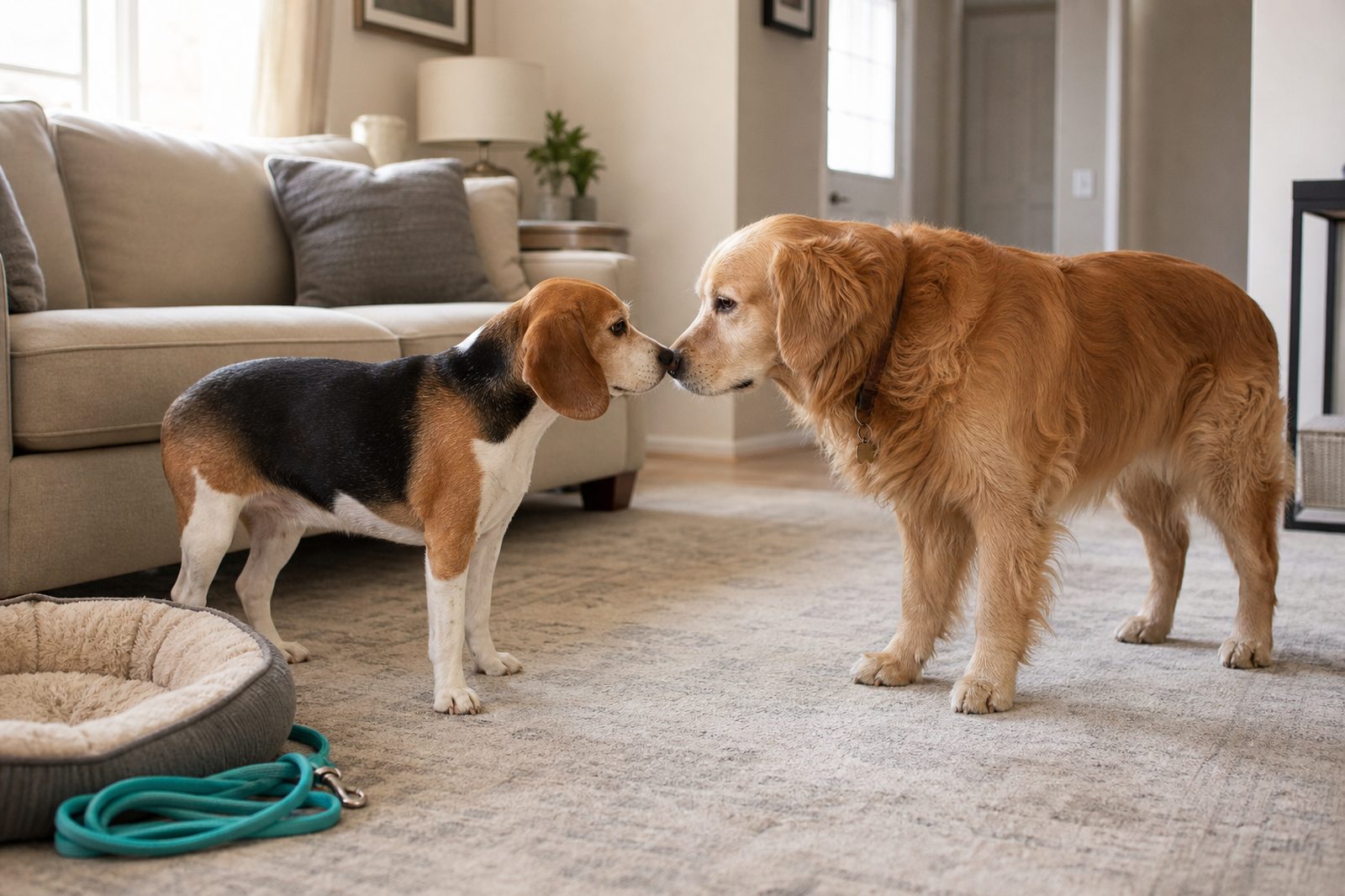
- Write down your trusted circle. Family and friend dogs you know are healthy and fully vaccinated, and good with puppies. A stranger's dog is not in the circle. Tell that circle the plan: short visits, no high-traffic outings, and the puppy goes home before anyone gets overexcited.
- Carry, don't walk. The puppy rides until the series is complete: your arms, a carrier, a stroller. New sights, sounds, and smells in; paws off unverifiable ground.
- Keep exposures short and positive. Pair new things with food, play, and praise. Loose and curious means continue; tucked tail, freezing, or frantic avoidance means add distance and end on a win.
- Practice the boring stuff. Crate time with a stuffed food toy. Car rides that end somewhere fun. Happy vet visits for treats and nothing else.
- Skip the high-traffic list. Dog parks, off-leash areas, pet-store floors, rest-stop grass, busy sidewalks: off limits until the series is done.
- Loop in your vet. Your vet knows your puppy's vaccine dates and local disease pressure.
When can my puppy join group classes?
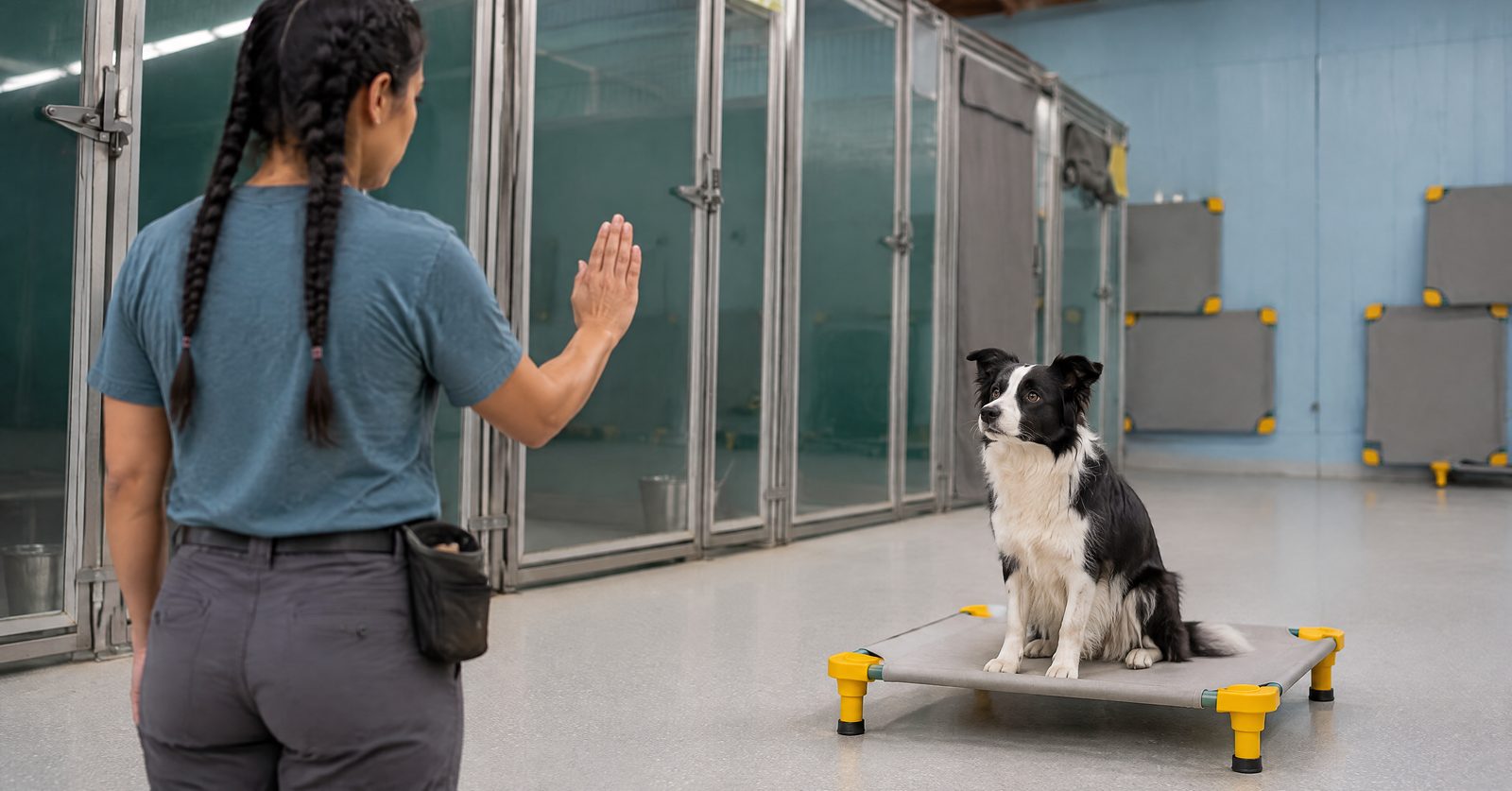
At Partners, group classes open at 20 weeks. By then the core series is complete (final dose at 16 weeks or older per WSAVA 2024) and the maternal-antibody window is behind the puppy. The puppy trains with known, vaccinated dogs in a sanitized facility.
Class runs on the same phase-based rhythm as everything we teach: teach, reinforce, proof, maintain. Group Classes and our Puppy Program are built for this handoff. Past 20 weeks? A PD360 Assessment shows the gaps.
A group class for a 20-week-old is not a puppy party. It is a structured school day in miniature: short teaching blocks where the puppy learns position and recall, supervised play where a trainer interrupts the bullying patterns before they rehearse, rest where the puppy learns to settle while the world moves around it. Teaching, play, rest, conditioning. The relationship gets built in real time, and the puppy goes home tired the honest way.
The safe puppy socialization schedule: birth to 20 weeks
The safe puppy socialization schedule in one view. Socialization is exposure with a plan.
| Age | Where | What |
|---|---|---|
| 3-8 weeks (breeder) | Whelping home | Handling from birth, littermates, household sounds and surfaces |
| 8-12 weeks | Home + trusted circle | Carried outings, dogs you know are healthy and vaccinated, short positive exposures, crate and car practice |
| 12-16 weeks | Widening trusted circle | More trusted environments, vet happy visits, grooming handling; no dog parks or high-traffic ground |
| 20 weeks | Group classes open | Vaccinated cohort, sanitized facility, structured skills with proofing |
| 20+ weeks | Everywhere, with judgment | Keep socializing through the first year; confidence needs maintenance |
Myth vs. fact
| Myth | Fact |
|---|---|
| AVSAB says early socialization is safe anywhere. | AVSAB makes safety conditional: current vaccines, parasite-free puppies, disinfected surfaces, no dog parks. We hold the statement to its own conditions. |
| Keeping a puppy home until 16 weeks ruins the dog. | Staying home is not the plan: early socialization inside trusted circles of dogs you know are healthy and vaccinated, from day one. |
| One or two rounds of shots means protection. | Maternal antibodies can block early vaccines, so the series runs to 16 weeks or older. One round begins it. The series completes it. |
| Parvo only spreads when dogs meet. | Parvo spreads through infected feces and contaminated surfaces and survives for months; infected dogs shed virus before they look sick. |
Mistakes that make it worse
- Reading "early" as "everywhere." Dog parks, pet-store floors, and rest-stop grass are exposure to unknown dogs' waste, not socialization.
- Treating one vet visit as a green light. A single round of shots starts protection. It does not complete it.
- Flooding a scared puppy. Dragging a frightened puppy toward the scary thing teaches fear faster than any class teaches confidence. Add distance, end on a win.
- Waiting until 16 weeks to start anything. The window does not pause for the vaccine schedule. Trusted-circle socialization starts at 8 weeks.
- Taking a stranger's word for it. "He's friendly" says nothing about vaccine status or yesterday's dog park.
High-risk vs. low-risk exposures
| Exposure | Risk | Why |
|---|---|---|
| Dog park, unknown dogs | High | Unknown vaccine status plus heavy fecal traffic. |
| Busy sidewalk, pet-store floor, rest-stop grass | High | Parvo survives months in soil and on surfaces. |
| Early class (under 16 weeks), unknown puppies | Medium-High | Depends on the facility's checks. |
| Playdate, known healthy vaccinated dog; carried outing | Low | Known health, controlled setting, zero unverifiable ground contact. |
| Group class at 20 weeks, vaccinated cohort | Low | Series complete, known cohort, sanitized facility. |
By the numbers
Key takeaways
Key takeaways
- AVSAB is right about the window: the first three months are the prime stretch.
- AVSAB's safety conditions are strict. We apply them strictly.
- Partners' line: trusted circles from 8 weeks; group classes at 20 weeks.
- Parvo spreads via feces and surfaces and survives for months; maternal antibodies can block early vaccines.
- Your vet closes the loop on timing.
Frequently Asked Questions
What is the first step if I just brought home an 8-week-old puppy?
Start trusted-circle socialization at home immediately, and book a PD360 Assessment as the professional first step. It maps behaviors across nine dimensions, showing confidence, arousal, and gaps, so the Puppy Program plan targets exactly what your young puppy needs.
Can my puppy meet other dogs before the shots are done?
Yes, but only dogs you know: healthy and fully vaccinated, good with puppies. Unknown dogs, dog parks, and high-traffic ground stay off limits until the series is complete, usually at 16 weeks. When in doubt, ask your vet about a specific dog.
What does AVSAB actually recommend?
The first three months are the prime window, and socialization should begin before vaccinations are complete, with classes from 7-8 weeks. AVSAB requires one vaccine set 7+ days before the first class, deworming, controlled indoor conditions, and no dog parks.
When is my puppy fully vaccinated?
The core series runs through 16 weeks or older, with doses every 2-4 weeks, because maternal antibodies can block earlier doses. Fully vaccinated means the series is complete, not one or two visits. Your vet confirms your puppy's exact date.
How do I socialize a puppy during a Phoenix summer?
Early morning or indoors. Phoenix averages a 106.9°F daily high in early July, with averages above 105°F into late August, so midday pavement burns paws and heat compounds every other risk. Use carried outings, indoor playdates, and air-conditioned sessions instead.
Where to go from here
You do not have to choose between a well-socialized puppy and a healthy one. Nobody brings home a puppy imagining a choice between a brave dog and a living one. You get both, early and safe, and the protocol above is how. Our Scottsdale and Cave Creek trainers run it every week. A PD360 Assessment maps the plan we walk with you.
From here
Match the program to the dog
Start with the assessment: Start with a PD360 Assessment: a nine-dimension read of your puppy's temperament, confidence, and arousal. The honest route follows the read: trusted-circle work now, Group Classes at 20 weeks in groups of six or fewer, the Puppy Program for the youngest.
Scottsdale: 8642 E Shea Blvd, 85260. Cave Creek: 4640 E Forest Pleasant Pl, 85331. Serving the Phoenix Valley.