First, the answer
Yes, rattlesnake avoidance training for dogs works by installing a conditioned avoidance response: the dog connects a rattlesnake's scent and sound with a brief e-collar stim, then steers clear on its own. No training is a guarantee, and peer-reviewed proof is thin, but the conditioning is real.
- Avoidance training installs a conditioned avoidance response through a brief, low-level e-collar stim paired with the scent and sound of a live rattlesnake.
- The collar is conditioned first and set to tap level by an instructor with at least two years of avoidance experience. Skill before tool, never a shortcut.
- The evidence: a University of Arizona veterinary study into whether aversion training works is ongoing. We say plainly where the proof ends.
- Cost varies by provider: ask what the session includes before comparing. Ours runs 15 to 20 minutes at Scottsdale or Cave Creek.
A dog that hikes the Valley meets rattlesnakes. Arizona has 13 rattlesnake species, and they turn up on trails, in washes, and in backyards from March through October. One bite often means an expensive emergency vet visit, per our own Rattlesnake Avoidance page. Here is the straight version: what the training does, what "conditioned first, tap level" means, and where the evidence ends. If every rock and log on your wash walk gets a second look from you, this is the guide for the other half of the team.
How does rattlesnake avoidance training actually work?
The short version: the dog meets a live rattlesnake in a controlled setting, and the moment it shows interest, a brief low-level stim interrupts it. Then the dog is run away from the snake. Repeat that across the scent, sound, and sight of the snake and the dog learns the pattern: snake means back off, fast.
Three steps:
- Check-in. We fit the e-collar, ask about your dog's background and medical history, and pair you with a trainer. Slots are scheduled individually, so most owners are in and out within the hour.
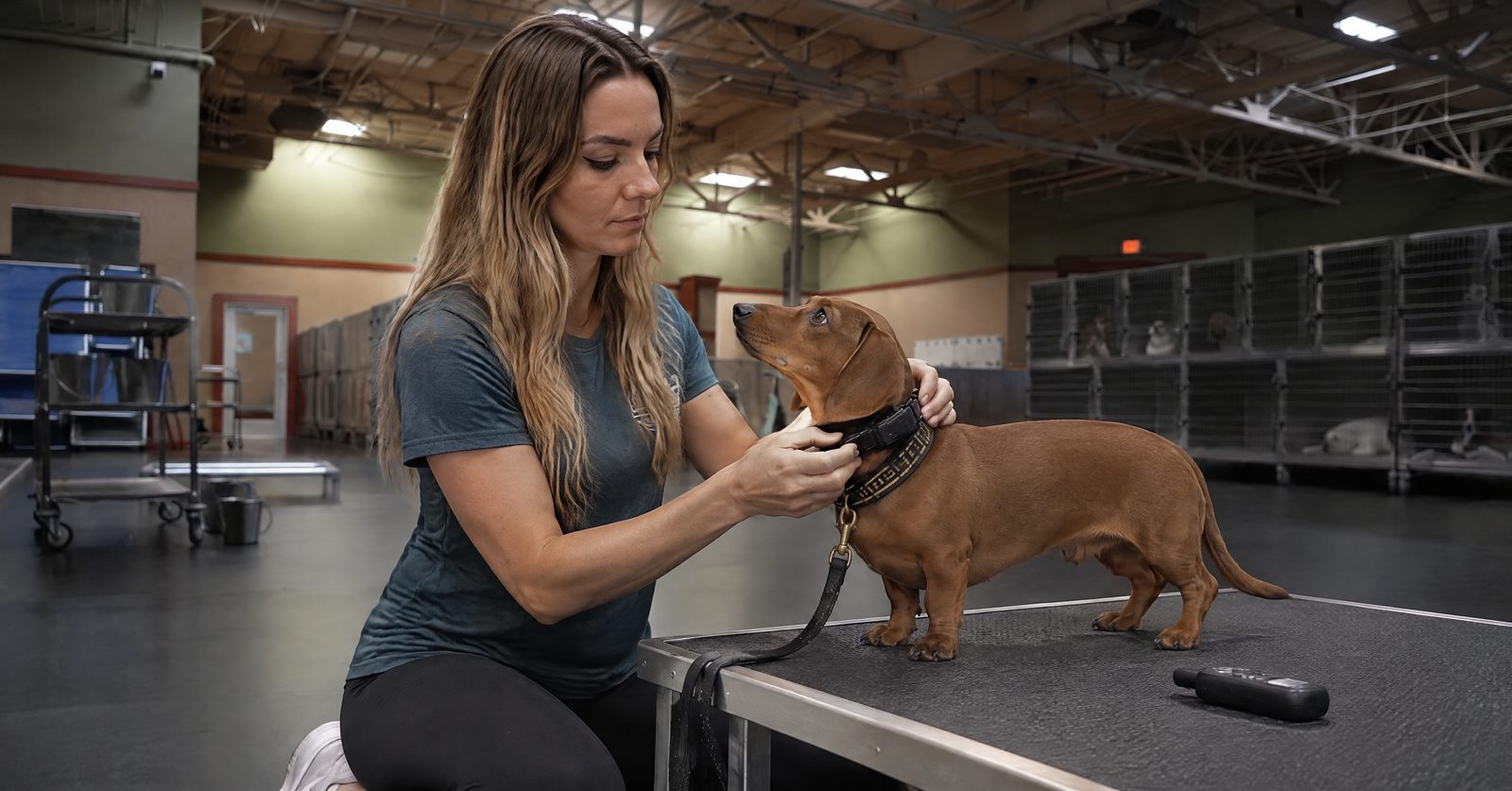
- Training. You and your dog enter the habitat while the trainer narrates what they see. We use live, intact Diamondback rattlesnakes, not defanged or milked, secured in double-mesh cages so a snake can never touch your dog. When your dog shows curiosity, a small stim builds a clear negative association, then we run your dog away from the snake to encourage the flight response.
- Debrief. Your instructor tells you how your dog performed and when to come back. We recommend a refresher once or twice a year, ideally before desert hiking season.
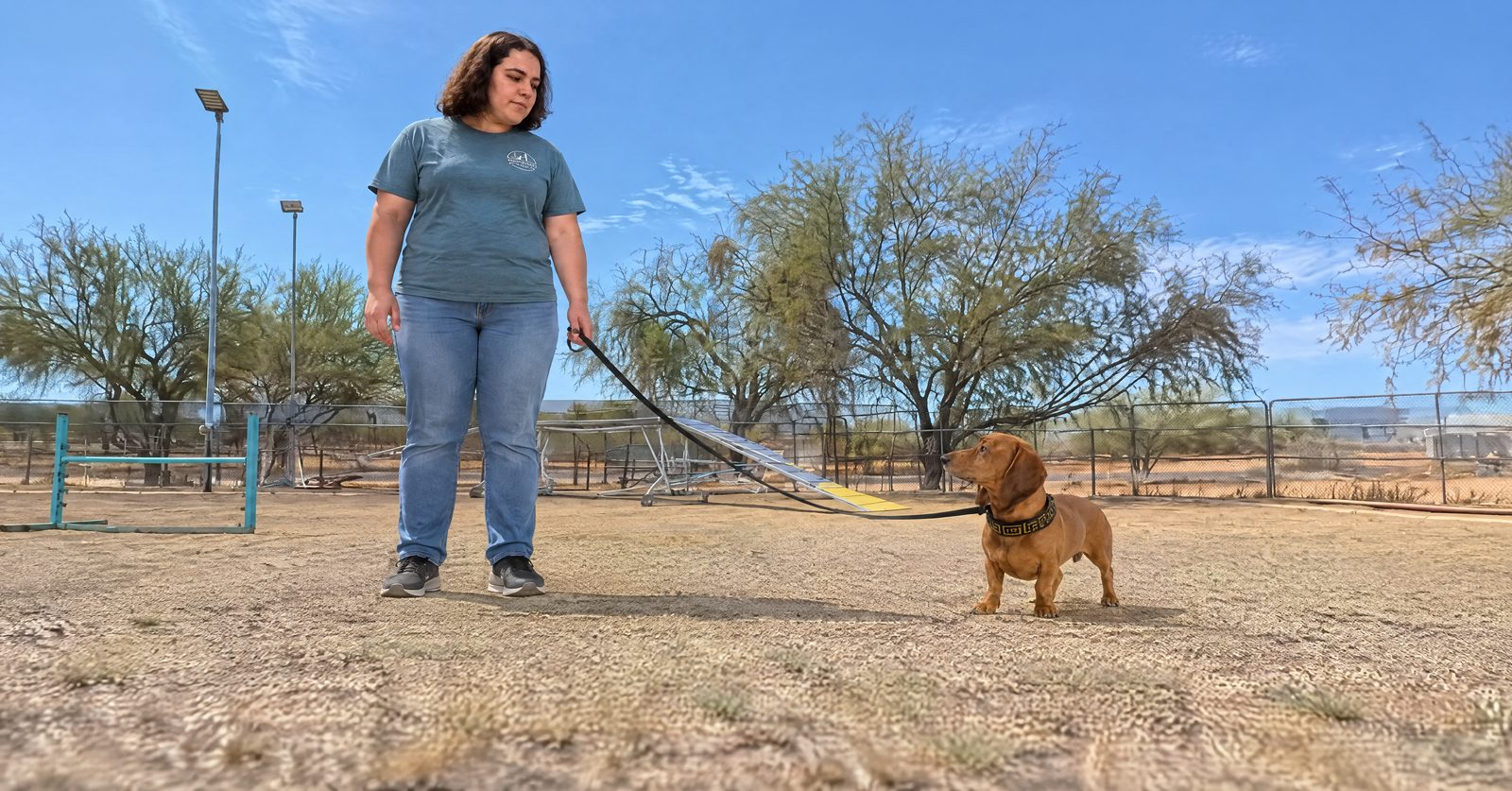
Cave Creek trains fully outdoors, in the same desert ground your dog hikes on. Scottsdale trains primarily indoors. Both build the same lasting avoidance. The trainer narrates what they see because the Pet Parent has to learn the tells too: the pause, the head cock, the nose going high. Avoidance training trains two students at once.
Begin with the assessment
Book rattlesnake avoidance at Partners
Sessions run about 15 to 20 minutes at Scottsdale or Cave Creek. Choose First Timer or Refresher in the scheduler and add more dogs in the same window.
Why an e-collar, and what does "conditioned first, tap level" mean?
The short version: a rattlesnake strike can kill your dog, so the consequence has to be immediate, unmistakable, and delivered at the exact moment of curiosity. Nothing else in the toolbox does that at distance. The e-collar earns its place here, but only under our rules: conditioned first, and set to tap level by a skilled trainer. It is the fire-extinguisher logic: nobody installs one because extinguishers are fun. You install it because the thing it stops is worse than the tool itself.
That is how we treat every tool: the same rules run through our e-collar breakdown and the methodology flagship.
Conditioned first means the dog understands the tool before the tool does any teaching. Tap level means the lowest level the dog notices, like a tap on the shoulder. The stim is brief; it startles without harming. That is the level an experienced trainer sets, which is why our instructors need at least two years of avoidance experience. We have safely trained more than 18,000 dogs this way since the early 2000s.
Skill before tool decides everything, because the timing is the product. A stim a half-second late teaches the dog nothing about the snake. You are paying for the trainer's read of your dog; the tool is the delivery. The human in the loop is the entire safety system. The trainer watches the dog, the snake, and the timing, and decides whether the dog is even ready for the sequence that day. A dog that is too aroused, too shut down, or too young does not run the drill. The tool waits for the trainer's judgment, not the other way around.
"The dog doesn't know that it's a rattlesnake. The dog just knows, 'When I pick up on that scent or when I pick up on that sound, I don't like that.'" (Partners trainer, quoted in the Scottsdale Independent)
Is there real evidence it works?
The short version: the mechanism is proven science. Peer-reviewed proof of this specific training is thin, and the honest answer is the jury is working on it right now.
Avoidance learning is not controversial. Pair a cue with a consequence the animal can escape by avoiding it, and the animal avoids it. On this specific application:
- A University of Arizona study is ongoing. A UArizona College of Veterinary Medicine instructor is participating in a research study into whether rattlesnake-aversion training works, and which method is most effective, per the Associated Press in August 2026. Until it publishes, no gold-standard study settles the question.
- Veterinary behaviorists take it seriously. Dr. Pamela Reid of the ASPCA's behavioral sciences team told the AP that "this type of training can be highly effective," but only "under the guidance of a trainer knowledgeable in the principles of avoidance learning." Same line we hold: the trainer, not the tool.
- Our 18,000 dogs are experience, not proof. More than 18,000 dogs trained since the early 2000s is a volume fact about our program. It is not a controlled trial, and we will not dress it up as one.
What the training does: it installs an avoidance default through conditioning, so the scent and sound of a rattlesnake trigger a back-away before the dog gets close. What it does not do: make your dog snakeproof. Any trainer who promises that is selling, not training.
One more number worth having: the snakebite survival rate for pets is 94% with quick treatment, per the UArizona veterinary instructor quoted in the AP report. Training is not the whole plan. Speed to the vet is the other half. When a Pet Parent asks our trainers whether it worked, the answer is the same every time: watch the dog on the next walk. The dog's nose and body tell the truth before any study does.
What are the honest limits?
The short version: no training is a guarantee, avoidance fades without refreshers, and the vaccine conversation belongs with your vet, not with us.
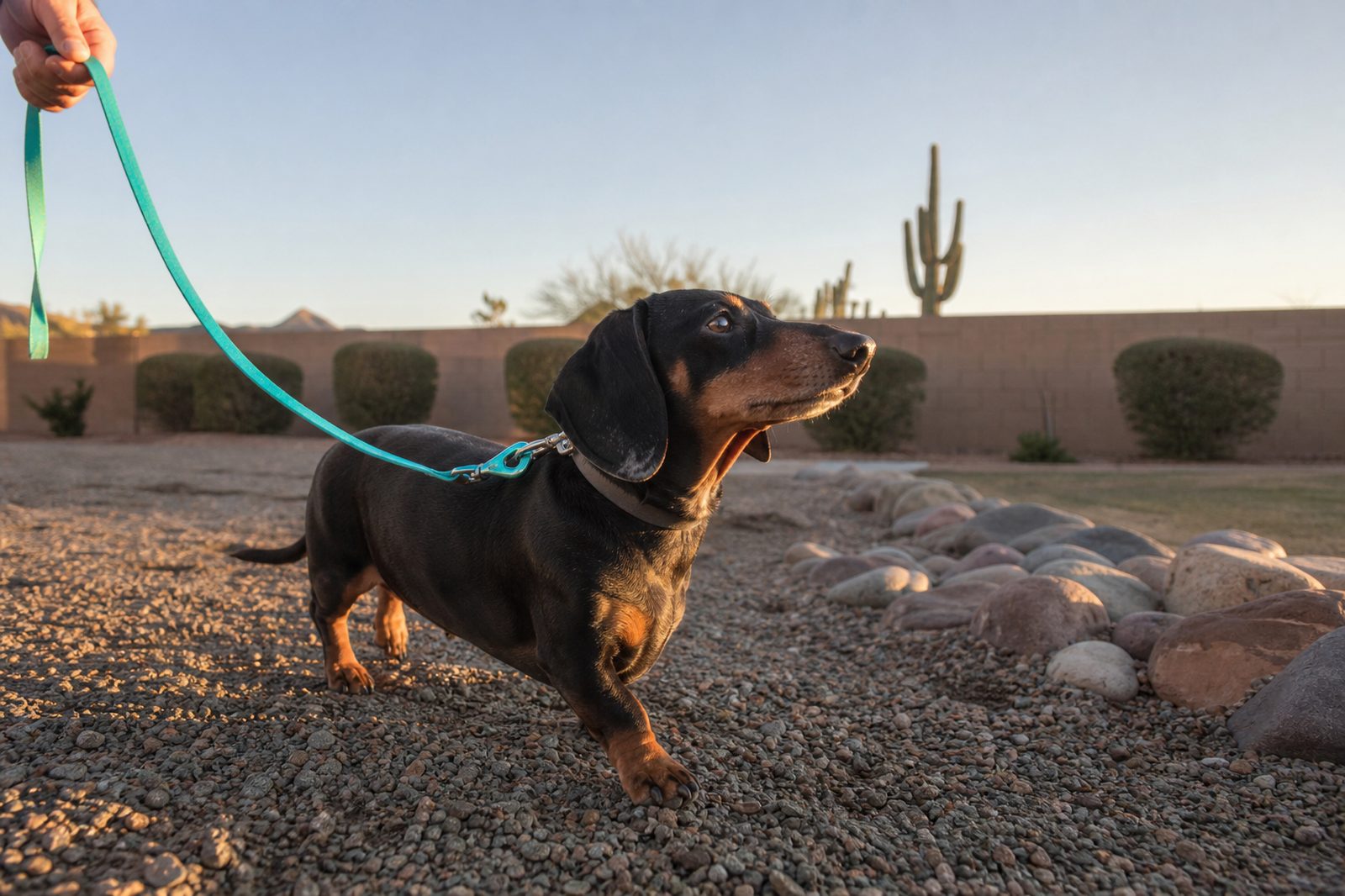
- No guarantee. A dog can avoid snakes a hundred times and still surprise you once. Training lowers the odds; it does not remove them. About half of snake bites happen in and around the house, so management (clear sightlines in the yard, keeping the dog close after dark) carries weight alongside training. Management is not punishment. In the Valley's suburbs, the yard is the first snake habitat to fix: trimmed gravel, no brush piles, no packrat nests against the wall.
- Avoidance fades. Conditioning is maintained through repetition, so we recommend a refresher once or twice a year, ideally before desert hiking season. Treat it like the batteries in your smoke detector: you swap them on a schedule, not when the house is already smoky. Progression prevents regression, and maintenance has no finish line.
- The vaccine is debated. The rattlesnake vaccine (Crotalus atrox toxoid) is a conditionally licensed product whose label states efficacy and potency have not been fully demonstrated (Drugs.com label summary, retrieved 2026-09-16). A retrospective study of 272 cases found no measurable benefit; AAHA takes no position. We train; your vet advises. The full breakdown lives in our Rattlesnake Vaccine Debate article, which lays out what Arizona vets actually say.
What should you ask any avoidance trainer?
The short version: ask about the snakes, the collar, the instructor's experience, and the refresher policy. The answers tell you whether you are buying training or theater.
| Ask this | Why it matters |
|---|---|
| Are the snakes live, intact, and caged? | Dead snakes and recordings don't smell or sound real. Cages keep everyone safe. Ours are live, intact Diamondbacks in double-mesh cages. |
| Who sets and times the stim, and what is their experience? | Timing is the product. Our stim is timed by an instructor with at least two years of avoidance experience. Vague answers are a red flag. |
| What stim level do you use? | The honest answer is tap level, a brief startle. "We crank it until they learn" means correction first, teaching never. |
| What is your refresher policy, and what does it cost? | Avoidance fades without repetition. We recommend once or twice a year. "One session lasts forever" is sales. |
| Do you guarantee my dog will never be bitten? | A "yes" ends the conversation. No honest trainer guarantees an animal's behavior around wildlife. |
How much does rattlesnake avoidance training cost in Arizona?
The short version: cost varies by provider. Compare what the session includes, not just the number.
What drives the cost: a live, secured rattlesnake setup with a trained handler; session length and how many dogs are worked; the trainer's experience with conditioned-flight work; and the refresher cadence, usually once or twice a year. A session that includes a real secured snake, skilled timing, and a clear refresher plan is not the same product as a lecture. Ask what is included before you compare numbers, and contact the provider for current rates.
By the numbers. 18,000+ dogs trained by Partners since the early 2000s. 15 to 20 minutes per session. 94% pet snakebite survival with quick treatment (UArizona CVM via AP, Aug 2026). Refresher recommended once or twice a year.
Myth vs. fact about rattlesnake avoidance training
| Myth | Fact |
|---|---|
| The e-collar shocks the dog. | Ours is a low-level cue at tap level, conditioned first, timed by an experienced instructor. It startles without harming. |
| One session makes the dog snakeproof for life. | Avoidance fades without repetition; refreshers once or twice a year keep it sharp. Any guarantee is a sales line. |
| The rattlesnake vaccine replaces training. | The vaccine is conditionally licensed, with efficacy not fully demonstrated per its label. It is a vet conversation, not a training substitute. |
| All avoidance trainers do the same thing. | The UArizona study currently underway is testing which method is most effective. "Not settled" is the honest answer; run the checklist above and judge by the answers. |
Choose by case, not by tool
Start With the Assessment, Not the Program
New to Partners? A PD360 Assessment reads your dog across nine dimensions and matches it to the right plan, including rattlesnake avoidance if desert trails are part of your life.
Key takeaways
Key takeaways
- Avoidance training installs a conditioned default: the scent and sound of a rattlesnake trigger a back-away before the dog gets close.
- Our e-collar rules: conditioned first, tap level, timed by an instructor with 2+ years of avoidance experience. Skill before tool.
- The evidence: avoidance learning is established science; a UArizona College of Veterinary Medicine study is ongoing, with no published results.
- Honest limits: no guarantee, avoidance fades without refreshers, the vaccine decision belongs with your vet.
- Cost: varies by provider and session type; compare what is included, not just the number.
Frequently Asked Questions
Does rattlesnake avoidance training hurt my dog?
No. The collar delivers a brief, low-level stim at tap level, the lowest level the dog notices, timed by an instructor with at least two years of avoidance experience. It startles without harming. The goal is a clear, lasting avoidance association so your dog steers clear of snakes on its own.
How much does rattlesnake avoidance training cost in Arizona?
Cost varies by provider and session type. Our sessions run about 15 to 20 minutes at Scottsdale or Cave Creek, and you can add more dogs in the same scheduling window. Contact the provider for current rates.
How long does a session take, and when should we book?
Each session runs 15 to 20 minutes, and most owners are in and out within the hour. Arizona rattlesnake season runs March through October, so most families book in early spring before peak season. Book a refresher once or twice a year, ideally before desert hiking season.
Is rattlesnake avoidance training a guarantee my dog will never be bitten?
No. Any trainer who guarantees that is selling, not training. The training installs an avoidance default through conditioning, which lowers the odds without removing them. Pair it with management around the house and trails, fast transport to a vet after any bite, and a vaccine conversation with your vet.
What is the first step to book rattlesnake avoidance at Partners?
Choose First Timer or Refresher in the scheduler on our Rattlesnake Avoidance page, pick Scottsdale or Cave Creek, and add more dogs in the same window. To bundle it with a camp stay, boarding, or private lessons, ask for one plan and one quote; new clients start with a PD360 Assessment.
Where to go from here
Spring slots fill before hiking season. Book a First Timer session, then keep the avoidance sharp with a refresher before each season. The team at Scottsdale or Cave Creek will tell you exactly how your dog responded and when to come back.
Scottsdale: 8642 E Shea Blvd, 85260. Cave Creek: 4640 E Forest Pleasant Pl, 85331. Serving the Phoenix Valley.