Seven signs lead from a puppy that goes still at the bowl to an air snap: freezing, eating faster, whale eye, body blocking, a lip curl, a low growl, then the snap. Most Scottsdale and Cave Creek families miss the first two or three signs and only notice once a growl gets loud enough to worry them.
The first sign is the easiest to miss: a puppy that goes still over a food bowl for half a second longer than usual. It looks like nothing. It is usually the opening move in a pattern that, left alone, escalates in a predictable order. Trainers at our Scottsdale and Cave Creek campuses see this pattern often enough to know it well. Families who work with them rate that experience 4.8 stars across 2,000+ Pet Parent reviews, and this guide walks through the seven signs in the order they tend to appear.
The seven signs, earliest to latest:
- Freezing or stiffening over an item
- Eating or chewing faster when approached
- Whale eye
- Body blocking
- A lip curl
- A low growl
- An air snap
What Is Resource Guarding, and Why Do Puppies Do It?
Resource guarding is a puppy protecting something it values: food, a toy, a bed, a chew, sometimes a person. Resource guarding is instinctive, and almost every puppy shows a mild version of it at some point. A mild flash of it is not a sign something has gone wrong at home. The behavior sits on a spectrum. A puppy that eats a little faster when someone walks by is on the mild end. A puppy that snaps when a hand comes near the bowl is on the serious end, and most puppies never get anywhere close to that end when the early signs get a calm, consistent response instead of a dramatic one. The seven signs below are that spectrum laid out in order, from the mildest and easiest to miss to the one that should never be tested twice. Reading the whole pattern matters more than reacting to any single sign in isolation.
What Are the First Signs Most Families Miss?
The earliest signs are quiet, which is exactly why families miss them. Four signs show up before a growl ever does, and all four are easy to read once you know what to look for.
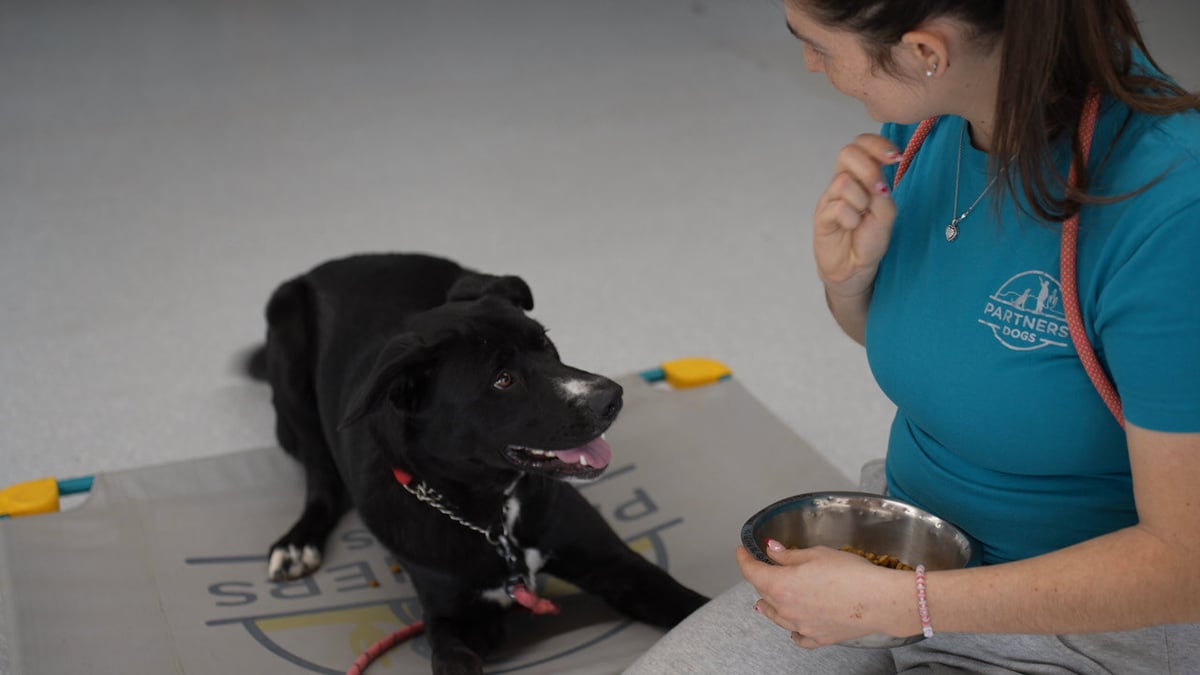
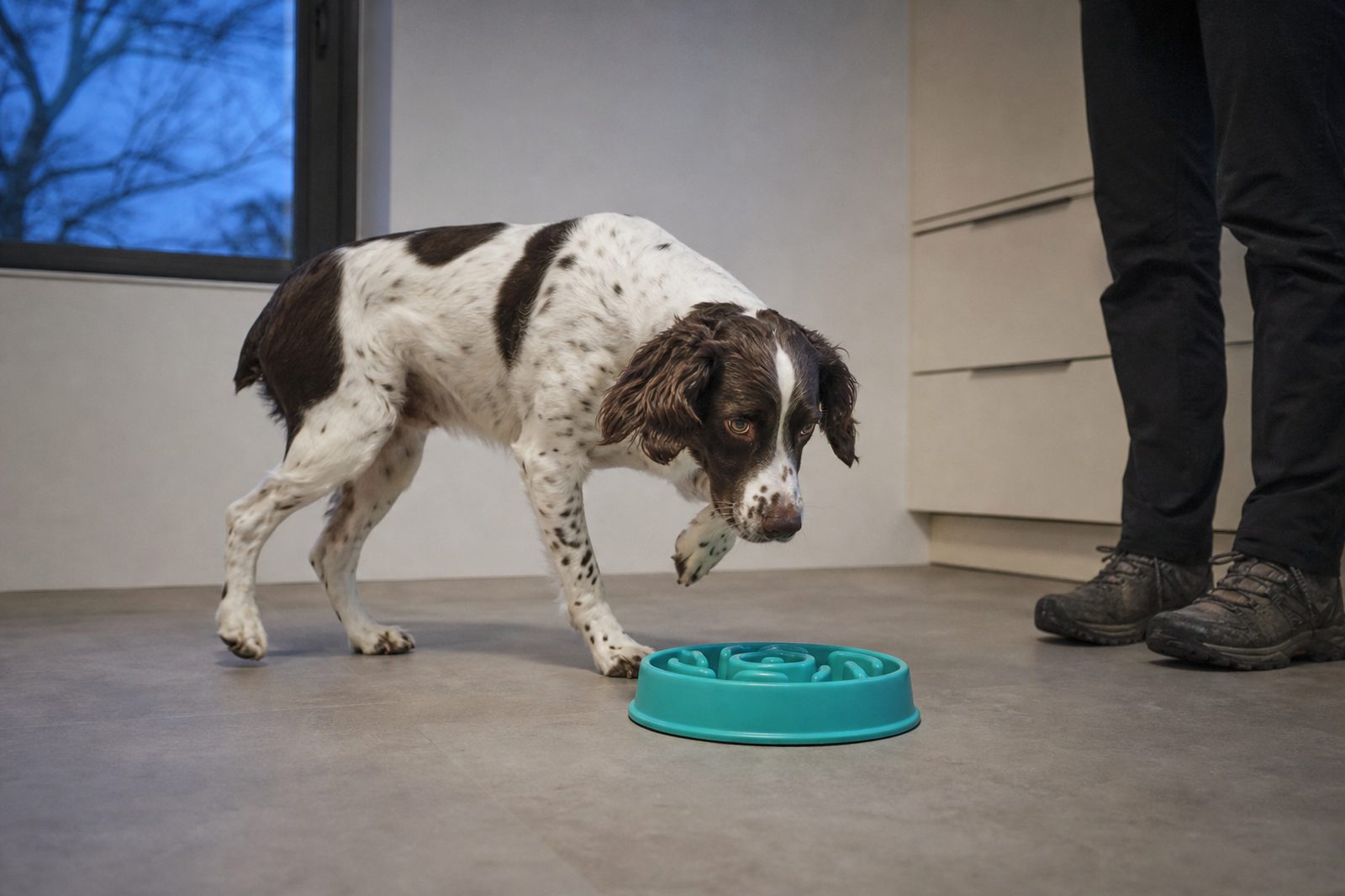
- Freezing or stiffening over an item. A relaxed puppy keeps moving. A guarding puppy goes still and tenses up the moment you get near a bowl, a bone, or a toy. Walk past during a meal and watch for the pause.
- Eating or chewing faster when you approach. Gulping, or the opposite, going completely still and stopping mid-bite, both signal the same worry: that the item might disappear.
- Whale eye. The puppy turns its head slightly away while keeping its eyes locked on you, showing a crescent of white. This signals stress about whatever is in front of the puppy.
- Body blocking. The puppy angles its body between you and the item, or turns away with the item held tight, using its own frame as a barrier.
Any one of these on its own is not an emergency. A pattern of two or more, appearing the same way around the same items, is the signal worth acting on.
What Do the Escalation Signs Look Like?
Past the first four signs, the next three move from body language into direct warning. A lip curl, a low growl, and an air snap are the three signs that mean management starts today.
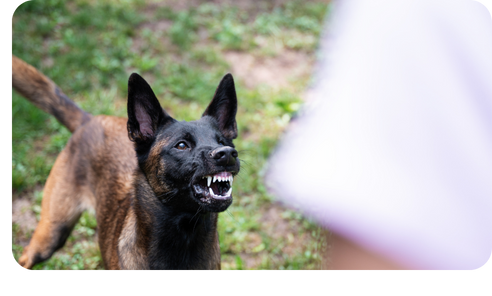
- A lip curl or lifted lip. The front teeth show without a full snarl, often right alongside or just before a growl.
- A low growl. A short, low sound aimed at whoever is near the item. This is the puppy communicating out loud.
- An air snap. A quick bite toward the air or a hand that stops short of contact. This is the last warning before contact happens, and it should be treated that seriously.
A puppy that reaches the air-snap stage needs a trainer's eyes on it right away. Our resource guarding assessment and safety plan covers exactly this handoff, from early signs to a plan that lives in the system for managing the household around it.
Should You Punish a Growling Puppy?
No. A growl is information, not defiance. It is the clearest signal in the sequence, and punishing it does not change the feeling underneath it. A puppy that gets scolded or grabbed for growling can learn a different lesson than the one intended: that warning signals bring trouble, so the safer move next time is to skip the growl and go straight to a snap. That trade, a quieter puppy for a more dangerous one, helps no one.
None of this means growling gets ignored. The response is management and a change in approach: address whatever triggered the growl, give the puppy space in that moment instead of reaching in, and note the trigger so it is easier to manage next time. Treat the growl as useful data about what to work on, the same way a trainer reads it. A puppy that is never punished for growling keeps using its early signals, and a puppy that keeps using its early signals is far easier to read and manage than one that has learned to stay silent until it bites.
What Should You Do the Moment You Spot a Sign?
The response is the same for any of the seven signs, mild or serious. Do not test the behavior, manage the environment around it, and get a professional read before the pattern repeats too many times.
- Do not reach in to "prove" the puppy will be fine. Testing a guarding puppy is how a lip curl turns into a snap.
- Give the puppy space to finish with the item, then pick it up once the puppy has walked away on its own.
- Feed meals and high-value chews in a low-traffic spot away from foot traffic, kids, and other pets while you get a clearer read on the pattern.
These three steps manage risk today while you watch for a pattern. Once a sign moves past the mild end of the spectrum, the next move is a professional read, before more repetitions let the pattern deepen.
Worth a second opinion
Get Ahead of the Growl
A PD360 Assessment puts a trainer's eyes on your puppy in person at either campus across a full day, and pickup brings a verbal breakdown along with a revised score.
When Should You Get a Professional Assessment?
Catching resource guarding in the puppy stage is the whole advantage. The earlier a family recognizes the pattern, the fewer repetitions the puppy gets to practice it, and the easier the fix. Call a trainer without delay if you see a lip curl, a growl, an air snap, or any contact with skin. Do not wait to see if it resolves on its own.
This is also where a facility with more than one set of eyes helps. At Partners Dogs, your puppy is never assessed by a single opinion; a team of trainers cross-checks patterns against thousands of dogs they have worked with, and once your puppy is enrolled, what they see gets logged in your dog's PD360 Pet Progress Tracking System so the plan adjusts as the pattern changes without starting over at each visit. Parent education runs alongside all of it, so you leave knowing exactly what to do differently at home in between sessions. Partners Dogs programs, including a PD360 Assessment, start at 20 weeks old; if your puppy has not reached that age yet, the management steps above are exactly what to lean on until enrollment is an option.
If guarding is already established in an adult dog rather than caught early in a puppy, the fix looks different. Our guide on how to stop a dog from resource guarding covers the correction plan for a pattern that has had time to set in.
Frequently Asked Questions
What age do puppies typically start showing resource guarding signs?
There is no single age. Guarding signs can appear anywhere from early puppyhood through adolescence, and when they show up depends more on what a puppy has learned works than on a specific birthday. Watching for the signs themselves catches the pattern whenever it starts.
Is a growl always a sign of resource guarding?
Not always. A growl during rough play reads differently than a low, stiff growl aimed at someone approaching food or a toy. Body posture, the item involved, and who is nearby all matter more than the sound by itself.
What should you do right after your puppy growls over food or a toy?
Stop what you were doing and give the puppy space instead of pushing closer. Note what triggered the growl (a hand near the bowl, another pet walking by, someone reaching for a toy) and keep that trigger away from the puppy for now. Bring in a trainer if the growl repeats.
What is whale eye in dogs?
Whale eye is when a dog turns its head slightly away from something while keeping its eyes fixed on it, showing a crescent of white around the eye. Around a food bowl or toy, it usually means the puppy feels the item is at risk.
Can early resource guarding in puppies be managed at home?
Mild, early signs often respond well to consistent management around meals and toys. Once signs move past freezing and stiffening into a growl or a snap, bring in a trainer; do not keep testing the behavior at home.
Is a puppy that resource guards a bad fit for a family with kids?
No. Early resource guarding is common, and it is manageable with consistent handling and a calm response to each sign. It becomes a bigger risk around kids mainly when it gets ignored, or when growling gets punished into silence so the warning disappears. The priority is calm management now and a professional read on any serious sign, a lip curl, a growl, or a snap.
Where to go next
Start Coaching Before the Pattern Grows
Early guarding responds well to hands-on coaching in your own home, before the habit has years to set. A private lesson gets a trainer looking at your puppy's specific triggers within the week.