In one paragraph
Two paths split reintroduction after training: dogs that already like each other move into short, supervised, leash-and-collar playtime within the first few days home, while dogs with real tension between them keep leash, collar, and often a muzzle on through weeks of heavier obedience work, with off-leash time reserved for a trainer's go-ahead rather than a date on the calendar.
Why does the freshly trained dog need time alone before saying hello?
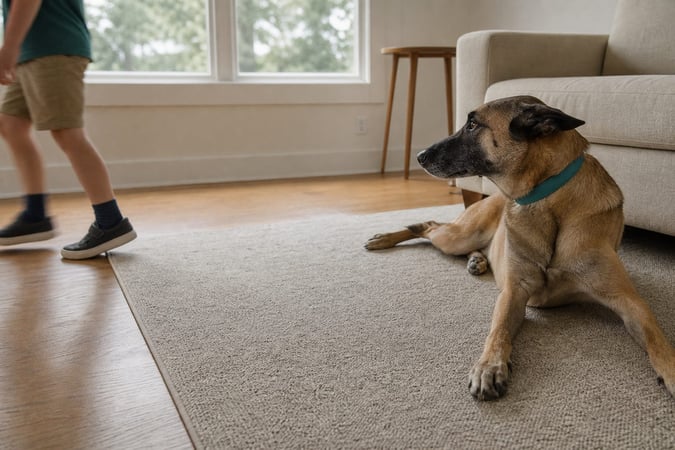
A dog coming home from camp needs a quiet room before it needs a reunion. Picture a Fountain Hills family pulling into the driveway after fourteen nights of Foundation Camp: the resident dog is already at the window, spinning at the door, and everyone wants a happy reunion in the yard within the hour. That instinct is the one to resist. A dog that has spent two weeks learning new equipment and expectations needs a settle-in window: a crate, a separate room, or a baby gate before it takes on the harder job of reading another dog's body language again. The house has changed too: routines have shifted, and the resident dog has had two weeks of the household's undivided attention.
This window is also the training's first quiet proof. A dog that settles into a crate or a place command without pacing, in a room it has not seen in two weeks, says something about how the structure travels. A dog that cannot settle alone yet is not ready for another dog layered on top.
How do you know which reintroduction path your dogs are on?
One short, leash-and-collar test tells you more than a week of guessing. Once the freshly trained dog has settled, the first meeting happens on leash and collar: both dogs, both handlers, a few feet apart, in a low-traffic part of the house rather than nose to nose at the door. A few signs in the first minutes tend to separate the two paths:
- Loose bodies and soft eyes on both sides.
- A willingness to look away from each other without being told to.
- No stiffening, freezing, or fixed stares once the initial excitement settles.
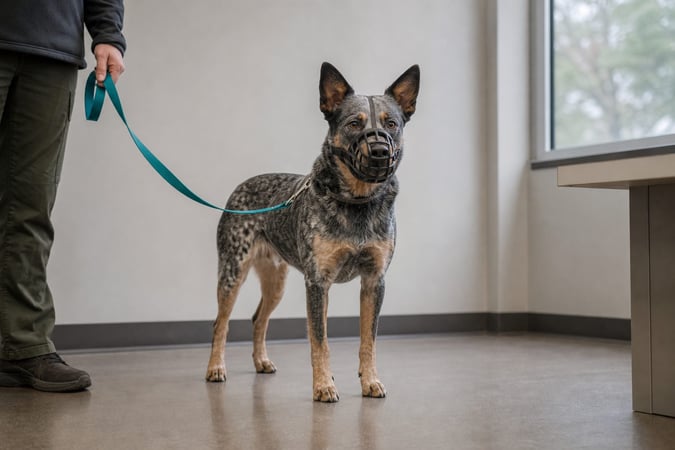
Dogs showing most of that are on the social-siblings path, opening the door to controlled playtime within days. Dogs that stiffen, fixate, or will not disengage are on the un-social-siblings path: leash, collar, and often a muzzle stay on through weeks of obedience work. Neither path is a verdict on the dog. Sibling tension is a common reason families bring a dog through Behavior Camp, and the behaviors underneath it, most often sibling aggression or resource guarding over food, respond to the same structure that leash reactivity does.
What does controlled playtime look like for social siblings?
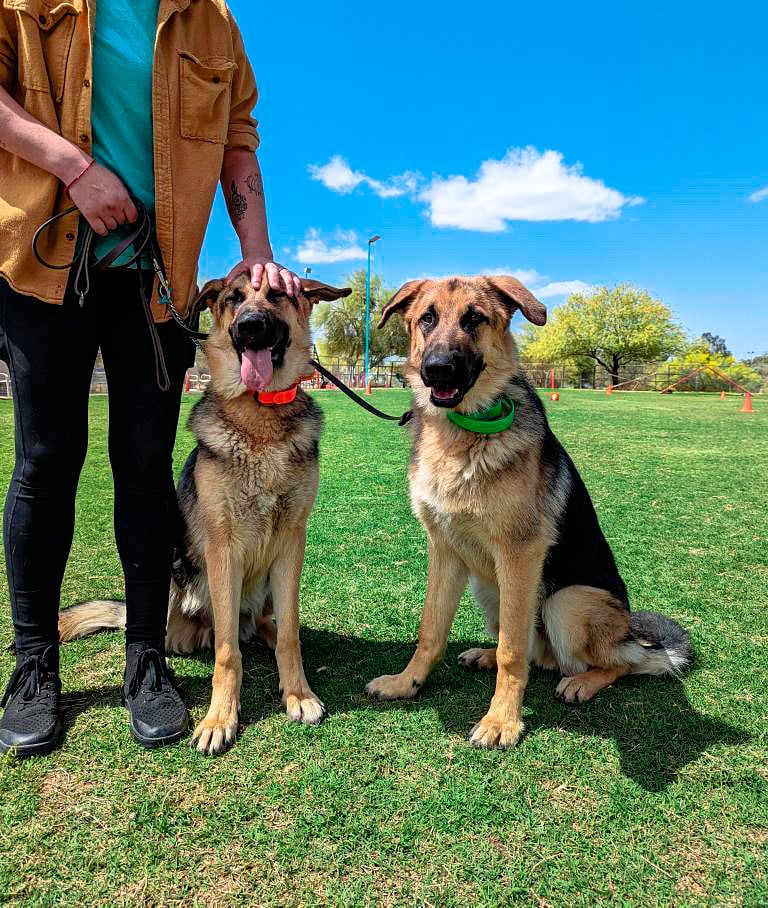
Leash and collar stay on even after the greeting goes well. For dogs that read as social, the next step is short, supervised play with both dogs still wearing leash and collar, a handler holding each line loosely enough to stay out of the way but close enough to interrupt. Sessions run five to ten minutes at first, end while the dogs are still calm, and happen in the same low-traffic space before expanding to the rest of the house. Toys, chews, and food bowls stay out of the picture until the dogs have had several clean sessions together, since those are resource-guarding tests waiting to happen.
That same order, structure before freedom, is what J.J. F., Cave Creek, credits for a smoother introduction between an older resident dog and a new puppy: "Jen's patient guidance provided us with the structure we needed for a smoother transition." The dogs did not have to like each other on day one. The order just had to hold until they did.
Get structure started
See which program matches your dogs' reintroduction path
A short quiz sorts your household onto the right starting program before you build a transition plan around the wrong assumption.
What changes when your dogs are not social siblings?
The leash, the collar, and often the muzzle stay on for weeks, not days. When the first test reveals real tension (stiff bodies, guarding, or a history of a fight), the plan slows down and the obedience workload goes up. Both dogs stay leashed indoors during shared time, a muzzle goes on the higher-risk dog, and the sessions look less like play and more like parallel obedience: place commands held at a distance, calm hallway passes, brief proximity with both handlers working their own dog. Bruno's story is a clear example. His transition-day protocol was specific: leash and supervision indoors for the first two to three days, a muzzle on during any socializing, and a structured, one-dog-at-a-time reintroduction to the household's other dogs, not a single group reunion.
Families in this stretch often underestimate the timeline. A dog that fought with a housemate once did not build that history in an afternoon, and it will not unlearn it in one either. Weeks, not days, is the realistic window, and a plan built around one pair of dogs beats a generic schedule.
Who decides when the leash and muzzle finally come off?
That call belongs to a trainer working with your specific dogs, not a public checklist. How many clean sessions it takes and when a muzzle finally comes off depend on bite history, breed, and how each dog is responding. There is no fixed number of days that applies to every household. National shelter-behavior guidance from ASPCApro backs the same order used here: neutral space, one handler per dog, short interactions before anything longer. What no public checklist can offer is the specific go or no-go for serious dog-dog conflict.
Off-leash reliability also gets tested here. Maricopa County's six-foot leash law means a dog is on leash in public regardless, so the better question is not when the dogs can be off leash together in the yard, but whether each dog has individual off-leash reliability first, built through structured recall work rather than hoped for once group tension has passed. That work is exactly what Foundation Camp builds before any dog goes home to a Fountain Hills multi-dog household.
Frequently Asked Questions
What is the best board-and-train option for a Fountain Hills multi-dog household?
For most Fountain Hills families, zip code 85268 included, Foundation Camp is the standard starting point: fourteen nights of obedience built around a trainer-guided reintroduction plan for the specific dogs in the house. Households working through serious dog-dog conflict are usually better served starting with Behavior Camp instead.
Is dog training realistic for a busy household with more than one dog?
Yes. The camp format exists partly for this reason: a busy family drops one dog off for a structured stay instead of training two dogs at home each night, then picks up the trained dog with a transition-day walkthrough on how the reintroduction should go.
What is the best dog training program near 85268 if I already have multiple dogs at home?
The right program depends on the dogs' relationship today, not proximity to any zip code. Dogs that already get along tend to do best with Foundation Camp plus the reintroduction plan above. Dogs with a real history of conflict or a past fight are better served by Behavior Camp, with more obedience work and a slower, muzzle-supported reintroduction.
Where can dogs get reliable off-leash training after camp?
Off-leash reliability is built the same way anywhere in the Valley: through structured recall work before it is tested with another dog present. Foundation Camp and Behavior Camp both build this for each dog individually, since Maricopa County's leash law requires reliability on leash regardless, and off-leash time at home is a separate milestone layered on once the dogs' relationship has settled.
What if my dogs are already fighting instead of just adjusting to a new arrival?
An active pattern of fighting is different from a normal reintroduction and calls for separation and professional help sooner. A PD360 Assessment is the fastest way to get an accurate read on what is happening between the dogs before deciding on a program.
Take the first step this week
Get the muzzle-supported reintroduction plan Behavior Camp builds
Behavior Camp pairs heavier obedience with a trainer-guided, muzzle-supported reintroduction for dogs that need more than a few clean sessions to trust each other again.
Keep reading