The core of it
A dog trainer's day splits roughly in half between working dogs and coaching the people who go home with them: each dog moves through Teaching, Reinforcing, Proofing, and Maintenance while a trainer runs PD360 Assessments, writes daily reports, and adjusts pace dog by dog instead of running one script for the whole floor.
What does a dog trainer actually do all day at Partners Dogs?
A trainer's day is several jobs stacked back to back, not one. Before the first drop-off, leashes are checked, kennel cards read, and runs walked: a reactive dog boarding for Behavior Camp gets a different plan than a six-month-old golden starting Foundation Camp. That dog-by-dog read repeats across a two-campus floor in Scottsdale and Cave Creek, run by a team that has worked with 70,000+ dogs since Partners Dogs opened in December 1997, translating what a dog's body says into a plan the family can follow. A trainer also carries the paperwork side of that read: intake notes, medical flags, and the family's own description of what a good day looks like, so nothing about a dog's history gets re-learned from scratch on day one.
How does a shift move from morning arrival to PD360 scoring?
Every new dog gets read before it gets trained, and that read has a name: PD360. A family drops off between 9 and 10am, and for the next few hours a trainer watches how the dog handles novelty, recovers from a startle, and settles after arousal climbs. By the 2 to 4pm pick-up window, the trainer gives the family a verbal breakdown and a revised PD360 score, then builds that read into the plan. That plan gets written down before the trainer moves to the next dog, so a colleague covering the following day can pick up the same read instead of starting over.
How much of the day is spent teaching dogs versus coaching people?
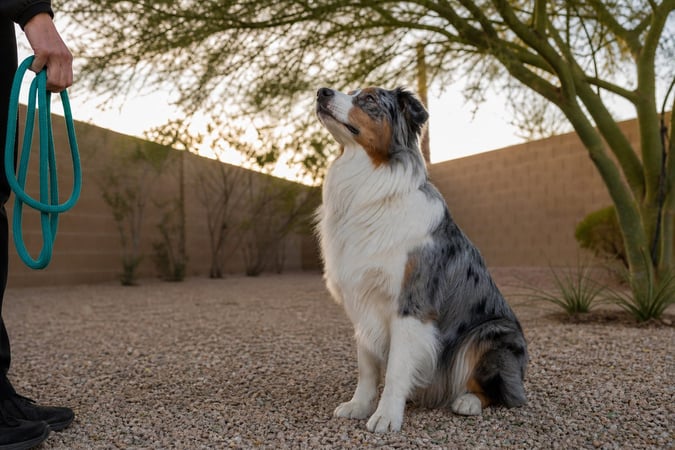
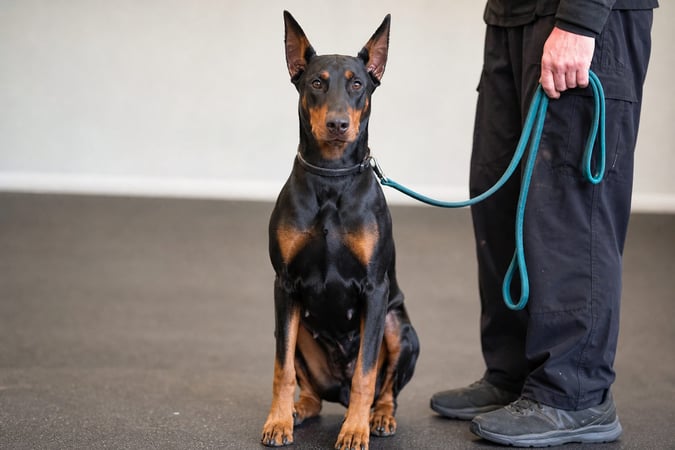
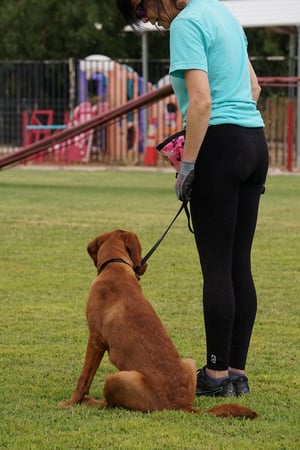
More of the job belongs to the humans than most people expect. A private lesson runs on live coaching: a trainer demonstrates a skill, then hands the leash back and coaches the handler through the same motion. Group classes repeat that for a room of owners, and DaySchool and DayCamp add a daily-report habit on top, so a family who never sees the 11am session can still keep it going at 6pm. Running a 1:10 ratio, a trainer has to find that coaching time inside a full day; see why one trainer per 10 dogs changes everything.
Coaching a handler is its own skill, separate from working the dog. A trainer times a marker the same way for the owner as for the dog, since a late click or a vague cue teaches the wrong lesson to both ends of the leash, and threshold distance matters as much for a nervous owner learning to stay calm as it does for a dog learning to settle.
What happens when a dog moves between Teaching, Reinforcing, Proofing, and Maintenance?
A dog's stage decides the trainer's plan more than the calendar does. Teaching builds a new skill with minimal distraction. Reinforcing repeats it with more variables, other dogs, new handlers, a change in location. Proofing pushes the skill into the environments where it has to hold. Maintenance keeps it sharp long after the dog has technically graduated. A dog can sit inside more than one stage on the same day, since a sit-stay might already be in Maintenance while loose-leash walking near a bicycle is still in Reinforcing.
Bubbles, a Golden Retriever puppy in Foundation Camp for jumping and leash pulling, shows that arc: threshold work went in on day 2, jumping control on day 9, a proofing pass on day 13, and her 14-day stay closed at a graduation meeting where her owner received the protocols directly. Read the full arc in Bubbles's success story.
What skills and hours does it take to become a trainer at Partners Dogs?
Nobody starts on the floor running a full caseload alone. A new trainer builds hands-on hours under a senior trainer's eye, learning to read arousal versus disobedience and threshold distance versus flooding, before taking independent responsibility for a dog's plan. Partners Dogs University runs that ladder in house, coursework first, then supervised hours toward Instructor and Senior Instructor status; a PDU credential rests on those logged hours, not classroom seat time. That hands-on hour count matters more once a trainer starts covering group classes and DaySchool report writing, both of which lean on judgment a syllabus alone cannot teach. Browse Partners Dogs University, open careers, or the team page.
How does a Cave Creek shift change with the desert, from monsoon storms to snake season?
Arizona sets the schedule as much as any training plan does. Rattlesnake season runs a spring window and a second one in the fall, and Snake Avoidance sessions get scheduled around it: a live encounter with a real snake, not a classroom lecture. Monsoon season, roughly mid-June through September, moves outdoor work indoors or into early morning before the pavement turns dangerous, and front-loads assessments into the cooler part of the day. A trainer working an outdoor run in July checks the pavement with a hand before checking the leash, and a dog whose paws show early sensitivity gets moved to shaded footing rather than pushed through the set.
Frequently Asked Questions
What is the first thing a trainer does when a new dog arrives on campus?
A trainer reads the dog first: kennel notes, how it exits the car, how it responds to a new person and space. That read shapes the PD360 Assessment, rather than starting every dog on the same first exercise.
Does the same trainer work with a dog every single day?
Not always, and that is deliberate. A dog that only responds to one handler has learned a person, not a skill. Rotating trainers across a stay helps a behavior generalize past one room and one voice.
How does a Cave Creek or Scottsdale shift change during monsoon season?
Outdoor field work shifts to early morning or moves indoors when storms or heat make the pavement or open desert unsafe. A trainer plans the day around the forecast the same way they plan it around a dog's stage of training.
What does a trainer write down about a dog's day?
Daily reports cover what was worked, how the dog responded, and what is planned next, so a family or another trainer picking up the dog can see the plan without re-reading the whole stay.
What does a new trainer's first week at Partners Dogs look like?
A new trainer shadows before handling, watching how a senior trainer reads a dog's body language and adjusts a plan in real time. Independent work builds gradually, dog by dog, rather than a full caseload on day one.
Reserve a spot
See where Partners Dogs University fits your next step
If this floor sounds like the work you want, look at the path itself. Current rates for camps and lessons are on the pricing page.
"Wonderful trainers that have patience with both my dog & me."
Dar B., Cave Creek
Keep reading