In short
Arizona’s desert heat, hot pavement, standing water, and rattlesnakes are the biggest risks to a dog outdoors here, and all of them are manageable with a few habits. Test the pavement before every walk, never leave a dog in a parked car, and treat snake avoidance training as standard care from Carefree to Cave Creek, not an optional extra.
The Sonoran Desert is a spectacular place to share a life with a dog, and an unforgiving one to get careless in. Most of the emergencies we hear about from clients in Scottsdale and Cave Creek are not freak accidents. They are ordinary decisions that would have gone unnoticed almost anywhere else in the country.
Six rules, three things to do and three to avoid, cover most of what goes wrong here.
1. Leave Your Dog Home Sometimes
This is the one nobody wants to hear. You got a dog so you could do things together, and leaving them behind can feel like a failure.
It is not. From roughly May through September, plenty of days here are simply not safe for a dog to be outside for any length of time, no matter how much they want to come along. A cool house is a better place for your dog than the trailhead, the patio, or the back of a truck. Plan outdoor time for early morning and after dark, and let the middle of the day belong to the air conditioning.
If skipping the walk also means skipping exercise your dog genuinely needs, a supervised, air-conditioned day at DaySchool can fill that gap without putting your dog in the heat at all.
2. Never Leave Your Dog in the Car
It seems absurd that this still needs saying, and yet it happens every summer in the Valley.
Interior vehicle temperatures climb past 120 degrees, and they get there faster than most people believe. Cracking a window does not provide meaningful ventilation. A dog can suffer permanent damage or die in under five minutes at those temperatures. There is no errand short enough. If your dog cannot come inside with you, your dog should not be in the car.
3. Check the Water You Leave Outside
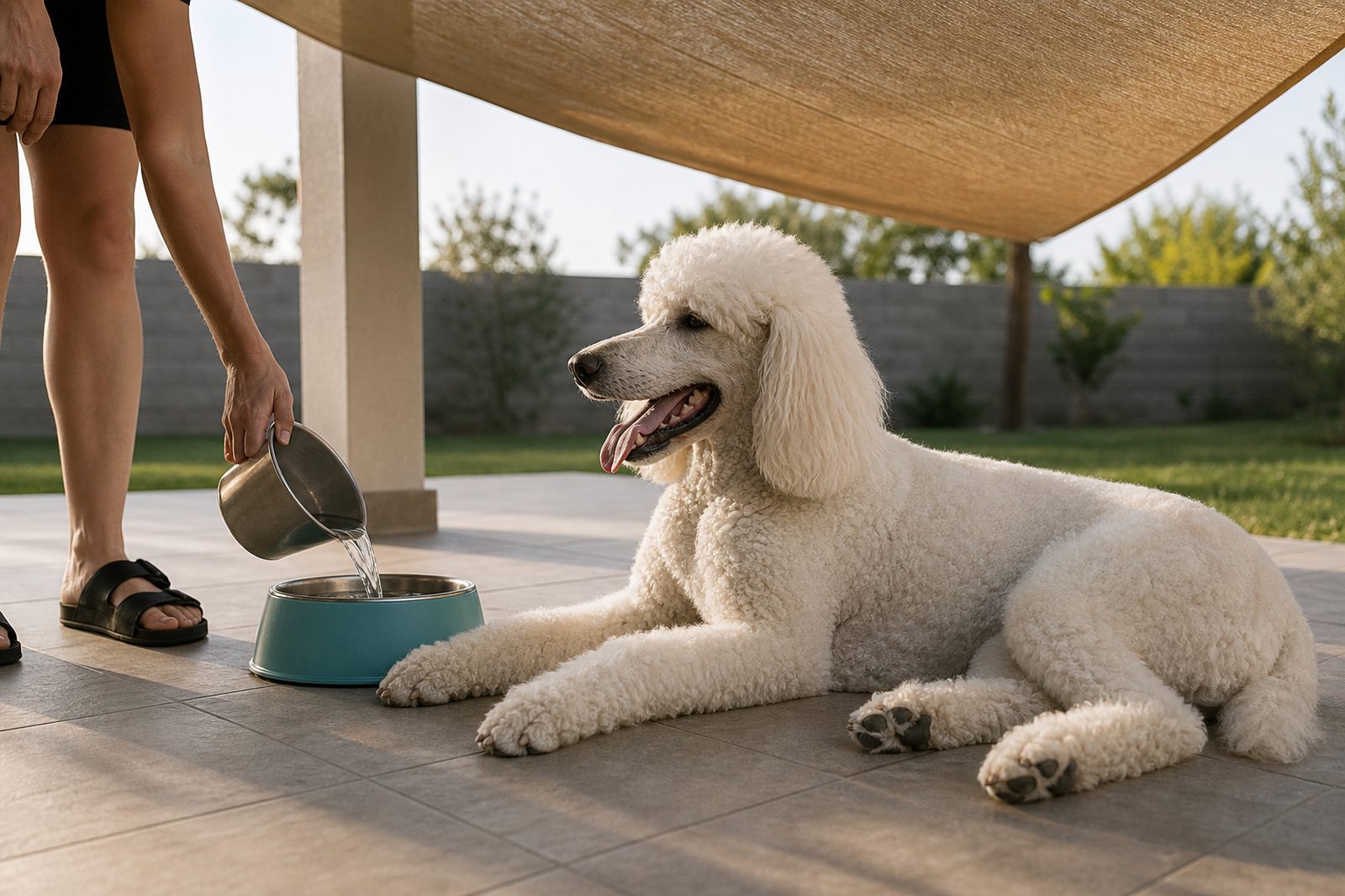
An outdoor water bowl is good practice for most of the year. It also needs checking, because your dog is not the only one who finds it.
During monsoon season, the Colorado River toad, also called the Sonoran Desert toad, moves into standing water, including bowls and fountains. The toxin it secretes is serious, and a dog that mouths or bites one can be poisoned quickly. Dump and refill outdoor bowls, check them before your dog goes out at night, and know where your nearest emergency vet is between June and September.
Next step
Give Your Dog Year-Round Protection From the One Desert Risk You Can Train Away
Heat and hot pavement take planning. Rattlesnakes take training. A dog that already knows to avoid the sound, scent, and sight of a rattlesnake reacts on its own, before you ever see it.
4. Check the Pavement First
Ground surface temperatures here can exceed 160 degrees on a hot afternoon. That is hot enough to cook meat, and your dog is walking on it barefoot.
The test takes five seconds. Put the back of your hand flat on the pavement and hold it there. If you cannot comfortably keep it there, your dog should not be walking on it. Asphalt holds heat long after sundown, so an eight o’clock walk in July can still burn paw pads. Grass, dirt, and shade are all cooler than sidewalk, and booties are worth having if your dog will tolerate them.
5. Get Snake Avoidance Training
Rattlesnakes are not a summer problem in Scottsdale and Cave Creek. They are a year-round problem, and they turn up well inside developed neighborhoods, not just out on the preserve. Every year we hear from owners who assumed their yard was safe.
Snake avoidance training teaches your dog to recognize the scent, sound, and sight of a rattlesnake and move away from it on their own, without waiting for you to notice first. That matters because on a trail, or in the dark in your own backyard, your dog will find the snake before you do.
A snake bite means an emergency vet visit, antivenom, and a bill that runs into the thousands, even when the outcome is good. We run snake avoidance training out of our Cave Creek campus, and it remains one of the highest-value things a desert dog owner can do.
6. Do Not Overdo Water After Exercise
Water keeps your dog cool and safe, and there is still such a thing as too much too fast.
A dog that has just run hard and then gulps a large volume of water in one go is at elevated risk of bloat, a condition that is still not fully understood but is unquestionably life-threatening. Let your dog cool down first, then offer water in smaller amounts.
Know the early signs:
- Lethargy
- Refusing food or water
- A distended or tight abdomen
- Unproductive retching
- Restlessness
- A stiff, strained walk
If you suspect bloat, go to the vet immediately. This is not a wait-and-see condition. It escalates in hours, and time is the variable that decides the outcome.
The Short Version
The desert is a wonderful place to live with a dog. It just asks for more forethought than most environments do. Check the ground, check the water, respect the heat, and take rattlesnakes seriously. When you are unsure, err toward caution. You will never regret the walk you skipped.
Partners Dogs has trained dogs in Arizona since 1997, when we opened our original Cave Creek campus. We now also run programs from our Scottsdale campus, and our trainers see these same desert emergencies every year at both locations.
Frequently asked questions
How hot does pavement get in the Arizona desert?
Ground surface temperatures in the Scottsdale and Cave Creek area can climb past 160 degrees on a hot afternoon, hot enough to burn a dog’s paw pads. Before any walk, press the back of your hand flat on the pavement and hold it there for five seconds. If it is too hot for your hand, it is too hot for your dog’s paws.
Is it ever safe to leave a dog in a parked car in Arizona?
No. Interior vehicle temperatures climb past 120 degrees and get there faster than most people expect, even with a window cracked. A dog can suffer permanent damage or die in under five minutes at those temperatures, so there is no errand short enough to risk it.
Are Colorado River toads dangerous to dogs?
Yes. During monsoon season the Colorado River toad, also called the Sonoran Desert toad, moves into standing water including outdoor bowls and fountains. Its toxin is serious, and a dog that mouths or bites one can be poisoned quickly, so check and refill outdoor water before your dog goes out, especially at night between June and September.
What are the early warning signs of bloat in dogs?
Early signs include lethargy, refusing food or water, a distended or tight abdomen, unproductive retching, restlessness, and a stiff or strained walk. Bloat escalates in hours, so if you notice any of these signs, especially after hard exercise, treat it as an emergency and get to a vet immediately rather than waiting to see if it passes.
Does Partners Dogs offer rattlesnake avoidance training?
Yes. Partners Dogs runs snake avoidance training out of our Cave Creek campus, teaching dogs to recognize the scent, sound, and sight of a rattlesnake and move away on their own. Rattlesnakes are a year-round risk in the Scottsdale and Cave Creek area, not just a summer one, so many owners train well before their dog ever encounters one on a trail or in the backyard.
When is it too hot to walk my dog outside in Arizona?
From roughly May through September, the middle of the day is often unsafe for any length of time outdoors, no matter how much your dog wants to go. Plan outdoor time for early morning or after dark instead, and let an air-conditioned house, or a supervised day at DaySchool, cover the hours in between.
Stay ready
Make This the Season Your Dog Is Ready for the Desert
Snake avoidance training and hot-weather habits work together to keep your dog safer everywhere from the backyard to the trailhead.
Keep reading