Quick answer
Are dog parks bad for reactive dogs? For a dog still in training, yes. The uncontrolled park rehearses the exact response you want to change: trigger, chemical spike, outburst, payoff. Proofing needs the controlled five D's. Screened, structured play builds the right reps instead.
- A reactive dog in a dog park gets hundreds of unplanned reps of the wrong response: trigger appears, chemistry fires, the dog erupts, and the dog practices the pattern again.
- Proofing runs the five D's (duration, distraction, distance, direction, difficulty). A dog park maxes out every D at once with zero control over any of them.
- Reactivity runs on four fuels: fear, frustration, over-arousal, and self-rewarding chemical loops. The park feeds all four.
- Better reps come from structured alternatives: supervised play with screened dogs, controlled setups, and DaySchool play groups matched by temperament.
- A dog park can work for a stable, proofed dog at the right park at the right time. This is about fit, not absolutism.
If you are a Scottsdale or Cave Creek Pet Parent whose dog barks, lunges, or fixates at the dog park gate before you even unclip the leash, this one is for you. You did not adopt a dog to spend every park visit apologizing to strangers. The park is supposed to help. For a reactive dog, it usually rehearses the problem instead. Here is what the park does well, where it fails reactive dogs, the chemistry underneath, and the alternatives that build the right reps. For the framework behind every term below, see our methodology.
Are dog parks bad for reactive dogs?
Dog parks are bad for reactive dogs that are still in training, because the park is the opposite of a controlled proofing environment.
Proofing runs the five D's: duration, distraction, distance, direction, difficulty. A dog park slams all five to maximum at the same time. Dozens of unknown dogs at close range, running in every direction, for as long as you stay. No trainer controls who walks through the gate, how those dogs behave, or how close they get to your dog. That control is exactly what a trainer provides in a DaySchool play group or a Group Class at Partners: the distances are chosen, the dogs are screened, and the reps are the ones you actually want. A reactive dog placed in that environment gets reps. Hundreds of them. The reps build the wrong response: see a dog, spike, erupt, drive it off or get driven off. Dogs get good at whatever they rehearse.
The question is fit: which dogs belong at the park, and which ones do not. A stable, proofed dog with reliable recall can have a fine time at the right park. A dog whose reactivity is still being rewritten gets no benefit and real damage from the same place.
What do dog parks do well?
Dog parks do two things well: room to run, and the convenience of off-leash freedom for dogs that are already stable.
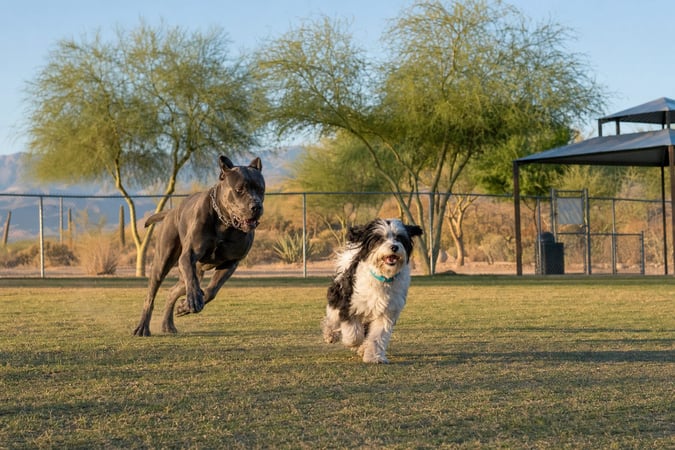
A fenced park gives a fast dog room to sprint safely. It is free and close by. For a dog with solid recall and no reactivity, twenty minutes of chase with the right dogs is a fine workout.
The limit is real, and a dog behaviorist states it directly. Scott Sheaffer (CDBC, CBCC-KA) says dog parks are great for most dogs, but not all. His checklist for a dog that belongs there starts with the dog not being dog-reactive and not being targeted by other dogs (USA Dog Behavior, retrieved 2026-09-16). A reactive dog fails that checklist on the first line.
Why does the dog park make reactivity worse?
Because every visit lets your dog rehearse the full behavior chain with the wrong response, and rehearsal is what builds reactivity.
At the park, the chain runs on a loop. A strange dog rushes your dog. Adrenaline and cortisol hit. Your dog lunges, barks, snaps. The other dog backs off, or your dog gets pulled away, and the outburst "worked." Repeat that fifty times in an afternoon and your dog has learned one thing: erupting at dogs is the job.
There is no distance control. Distance is the D that matters most for reactivity: too close and the dog cannot think. At a park, dogs close distance on your dog whenever they want. A dog that needs twenty feet to stay under threshold gets zero feet at the gate.
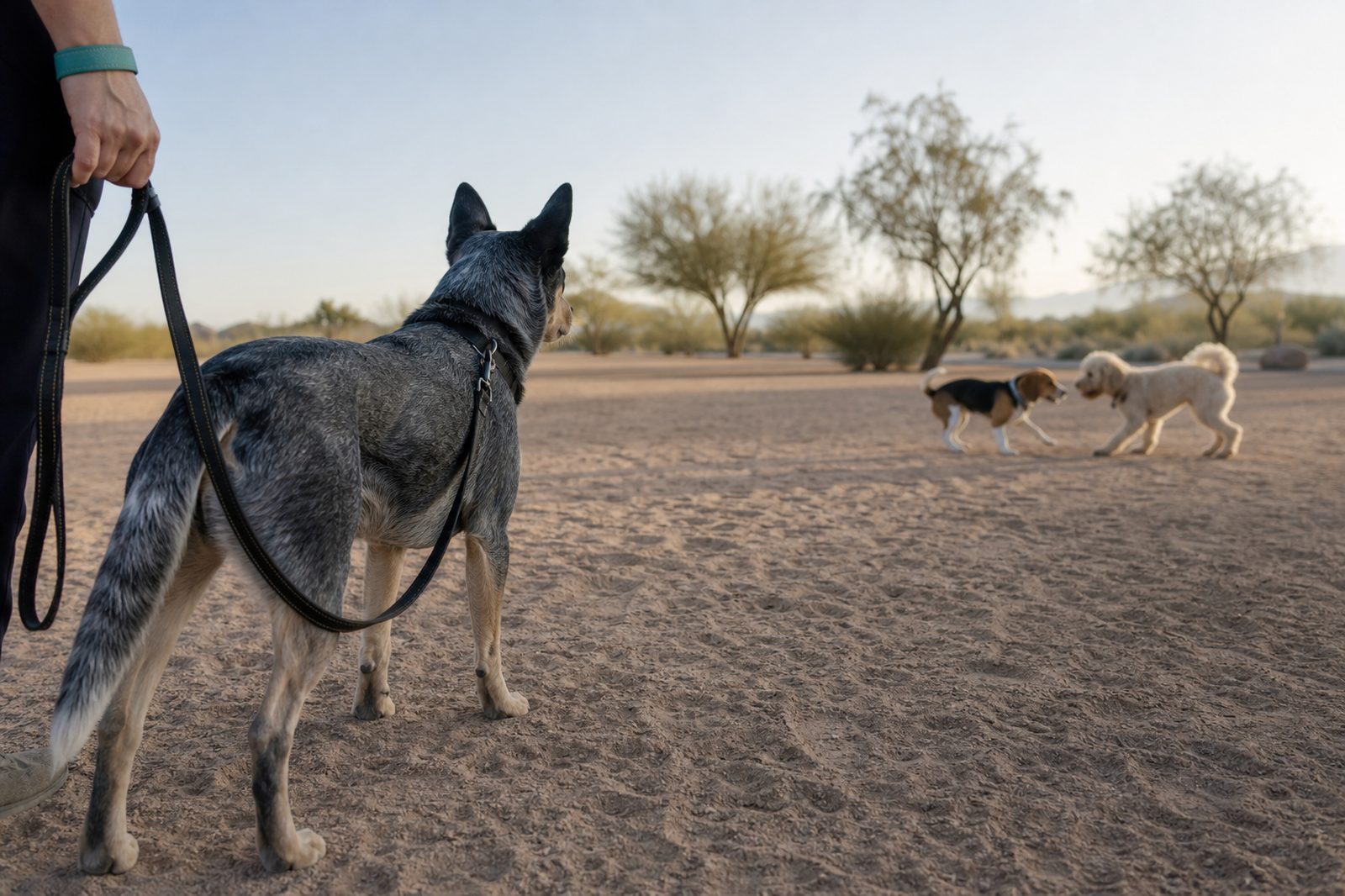
There is no screening. No one checks the dogs entering for behavior, health, or temperament. Your reactive dog meets the dog that rushes, the dog that humps, the dog that resource-guards the water bowl, and the owner who is looking at a phone. Sniffspot's behavior guide lists exactly this as the core problem: no behavior screening, limited space that makes distance management nearly impossible, and high arousal that elevates stress for every dog in the park (Sniffspot, retrieved 2026-09-16).
The recall damage is real too. Animal Aid behaviorist Shelby Thorn notes that the park's chaos teaches dogs that parks mean unbridled freedom, and the recalls stop working even in other settings: the dog is practicing bad habits on repeat (Animal Aid, retrieved 2026-09-16). Every ignored recall at the park makes the recall weaker everywhere else.
What is arousal stacking at the dog park?
The park stacks triggers faster than your dog can recover from them, and a stacked dog has no threshold left.
One strange dog rushing in is a trigger. Ten of them in the first five minutes is a stack. Add the car ride over, the gate ritual with dogs pressing in, the chase games, the near-miss scuffle by the water bowl, and the new dog that just arrived. Each event adds arousal. Your dog never comes back down between them.
A calm dog absorbs a stack and shakes it off. A reactive dog carries it. By minute twenty your dog is reacting to dogs it tolerated at minute five. The dog is full.
This is also why the drive home is often the worst part of the visit. Your dog arrives home still stacked, and the neighbor's dog through the fence gets the reaction that twenty park dogs built. Owners blame the neighbor's dog. The park built the charge.
Then there is your end of the leash. Dr. Natalie Marks, a veterinarian, warns that taking a fearful or anxious dog to the park can be downright dangerous, and that dogs already showing stress at home are at high risk of squabbles at the park (Daily Paws, retrieved 2026-09-16). Your tension at the gate travels straight down the leash. The dog reads it, the arousal stacks higher, and the visit starts over threshold before it begins.
What is the chemical cycle of rehearsed reactivity?
Reactivity runs on a chemical loop that gets faster and louder every time the dog runs it.
Reactivity arises from fear, frustration, over-arousal, AND self-reinforcing chemical cycles. Never the "always fear" story. A dog that erupts because it cannot reach the other dogs is running frustration. A dog that erupts because every dog is a party it cannot handle is running over-arousal. A dog that erupts because the eruption itself feels like relief is running a chemical loop.
The chemistry is measurable. Research on reactive and aggressive dogs found they carry significantly higher plasma cortisol, the primary stress hormone, than non-aggressive dogs, alongside lower serotonin, the neurotransmitter that helps inhibit impulsive behavior (PMC/NIH review, retrieved 2026-09-16). A dog that rehearses reactivity keeps that system primed. Each outburst ends with a chemical payoff: relief, a rush, the other dog retreating. The payoff teaches the brain to fire the loop faster next time.
This is why "just let them work it out" fails. Exposure without control charges the loop. Controlled training lowers the trigger intensity, installs a response worth offering, and keeps the outcome consistent, which is the only thing that rewrites a chemical habit.
"The park doesn't teach your dog anything new. It just grades what you already taught, with a hundred dogs grading along with it."
What are the best alternatives to dog parks?
Replace the uncontrolled park with controlled reps: screened play, structured setups, and training that counts as exercise.
Your reactive dog still needs to move, play, and learn to exist around dogs. It needs those things in an environment where every D is controlled. Here is the order that works:
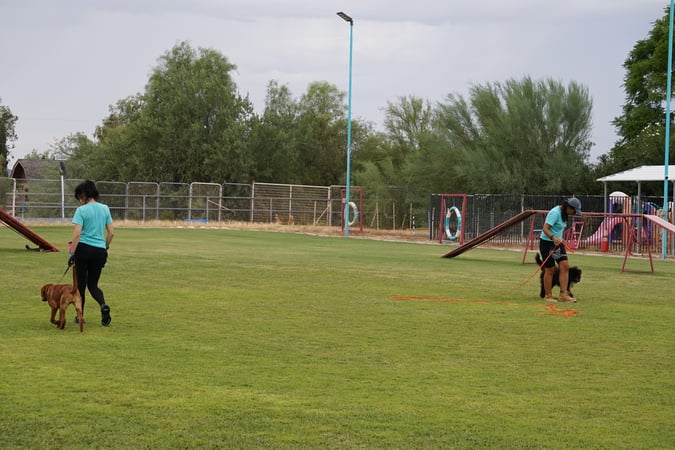
- Supervised play with screened, matched dogs. Small groups, matched by size and play style, watched by trainers who interrupt the wrong patterns before they rehearse. This is what a DaySchool day runs: play as training, not play as chaos. Small groups matched by size and play style, and a trainer who interrupts the wrong pattern before it rehearses.
- Controlled setups with one known dog. A calm, neutral dog at a distance your dog can handle, closing the distance only as the behavior holds. One variable moves at a time. That is proofing.
- Structured walks with a job. A sniff walk or a place-and-heal pattern gives an over-aroused dog something to do with its brain. Pattern work settles a busy dog faster than an extra mile.
- Training sessions as exercise. Fifteen minutes of real proofing work tires a dog out more honestly than an hour of frantic park chase, and every rep builds the right pattern.
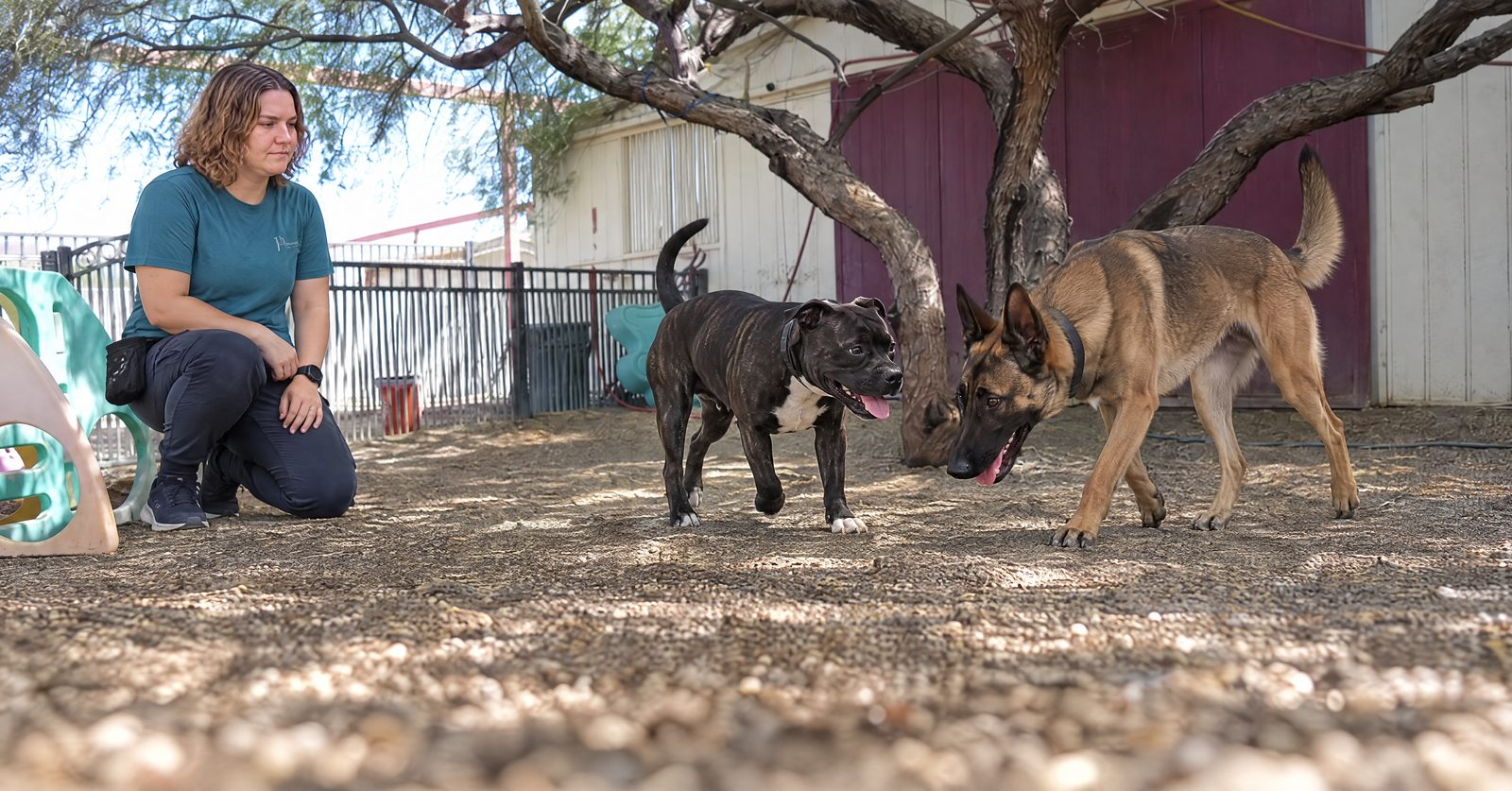
DaySchool exists for exactly this gap: the dog gets the social exercise it needs during your workday, in supervised groups matched by temperament, with trainers running methodology reps instead of just opening a gate. For how a school day differs from a daycare free-for-all, see our Day School vs Daycare comparison.
Start here
DaySchool: supervised play that builds the right reps
Your reactive dog still needs play and social exercise. DaySchool runs it in small, temperament-matched groups under trainer supervision: no gate chaos, no rehearsing the outburst, every rep counted toward the behavior you want.
When can a dog park actually work?
A dog park works when the dog is stable, the park is the right one, and the timing is right. All three, not one.
The dog: proofed around strange dogs at close range, recalls off a chase, and recovers fast from surprises. That is a finished product of the five D's, not a dog that is "usually fine."
The park: small, with regulars you know, sight lines so you can see trouble early, and separate areas so you can leave the big-dog chaos. The best park is the boring one.
The timing: off-peak hours. Early morning on a weekday beats Saturday at ten. In July, the 5 a.m. crowd owns the park before the Valley heat does. Fewer dogs means fewer stacked triggers and room to create distance when you need it.
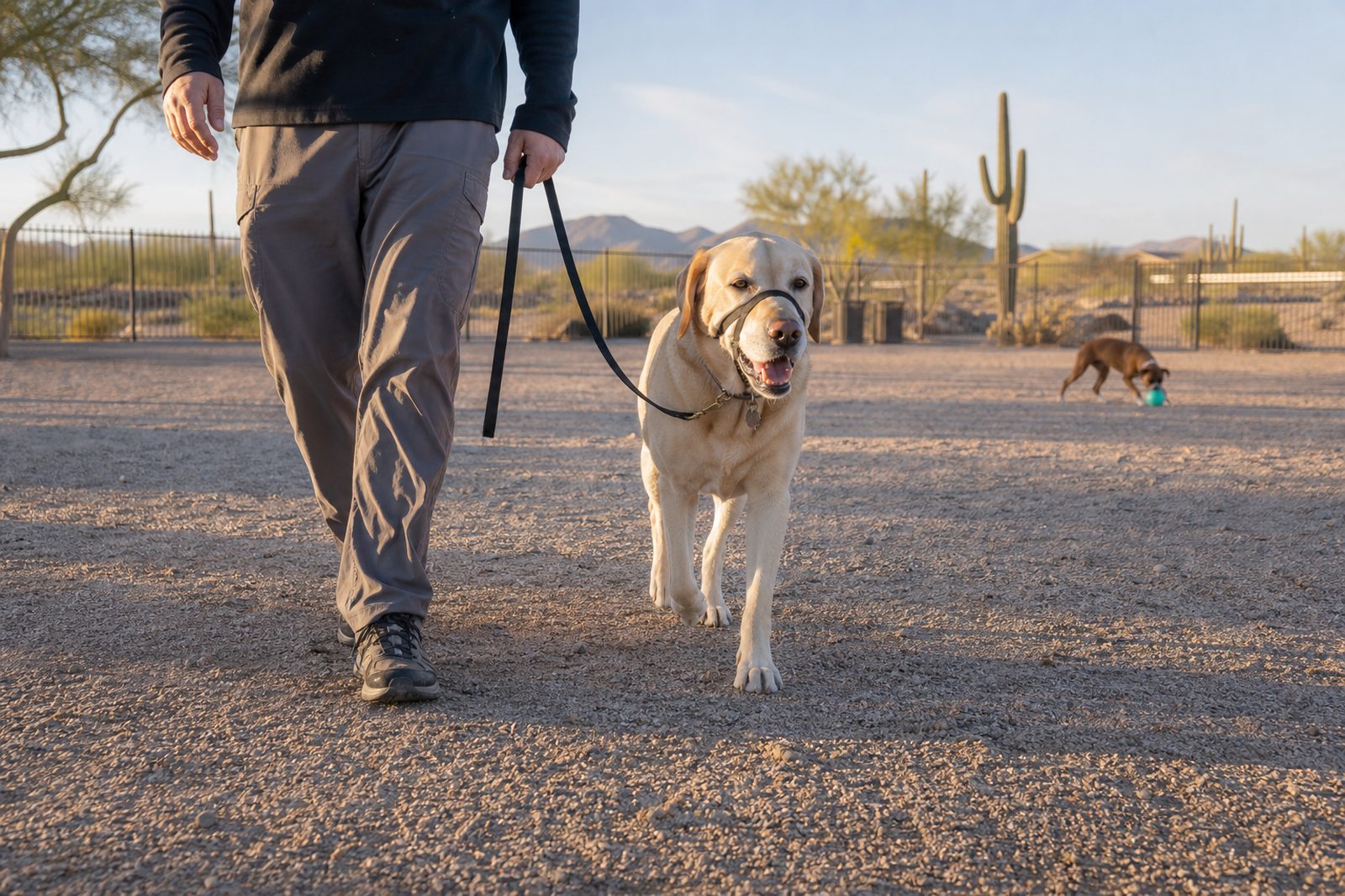
If your dog is mid-training, treat the park as a test you have not earned yet. There is a real list of off-leash dog parks in Scottsdale and Cave Creek for the day your dog is ready. Getting there is the work. The park is the reward at the end of it.
Signs your dog is not ready for the park
- The gate ritual is already a meltdown. Barking, lunging, or fixating before you enter means the dog is over threshold on arrival. The visit only goes downhill.
- Your dog cannot disengage. A dog that locks onto every dog and cannot look away, take a treat, or respond to its name has no behavior to proof yet.
- Recovery takes the whole visit. A stable dog shakes off a surprise in seconds. A dog still wired from a scuffle an hour ago is stacking, not playing.
- You are managing the whole time. If you spend the whole visit intercepting your dog and apologizing to strangers, neither of you is enjoying the park.
- It bleeds into the rest of the week. Reactivity that is worse for days after a park visit is the chemical loop talking. The park is charging it.
If you are unsure whether your dog is reactive or something more serious, our reactive vs aggressive guide gives you the five tells. The label decides the plan. And when the answer is real reactivity (the dog that can't disengage or recover between triggers), supervised play stops being enough. That's the dog Behavior Camp was built for: a 21-night stay that works the underlying emotional response, not the symptom, with the PD360 Assessment required before entry.
Key takeaways
Key takeaways
- Dog parks make reactivity worse by giving the dog hundreds of uncontrolled reps of the wrong response: trigger, chemical spike, outburst, payoff.
- Proofing needs the controlled five D's. A dog park maxes out duration, distraction, distance, direction, and difficulty at once with no control over any of them.
- Arousal stacks faster than a reactive dog can recover, so the dog reacts at minute twenty to dogs it tolerated at minute five.
- Reactivity runs on fear, frustration, over-arousal, and self-rewarding chemical loops. Reactive and aggressive dogs show measurably higher cortisol and lower serotonin than calm dogs.
- Supervised, screened play builds the right reps. DaySchool runs small temperament-matched groups under trainer supervision.
- A dog park can work for a stable, proofed dog at the right park at the right time. Fit, not absolutism.
Frequently Asked Questions
What is the first step if my dog is reactive at the dog park?
Book a PD360 Assessment. A senior trainer reads your dog across nine dimensions, names the actual drivers of the reactivity, and routes it to the right program. Stop the park visits first. Every park trip while you wait rehearses the pattern you are paying to fix.
Can a reactive dog ever go to a dog park?
Yes, when the dog is the finished product, not the work in progress: proofed behavior around strange dogs, a recall that holds off a chase, and fast recovery from surprises. Pair that dog with a small park of known regulars at off-peak hours. Mid-training dogs should earn the park as a final test, not use it as the training.
Will more socialization at the park fix my dog's reactivity?
No. Socialization is controlled exposure to new experiences, and the Association of Professional Dog Trainers defines it around young puppies, not flooding an adolescent or adult dog. Uncontrolled exposure rehearses the outburst. The fix is controlled proofing: one variable at a time, distance managed, the right response rewarded every rep.
What are the best alternatives to dog parks for a reactive dog?
Supervised play with screened, temperament-matched dogs; controlled one-dog setups at a distance your dog can handle; structured walks with a job like sniff work; and training sessions that count as real exercise. In the Phoenix Valley, our DaySchool program runs exactly this: social exercise in small supervised groups at the Scottsdale and Cave Creek campuses.
Why is my dog fine off-leash at the park but reactive on leash?
Off-leash the dog controls distance, movement, and greeting rituals. On leash all of that is stripped away and frustration does the rest. That split is one of the clearest signs of frustration-driven reactivity, not aggression. It also means the park is not fixing anything: the leash problem needs its own proofing work at controlled distances.
Match the program to the dog
Match the program to the dog
DaySchool gives your dog the social exercise it needs in supervised, temperament-matched play groups. If the reactivity runs deeper than management can reach (the dog that can't disengage, can't recover, or keeps escalating), the PD360 Assessment maps the full behavior picture across nine dimensions and routes your dog to the right program, which for a true behavior case is Behavior Camp: the 21-night root-cause reset with daily structured sessions, controlled exposure, and trainer-led follow-up days that lock the change in at home.
Where to go from here
Stop rehearsing the problem and start building the replacement. Supervised play, controlled distance, rewarded reps. That is the whole program, and it works on the dog in front of you: mentor and student, figuring it out together.
Scottsdale: 8642 E Shea Blvd, 85260. Cave Creek: 4640 E Forest Pleasant Pl, 85331. Serving the Phoenix Valley.