The short answer
A reactive dog runs a rehearsed pattern (fear, frustration, over-arousal, or a self-rewarding chemical loop) that erupts at a trigger. An aggressive dog acts with intent to cause harm. Most Pet Parents mislabel the first as the second.
- Reactivity is a rehearsed pattern erupting at a trigger: fear, frustration, over-arousal, or a self-rewarding chemical loop. Aggression is intent to harm.
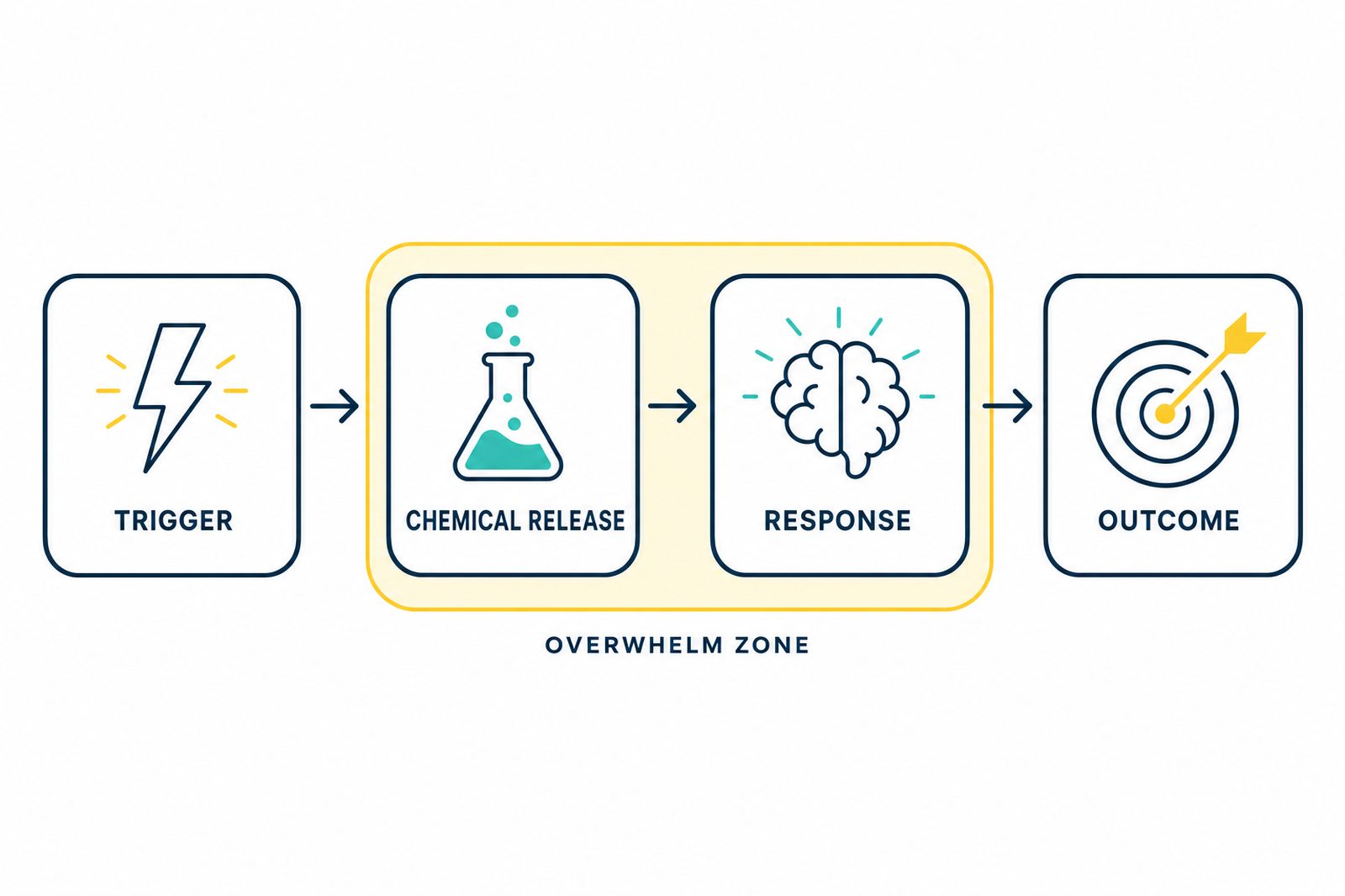
- Behavior runs a chain: trigger > chemical release > response > outcome. Correction applied before the dog knows an alternative rehearses panic. Timing and teaching decide.
- Five tells separate them: body language, trigger context, target, recovery time, bite history.
- Arizona is a strict-liability state: A.R.S. § 11-1025 holds the owner liable on the first bite, and the average 2025 dog-bite claim cost is in the tens of thousands (Triple-I and State Farm).
- Skip the guesswork: a PD360 Assessment tests the dog across nine dimensions and routes it to the right program.
If you are a Scottsdale or Cave Creek Pet Parent who has watched your dog bark, lunge, or snap and asked is my dog dangerous?: this reactive-dog-vs-aggressive-dog comparison is your diagnostic. What reactivity is and what true aggression looks like come first. Then the five tells that separate them, the cost of the wrong label, and how an assessment routes your dog to the right program. Because the dog you brought home is still in there. The pattern is just louder than the dog right now. For the training plan, our reactive dog training guide is the cluster hub.
What are dog reactivity signs, really?
The short version: reactivity is a rehearsed pattern erupting at a trigger, and the fuel comes in four forms.
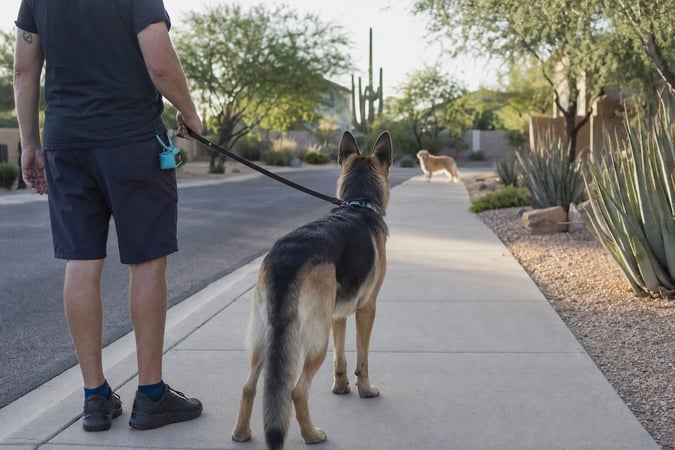
The classic signs are loud: barking, lunging, spinning, whining, hackles up, air snaps. A trigger shows up: another dog, a skateboard, a stranger, a coyote at the wash. The dog detonates. A rehearsed pattern running its loop.
Run that sequence daily on the same walk and whatever ends the pressure gets rehearsed until the chain hardens into a default. Four pattern-sources drive most reactivity:
- Fear. The dog is afraid, and its fight response fires first: barking and lunging to drive the scary thing off. Fear is a legitimate fuel. It is one of four.
- Frustration. The leash, fence, or window blocks what the dog wants, and the blocked impulse erupts. Plenty of "aggressive" fence dogs are frustrated greeters with no off switch.
- Over-arousal. Some dogs boil over. Too much input, too fast, and the nervous system discharges the excess as noise and motion.
- Self-rewarding chemical loops. The loop pays for itself. A dog barks and lunges at a passerby, and each bark-lunge dumps rewarding chemicals, so the cycle repeats and strengthens on its own. The tell: when the person walks into the kennel, the reactivity often subsides. The dog feared nothing and threatened no one. The cycle itself was the reward.
The force-free line that every reactive dog is a fearful dog prescribes the wrong fix for the other three fuels. Dogs work in patterns. Some patterns involve fear. Not all of them do.
That sorting, which of the four fuels is actually driving the loop, is the first job when a senior trainer reads your dog for a full day in a PD360 Assessment. The fix for fear is not the fix for a self-rewarding chemical cycle.
Genetics layers the plan. Breed is a hypothesis, not a verdict: herding breeds lean toward chase and nip, guarding breeds toward holding ground. Predisposition informs the plan. The individual dog decides it.
What does true aggression look like?
The short version: aggression is intent to cause harm, and intent changes everything about risk and the plan.
Where the reactive dog is loud, the truly aggressive dog is often quiet. Stillness. A hard stare. Closed mouth or curled lip. Weight forward. The growl runs low and sustained, a different sound from the rapid-fire barking of panic. The reactive dog wants the trigger gone. The aggressive dog wants to damage the target.
Two flavors: fear-driven, offense as defense after warnings failed; and predatory, rarer in pet dogs, silent and focused with no warning.
Once a dog has broken skin, it becomes risk management: different plan, tools, and timeline. The route runs through a senior trainer reading the dog one-on-one in person, never a phone diagnosis.
Is my dog reactive or aggressive? 5 tells that settle it
The short version: five tells, no trainer's eye required.
- Body language: noise vs. stillness. Reactive dogs put on a show: barking, lunging, spinning, whining, hackles, look-aways between bursts. Aggressive dogs economize: stiff body, hard stare, still tail, forward lean.
- Trigger and context. Reactivity is situational and proximity-driven: on leash, behind a fence, in the car. Add distance and the dog is fine. Aggression ignores the leash: resources, territory, handling, specific people, sometimes no obvious trigger.
- Target. Reactive targets are usually other dogs or novel stimuli, often leash-specific. Aggressive targets are specific and can include family members.
- Recovery time. The tell Pet Parents miss. A reactive dog detonates, then snaps back in seconds: panting, shaking it off. An aggressive dog stays elevated: pacing and scanning, ready to redirect onto whatever is closest. One is a thunderstorm. The other is a climate.
- History. Reactivity has a history of noise: months of barking and lunging, air snaps, zero broken skin. Aggression has a history of contact: punctures, bruises, escalating incidents. Broken skin means book an assessment.
Anxiety often rides along as a co-trigger. If your dog also panics when left alone, see our piece on separation anxiety.
Reactive dog vs aggressive dog: how do they compare side by side?
The short version: intent, stillness, and history draw the line.
| Reactive dog | Aggressive dog | |
|---|---|---|
| Intent | Discharge overwhelm; make the trigger go away | Cause harm; control or remove the target |
| Body language | Big and noisy: barking, lunging, spinning, whining, hackles, look-aways | Economical and still: hard stare, stiff body, closed mouth or curled lip, forward weight |
| Trigger | Proximity, frustration, or self-rewarding loops: on leash, behind fences, at barriers | Resources, territory, handling, specific people; can appear with no obvious trigger |
| Target | Usually other dogs or novel stimuli; often leash specific | Specific target; can include family members |
| Recovery time | Seconds to minutes once the trigger leaves; dog shakes it off | Stays elevated; paces, scans, may redirect |
| History | Months of noise, lunging, air snaps; no broken skin | Broken skin, bruises from grabs, escalating incidents |
| Program fit | Assessment first; moderate cases route to a board-and-train stay, mild cases to structured days | Assessment first; severe cases, such as several bites or aggression the dog starts, route to an intensive board-and-train stay; never a DIY project |
By the numbers
Is correction part of the fix? The honest answer
The short version: yes, and there are rules for it that we state plainly.
All four quadrants of operant conditioning are legitimate tools. Positive reinforcement is our primary method and the base of every program. Fair, minimal, well-timed correction is also legitimate and necessary. Never the starting point: only after the alternative is understood, at the lowest level the dog notices, like a tap on the shoulder. And the tool never replaces the human in the loop. The collar does not train your dog. You do, with a trainer beside you until you do not need one.
Here is a part that often gets left out: when the dog or the Pet Parent grows frustrated, positive-only pressure turns aversive and becomes its own punishment. A dog drilled on treats it no longer wants is living under pressure with a friendlier name. We run the dog in front of us.
Every part of life runs on reinforcement and punishment. Wake up late, get to work late, get a tardy notation: a minor correction. Stay late consistently and face suspension, then termination: an escalated punishment. Do that at every job and you end up with nothing. Training is no different. The question is whether the correction is fair, minimal, and timed to teach.
And a word about clarity. Healthy relationships include fair feedback, and your dog deserves the same clarity from you.
The Hard Lines prohibit abuse and dogma, not correction: no dominance theory, no alpha rolls, no hot-stove setups engineered to make the dog fail, no yelling, no hitting, no training from anger, no tool the dog has not been conditioned to understand.
What happens when you get the label wrong?
The short version: the wrong label builds the behavior you fear, and in Arizona it carries legal weight.
The label determines the plan: program, tools, timeline, safety protocol. Wrong label, wrong program, wasted months.
In Arizona the stakes go further. Arizona is a strict-liability state: A.R.S. § 11-1025 holds the owner liable for a bite in a public place or lawfully on private property: on the first bite, with no prior history. A.R.S. § 11-1025(B) requires you to give the person bitten your contact information; A.R.S. § 11-1014 requires a bite quarantine: at least ten days for an unvaccinated dog, at a county pound or, at the owner's request and expense, a veterinary hospital. A properly vaccinated dog may be quarantined at home with the consent of the county enforcement agent. The average 2025 U.S. dog-bite claim cost in the tens of thousands (Triple-I / State Farm). Here, the wrong label is financial and legal exposure. This is general information, not legal advice.
Mistakes that make it worse
- Calling reactivity "aggression" and reaching for correction-first tools. Blasting a dog mid-meltdown with harsh leash pops or an unconditioned E-Collar adds pressure to panic. Correction as the entire plan (no taught alternative, no conditioned tools) is correction-first dogma, and it fails. Fair, minimal, well-timed correction stays legitimate once the dog understands an alternative.
- Calling aggression "reactivity" and DIYing the fix. Slow-exposure protocols and dog-park "socialization" are the wrong medicine for intent to harm. Flooding an aggressive dog is how incidents happen.
- Assuming the label does not matter. It decides the plan: program, tools, timeline, safety protocol. Get it wrong and you spend months training the wrong dog.
- Ignoring the Arizona stakes. Strict liability on the first bite, contact-information requirements, a bite quarantine. Here, the wrong label is legal and financial exposure.
Where to start
Book a PD360 Assessment
The full-day, hands-on evaluation where a senior trainer reads your dog across nine dimensions and routes it to the right program. A PD360 Assessment is recommended before every camp and required before Behavior Camp and Transform Camp.
How does a trainer actually tell the difference?
The short version: no phone diagnosis. We test the dog, all day, across nine dimensions.
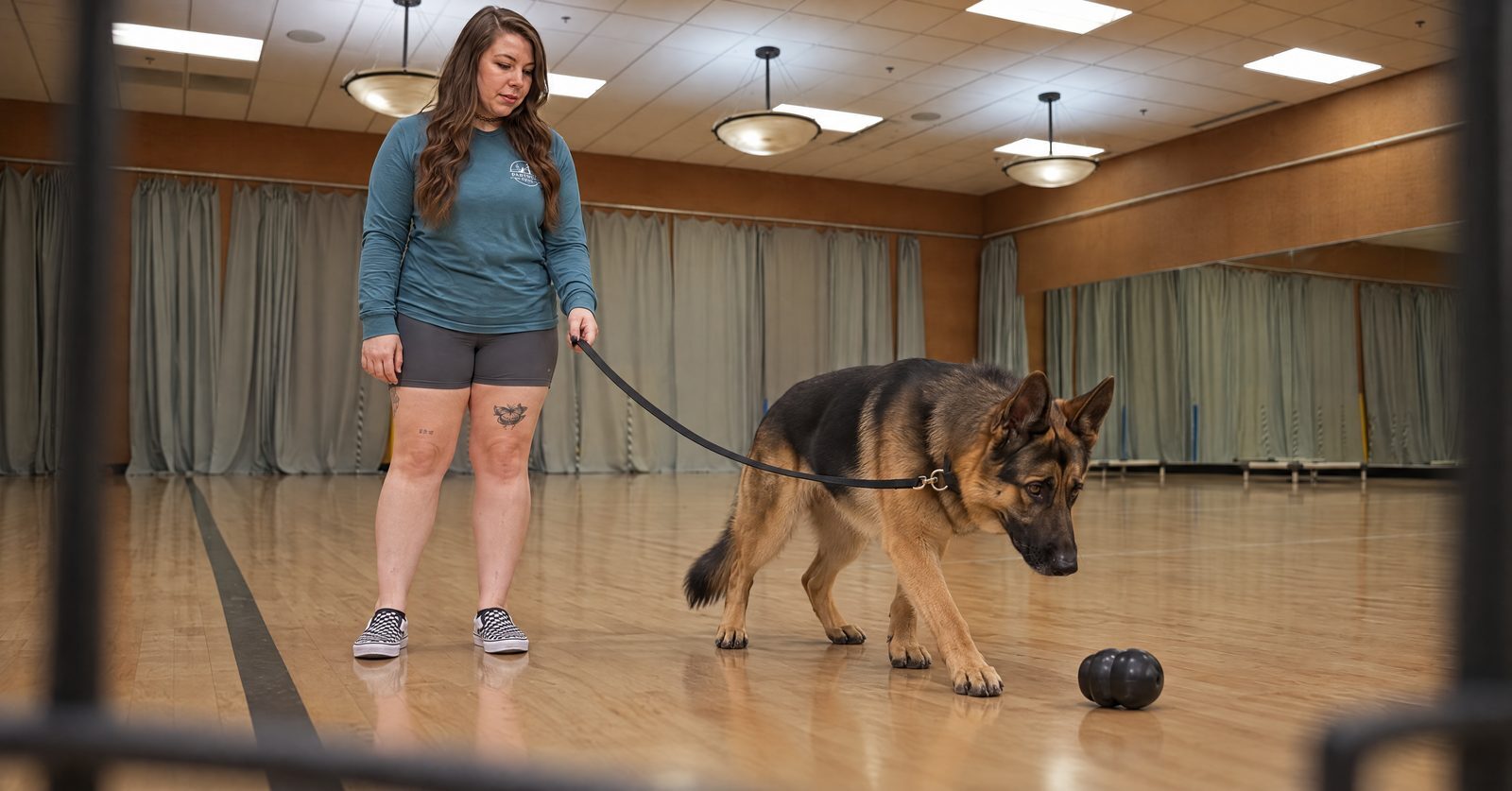
At our Scottsdale or Cave Creek campus, your dog faces live situations with trained handlers while we watch the behavior chain live, separating overwhelm from intent on evidence. That is what choosing the right dog trainer comes down to: diagnose before prescribing. For the minute-by-minute, see Inside the PD360 Assessment. Serving Phoenix Valley families since 1997.
Which program fits your dog: Behavior Camp, Transform Camp, or DayCamp?
The short version: the label determines the plan, and the assessment determines the label.
Once the PD360 Assessment scores your dog:
- Moderate reactivity (loud, fast recovery, no severe aggression) routes to Behavior Camp: a 21-night stay of daily structured sessions, modeling between sessions, and controlled exposure that rebuilds the chain link by link through the five D's.
- Severe aggression, such as several bites or aggression the dog starts, routes to Transform Camp: a 28-night stay with a senior trainer working one dog at a time, for dogs where intent, not just overwhelm, is on the table: higher safety protocol, longer runway, same phase-based structure. Candid prognosis: some dogs transformed, some improved with lifelong management, a few with limits.
- Mild reactivity (young dog, early pattern, fast recovery) may fit DayCamp: structured days that break the rehearsal cycle early.
No program is assigned from a phone call. The assessment decides.
Next step
Match the program to the dog
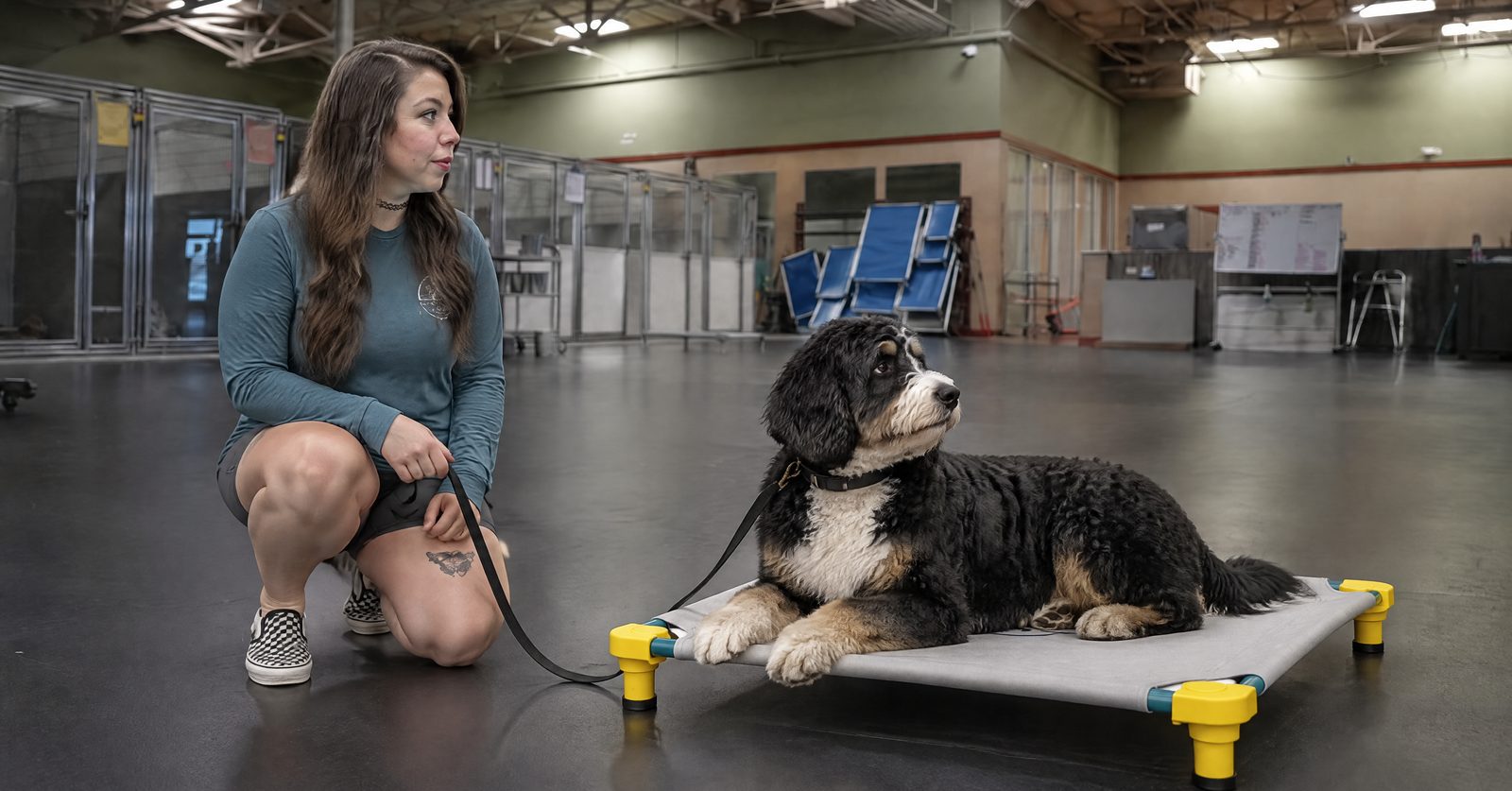
The assessment decides the route. Moderate reactivity routes to Behavior Camp (21-night stay); severe aggression, such as several bites or aggression the dog starts, routes to Transform Camp (28-night stay). Your PD360 Assessment decides which.
What should you do this week?
The short version: manage first, train second. Never correct a dog over threshold before it knows an alternative.
Stop making it worse before the assessment:
- Add distance. Distance is the cheapest tool you own. Cross the street. Walk at 6 a.m., before the Valley heat climbs.
- Stay legal and leashed. A.R.S. § 11-1012 requires dogs in public parks and on public school property to be physically restrained, usually on a leash, and local rules often go further. Build management around the leash.
- Skip the dog park. Off-leash strangers flood an overwhelmed dog. When your dog is ready for other dogs again, that practice happens in a Group Class at Partners: controlled setups, distances chosen for your dog, a trainer reading both dogs, not in a free-for-all.
- Teach first, correct second. Our behavior-change method starts with management and assessment; corrections enter only after the dog has been taught an alternative, at the lowest effective level.
- Know when the vet comes in. If the reactivity is sudden, new and out of character, have your vet take a look, since pain, thyroid or stomach trouble, nerve or brain issues, or medication can drive reactive behavior.
Key takeaways
Key takeaways
- Reactivity is a rehearsed pattern; aggression is intent. The five tells: body language, trigger, target, recovery time, history.
- Mistimed correction backfires. Correction during the chemical flood, before the dog knows an alternative, rehearses panic. A growl follows the same rule: it gets a calm correction only after the dog knows the alternative, then a redirect and a reward.
- Fair correction stays legitimate. Once the dog understands an alternative, minimal, well-timed correction at the lowest perceptible level is fair training, not abuse.
- In Arizona, the label has legal teeth: strict liability under A.R.S. § 11-1025 from the first bite, and an average 2025 claim cost in the tens of thousands (Triple-I / State Farm).
- Assessment first. The PD360 Assessment reads your dog across nine dimensions and routes it to the right program. It is recommended before every camp and required before Behavior Camp and Transform Camp.
Frequently Asked Questions
How can I tell if my dog is aggressive or reactive?
Run the five tells: noisy vs. still, leash-and-barrier vs. resource triggers, other dogs vs. specific targets, fast recovery vs. staying elevated, noise history vs. broken skin. For a definitive read, book a PD360 Assessment.
Can a reactive dog become aggressive over time?
Yes. Every unhandled episode rehearses the chemical chain until the pattern hardens into a default, and correction-first handling accelerates it: harsh corrections with no taught alternative add pressure to panic and leave the dog with nothing to do instead, so the panic keeps getting rehearsed.
Can I handle fear-based aggression on my own?
No. Fear-driven aggression means the dog learned offense is the best defense; DIY slow-exposure or dog-park socialization risks a serious incident. Start with an assessment, not a YouTube protocol: safety protocol, controlled environment, phased plan.
What tools should I avoid for aggressive dogs?
Avoid correction-first plans: harsh leash corrections and unconditioned E-Collars during arousal, with no taught alternative. They add pressure without changing intent. Our Hard Lines prohibit abuse and dogma: no dominance theory, no alpha rolls, no hot-stove setups, no yelling or hitting, every tool conditioned before use. Fair correction stays legitimate once the alternative is understood.
What should I do if my dog keeps biting me aggressively?
Stop unsupervised contact, manage the environment, book a PD360 Assessment now. Arizona law: A.R.S. § 11-1025 makes you liable for the bite regardless of the dog's earlier behavior, requires you to give the person bitten your contact information, and A.R.S. § 11-1014 requires a bite quarantine (at least ten days for an unvaccinated dog). Get medical care for any bite that breaks skin. Do not wait.
Where to go from here
You came in asking whether your dog is reactive or aggressive. Now you know the five tells and the cost of the wrong label. Book the PD360 Assessment.
Scottsdale: 8642 E Shea Blvd, 85260. Cave Creek: 4640 E Forest Pleasant Pl, 85331. Serving the Phoenix Valley.